Deutsche Bristol-Werke was founded at Halberstadt in 1912 to manufacture products of the British & Colonial Aeroplane Company, but severed connection with the parent company in 1914. Subsequently it developed and built its own designs under the name of Halberstadter Flugzeugwerke.
Halberstadt’s first aircraft, the C.I reconnaissance biplane, first flew in May 1916, and together with more powerful C.III and C.V developments, was produced in large numbers in the First World War. The CL class two-seat escort fighters were particularly successful in ground-strafing roles during the campaigns of autumn 1917. Halberstadt’s D-class single-seater scouts were strong and maneuverable, but inferior to Allied fighters in speed. A number of D.ll and D.lll scouts were built by Hannoversche Waggonfabrik AG. The Halberstadt D.V, the company’s final scout design, appeared in early 1917.
Pioneers
Haerens F.F.1 Longhorn

The 1913 Hærens Flyvemaskinfabrikk F.F.1 Longhorn (or Langhorn) was a Maurice Farman MF.7 Longhorn copy.
Einar Sem-Jacobsen drew from memory after a Farman factory visit.
It was the first Norwegian aircraft, undertaking a trial run on 22 May 1913.
Haenlein Airship
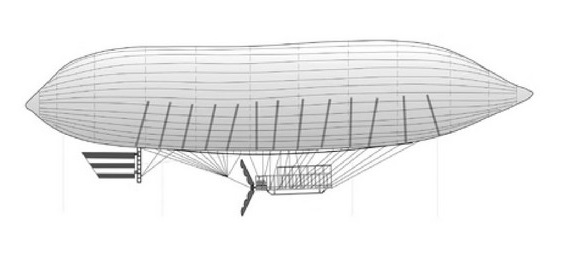
In 1860 Belgian Etienne Lenoir patented a gas engine fuelled by coal gas. Paul Haenlein employed a four-cylinder Lenoir engine producing 5 hp in his airship at Brunn in 1872.
The airship’s varnished silk envelope was filled with coal gas, which supplied the engine at a rate of 250 cu.ft of gas per hour, turning a large propeller at 40 rpm. Internal pressure was maintained by a ballonet supplied with air rom a mechanical pump, fitted to compnsate for the coal gas burned in flight. During the first trial at Brunn in December 1872, perceptible control and a degree of acceleration were evident, with the craft achieving 11 mph.
Despite the initial success of this and further trials, the early Lenoir engines suffered from a poor power-to-weight ratio and low power. Haenlein eventually abandoned his work, frustrated by the lack of suitable engine.
Envelope capacity: 72,000 ft
Length: 150 ft
Diameter: 30 ft
Height: 44 ft
Gross lift: 2.1 ton
Disposable load: 0.30 ton
Engine: 1 x Lenoir 4 cyl gass, 5 hp
Speed: 11 mph
Range: 10 mi
Crew: 1
Haeferlin Monoplane
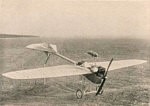
The Haeferlin monoplane was designed and built by Haeferlin in Germany, circa 1911.
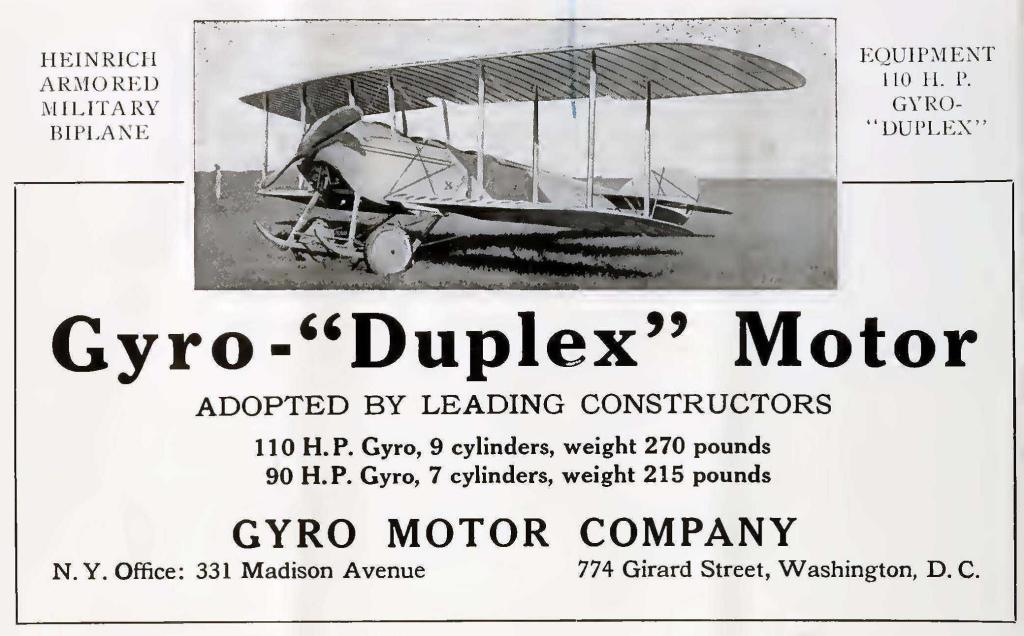
Gyro Motor Duplex L
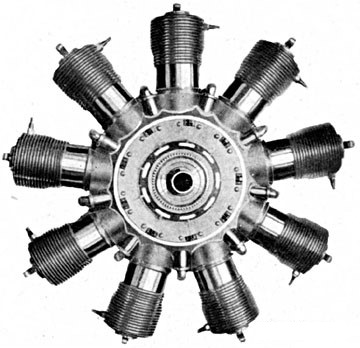
The 1914 Gyro Motor Co Duplex L was a nine-cylinder air-cooled rotary aero engine producing 110hp@1200rpm from 858.82ci, with a dry weight of 270 lb.
Gyro Motor Duplex K
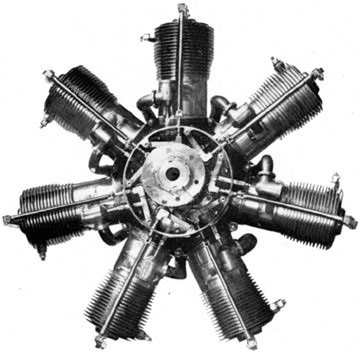
The 1914 Gyro Motor Co Duplex K was a seven-cylinder air-cooled rotary aero engine producing 90hp@1250rpm from 667.97ci, with a dry weight of 215 lb.
Gyro Motor Duplex J
The 1914 Gyro Motor Co Duplex J was a five-cylinder air-cooled rotary aero engine producing 50hp@1250rpm from 477.12ci, with a dry weight of 170lb.
Gyro Motor 1911 35hp
Designed by Fred Weinberg, the 1911 35hp was a five-cylinder air-cooled rotary aero engine.
Gyro Motor 1911 22 hp
Designed by Fred Weinberg, the 1911 22hp was a three-cylinder air-cooled rotary aero engine.
Gyro Motor Co
fdr: Emile Berliner
774 Girard St
Washington DC.
USA
 All Aero