Charles K Hamilton
Mineola NY.
USA
Built aero engines 1009-10.
Charles K Hamilton
Mineola NY.
USA
Built aero engines 1009-10.
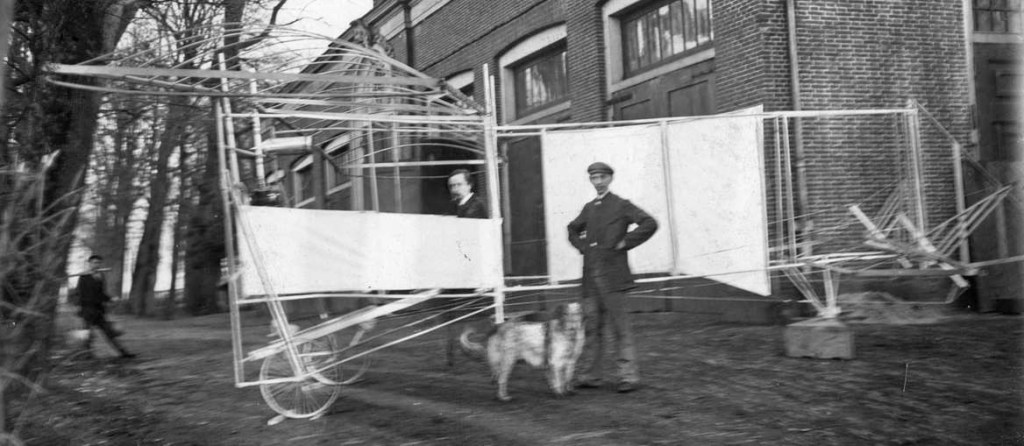
An aeroplane designed and built in 1909 by the Dutch brothers Ph. J. Hamers (architect) and J. Hamers (mechanic) together with the mechanic P. de Roos. They decided to build this plane after experimenting with gliders. The machine was finished in the beginning of 1910 and was ready to fly in February 1910. Flying tests were not successful because of the unreliable and/or underpowered engine, a two-cylinder 20 hp Humber motorcycle unit. As ever money was the problem… The machine was a monoplane, but they saw it as a biplane with one wing in front and one low at the back. Lots of the construction was of steel tubing. The plane was modified in the middle of 1910 and shown on an exposition in Haarlem in August 1910, the heavily modified machine more similar to a Blériot monoplane. After that exposition the work of the Hamers brothers faded into history.
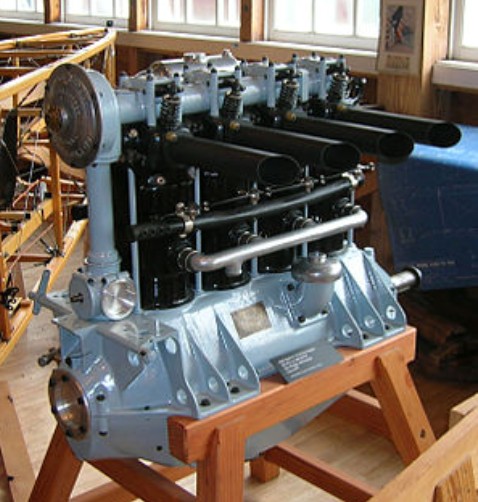
The Hall-Scott A-7 was an early aircraft engine manufactured by the Hall-Scott company of Berkeley, California. Of straight-4 configuration, it developed 100 horsepower (75 kW). These engines suffered from reliability problems and were prone to catch fire while in operation.
Applications:
Aeromarine 39
Dayton-Wright FS
Standard J-1
A-7
1916
90-100hp@1400rpm
549.78ci
dry wt: 410 lb
A-7a
1916
100hp@1400rpm
606.14ci
dry wt: 420 lb
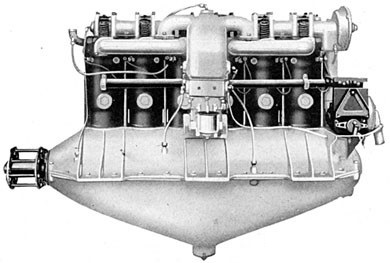
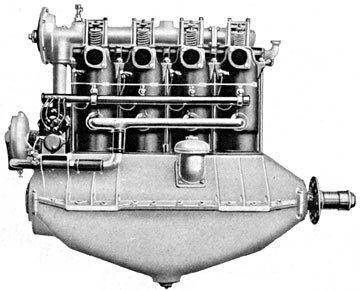
The 1915 Hall-Scott A-5 aero engine was a liquid-cooled inline six-cylinder producing 125hp@1250rpm from 824.67ci and with a dry weight of 525 lb.
The model A-5a of 1915 produced 165hp@1475rpm from 909.22ci.
The 1912 Hall-Scott A-4 was an eight-cylinder V, water-cooled aero engine that produced 100hp@1200rpm from 785.4ci and had a dry weight of 535 lb.
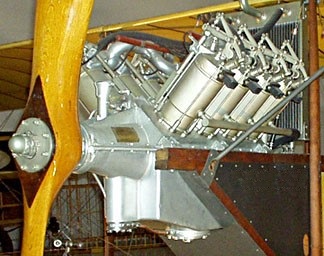
The 1912 Hall-Scott A-3 was an eight-cylinder V, water-cooled aero engine that produced 80hp@1400rpm from 502.64ci and had a dry weight of 290 lb.
The 1911 Hall-Scott A-2 was an 8-cylinder Vee producing 60hp@1400rpm from 402.08ci. the dry weight was 260 lb.
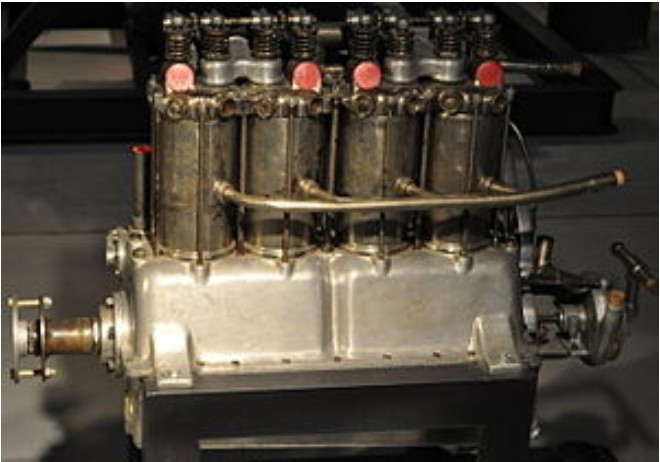
The Hall-Scott Motor Car Company began specializing in the construction of airplane engines in 1911. The Type A-1, designed by Elbert J. Hall and the first one they produced, was soon being used on many types of early aircraft. The Hall-Scott A-1 was an early aircraft engine of straight-4 configuration, it developed 40 horsepower (30 kW).
At the Third International Aviation Meet in Los Angeles in 1912, a Hall-Scott A-1 powered an aircraft designed by Jay Gage of Los Angeles and flown by Charles Stevens. During the 1912 International Aviation Meet in Oakland, Hillery Beachey, brother of famed aviator Lincoln J. Beachey, flew a biplane powered by an A-1.
Specifications:
Type: 4-cylinder, liquid-cooled, inline aircraft engine
Displacement: 251 cubic inches (4.1 l)
Length: 39 inches (991 mm)
Width: 17.5 inches (445 mm)
Height: 28 inches (710 mm)
Dry weight: 165 pounds (74.8 kg)
Cooling system: liquid-cooled
Power output: 40 horsepower (30 kW) at 1500 rpm
In 1910 Hall-Scott built a 60 hp engine of unknown type.
1911:
(Albert John) Hall-(Bert) Scott Motor Car Co
Berkeley and San Francisco CA.
USA
Engine builder
 All Aero