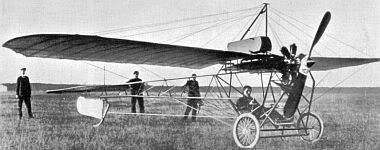
Harper 1912 monoplane

This 50-foot span monoplane, “one of the largest, if not the largest monoplane in the world”, was designed by William Harper Jr., of New Bloomfield, PA, USA,, a student of aerodynamics who had worked for several years on a weight-carrying machine that would fly with the least possible horse-power. Flights were made using as little as 10 or 12 hp of its original home-made motor. This was a two-cylinder, two-stroke, revolving engine that could give 50 hp and drove a monster propeller of around 9 ft. diameter with very steep pitch. The machine flew carrying a total weight of around 1600 lbs. The body was long and the elevators big, and all movements of the machine were slow, instead of responding quickly to the slightest gusts. The object was to approximate soaring. The machine was used for passenger flights, carrying as much as three passengers, re-engined with a six-cylinder 60-80 hp Roberts engine. It crashed in November 1912.
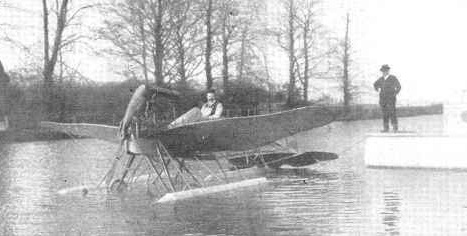
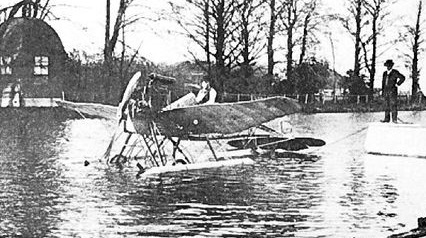
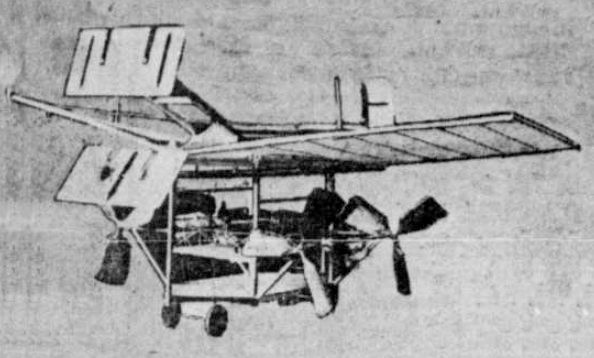
Harper Hydroplane

The picture shows the machine in a probably artificial seaplane basin at Warmond (quite a bit away from Scheveningen). Soon after this picture was taken the machine got into flames at the first flight. That was the end of the ‘Lygia’ hydro-aeroplane. The pontoons of this hydro-aeroplane does not look if it will ever go up, no steps are visble. The name ‘Lygia’ can be read on the rudder (on the original picture at least). The machine earned its (little known) place as being the first hydro-aeroplane in Holland, although it did not fly.

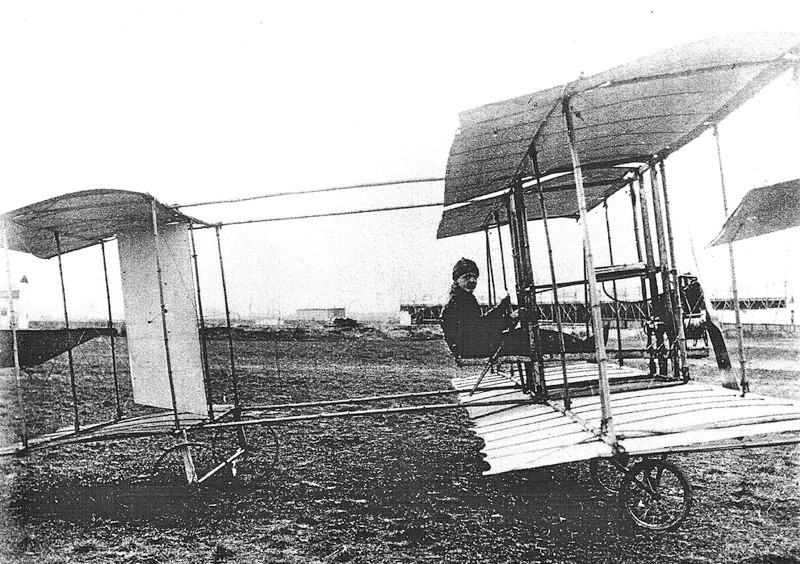
Harper Type No.1

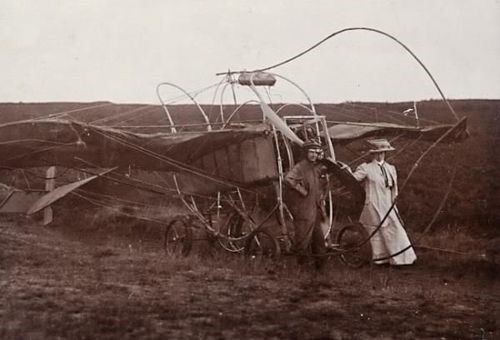
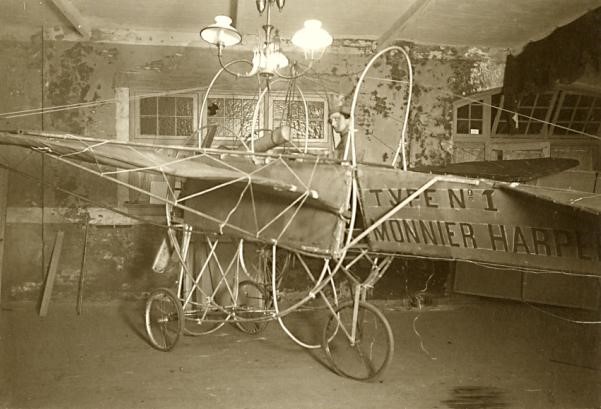
The Monnier Harper Type No.1 was modified from the original machine assembled in Rotterdam, as seen before its August 10, 1911 flight test on the plain, probably around Apeldoorn, Netherlands. Likely a memento taken just before; the couple may be Monnier Harper and his wife.

Monnier Harper at work on his Type No.1 monoplane, probably at Apeldoorn

Harper, Arthur Frederic Monnier

Monnier Harper – 1912

(Arthur) Monnier Harper was born 17-8-1888 in Belfast and was a violin virtuoso, making his public debut at the age of eleven. Probably in 1904 he settled with his mother and brother in Brussels, and at the age of sixteen played in the orchestra of the Ostende Kurhaus. In the following years he performed as a soloist in France, The Netherlands, England, Northern Ireland and Belgium. Monnier Harper also played with the Residentie Orchestra of The Hague during one season (probably 1913-14).

In 1911 he settled in Scheveningen, being appointed Dutch representative of the Weston Hurlin Co., a supplier of aircraft components and founder of flying schools. The Dutch aviation pioneer Adriaan Mulder had been his flying instructor.

Louis Blériot, in his Type XI monoplane, flew across the English Channel from Les Baraques, near Calais, to Northfall Meadow at Dover on Sunday, 25 July 1909, winning the Daily Mail challenge prize of £1,000. Monnier Harper was inspired.

Lodewijk Muns, writing on the NMI website, notes that 1909 was also the year of the first flight over Dutch territory.

It wasn’t by Monnier Harper.
De Dordrechtsche Courant, 17 August 1909, page 2:
‘On Friday on the heath at Vaassenschenweg, Messrs Elbe Rieciel and Arthur Monnier Harper, violinists from Apeldoorn, tried out their homemade flying machine.

‘At first, the machine quite often refused to budge, but with some helpful hands it finally began to move beyond this earthly vale of tears.

‘However, the unevenness of the terrain made the colossus waver and with a thump it smashed into the hillside, crushing the two bicycles which provided the forward momentum.

‘Fortunately, the two pilots were unhurt.

Arthur Monnier Harper died 1-1-1916.

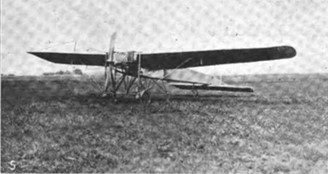
Harlan Dove

Harlan, who had rented a shed to Max Schüler, took over the semifinished student model in 1910. His chief architect Karl Grulich improved it, finished it – and Harlan came out with it. This Harlan-Eindecker became a successful aircraft. On 29 December 1910, Grulich thus flew his aircraft license number 46. By the end of the year 1911 several versions of this pattern were built and sold. At the end of 1913, the Harlan works had three aircraft sheds, but in the spring of 1914 Harlan was financially deadlocked. He sold his company.

At the beginning of 1914, the “Bussard-Flugzeug-Werke GmbH” emerged from the sale of the remains of the Harlan-Flugzeugwerke GmbH and had its small workshop and flying school in the shed.

Harlan-Flugzeugwerke GmbH

Harlan, who had rented a shed to Max Schüler, took over the semifinished student model in 1910.

At the end of 1913, the Harlan works had three aircraft sheds, but in the spring of 1914 Harlan was financially deadlocked. He sold his company.

At the beginning of 1914, the “Bussard-Flugzeug-Werke GmbH” emerged from the sale of the remains of the Harlan-Flugzeugwerke GmbH and had its small workshop and flying school in the shed.