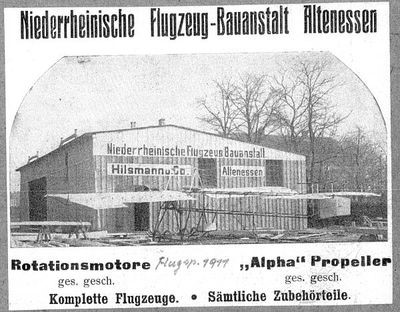
A monoplane designed and built by Hilsmann circa 1909-10 was given its first trials at Essen, and several long jumps of 60 to 100 metres were made.
The “Niederrheinsche Flugzeug-Bbauanstalt Altenessen” Type e or Type d, was built in 1911.
A monoplane designed and built by Hilsmann circa 1909-10 was given its first trials at Essen, and several long jumps of 60 to 100 metres were made.
The “Niederrheinsche Flugzeug-Bbauanstalt Altenessen” Type e or Type d, was built in 1911.
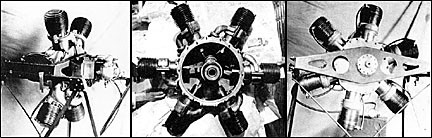
Stanley V Hiller of Alameda CA., USA, built a number of engines during 1910 to 1913.
1910 = unknown type.
1911 = 30hp 6RA rotary, two-cycle.
1912 = 60hp 6RA rotary; built by C E Kelsey, San Francisco.
1913 = 90hp unknown type.
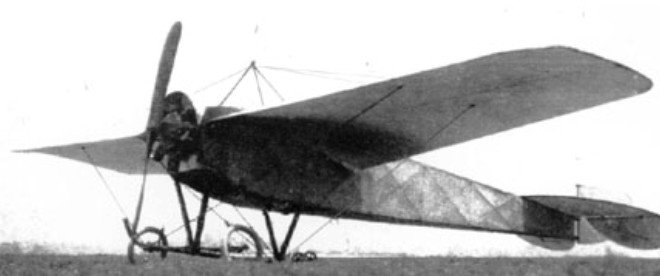
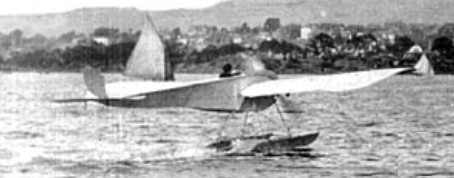
Stanley Hiller Snr began designing gliders in 1909 and this, his first powered aircraft, flew at Alameda and a 1911 air meet at Tanforan race track in South San Francisco. On pontoons, it was flown from Lake Merritt, Oakland, by Charles Patterson in August 1912.
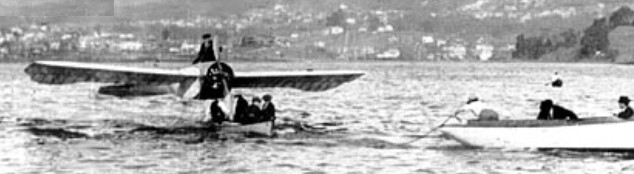
Power was 60hp and 80hp Hiller rotary built from Hiller’s plans by C E Kelsey, San Francisco.
Stanley Hiller (Sr)
Alameda CA.
USA
Stanley Hiller Snr began designing gliders in 1909 and this, his first powered aircraft, flew at Alameda and a 1911 air meet at Tanforan race track in South San Francisco. He also built engines.
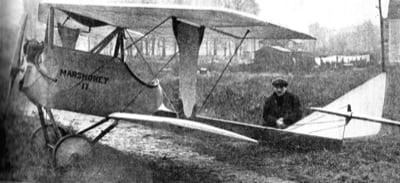
The Hild-Marshonet biplane was designed and built by Frederick Hild and Edward Marshonet of Hempstead, New York, in 1919. It had no fuselage as such, the pilot being seated in a streamlined nacelle. An outrigger of boxed cantilever construction supporting the empennage was attached directly behind the pilot’s seat. It had a single-boom tail and swept back wings.
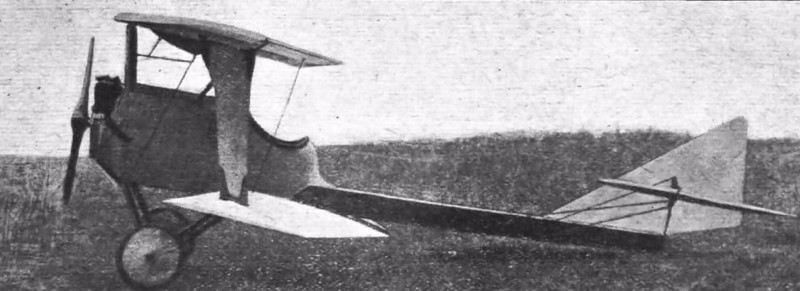
It was powered by a 20 hp-Spainhour V-twin engine.
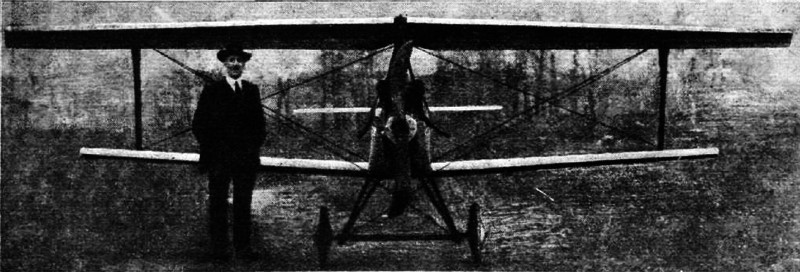
The plane could be taken apart in minutes.
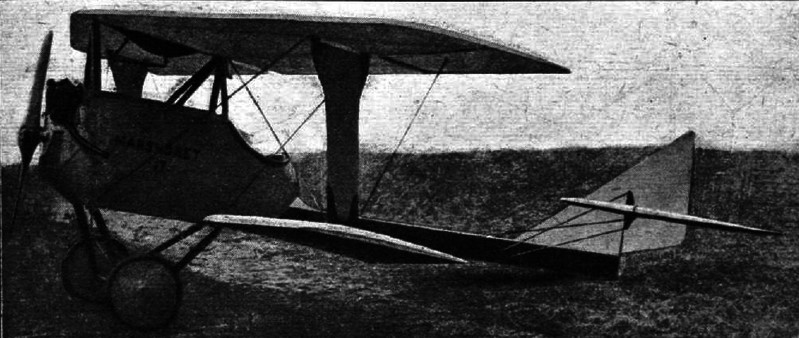
Span: 24 ft
Length: 19 ft
Empty weight: 450 lb
Loaded weight: 700 lb
Speed: 65 mph
Price $2,000.
The 1909 Hieronymus Type I was designed and built by Hieronymus in Austria/Hungary.
Span: 39’4″

Industrialist Henry Hettinger constructed this airplane, whose fabric-covered wings were sewn by his wife Mary. Hettinger made flights along the Cohansey River meadows, at the fairgrounds on Fayette Street, Bridgeton, New Jersey, and later outfitted the plane with pontoons. The 40 HP six cylinder engine was built by the Hettinger Engine Company.
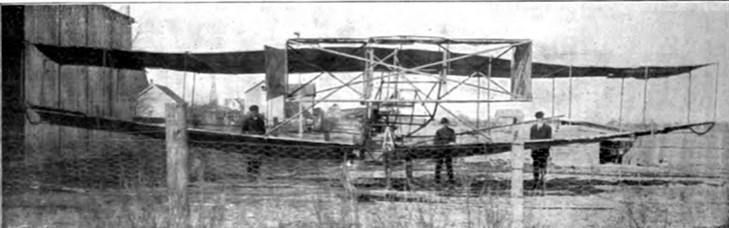
The second pusher biplane design built by the Herzog brothers of Harvard, Nebraska, USA, in 1909. It had a span of 48 ft, with a characteristic wavy W-shaped top wing and small horizontal stabilizing surfaces at the tips of the lower wings. The apparently tail-less plane had biplane elevators and rudders at the front, a three-wheel undercarriage and an aircooled engine of 21 hp of unknown make.
In response to a contest announced in Paris on a “flying bicycle” capable of at least 10m-long flight, Władysław Herzig from Poland designed and built such vehicle in 1913 which is said to make successful “jumps” of at least several meters.
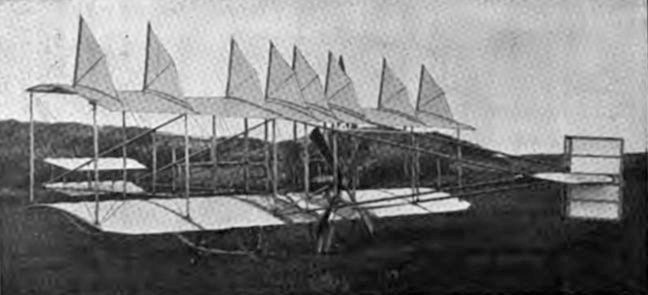
A pusher biplane with a central skid and skids under each wingtip, powered by a Curtiss 25 hp 4-cyl water-cooled engine with a four bladed propeller. Six vertical fins were arranged on the upper wing for lateral stability.
The machine was displayed at the Boston Aerial Exposition on 20-26 February, 1910.
It was first flown on 28 February 1910 by Augustus Herring on the ice at Chebacco Lake, Hamilton, MA.
It was ordered by the carousel and amusement park manufacturer Charles W. Parker of Abilene and Leavenworth Kansas. It was the first of many Burgess aeroplanes, it made the first flight in New England and was the first commercial aeroplane built and sold in New England.
 All Aero