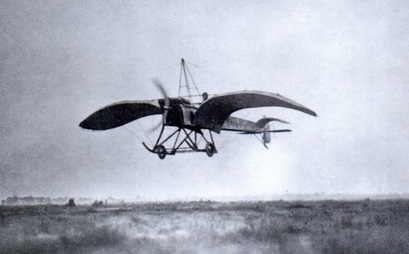
A more traditional design, the 1914 Huntington Clam was flown several times at the Hempstead Plains Airfield.
A more traditional design, the 1914 Huntington Clam was flown several times at the Hempstead Plains Airfield.
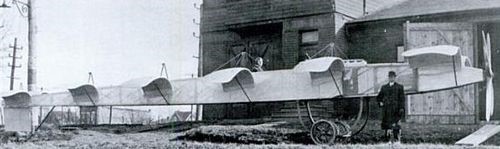
A multi-wing aeroplane designed and built by Howard Huntington sometime during 1912/1913. The photo shows Huntington in front of his house in Hollis, Queens, on January 22, 1914.
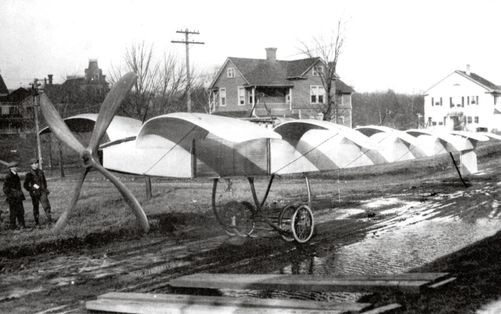
In June of 1914 Huntington constructed a single wing variant of his multiplane – the Huntington “Clam”.

A helicopter designed and built by A. E. Hunt of Kansas, identifiable by the two large drum-like constructions that were the rotors. Hunt, a blacksmith, appeared to have put most of his stock of pipe and angle iron into the machine, as it ended up weighing 3 tons. Since the rotors generated 400 pounds of lift, performance was somewhat below what he might have been hoping for.
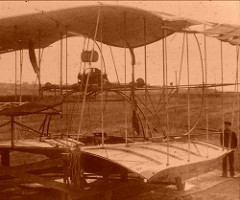
The Humphreys Biplane, aka the Humphreys Waterplane, aka the Wivenhoe Flyer was designed by Jack Humphreys, built by a firm of shipwrights called Forrestt and Co. and launched on the River Colne, which runs past Wivenhoe in Essex. It was tested in 1909, but the efforts to start up the engine caused the machine to rock so much that water entered the coracle-type hull – and the machine, with Humphreys on board, sank. Salvaged, further tests took place, but the craft was never able to exceed 12 knots, and never left the water.

The 1911 Humphrey No. 3 monoplane, built in the UK, flew with 3 people
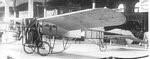
The 1910 Humber Lovelace type monoplane was designed by Capt.T.T. Lovelace, and built by Humber Ltd in the UK.
Span: 33′
Length: ¨26’6″
Weight: 500 lb
Speed: 50 mph
Price: £750
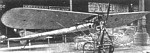
The 1910 Humber Le Blon Type monoplane was designed and built by Humber Ltd in the UK.
Span: 29′
Length: 26’8″
Weight: 490 lb
Price: £480
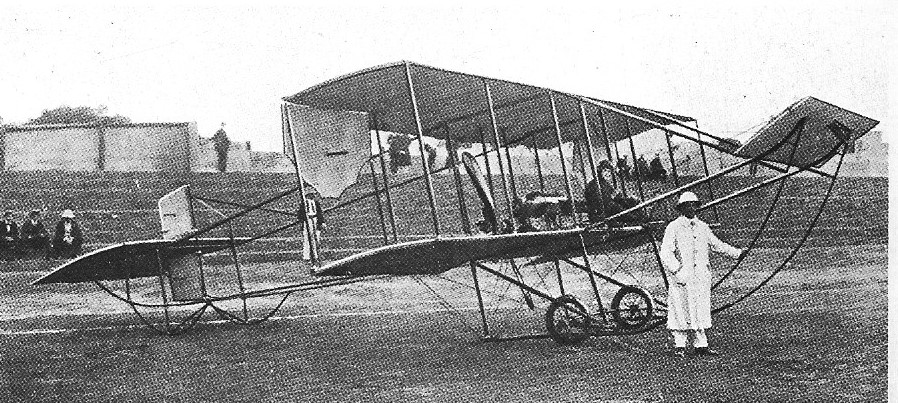
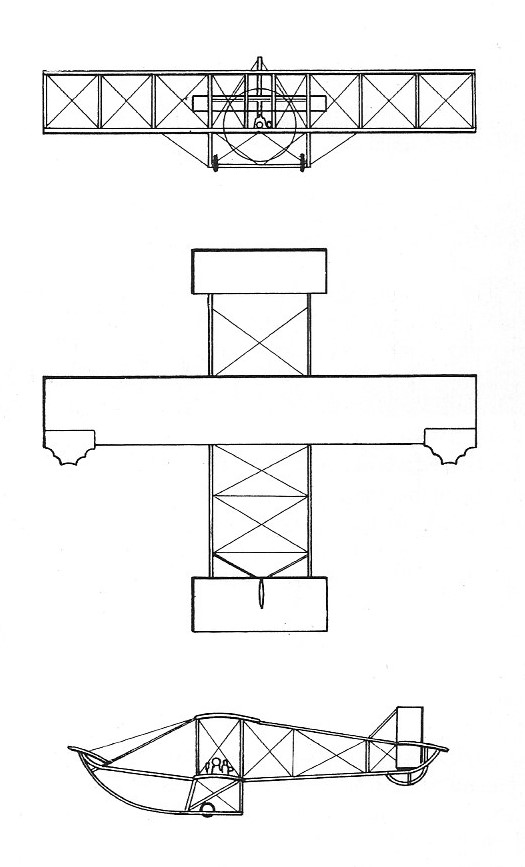
The fifth aircraft produced by Humber was a British version of a biplane designed by Frenchman Roger Sommer, and derived essentially from the Farman III of 1909.
Two Roger Sommer biplanes were completed towards the end of 1910. One of the latter carried the first official air mail in India. This event was part of the Universal Postal Exhibition held in Allahabad in India during February 1911. During the exposition, the French pilot Henri Pecquet, on February 18, flew across the Jumna river from Allahabad to Naini Junction, in all some 8km / 5 mi with 6500 letters. Four days later, a ‘regular’ service for the duration of the exhibition was opened by Pecquet and Captain Walter G Windham, the aircraft that they used again being the Humber-Sommer biplane.
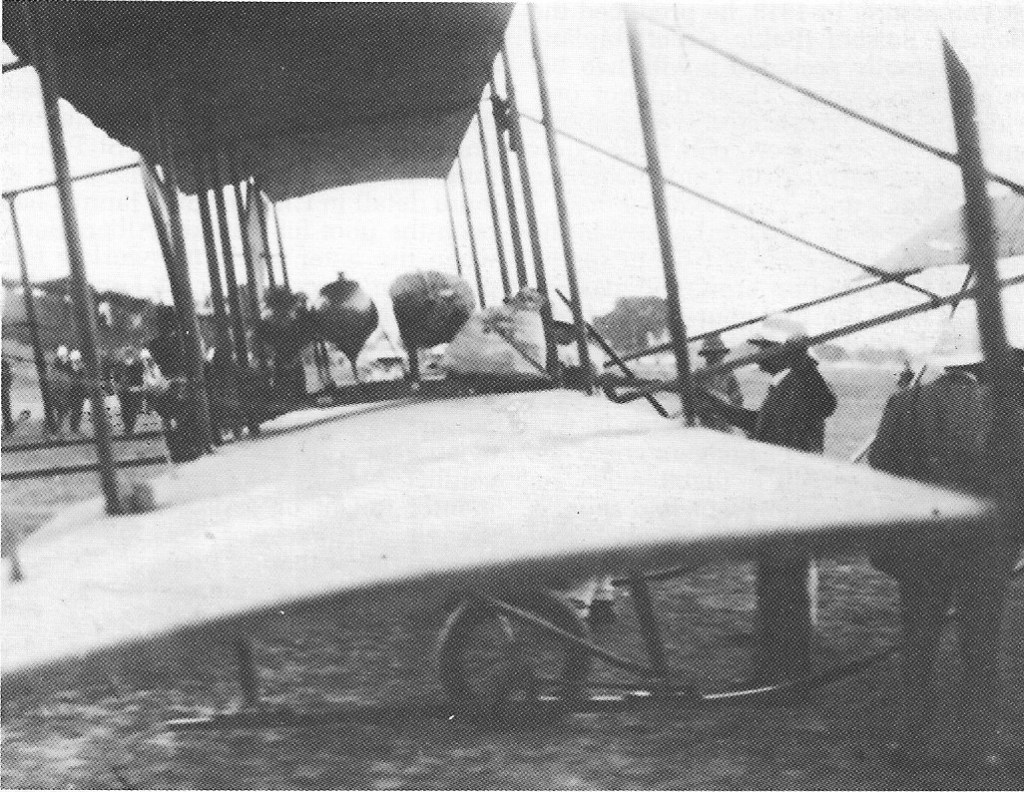
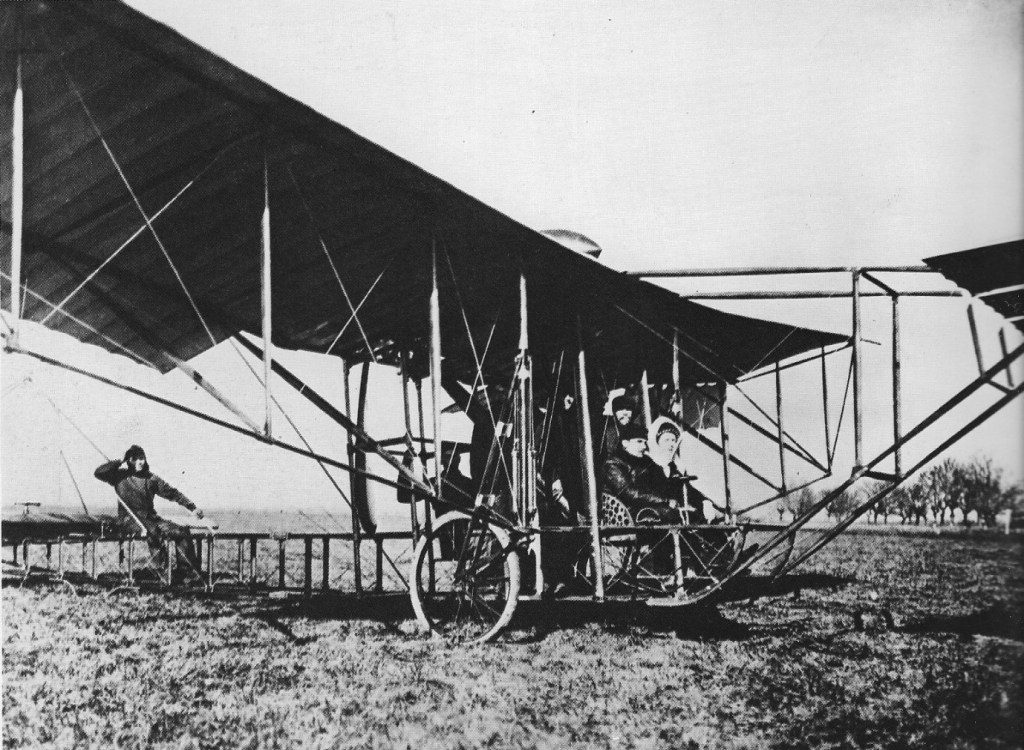
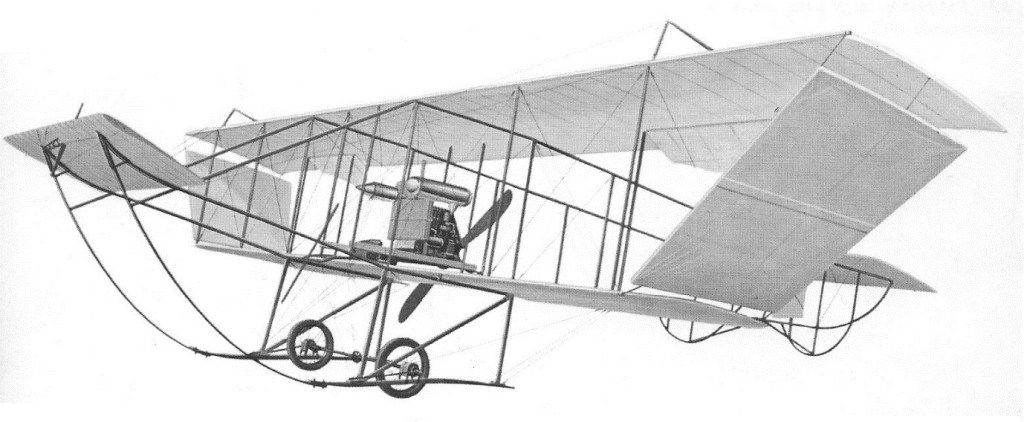
Engine: Humber 4-cyl, 50 hp
Wingspan: 13.92 m / 45 ft 8 in
Wing area: 47 sq.m / 505 sq.ft
Length: 12.19 m / 40 ft
Payload: 91 kg / 200 lb
Max speed: 56 kph / 35 mph
Seats: 2
At the 1910 Olympia Aero Show Humber exhibited a single-seat monoplane designed by aviator Hubert Le Blon. Powered by a three-cylinder Humber engine, it had variable-camber wings and a small diameter tapering wooden boom served as the fuselage.
Span top: 45′ 8″
Length: 40′
Weight: 820 lb
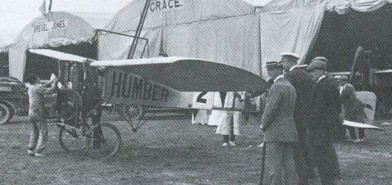
The Humber Motor Company Ltd. manufactured a British version of the Bleriot XI in 1910, known as the Humber- Bleriot Monoplane. Two further Bleriot modifications were built to the design of Captain T. T. Lovelace.

 All Aero