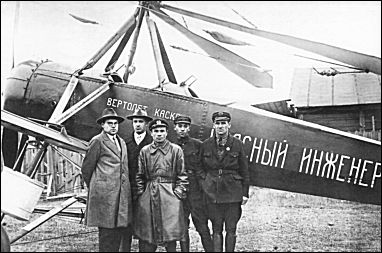
Designated from Kamov and N.K.Skrzhinskii, autogyro Krasnyi Inzhyener (Red Engineeer) was based on the Cierva C.8 using an Avro 504 (U-1) fuselage, landing gear and most of flight controls. The original rotor had four braced blades, and small wings were fitted. The first ground running test was 1 Sept 29. The rotor began to spin, but the control system proved ineffective and was subjected to major changes. The U-1 rudder was changed for a larger surface, then the torque of the engine/propeller almost overturned machine. This was rectified by hanging an 8kg weight under the right wingtip. Test pilot I.V.Mikheyev was unable to fly aircraft because of a lack of power. The KaSkr-1 was rebuilt as the KaSkr-2.
KASKR-1 Engine: 1 x M-2, 90kW / 100 hp Rotor diameter: 12m Fuselage length: 8.8m Max take-off weight: 950kg Empty weight: 750kg Max speed: 90km/h Operating ceiling: 15-25m Endurance: 1.5hr Crew: 1
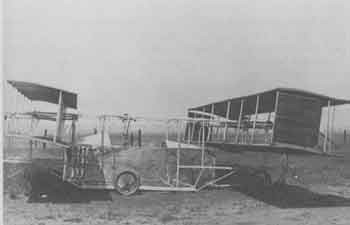
Dan Kaiser’s interesting tandem biplane, with tilting fore and aft biplane wing cells and a metal-covered fuselage enclosing aviator and engine, was tested at Cicero Flying Field, Chicago, in 1912.
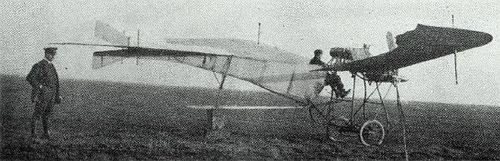
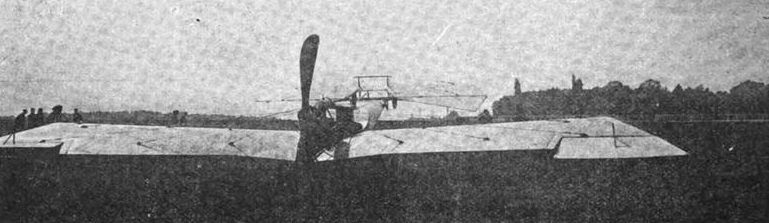
Thirteen meter span monoplane – with which two passengers could be carried beneath the pilot – built by Oswald Kahnt in Leipzig-Lindenthal. Kahnt was taught to fly by Hans Grade and opened the “1. Sächsische Fliegerschule” in Leipzig. Apart from some Grade machines, he built this monoplane during 1911. The power-plant used was initially a 45 hp Oerlikon; later a 70 hp Schröter inline engine was installed. With his “Falke”, Kahnt flew over the “Völkerschlachtdenkmal.” As head pilot at the Gothaer Waggonfabrik during the war, he was killed in a crash.
Conrad Kadlec and his partners August Helpertz and Gustav Schlößer of Düsseldorf-Holthausen were granted a patent for this “Flugmaschine mit Wendeflügelrädern” in 1910. Little more is known of the unlikely-looking machine with rotating and twisting wings on a transverse horizontal axle.
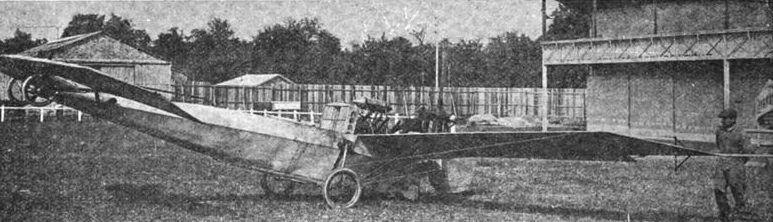
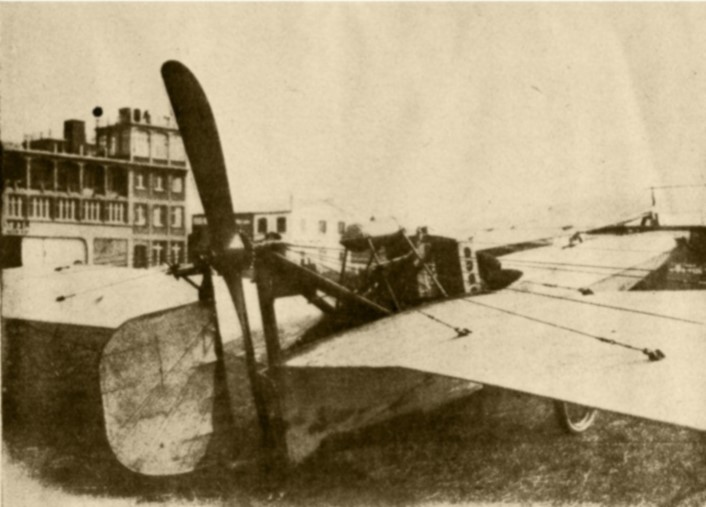
The Canard was a design of Pierre Juvigny which was in the list of about 56 enlisted competitors of the Concours de sécurité 1914 which was published on 17 January 1914. The Concours started in June 1914, but the Juvigny Canard was not ready for competition.
It is noted that the jury nevertheless inspected the incomplete machine (unable to compete) and inspected the variable incidence mechanism of the wing. Due to the weight of the engine and ancillary equipment the machine stood with the nose high when on the ground. There is no information that it took to the air and after the outbreak of the war in begin August 1914 experiments were presumably halted.
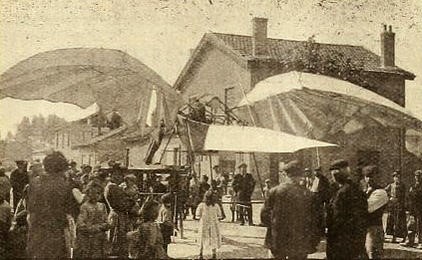
Thr Ornithopter of Jean-Baptiste Juge and Paul Rolland was designed and realized during 1907 through 1909. In a January 1909 magazine article written by Paul Rolland in “L’Aérophile” about the machine, Rolland begins with a plea to the editor of “L’Aérophile” for a more powerful engine (40 hp), as the one available had insufficient power. In the last paragraph he mentions that the first tests were made without any publicity given. Additionally, he states that the first wing flaps or “coups d’ailes” rather, “have given us every satisfaction.” Jean-Baptiste Juge had filed a French patent on September 28, 1907 (published November 28, 1908) for an “Aviateur”, which is remarkably similar to the finished model. That this patent has only Juge as inventor, gives the impression at least, that he was the driving intellectual force behind the design of the machine.
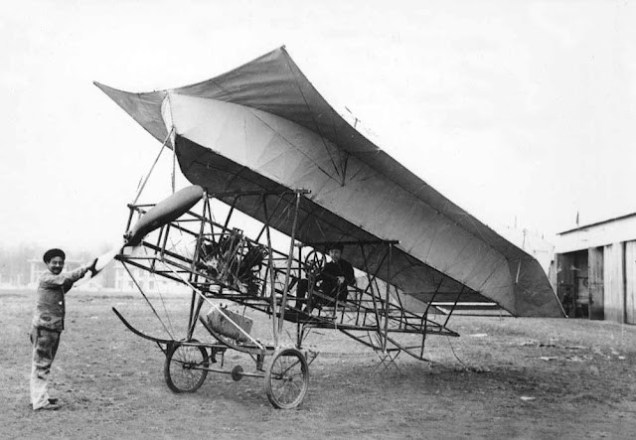
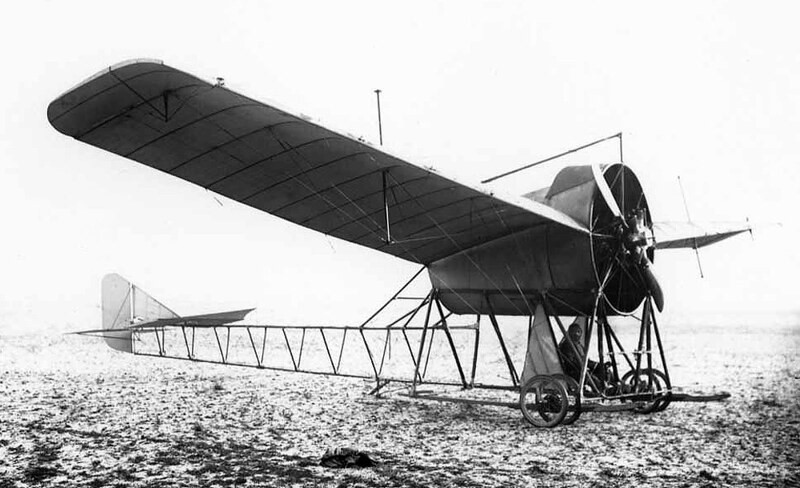
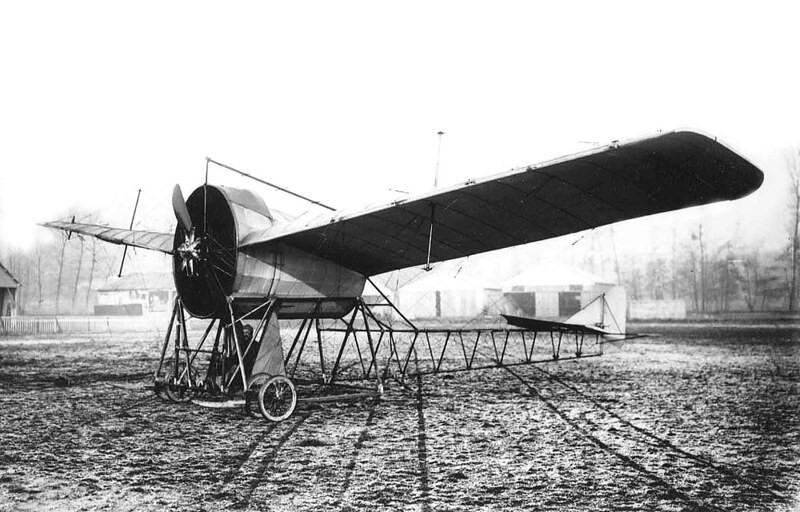
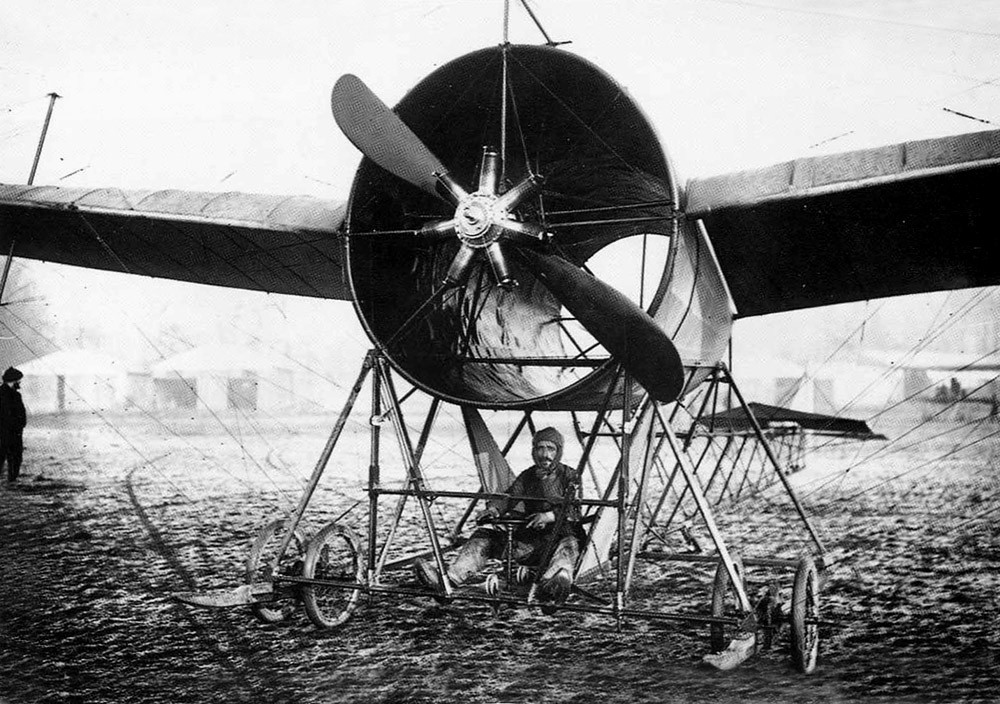
The Frenchman Jourdan tested during 1910-1912 at Juvisy (France) various versions of his aircraft in different forms. All his machines were characterized by a big central tube (‘conical barrel’). The engine with a tractor propeller was mounted before (or at first in) the barrel, to push air in the barrel. The idea might be to push the air through the barrel and fly. The machines had no model registration to differentiate them.
Possibly the Jourdan No.1 from Spring 1911 had a simple full rounded cone barrel in the front, then triangle elevator at the rear, and the wings have ailerons. The original machine giving the clearest view of the ideas of Jourdan. A very big barrel with the engine inside and propeller just as long as the diameter of the barrel. The shrouded propeller was patented December 30, 1910. Shoulder wings with wing warping. Machine did not fly after months of testing during 1910.
The Machine-2 of Spring 1911was a complete redesign, much smaller barrel, with the propeller before the barrel. Pilot could sit comfortably under the barrel seated within the massive undercarriage. This machine was (also) continually modified. At first it was fitted with wing warping, but after modification it was fitted with ailerons. As the machine was continuously modified there can be seen a sort of side board at the undercarriage, maybe to shield the pilot from the wind.
Machine was reported in the German press [Flugsport February 1911] and in the French press [L’Aérophile]. The machine was extensively tested, but no flight occurred.
The third machine of Spring 1912, was again a complete redesign. The full circle barrel was here replaced by a big half-barrel with a different undercarriage. The propeller was quite before the half barrel. Again, wing warping. The machine was again reported in the press [Flugsport March 1912] and it Flew. There is at least one picture of it (probably more) of the machine in flight.
A fourth version, which probably debuted in 1912, was a modification of the third, and notable mainly for the removal of the bottom half of the cylinder.
Etienne Jourdan died on July 15, 1912, leaving almost no trace of his ideas.



 All Aero