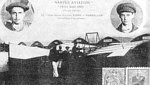
The 1910 Leroy et Marzollier monoplane was designed and built by Leroy and Marzollier in France.
The 1910 Leroy et Marzollier monoplane was designed and built by Leroy and Marzollier in France.
(1912) A two-row rotary, consisting of two seven-cylinder banks rotating round a single two-throw crankshaft.
(1913) An 11-cylinder rotary.
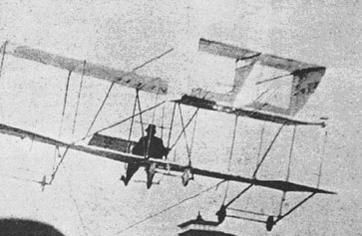
An earlier glider had been designed by Le Prieur based on a drawing from a French pamphlet. But when a test flight failed, Le Prieur turned to his friend Aibara for assistance, and Aibara brought in Tanakadate, an aviation pioneer in his own right, to help with the design.
The glider was developed by Yves Le Prieur, a military attache at the French Embassy in Tokyo, Lieutenant Shiro Aibara of the Japanese Navy, and Professor Aikitsu Tanakadate of Tokyo Imperial University’s School of Science, now the University’s Faculty of Science (at the time the University of Tokyo was named Tokyo Imperial University). Also known as the Aihara-Le Prieur, built by Japanese Lieutenant Shiro Aihara and French 2nd Lieutenant Le Prieur using bamboo for the structure.
The team first planned to use an automobile to pull the glider, but on the day of the trial the car broke down and didn’t make it to the test site. Instead they put a small boy aboard and a group of students pulled on the cable attached to the craft.
On the morning of December 5, 1909, a bamboo-framed and white cloth-covered glider was hauled onto the Daiichi Senior High School’s athletic field, Ueno Park, Toyko, today a part of the University of Tokyo’s Faculty of Agriculture on the Yayoi campus. A large number of students took hold of a rope attached to the glider, and then ran as fast as they could, pulling the glider behind them. Soon, spectators witnessed the craft, with a boy aboard, ascend slowly and fly at a height of 3.6 meters for a distance of some 15 meters before drifting down to a smooth landing. “
This was apparently the first, though unofficial, glider flight in Japan, and it represents the very beginning of airplane research.
In the subsequent December 9 test flight, piloted by Le Prieur himself, a car was used, which drove along a street near Shinobazu Pond, Tokyo, towing the glider. This was the first certified fixed-wing aircraft flight in Japan.
The 1909 Lepin triplane was designed and built by Lepin in France
In 1911 a biplane with an 18-foot wingspan was designed and built by Lennert in the USA.
Willie Lennert flew in his 18 ft. wing span Lennert Biplane (similar to a Demoiselle-type monoplane but with a second wing added below) powered by a Lennert 20 h.p. engine.
The first non-fatal accident at Cicero occurred in June 1911, to Willie Lennert while he was attempting to fly his small self-built Lennert Biplane.

Leo Lendner (Würzburg) built several flying machines in Germany during 1911-1913. This photograph was taken during a visit of k.u.k. military cadets at Würzburg in September 1912. It was sent as postcard to a girl of the family by that boy sitting in the 2nd cockpit – Max Graf von Tauffkirchen zu Guttenburg auf Ybm. Max was the lucky one to fly with Lendner on that machine, as he told.
The 1910 Lemaitre biplane was designed and built by Lemaitre in France.
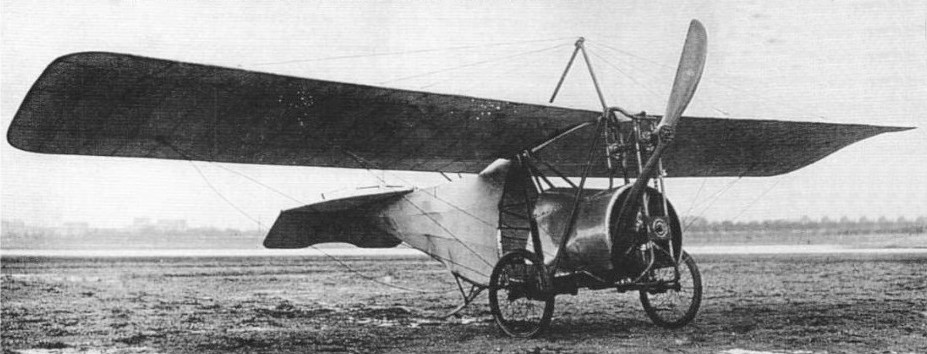
This stubby monoplane was designed by Lt Lelievre and built by Vendome in 1912 at Le Havre, France. The wing was mounted on the top of the short, covered fuselage, with the engine set almost at ground level, driving through a chain the tractor propeller that was mounted slightly forward of the leading edge. The pilot sat inside the fuselage under the wing, entering through one of the side doors.
It first flew on 18 July 1913, at Issy-les-Moulineaux. It was destroyed when it crashed in August during test flights, slightly injuring Lt Lelievre.
Engine: Gnome 50 hp
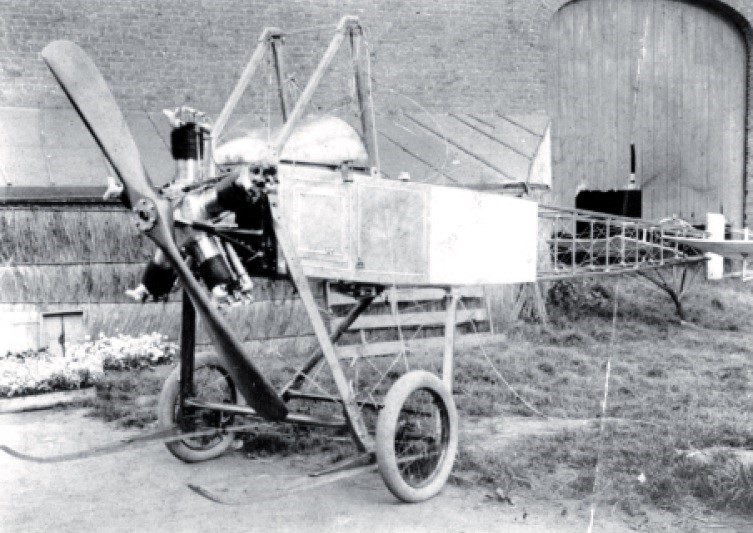
Arthur Leleu, carpenter and father of 18 children, designed and built this somewhat Deperdussin-inspired monoplane, which was powered by a five-cylinder Anzani. It was tested at the La Briquette field outside Valencienne, France, by a pilot by the name of Boutaric. The first flight, on 18 May 1913, was successful, but on the next day the pilot was disturbed by some cattle, landed on a marker stone and broke the wheel axle. That was apparently the last that was heard of the machine.
 All Aero