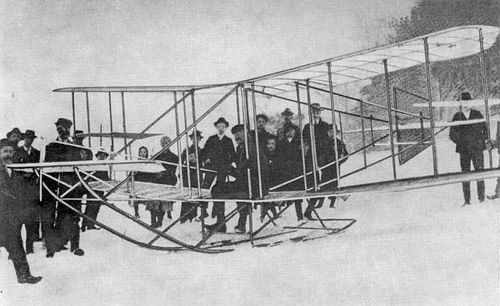
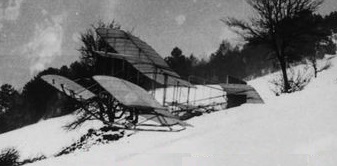
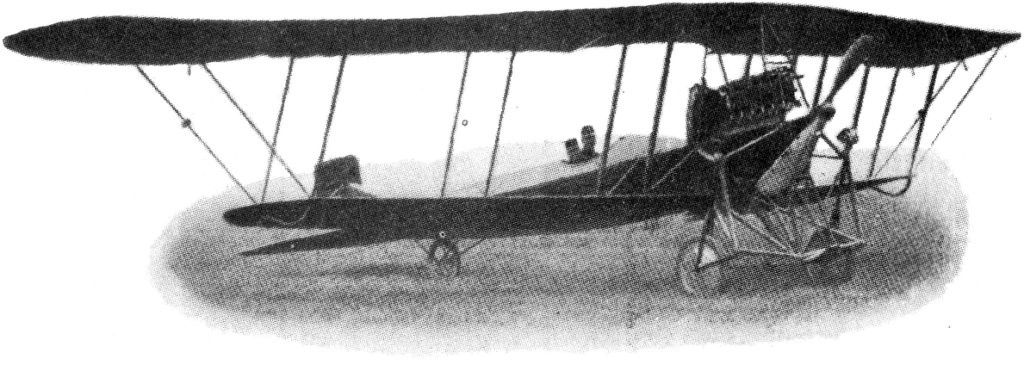
Lohner-Daimler Arrow

Lohner-Daimler was formed in 1911, producing Arrow biplanes. One sold to Austro-Hungarian Army late 1911.

In 1912 made a world’s altitude with passenger record at 4,530 metres (14,862 feet).

Four were built during 1912.

1911
Engine: Aust. Daimler, 60 hp
Speed: 50 mph / 80 kph

1912-13 Pfeilflieger
Engine: Aust. Daimler, 125 hp
Span: 44 ft 3 in / 13.50 m
Length: 32 ft / 9.70 m
Wing area: 450 sq.ft / 42 m²
Total weight: 926 lb / 420 kg
Speed: 62 mph / 100 kph

Lohner No.1 / No.2

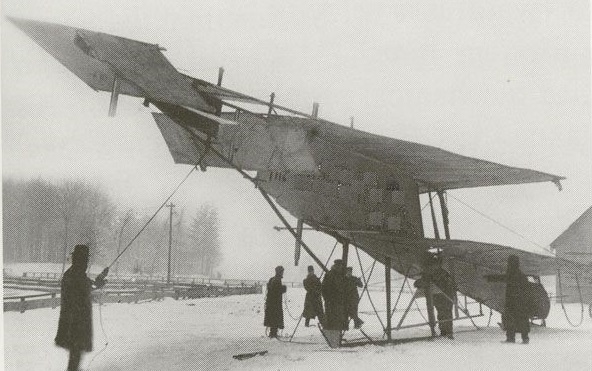
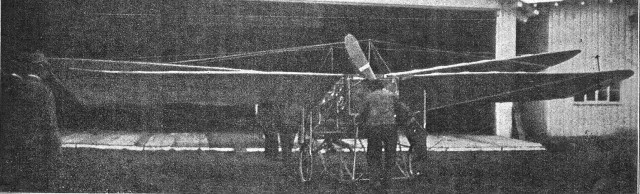
Canadian aircraft designed and constructed by George Lohner, a recently-emigrated German who had arrived in Ottawa, Ontario, during the summer of 1909. Completed and tried unsuccessfully in early 1910, the No.1 was soon followed by the Lohner No.2 – a similar machine that “flew” under tow on July 21, 1910 – after which little else was heard of George Lohner.

Loew Tandem-Eindecker / E.1

This long-lived machine went through an unusual series of modifications. It was built by the Kieler Maschinenfabik Mordhorst, Germany, in 1908 as a “Dreiflächner”, with three wings in tandem, for Otto Fritzsche, but Fritsche was killed in a car accident before a meeting in Kiel where he wanted to compete. Carl Loew took over the machine in 1909 and the Rumpler workshops removed one of the wings pairs and installed an Aeolus engine, but he still couldn’t get the craft in the air. After yet another another rebuild it looked more like a normal Taube monoplane and was equipped with a Daimler engine. In this configuration it flew in 1911, piloted by Loew. After a successful flight over the Baltic from Sonderburg in Nordschleswig (now Sønderborg, Denmark) to Kiel he donated the machine to the Kaiserliche Marine, who equipped it with floats and named it E.1. The E.1 survived until the beginning of 1914, when it was destroyed in a crash in Tsingtao, China.

Loening Aeronautical Engineering Company

Grover C. Loening built a monoplane flying-boat in 1911. Formed company in 1918, and built his first Air Yacht (based on prewar design). A two-seat monoplane fighter with very advanced features was ordered by the Government, but contract for 2,000 canceled at war’s end. Produced very popular line of single-float, biplane flying-boats based on Air Yacht for civil and naval use.
In 1920, Grumman joined the Loenings as test pilot for their famous Air Yacht amphibians, and over the next several years, he took over full responsibility for the company’s aircraft design.
The Loenings sold out their company in 1929 and backed Grumman in a venture of his own.
Merged with Keystone Aircraft Corporation in 1928. Built monoplane and biplane pursuits for the Army. After takeover by Keystone, Loening set up the Grover-Loening Aircraft Company at Garden City, New York, as consultant, and built small amphibian flying-boat XS2L for U.S. Navy in 1931. Delivered XSL-2 experimental submarine-borne version in 1933.

Lock & Robbins 1910 4-cyl

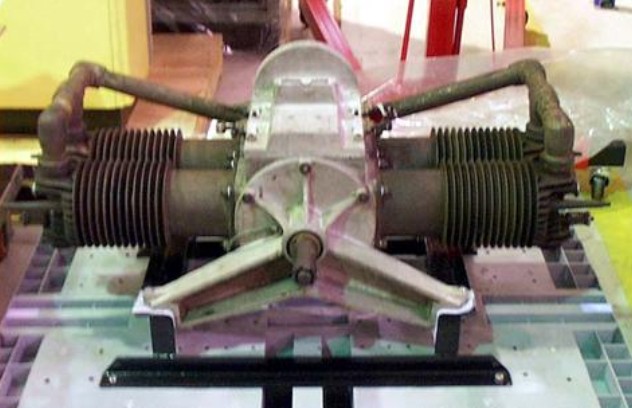
This four-cylinder, horizontally-opposed engine is one of the earliest aero engines to be built in Australia. It was designed and built by two young motor mechanics, Azor D. Robbins and Aubrey Keith Lock. Robbins was employed at Dalgetys Garage in Bourke Street, Melbourne while Lock was an apprentice with Herbert Thomson’s Steam Car Company in Armadale. They had been approached to build a 50 horsepower (37 kW) aero engine by Lawrence Marshall, a Melbourne inventor who was building a biplane to compete for a Commonwealth government prize of £5,000 for a military aeroplane. Lock and Robbins worked on the engine part-time in Richmond and subsequently at the Dalgety’s engineering shop in Melbourne. A total of forty cylinders were believed to have been cast by an outside foundry from which the four best were selected. Despite this, the cylinders fractured during a bench test and Marshall refused to pay for the engine as it did not deliver the promised 50 horsepower.

It was later repaired by Lock and acquired by Azor Robbins and a business partner Alex Porter, who had built a Bleriot-type monoplane in Albury, New South Wales. Robbins and Porter had moved to Albury from Melbourne in 1911 opening their own automotive business at 532 Kiewa Street. The engine was reported to have been displayed at the 1912 Albury Show. Their aircraft is believed to have made several short flights in July 1913. The aircraft was subsequently sold to Blacklock’s Garage in Dean Street Albury where it was later destroyed in a fire. The engine was salvaged by Aubrey Lock who kept it at his Melbourne house until his death in 1966. It was donated to the Museum of Victoria in Melbourne, Australia, in pieces in 1978 by Donald Shanks. Since then it has been reassembled and conserved to retain as much of the original finish and components as possible.

Height: 420 mm
Width: 1040 mm
Weight: 80.5 kg