Germany
Based at Johannisthal, Berlin; one of the largest German aircraft companies during First World War. Built Farmans under license, its own first design being the B.1 of 1913. An efficient aircraft remaining in service for observation and training for some years, it was the forerunner of all German two-seat observation aircraft of 1914-1918. Developed lengthy series, including very popular C.V and C.VI as well as prototype fighters and bombers. Converted several postwar for service with civil airlines.
Pioneers
Ludlow Aeroplane No.12
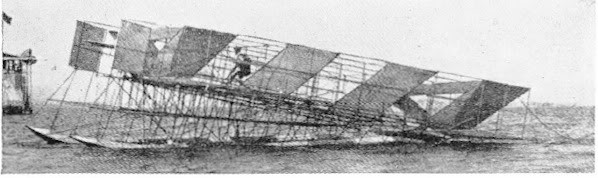
Israel Ludlow’s Jamestown Exposition Glider on floats during its unsuccessful trials on Hampton Roads, piloted by the aeronaut Capt. T. T. Lovelace and towed by the tug Potomac on August 21, 1907.
Lovington 1910 hydroaeroplane
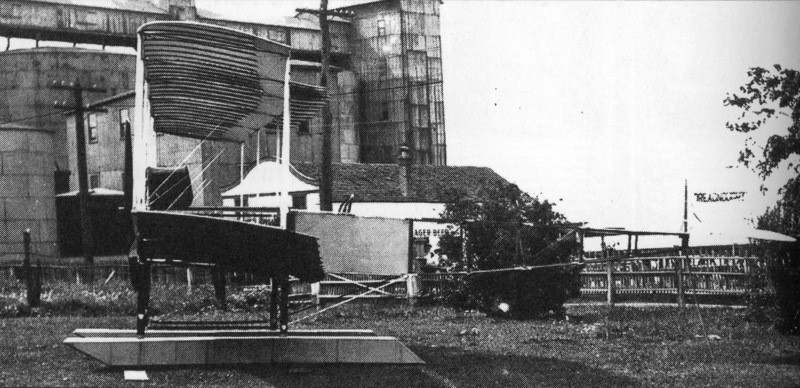
Built by the Lovington brothers Ted, Joseph, Leon and Joe, on Staren Island, NY., USA.
No information on its success.
Lowe Intrepid
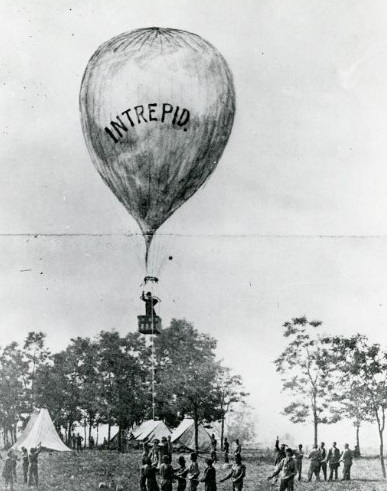
Thaddeus Lowe’s balloon test of the “Intrepid” May 31, 1862, at the battle of Fair Oaks, Virginia, during the Peninsular Campaign, May-August 1862. Lowe’s balloon was used for reconnaissance for the Union Army during the Civil War. Using a telegraph the driver could send a message about Confederate camps and troop movements to soldiers below who then gave the information to Union generals. The test was supported by Smithsonian Institution Secretary Joseph Henry, who served as President Abraham Lincoln’s scientific advisor during the war.
Loubery 1911 biplane
The 1911 Loubery biplane designed and built by Loubery in France had twin engines and three propellers.
López Jalisco

Designed, patented, built and flown in 1909 by Mexican aviation pioneer José Guadalupe Mejía López. During its first test on the plains of the Rosary in the city of Guadalajara, the aeroplane was pulled with a rope by an automobile and rose 4 meters before it collided with a cactus, although suffering only minor damage. López subsequently received a German-made engine of 35 hp and flew the machine a distance of 800 meters at a height of 2.5 meters, thus becoming the first Mexican to build and fly his own aircraft.

Loose 1911 pusher biplane
The 1911 pusher biplane built by Loose in USA was deliberately crashed in an exhibition flight to avoid running into the crowd.
Loose Monoplane

A 1909 monoplane designed by George H. Loose of Redwood City, California. Instantly recognizable due to the peculiar curved wing design, The twin tractor propellers were designed to blow under arched, birdlike wings.
Span: 31’8″ (later 26′)
Length: 20’6″
Longren 1911 Biplane
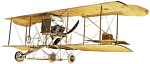
The 1911 Longren biplane was designed and built by Longren Brothers in the USA.
Span: 26′
Top Speed: 60 mph
Long 1911 Monoplane
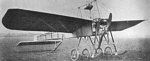
The Long Monoplane was designed by J. B. D. Long and was built by R.Beney Co during 1911. A tractor single-seater, it was powered by the four-cylinder 35 h.p. Lascelles semi-radial engine, and was tested at the Acton Aviation Grounds, UK.
 All Aero