Built an aircraft in 1910.
Pioneers
Makowiecki, Karol
Karol Makowiecki was a landowner living in Odessa and an aviation enthusiast, who has made a balloon already in 1906 and in 1911 he made a copy of Farman biplane in 1912 and later established a factory of aircraft equipment where – besides the main production – two more “Farman-like” aircraft were made.
Maire & Perrin 1909 Biplane
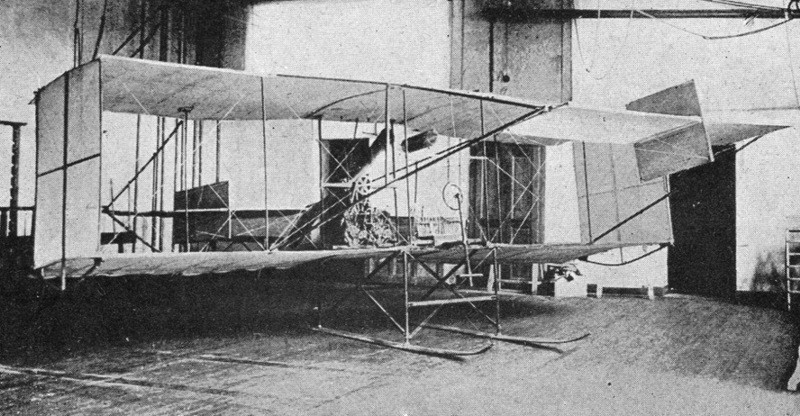
Mr. Maire and Mr. Perrin built in 1909 a biplane in Lausanne (Switzerland) powered by a 20 hp engine driving a pusher propeller. As the tests were to be performed on the snowy fields of Lausanne, skis were mounted as an undercarriage. There is no information about the flying capabilities of the machine.
Mair 1910 Wright Flier
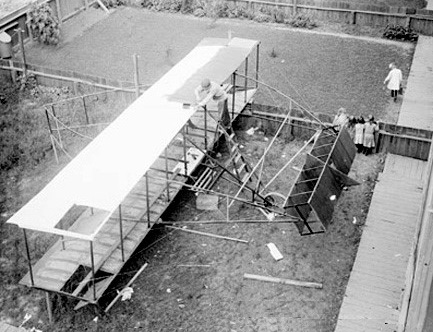
In 1910 J E Mair built a single seat copy of a Wright Flier in his back yard, but there is no record of it flying or if it even left the back yard.
Mair, J E
J E Mair
3106 W Fullerton Ave
Chicago IL.
USA
Circa 1910 built a Wright Flyer copy.
Mainz 1911 Doppeldecker
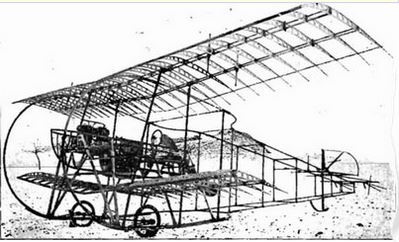
The Mainz Motor School airplane, known as the “One and a Half Decker” was built at the German Motor School at Mainz, Germany. The upper wing of this two-decker had 10 m span, the lower deck 7 m. The 50 hp Argus engine was placed in the front of the fuselage and drove the pusher propeller by means of a transmission. In the gondola-like cockpit there was space for the pilot and two passengers. Radiators were fixed on both sides of the fuselage.
Mainguet La Dorade / Sea-bream
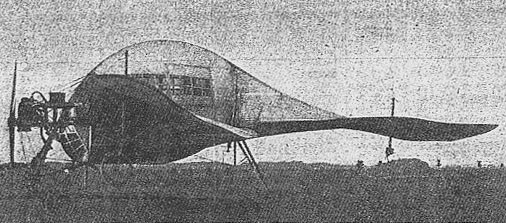
The Henri Mainguet La Dorade / Sea-bream of 1910 was intended to hold ten passengers in an enclosed cabin. Distinctive for its bulbous fuselage and lack of a stabilizing vertical tail fin, the pilot was seated outside, at the nose of the all-covered fuselage, the engine set out above him.
The passengers sat in the enclosed cabin with mica windows which made up the bulk of the streamlined guppy fuselage; aft, it tapered down to a long sweeping horizontal tail. No vertical surface appears to have been fitted. The oval somewhat drooping wings were mounted at a very high angle of attack, and had wheels set below the tips; the whole machine was resting on a long skid with two trailing wheels forward and one under the rear of the cabin. The engine seems to have been a 40 hp 3-cylinder Anzani. With a higher-powered engine, Mainguet at first succeeded at first only in running into the trees, and later in some prolonged hops.
Henri Mainguet built this tractor monoplane, in 1910 at Chartres: it appeared for the first time on 21 May.
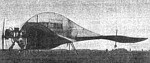
It flew but without passengers.
Maillot Kite
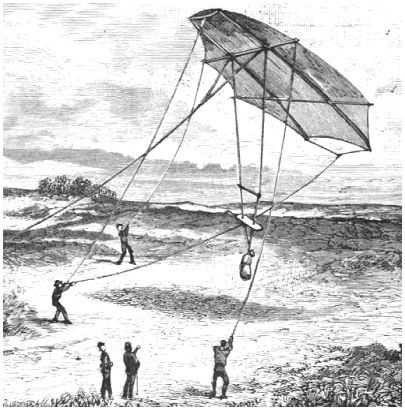
Marcel Maillot (1886-1887) of France got the attention of spectators and newspapers alike with the flight of his very large kite that was designed to lift payloads as a test for lifting a person. Accompanied by a ground crew of four manipulating the kite lines, Maillot succeeded in having the kite lift a bag of earth weighing 150 lbs (68 kilograms) in 1886. The Maillot kite sail area was 85 square yards. The frame alone weighed 150 pounds and the canvas sail and cords weighed 99 pounds according to the article.
Magnuson, Emil
North Dakota
USA
Emil Magnuson was an early constructor of propellers for aircraft and farm wind machines, reported to have built an airplane of some sort, as well.
Magnan Zézé 1
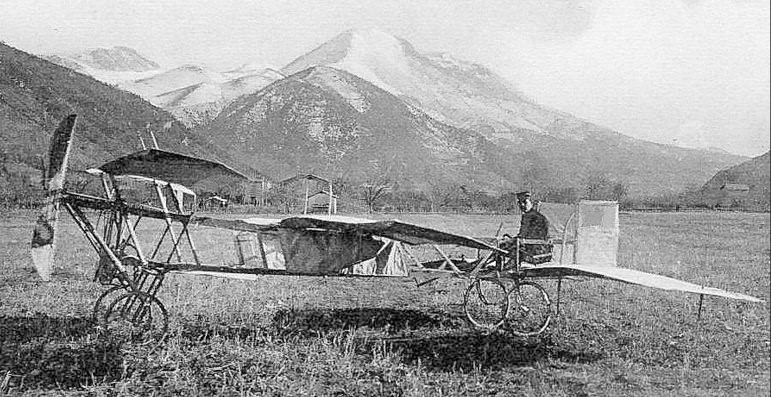
Little is known about the “Zézé 1” tandem wing monoplane, which was tested at Pont des Arches, near Dignes, Haute Provence, France, probably in 1910.

 All Aero