
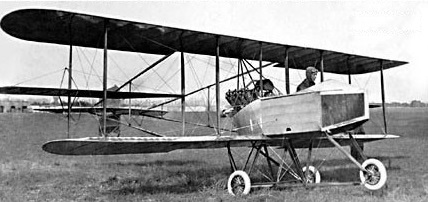
The 1911 Martin-Handasyde No. 4B was designed and built by Helmuth P. Martin and George H. Handasyde in the UK.
Span: 37′
Length: 33′
Weight: 800 lb
Speed: 60 mph
Price: £ 1100
The 1911 Martin-Handasyde No. 4B was designed and built by Helmuth P. Martin and George H. Handasyde in the UK.
Span: 37′
Length: 33′
Weight: 800 lb
Speed: 60 mph
Price: £ 1100
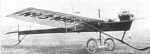
The 1910 Martin-Handasyde No. 3 was designed and built by Helmuth P. Martin and George H. Handasyde in the UK.
Span: 32′
Length: 28′
Weight: 560 lb
Based at Woking, Surrey, with premises at Brooklands, the partnership of H. P. Martin and G. H. Handasyde built series of monoplanes from 1908 to 1914. Martinsyde Ltd. was registered in 1915 and undertook subcontract production of RAF B.E.2c and S.E.5A.
The first original wartime design was S.1 single-seat scout, built October 1914. The G.100, a large single-seat fighter with Beardmore engine, appeared in late 1915. Later examples with more powerful Beardmore engine were designated G.102; both known colloquially as Elephant, derived from their size.
Six prototypes of the F.3 fighter were ordered in 1917, and developed into the F.4 Buzzard which was ordered in quantity although only 52 had been delivered by Armistice in 1918. Some civil use in developed forms, some sold to overseas air forces.
The company went into liquidation 1921.
With the liquidation of the Martinsyde company in February 1924, and the acquisition of its stores, stocks and goodwill by the Aircraft Disposal Company (A.D.C.), the latter continued development of the Buzzard (see Aircraft Disposal Company A.D.C.1).
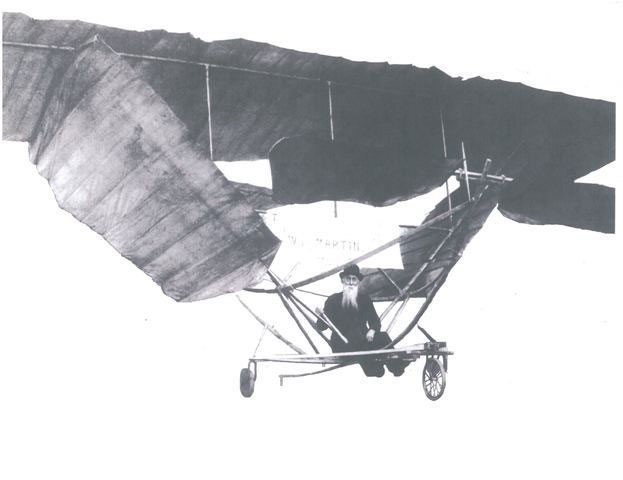
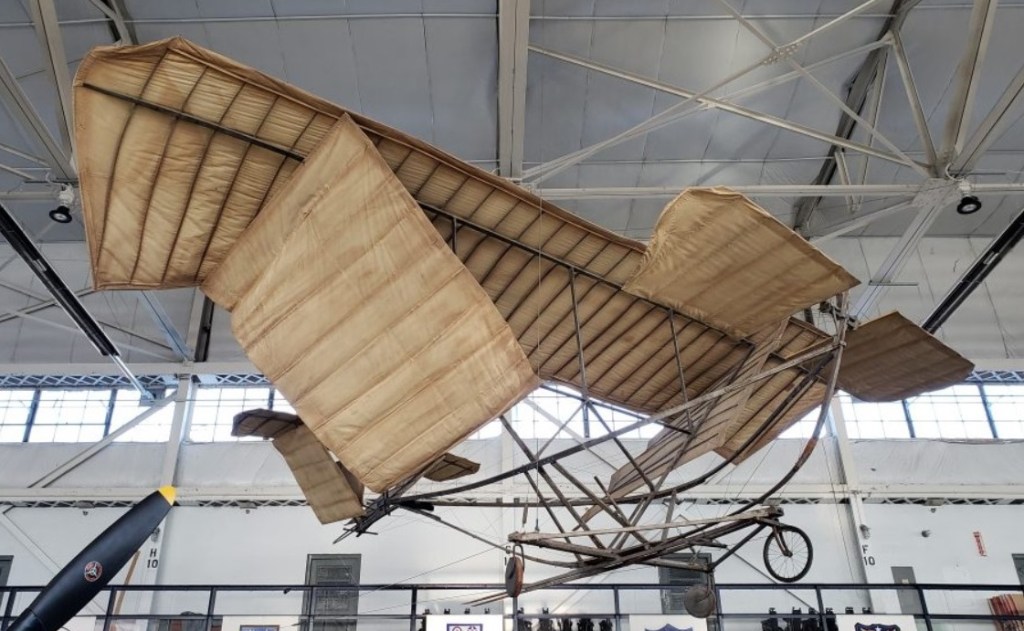
This monoplane was the first of its type in the world, and made many successful flights when towed by a horse or a Ford car. The inventor knew his aerodynamics, and his plane embodied principles of safety that have been generally adopted in plane construction.
On January 12, 1909, snow covered the fields back of the Martin farm, Canton, Ohio, and the device was hauled out and taken to the top of a hill. Old Billy, the farm horse, was hitched to the front of the plane by a long rope. Mr. Martin took his seat in the plane, son George whistled to Billy. The horse started down the hill pulling the plane behind him. It rose from the ground, reached a height of 25 feet and traveled 200 feet before the horse slackened its pace and the plane settled gently back to earth.
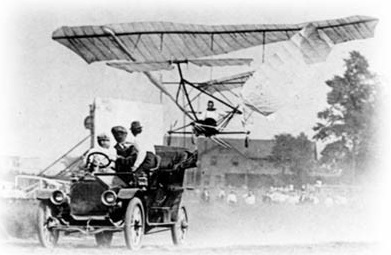
Mrs. Martin then took her seat in the plane and made several successful flights, being the first woman ever to fly in a heavier than air machine. Another son, Charles C. Martin, also went up and said that it came down like a feather. When he shut his eyes, he didn’t know when it struck snow.
Mr. Martin’s experiments had been kept secret, but the trial flights could not be hidden. Neighbors flocked to the field to see for the first time in their lives a human being sustained in the air by a heavier than air machine. Cousin Glenn L. Martin had not yet built the first plane in California.
A photographer came out to take pictures of the flights but became so excited that he failed to operate his photographic apparatus properly and all the plates were ruined!
During successive days more than 100 flights were made. All the members of the family, including the pet dog enjoyed the novel experience. One day one of the sled runners struck a bare spot on the ground and swerved the plane against a fence, damaging it slightly. The flights were suspended for a time.
William H. Martin had his eye on more than the local scene and wanted to get his plane demonstrated in the East, but was handicapped by lack of funds. William A. Hoberdier, who, with his brother, L.A. Hoberdier operated Lyric Amusement Co. of Canton, is credited with having helped finance trips to New York in the Spring of 1909.
Another milestone was established September 21, 1909, when Mr. Martin’s eight-year-old granddaughter, Blanche Martin, made several solo flights in the machine, thus demonstrating its safety. Her hops were 75 feet in length, and it was the first time a child of such age had ever taken to the air in a “heavier than air” machine.
Mr. Martin sought to obtain a motor for his plane and wrote to F.S. Lahm, noted Canton balloonist, then living in Paris. In a letter from Paris, dated March 15, 1909, Mr. Lahm told him that the only successful motor then on the market was exorbitantly priced and advised that a smaller one was to be produced soon. Some used motors were obtainable, but were unreliable.
Twenty years after the plane was built, patented and successfully flown, Mr. Martin offered it to the Smithsonian Institution. After long and careful investigation the Smithsonian institution accepted it as being the first plane of its type, and put it on display next to Lindbergh’s “Spirit of St. Louis.”
In 1936 Dennis R. Smith, when returning from a marble tournament, stopped in at the Smithsonian Institution and saw the Martin plane on display beside Lindbergh’s Spirit of St. Louis.
When he returned to Canton he met William H. Martin on the street and reported seeing his plane at the Smithsonian. Mr. Martin, then an old man of 81, with long white whiskers, and gentle and quiet spoken in manner, had the happiest moment of his life when he knew that his contributions to air pioneering had been memorialized by the preservation of his machine. His patent had run out in 1926, and he took additional satisfaction in knowing that the invention which he had patented was free for the use of all mankind.
When Harry Renkert organized the Canton Aviation Co. in 1938, and acquired the land for the airport, he named it Martin Field in honor of William H. Martin, whose farm adjoined the field.
The McKinley Presidential Library & Museum has graciously put the Martin Glider on indefinite loan to MAPS Air Museum as of February 16, 2002.

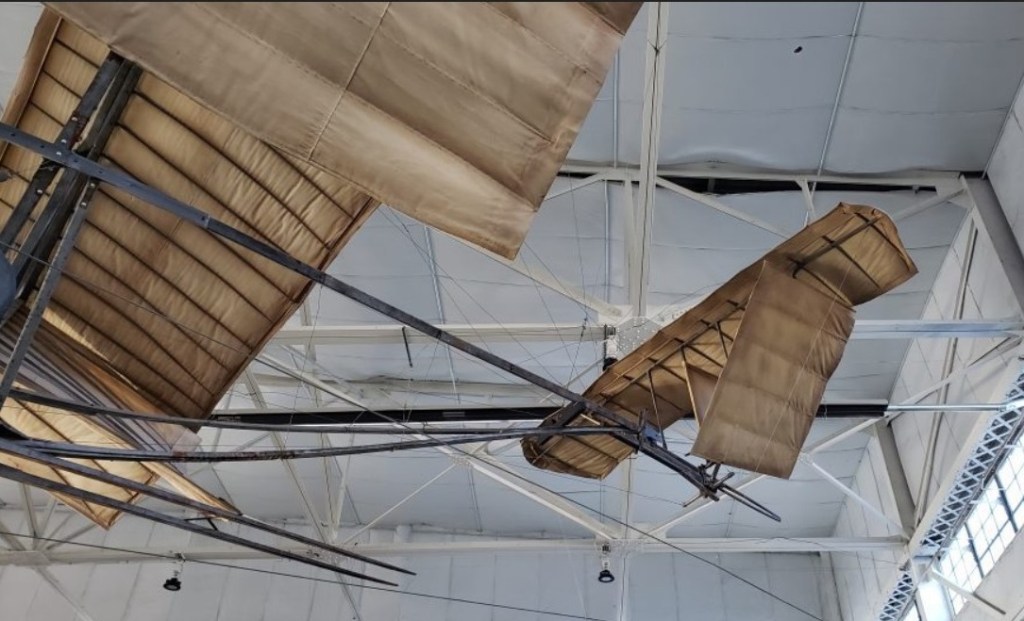
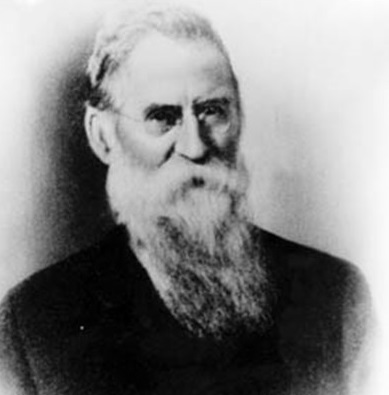
William H. Martin of Canton, Ohio, died in March, 1937. Mr. Martin’s funeral had to be postponed, as international travelers wished to pay their respects to this gentleman who had the courage to stay with his convictions…
William H. Martin’s funeral caravan stretched for five miles…
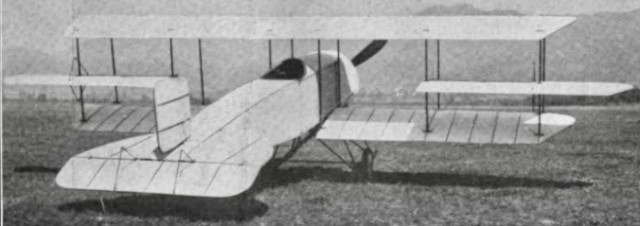
A single-seat biplane with a 90 hp Gnôme rotary engine. It was built for daredevil pilot Lincoln Beachey, but he rejected it on the grounds that it lacked necessary performance.
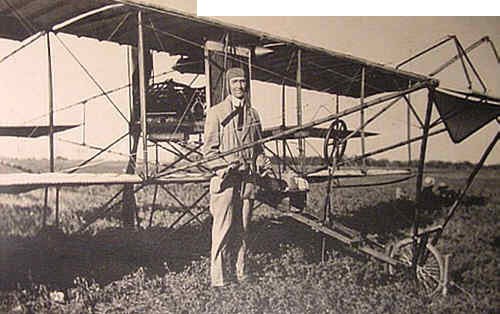
In 1910 Glenn L. Martin built another biplane machine with a slightly larger upper wing, interplane ailerons, a triangular stabilizer at the front rudder and a 50 hp Hall-Scott engine with which he set a few flight records of distance, duration and altitude in 1910 with flights from Newport-Beach to Catalina Island.
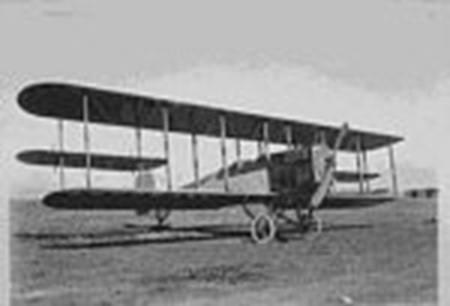
In 1913, Martin won an army contract to produce training aircraft and developed the famed Martin Model TT a tractor biplane with an enclosed fuselage and dual controls, much advanced for its time.
With increasing capital at his disposal, Martin moved to Cleveland. The Glenn L. Martin Company was on its way.
Span: 38’8″
Length: 24′
Seats: 2
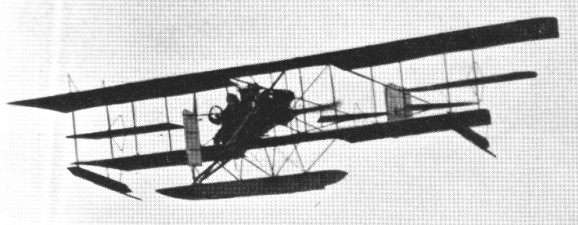
In 1905, young Martin founded an automobile repair shop. Like many other early aero pioneers, he used the profits from this practical endeavour to support his addiction to the airplane. In 1908, he rented an abandoned Methodist church in Santa Ana, California and built a pusher biplane powered by a Ford engine with which he taught himself to fly. In August 1909 Glenn L. Martin flew the Curtiss-type plane at Santa Ana, California. One year and $3,000 later, this budding high priest of aviation became the first to fly in California. Glenn continued flying, making fund raising exhibition hops.
Span: 40’3″
Length: 38’2″
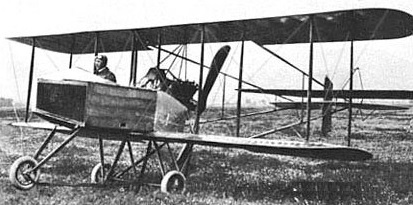
In 1905, young Martin founded an automobile repair shop. Like many other early aero pioneers, he used the profits from this practical endeavour to support his addiction to the airplane. In 1908, he rented an abandoned Methodist church in Santa Ana, California and built a pusher biplane.
The two place Pusher was powered by a 60-100hp Hall-Scott and featured tricycle gear and twin tail booms. Cost was $5,000.
 All Aero