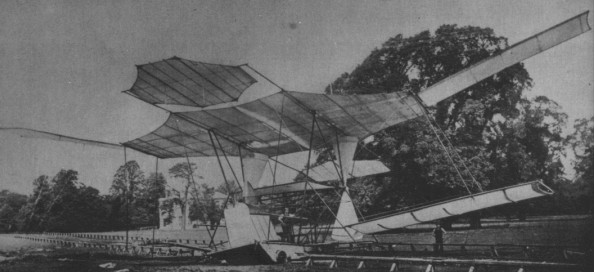
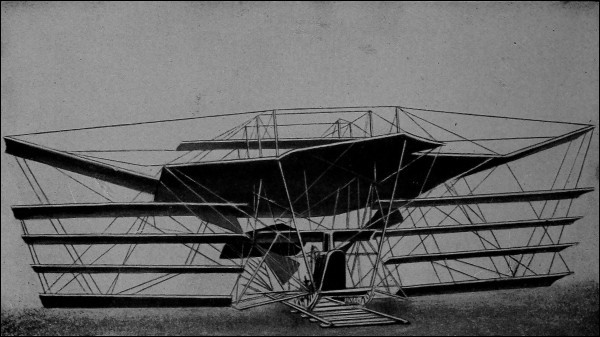
Sir Hiram Stevens Maxim (1840 1916) began building this huge aeroplane in 1891, describing it as ‘a flying machine that would lift itself from the ground’; he did not intend it to fly in the true sense. When tested in 1894, it ran along a railway track until, at a speed slightly above 42 mph (68 km/h), the wheels lifted clear of the track, fouled the guard rails placed to prevent a complete take off, and the machine had to be brought to a halt. Maxim did not pursue its development further.
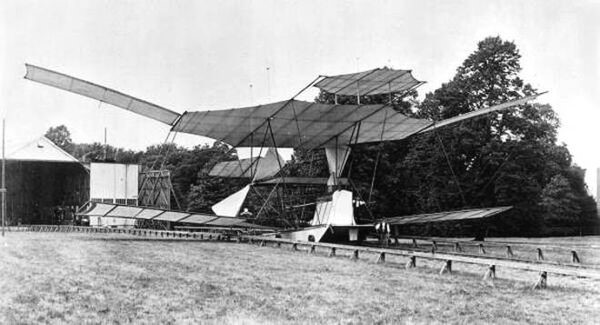
Powered: Two 180 hp Maxim steam engines
Props: 2 x 17 ft 10 in (5.44 m) diameter two blade pusher
Wing span: 104 ft 0 in (31.70 m)
Wing/elevator area (total): 4,000 sq ft (371.6 sq.m)
Length: approx 95 ft 0 in (28.96 m)
Gross weight: 8,000 lb (3,629 kg)
Accommodation: Crew of 4
 All Aero