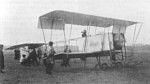
Designed by A. C. Beech for the National Aeroplane Co. of Chicago in 1912, the two-place open cockpit biplane was apparently based on the French Farman design. Fitted with dual controls, it was used by NAC School for flight training.
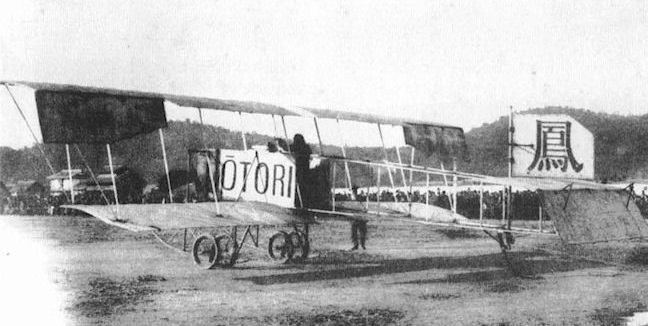
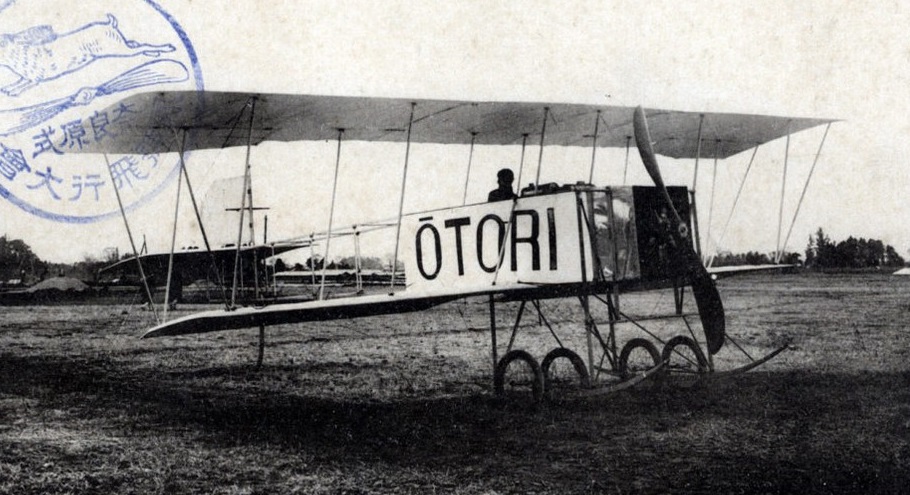
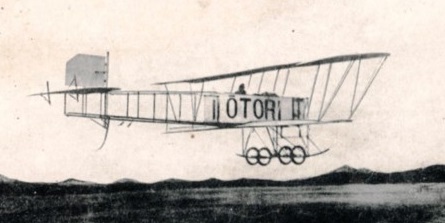
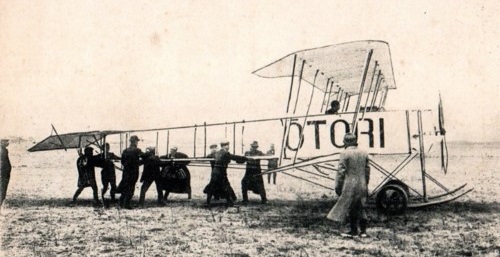
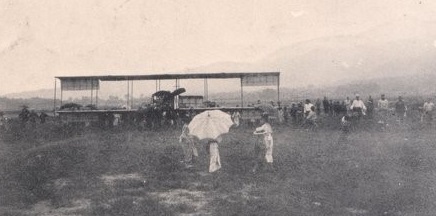
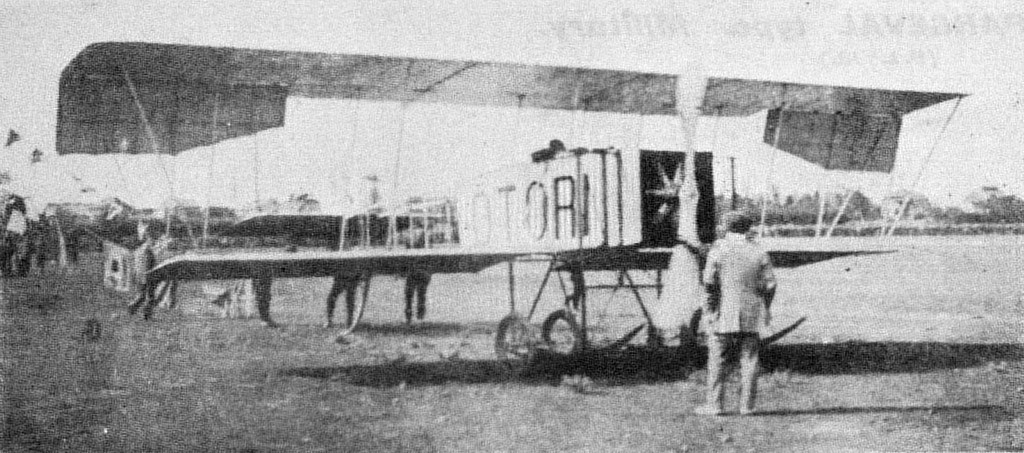
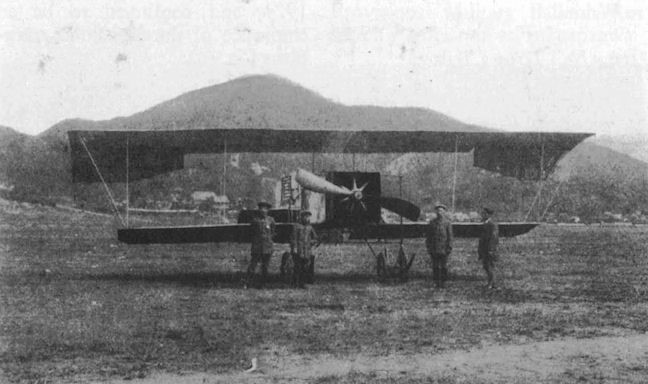
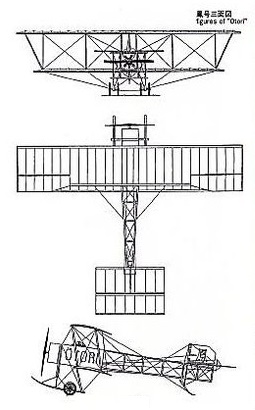
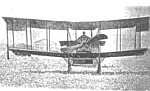
While the Narahara No.4 Ohtori-go was touring Japan with demonstration flights by Shimo, the Narahara No.5 Ohtori Nisei-go (meaning Ohtori the 2nd) was built. It was almost identical to the No.4 but was powered by a 70hp Gnome rotary engine and had a strengthened undercarriage. This aeroplane was completed in June 1913 and made exhibition flights at Ibaragi, Toyama, Ishikawa and Niigata from June to September that year.
Sanji Narahara eventually retired completely from aviation at his family’s insistence. His aviation activities were first taken over by Einosuke Shirato who then began manufacturing aeroplanes under his own name and provided flying training at Inage beach. In addition to Shirato’s activities, Otojiro Itoh also became known for his aviation endeavours, and between the two, a new era of civil aviation began in 1913 stemming from Narahara’s works and now centred at the Shirato/ltoh Airfields.
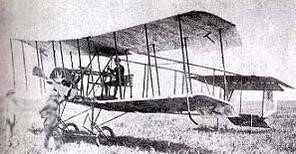
In the autumn of 1911, Narahara’s group was joined by Shuhei Iwamoto, later a professor of Tokyo University, and Kiyoshi Shiga, BSc. By March 1912 they had created the Narahara No.4 Aeroplane with the help of Saken Kawabe, Otojiro Itoh and Ginjiro Goto, themselves to become notable in aviation. The aeroplane was built at the Orient Aeroplane Company (Toyo Hikoki Shokai), having its office in Kyobashi, Tokyo. The factory was then located at Fukagawa (near or at Susaki Airfield) and final assembly was made at Tokorozawa where it was to be flown. It received the name of Ohtori-go, after a champion sumo-wrestler, Ohtori, at the request of the sponsor who supported the project.
A single-engine tractor training biplane with wooden structure with fabric covering. The pupil and instructor were in an open cockpit.
The aeroplane performed well and was taken on exhibition tours, with flights at major cities throughout Japan to demonstrate what was referred to as their ‘Japanese-made civil aeroplane’. Since there were no airfields in Japan at this time, flights were made from race tracks or military parade grounds of such relatively small size that landings and take offs were very near the spectators. During the first of these exhibition flights on 13 April, 1912, at Kawasaki Race Track, Kanagawa Prefecture, a failing engine caused the aeroplane to land short, allowing a wingtip to strike a school boy, breaking his arm.
The aeroplane was again demonstrated on 11 and 12 May for His Highness the Crown Prince (later Emperor Taisho) and his three sons (one to later become Emperor Showa [Hirohito]) along with Field Marshal Aritomo Yamagata and many other high-ranking officers at the Aoyama Military Parade Grounds. These demonstrations brought Narahara an award by the Imperial House, the first distinction given to someone involved in Japanese civil aviation.
The last exhibition flight by the Ohtori No.4 was in Seoul, Korea, on 3 and 4 April, 1913.
Around 1910, retired Japanese Navy engineer Sanji Narahara, who had studied munitions at the Imperial University, built an airframe for himself and on May 5, 1911, made a successful flight with a French-made engine installed.
Second biplane designed and built by Sanji Narahara, dating from early 1911. Of twin-boom, open construction and powered by a 50 hp Gnôme rotary, this Japanese machine actually flew as there is at least one photograph showing it in-flight.
Around 1910, retired Japanese Navy engineer Sanji Narahara, who had studied munitions at the Imperial University, built an airframe for himself and on May 5, 1911, made a successful flight with a French-made engine installed.
A tandem winged multiplane, designed circa 1910 by George Francis Myers, who active in the aviation scene from the 1890s to the 1930s. Connects to US Patent #1,427,314.
The third “Sky Cycle” built by Carl E. Myers of Frankfort, New York, in controlled, man-powered flight at the St. Louis Exposition and Music Hall Coliseum where the machine made over 120 ascensions during a single engagement in 1900.
The Sky-Cycle (C. E. Myers) was patented in the USA with number 581,218 on April 20, 1897.



 All Aero