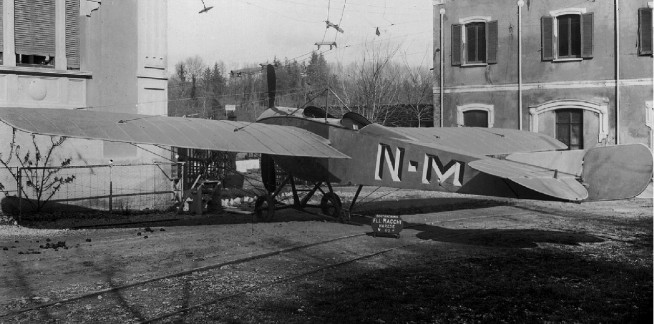
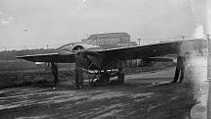
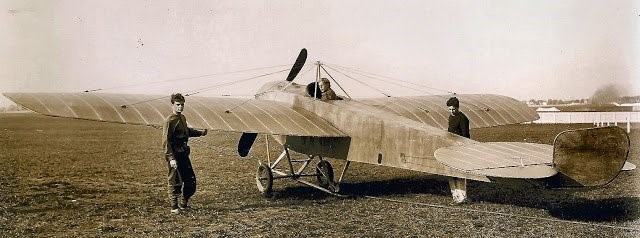
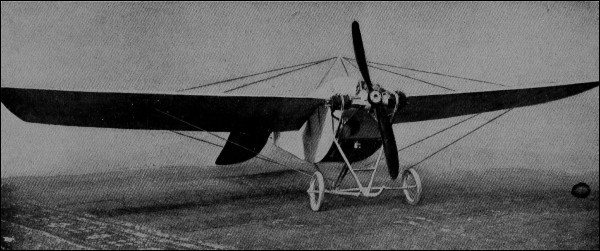
Nieuport VI, the first aircraft built by the new Limited Company F.lli Macchi from Varese in 1913
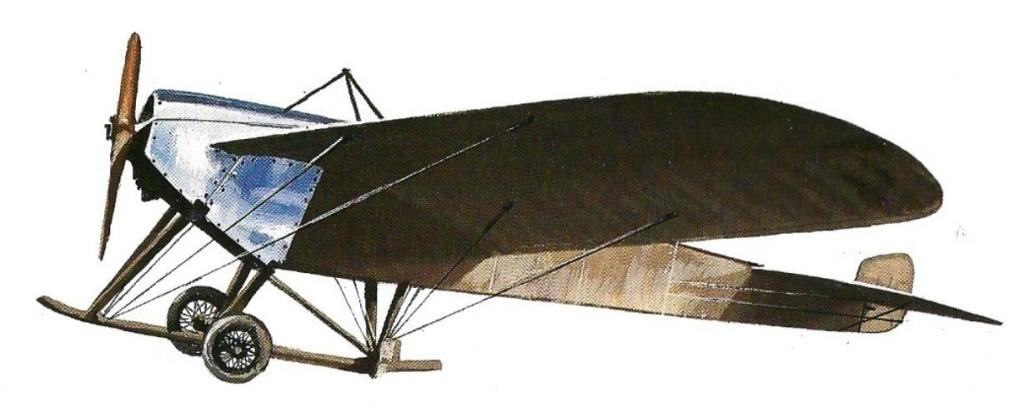
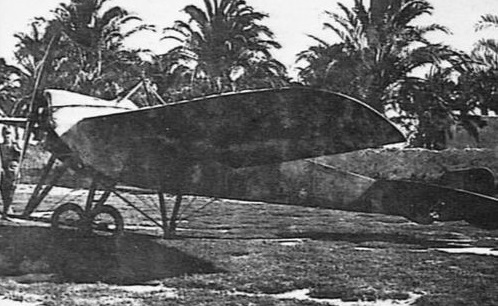
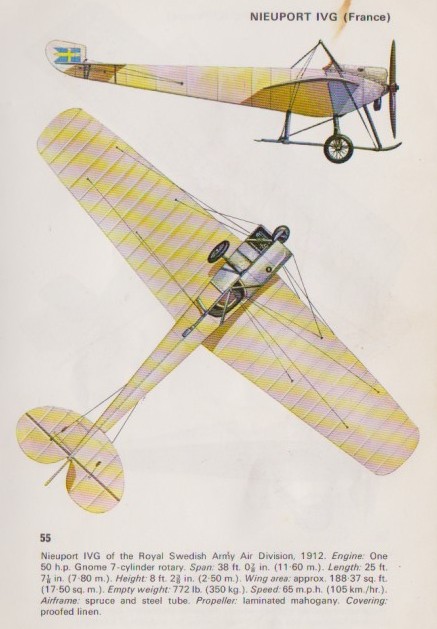
The Nieuport 6M was a 1914 Reconnaissance aircraft.
6M
1913 Nieuport VI Tandem sea-monoplane
Nieuport 6M Engine: Gnome, 80 hp Wingspan: 36 ft / 10.97 m Length: 26 ft / 7.92 m Height: 8 ft 6 in / 2.59 m Weight: 1080 lb / 490 kg Max speed: 70 mph / 112 kph Endurance: 3 hr Seats: 1
1913 Nieuport VI Tandem sea-monoplane Length: 22’4″ Wing area: 14.8 sq.yard
Edouard de Nieport was born in Algeria in 1875. With his brother Charles, he emigrated to France, altering their name to Nieuport. In 1905 Edouard began designing aircraft and appliances like spark plugs and magnetos.
In 1910 Edouard de Nieport decided to build a monoplane with a covered fuselage and on 21 June 1911 he flew his Nie-2N monoplane at 87.2mph. In September 1911 Edouard de Nieport was killed in an emergency landing in the -2N. Immediately the company was taken over by Henri de la Meurthe.
On 24 Jan 1913 Charles Nieuport and his mechanic, Gouyot, were killed.
By 1914 the firm had at least two factories in Issy-Les-Moulinaux and one flight school at Villacoublay.
Designer Gustave Delage made the Nieuport company famous with his series of fighters. The sesquiplane Nieuport XI and XVII served with British, French, Belgian, Russian, Italian, Dutch, Finnish, and American services during the First World War. The improved Nieuport 28 biplane which appeared in 1917 was less successful, but best known for its exploits with the American 94th Aero Squadron (“Hat-in-Ring”) in the hands of Eddie Rickenbacker and Raoul Lufbery. Nieuport aircraft were manufactured under license in Britain and Italy.
Societe Anonyme des Etablissements Nieuport amalgamated with the Astra airship company in 1921, but all construction of airships was abandoned and the company name changed again to SA Nieuport-Delage.
Gourdou-Leseurre joined Nieuport in 1925 to become Loire-Nieuport.
In France, the Socialist Government of the so called Popular Front brought all the companies building military aircraft, aero engines and armament under its control in 1936. The immediate result was the socialized oblivion of such established companies as Marcel Bloch, Bleriot, Nieuport, Potez, Dewoitine, Hanriot and Farman within half a dozen nationalized groups or Societies Nationales, named according to their geographical location (Nord, Ouest, Centre, Midi and so on).
After World War II, although four of the nationalized groups continued operating under state control, private companies were allowed to resume the design and manufacture of both civil and military aircraft. Some of the pioneering names of French aviation, such as Breguet and Morane Saulnier, returned to prominence, and by 1950 a new one had been added Avions Marcel Dassault.
Nielsen & v. Lübcke G.m.b.H. in Altona-Elbe, near Hamburg, built at least six different monoplanes around 1910. The main business of the company appears to have been street lighting, but they also operated a flying school.
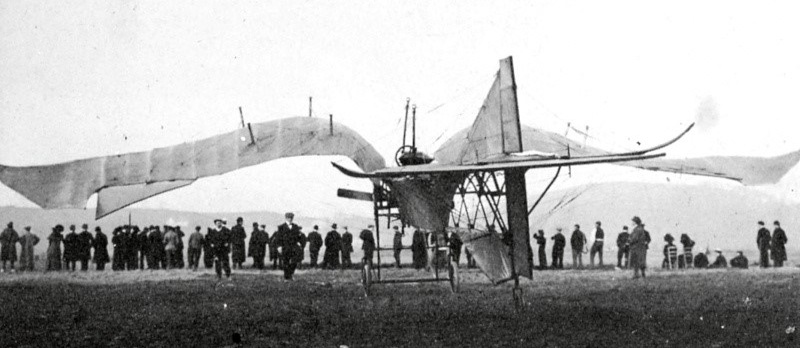
Francois Nicolas’ only design was sponsored by Marquis de Salamanca. An automobile-body-builder in Biarritz, Nicolas based his monoplane on the Antoinette, but made his even bigger. The triangular-section fuselage was long and slender, about one meter deep. Fully covered, it carried a long triangular tailplane and elevator. The rectangular wings were of dramatic seagull shape and supported by six kingposts and a forest of brace-wires.
The aeroplane is reported to performed “careful hops” on the Biarritz airfield, France, in 1910.
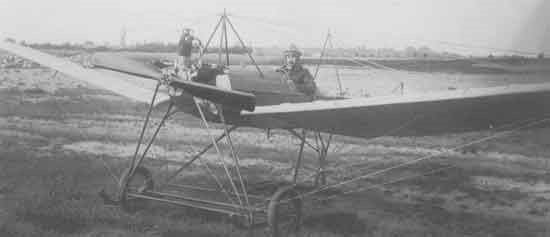
Designed and built by the Nordwestdeutsche Flugzeugwerke Heinrich Evers & Co. In all, 6 different monoplanes, E 1 through E 6, were built by NFW between 1912 and 1913.
In all, 6 different monoplanes, E 1 through E 6, were built by NFW between 1912 and 1913. The engineer Heinrich Evers was the leading force at NFW and while the firm folded for financial reasons within a year, in 1913 he went to the USA to work for the Benoist firm. At the start of WWI he immediately returned to Germany, but was captured by the French and interned in France until 1917 whereas Evers fled to Switzerland and later to Germany. Evers was then employed by Caspar, later again going to the USA to work for the Fokker firm.


 All Aero