Oertz-Werke Gmbh

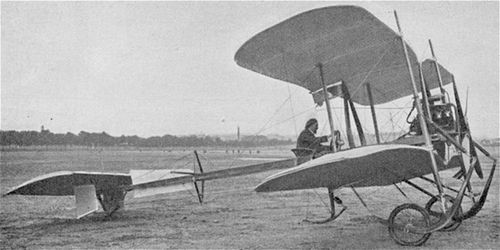
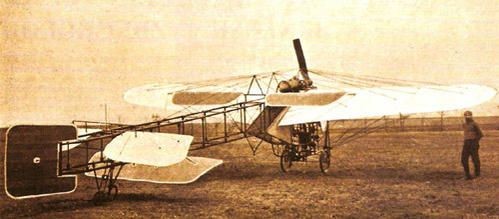
Max Oertz in Neuhof-Reiherstieg near Hamburg, Germany, an established builder of yachts, entered the aircraft business in 1911 and produced Wright machines.

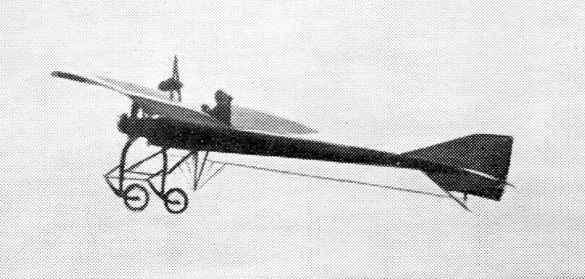
They then built the Doppeldecker before another more well-known biplane. The company produced three examples of the mid-wing M1911-12 monoplane and a single developed M1912-13 model.

They built several flying boats and eventually sold the business to Hansa-Brandenburg in 1917.
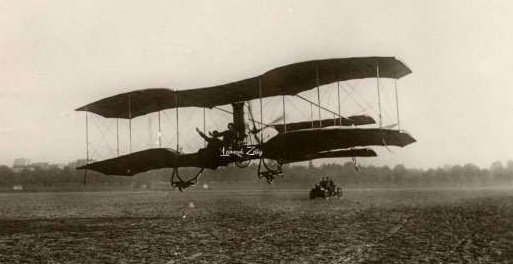
Odier-Vendome Biplane 1910

Pilot – Antoine Odier

Carrying the names of its designer (Antoine Odier) and ordered by Turcat-Méry race car driver Henri Rougier, this pusher biplane was built by the Vendôme company. It appeared in 1909 and was (under)powered by one of Rougier’s employers 18hp Turcat-Méry engines.

The designer also made the first flight of this, his first aircraft in May 27, 1909, which was also Odier’s first flight, ever.

A later improved tractor biplane followed in 1910, with less arched wings.

Second version

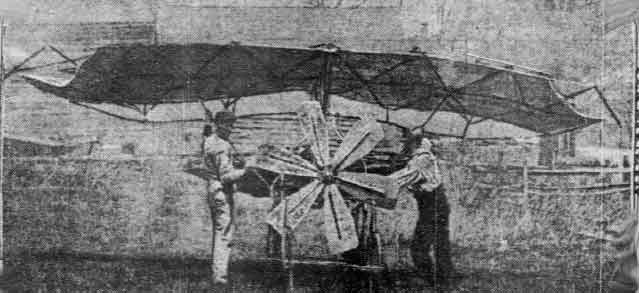
Ochoa Jersey Devil

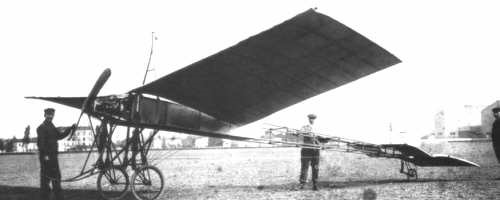
The “Jersey Devil”, also known as the “Jersey Mosquito” or “Ochoaplane” built by Victor Leaton Ochoa, and datable to 1908-09 in the USA. Based on two bicycle frames between which was mounted a six-horse power motor and below that a seat for the operator. The whole machine weighs about 250 pounds. The craft is notable for having several ‘interesting’ design features, such as the retractable truss-work wing structure, and the wing surface being concave, not convex.

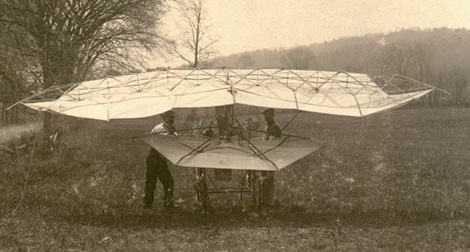
Obre No.1

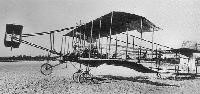
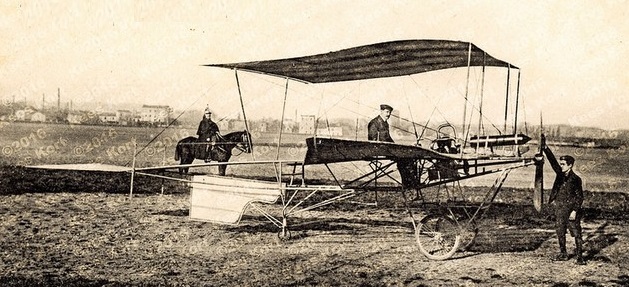
Émile Obre in his first biplane on the field Issy-les-Moulineaux, Paris, France, 1908

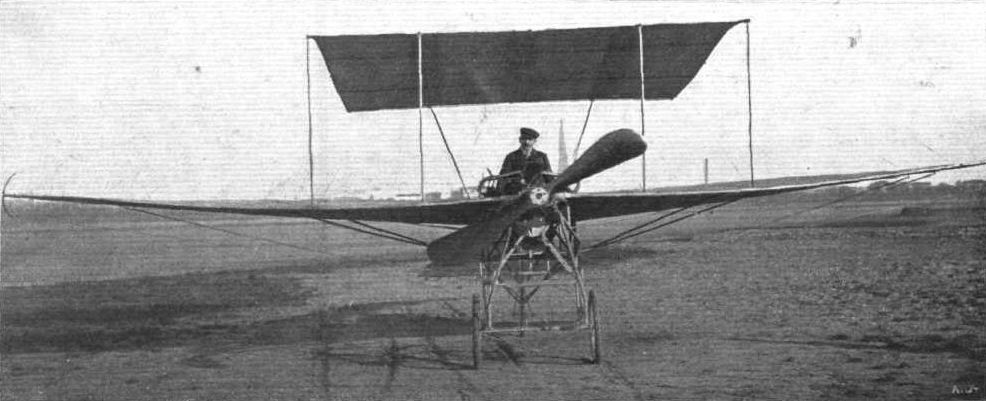
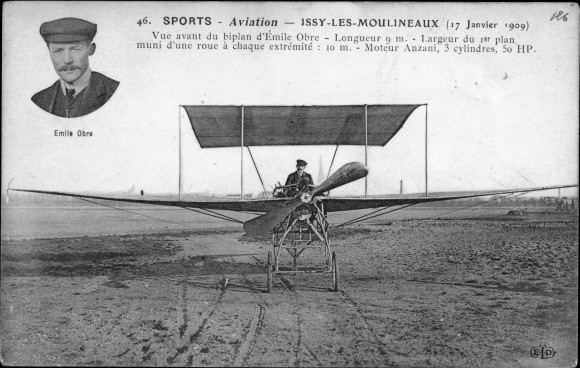
Émile Obre designed his biplane as a tractor with the Anzani 3-cylinder air cooled engine was fitted about 1,5 meter from the nose. The top wing consisted of a rectangular form with a special curve form. The span of the lower deck is 10 metres.

The power given (50 hp) for the 3-cylinder Anzani is very optimistic.

When testing the machine on 18 January 1909 at Issy-les-Moulineaux the machine crashed and was demolished. It was not repaired.

The machine was not a success but Obre went on and designed a completely new pusher biplane.

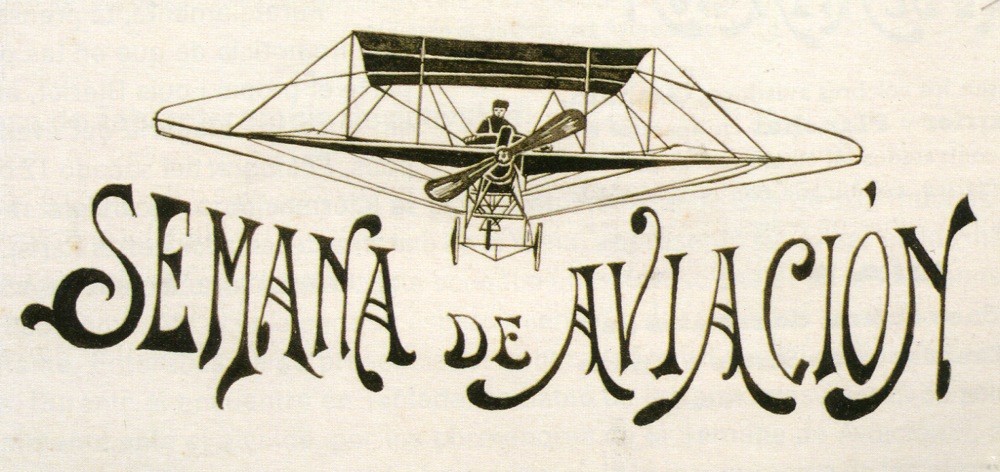
A drawing of the plane figured in a standing heading in “Flugsport” and in the logo of the 1910 Seville aviation week.