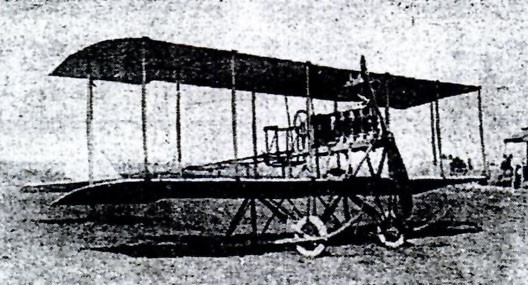
Built and designed by 19-year-old Harry Peyton of Waco, Texas, who made test flights of his biplane at a nearby field, most likely on the Trinity River bottom.
Built and designed by 19-year-old Harry Peyton of Waco, Texas, who made test flights of his biplane at a nearby field, most likely on the Trinity River bottom.
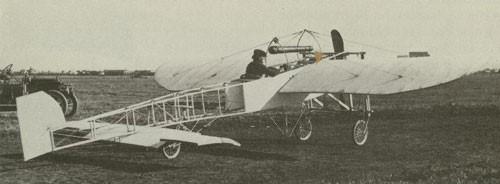
Canadian Edward C. Peterson piloting his own modified Blériot XI type copy across Kelly’s race track at Fort William, Thunder Bay, Ontario, near the corner of Edward and Arthur streets. Reportedly the first monoplane built in Canada, unfortunately on this occasion the plane failed to leave the ground. A later report in 1911 stated Peterson did make a successful flight over the fields at Mission Island.

Matias Pérez was a Portuguese aeronaut, tent-maker and Cuban resident who, carried away with the ever increasing popularity of aerostation, disappeared while making a gas balloon flight originating from Havana’s Plaza de Marte (now Parque Central) on June 28, 1856. A few days earlier he had made a successful first attempt, traveling several miles. His second try however, became part of Cuba’s folklore as today when someone or something vanishes into thin air, people say: “Voló como Matías Pérez” (flew away like Matias Pérez).
The Billing biplane was crashed on 4 October 1911 by N.S. Percival, who rebuilt it as the Percival Parseval I at the end of 1911-1912.

Emile Percevants’ “Metalloplan” pusher canard monoplane bicycle was displayed at the “stand de l’aviette” of the 1913 Salon de la Locomotion Aérienne (Paris). Although the Metalloplan company did not have much luck with aircraft, it seems they made successful business manufacturing bikes and motorbikes, and were active at least into the 1950s.
Emile Percevant was a policeman from Rétiers in eastern Brittany. His “Metalloplan” pusher canard monoplane bicycle was built in 1913.
Although the Metalloplan company did not have much luck with aircraft, it seems they made successful business manufacturing bikes and motorbikes, and were active at least into the 1950s.
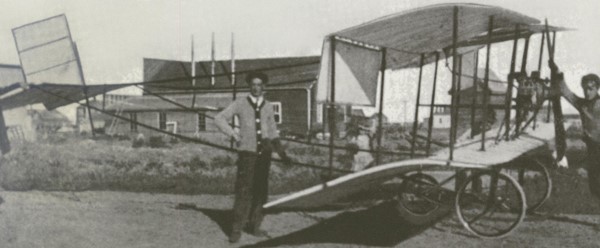
George and Ackley ‘Ace’ Pepper did their flying in Davidson, Saskatchewan, Canada. The machine was built with community support during 1910-11, mainly of wood and bamboo, powered by a 20-30 hp Detroit aero engine. A first flight attempt in July 1911 resulted in a damaged undercarriage and propeller, but another attempt on Aug. 1 was successful, but resulted in a crash.
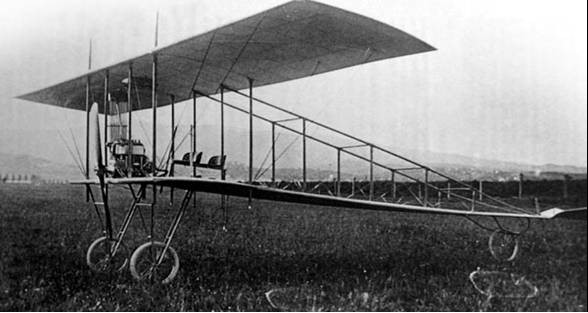
Slavoljub Penkala was interested in flight and decided to buld his own airplane, pretty much making it up as he went along. He patented it in late 1909 and the plane was ready for its first flight by June 1910. The funding came from Penkala’s own income from his pen and pencil factory, and a lot of the work and ideas also came from Dragutin Novak, who joined Penkala earlier the same year.
The Leptir (English: Butterfly)was a single engine, sesquiplane aircraft with conventional landing gear. The open girder fuselage provides an unusually long distance to the tail surfaces, compared to modern aircraft. The flat bottom surface of the fuselage was covered, forming a long thin triangular surface intended to provide lift, which was not functional in level flight. The aircraft was tail heavy with a center of gravity at 70 percent of wing chord.
The first flight occurred on 22 June 1910 with pilot Dragutin Novak. The 1910 Leptir II featured modifications to include skids. The aircraft was crashed several months later.
The CA-10 replica was built in 2010 and known as the Cvjetkovic CA-10 Penkala, bearing the registration of 9A-XCA. It was powered by an 80 hp (60 kW) Rotax 912 with the center of gravity moved forward for safety.
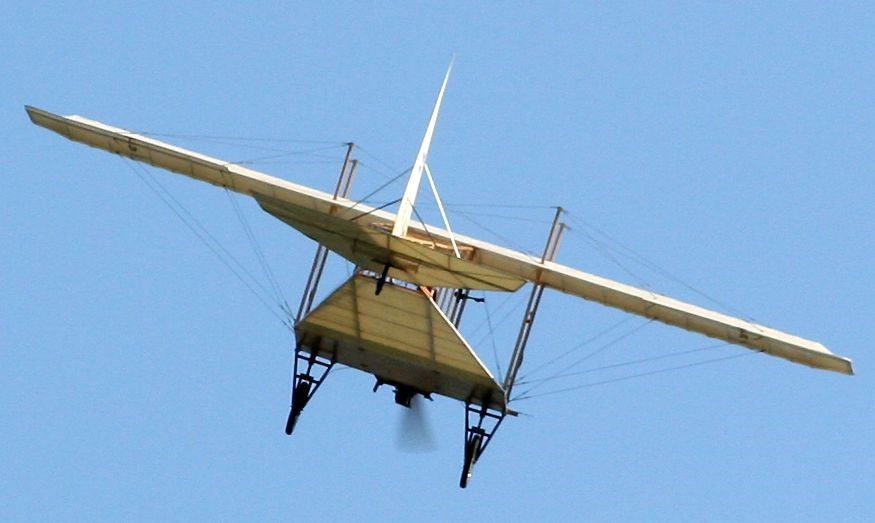
Penkala Biplane
Propeller: 2-blade
Wingspan: 11 m (36 ft 1 in)
Length: 11 m (36 ft 1 in)
Empty weight: 330 kg (728 lb)
Crew: 1
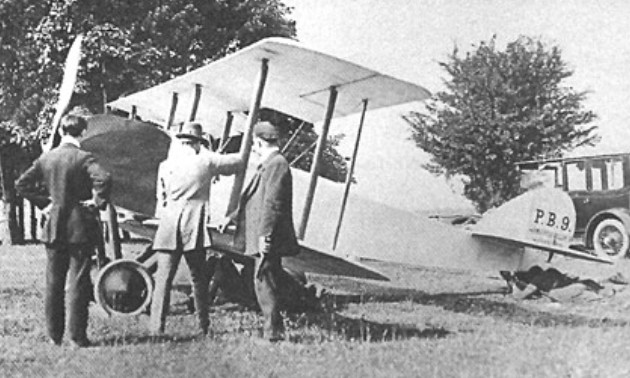
A single-seat open-cockpit equal span biplane scout aircraft, built by Pemberton-Billing Limited, which later became the Supermarine Aviation Works. Only one P.B.9 was built. The wings had full span spars with the upper and lower wings connected by four pairs of interplane struts. The fuselage had a fixed landing gear with a tail skid. While designed to allow the use of Grome 80 hp engine the prototype P.B.9 was powered by a 50 hp (36 kW) Gnome rotary engine taken from the company’s prototype P.B.1. Using a set of wings that had been obtained from Radley-England it was designed, built and made its first flight within nine days, though for publicity reasons its designer Noel Pemberton Billing claimed it had taken a week (giving rise to the nickname “Seven Day Bus”). It was first flown August 1914. Although the aircraft performed well only the prototype was built. it was later used by the Royal Naval Air Service as a trainer.
Exhibited at the 1914 Olympia Show.

A triangular kite on which Noel Pemberton Billing tried to glide from the roof of his house at East Grinstead in 1904. From this inauspicious start he went on to start the aviation industry that was renamed to Supermarine after he sold his interests.
 All Aero