Wright, Howard T. / Wright, Howard & Warwick

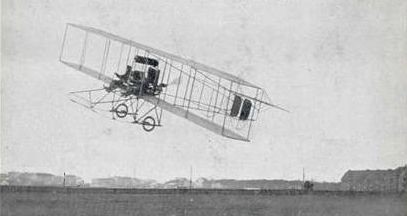
The Howard T. Wright company established “probably the first real aircraft factory in England and certainly the only one to operate at a profit at the time”, from 1908 to 1912.

Howard T. and Warwick Wright, in 1905, set up his own company in Prince of Wales Road, Battersea, London. There they built some 35 biplanes, monoplanes and an unsuccessful, helicopter. One of their biplanes was bought by Tom Sopwith. The Wrights’ exhibited a monoplane at the 1910 Olympia show. Designed and built helicopters, ornithopter, biplanes, and series of monoplanes, including five Avis. In 1910 T.O.M. Sopwith achieved the longest all-British flight to date with a Howard Wright 1910 biplane, a distance of 272km.

The business closed in 1911.
Wright-Gesellschaft Doppeldecker

German Flugmaschine Wright-Gesellschaft (Johannisthal) Wright biplane designed by Deutsche Wright pilot Robert Thelen in 1911. It had only a single propeller, directly attached to the drive shaft of its 50 hp NAG engine. Thelen used at least one of this type with the Ad Astra Fluggesellschaft, a flight school and exhibition company that Thelen formed with Rudolf Kiepert, also a Wright pilot.

Wright Mk.I

Peter Wright started the construction of a man powered aircraft in January 1971 at Melton Mowbray, UK. Similar to the ‘Puffin’ but differing in having a three unit undercarriage and swept forward wings.

The Mk.I first flew in February 1972 for 120 yards. After several flights it was decided a better test site was needed and that a Mk.II should be built.

Mk.I
Aspect ratio: 10:1

Wright WP-1

The sole Wright WP-1, A6748, was based on a Swiss-built Dornier Falke, imported by Wright Co. Built in 1923, it was all-metal, with an unbraced parasol wing, with a single-place open cockpit.

Engine: Wright-Hisso H-3, 325hp
Wingspan: 32’11”
Length: 24’6″
Max speed: 162 mph
Cruise speed: 142 mph
Ceiling: 19,400 ft
Seats: 1

Wright R Roadster / High Flyer / Baby Wright / Baby Grand

Wright R Roadster

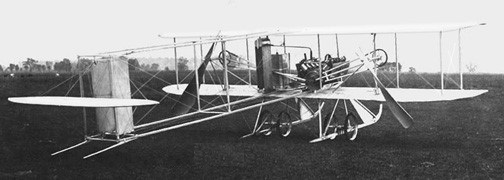
The 1910 two-place open cockpit Wright R Roadster was powered by a 30hp Wright 4 with two pusher props.

Similar 8-cylinder models were known as High Flyer and Baby Wright.

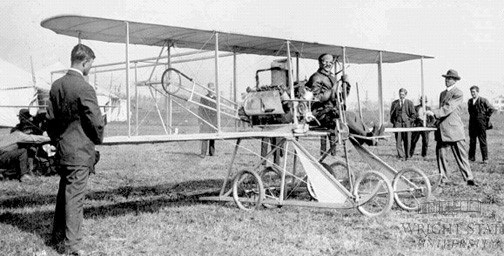
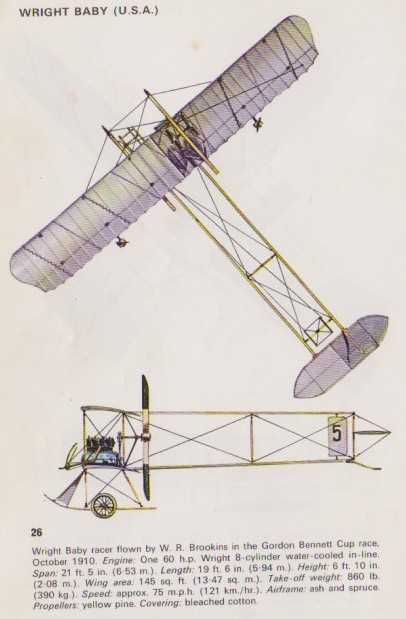
The Baby Grand, which was single place, with a 60hp Wright driving two pusher props, had no front elevator.

Wright Baby Grand 1910

Models were also displayed at the 1917 Pan-Pacific Aero Exposition (New York) with a 75hp Wright and a 150hp Hisso.

A Wright Baby flew more than 3100 miles around the United States.

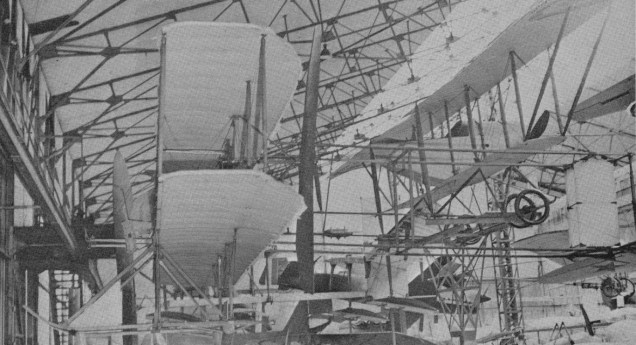
One Baby Wright, constructed in France by the Society Ariel, a Wright licensee, was discovered in an old building at Villacoublay being torn down. It is now in the Musee de l’Air in Paris.

Baby Wright at Musee de l’Air in Paris

R Roadster
Engine: 30hp Wright 4
Props: two pusher
Wingspan: 22’0″
Length: 19’6″
Seats: 2

Baby Grand
Engine: 60hp Wright
Props: two pusher
Wingspan: 26’6″
Length: 19’6″
Speed: 75 mph
Seats: 1

Baby Wright
Wing span: 26.24 ft
Length: 23.62 ft