Lawrence J. Lesh made his first flight in a glider in Chicago in 1906 at the age of 14. In 1908 he had an accident withhis glider at Morris Park, New York, which confined him to hospital for over seven months. Though only a boy of 17 years, Lesh had done a great deal of experimental gliding from the age of 14. He held the world’s record, having made a flight of more than six miles in length over the St. Lawrence River, towed by a motorboat.
Era
Lescarts N’Deke Mwaope
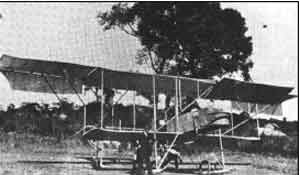
In April 1912 Fernand Lescarts, with the financial help of King Albert, travelled from Belgium to the Congo bringing with him a Farman biplane. The Farman was destroyed during the journey whereupon Lescarts designed and built a new biplane, and named it N’Deke Mwaope (White Bird), which flew pretty well until a violent windstorm wrote an end to the story.
Leroy and Marzollier 1910 monoplane
The 1910 Leroy et Marzollier monoplane was designed and built by Leroy and Marzollier in France.
Le Rhône 28E
(1918) A four-row rotary, consisting of four seven-cylinder banks rotating round a single four-throw crankshaft.
Le Rhône 18E
(1917) A two-row rotary, consisting of two nine-cylinder banks rotating round a single two-throw crankshaft.
Le Rhône 14D
(1912) A two-row rotary, consisting of two seven-cylinder banks rotating round a single two-throw crankshaft.
Le Rhône 11F
(1913) An 11-cylinder rotary.
Le Rhône 9 / K / L / M / P / R
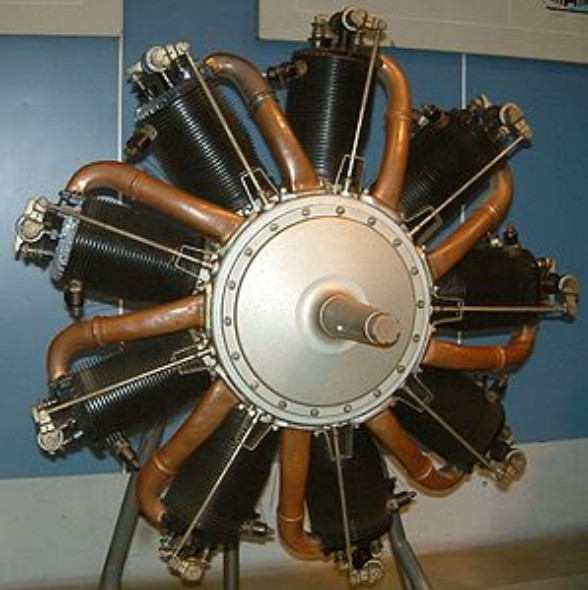
Le Rhône was the name given to a series of popular rotary aircraft engines produced in France by Société des Moteurs Le Rhône and the successor company of Gnome et Rhône. They powered a number of military aircraft types of the First World War. Le Rhône engines were also produced under license worldwide.
Although not powerful (the largest wartime version produced 130 horsepower (97 kW)), they were dependable rotary engines. The Le Rhône 9 was a development of the Le Rhône 7, a seven-cylinder design.
The copper induction tubes had their crankcase ends located in different places on the 80 and 110 horsepower (60 and 82 kW) versions – the 80 hp versions had them entering the crankcase in a location forward of the vertical centerline of each cylinder, while the 110 hp version had them located behind the cylinder’s centerline. This resulted in the 80 hp version’s intake plumbing being “fully visible” from the front, while the 110 hp version had the lower ends of its intake tubes seemingly “hidden” behind the cylinders.
A complicated slipper bearing system was used in the Le Rhône engine. The master rod was of a split-type, which permitted assembly of the connecting rods. It also employed three concentric grooves, designed to accept slipper bearings from the other cylinders. The other connecting rods used inner-end bronze shoes, which were shaped to fit in the grooves. The master rod was numbered as number one and the shoes of numbers. two, five and eight rode in the outer groove, the shoes of three, six and nine in the middle groove and four and seven in the inner groove. Although this system was complex, the Le Rhône engines worked very well.
The Le Rhône engines used an unconventional valve actuation system, with a single centrally-pivoting rocker arm moving the exhaust valve and the intake valve. When the arm moved down it opened the intake valve and when it moved up it opened the exhaust value. To make this system work a two-way push-pull rod was fitted, instead of the more conventional one-way pushrod. This feature required the cam followers to incorporate a positive action, a function designed in by using a combination of links and levers. This design functioned but it did prevent the incorporation of valve overlap which limits power output. Due to the structural and cooling limitations of the overall engine design the Le Rhône engines produced as much power as they were capable of, regardless.
As well as production by Société des Moteurs Gnome et Rhône, which had bought out Société des Moteurs Le Rhône in 1914, the Le Rhône was produced in Germany (by Motorenfabrik Oberursel), Austria, the United Kingdom (by Daimler), Russian Empire and Sweden.
Le Rhône 80 hp (60 kW) engines were made under license in the United States by Union Switch and Signal of Pennsylvania, and the 110 hp (82 kW) Oberursel UR.II rotary engine used by Germany in World War I, in such famous fighters such as the Fokker Dr.I triplane, was a close copy of the 110 hp 9J version.
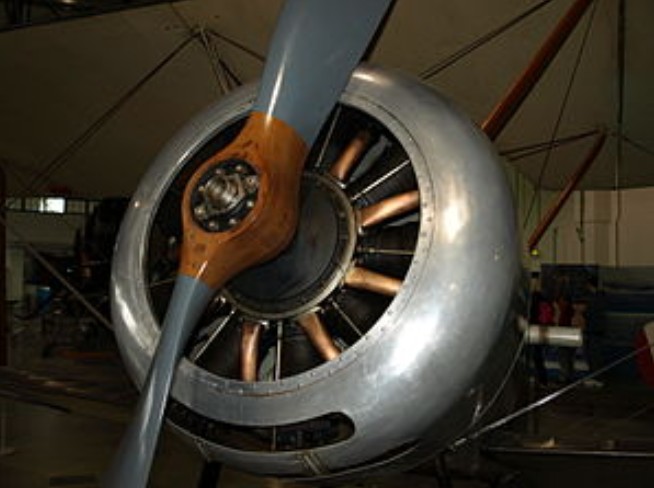
First run in 1916, the Le Rhône 9C is a nine-cylinder rotary aircraft engine produced in France by Gnome et Rhône. Also known as the Le Rhône 80 hp in a reference to its nominal power rating, the engine was fitted to a number of military aircraft types of the First World War. Le Rhône 9C engines were also produced under license in Great Britain by several companies, and in the United States. British production amounted to 1,088 examples.
In common with other Le Rhône series engines, the 9C featured highly visible telescopic copper induction pipes and used a single push-pull rod to operate its two overhead valves.
Oberursel produced the 110 hp model, supposedly without authorization in Germany. The Oberursel Ur.II was a straight copy of the Le Rhône, but the Le Rhône was preferred over the Oberursel due to the materials used in the French product. However, by July 1918 there was a shortage in Germany of castor oil, a plant-derived lubricant that the rotaries required as it could not be easily dissolved into the fuel, and because it possessed lubrication qualities superior to mineral oils of the day. A new Voltol-based lubricant, derived from mineral oil, was substituted and was blamed for engine failures on rotary-engined German fighters such as the Fokker E.V which used the Oberursel Ur.II. It has been suggested that without proper lubricants, the Le Rhône rotary would have been equally failure-prone.
A few examples of the 9C engine remain airworthy both in Europe and North America, one powering a vintage Sopwith Pup biplane in England, and a small number of others having powered reproduction WW I-era aircraft at Old Rhinebeck Aerodrome.
Variants:
Le Rhône Type 9C
(1916) 80 hp (60 kW), nine-cylinder rotary engine.
Le Rhône Type 9J
(1913) 110 hp (82 kW), nine-cylinder rotary engine.
Le Rhône Type 9Ja
(1915) 110 hp (82 kW), nine-cylinder rotary engine.
Le Rhône Type 9Jb
(1916) 120 hp (89.5 kW), nine-cylinder rotary engine.
Le Rhône Type 9Jby
(1916) 130 hp (97 kW), nine-cylinder rotary engine.
Le Rhône Type 9R
(1916) 170 hp (127 kW), nine-cylinder rotary engine.
Le Rhône 9Z
(1920) A 9-cylinder rotary.
Le Rhône K
(1916) A 9-cylinder rotary prototype engine.
Le Rhône L
(1916) A 9-cylinder rotary prototype engine.
Le Rhône M
(1917) A 9-cylinder rotary prototype engine.
Le Rhône P
(1917) A 9-cylinder rotary prototype engine.
Le Rhône R
(1917) A 9-cylinder rotary prototype engine.
Applications:
Bristol M.1
Bristol Scout
Caudron G.III
Caudron G.IV
Henry Farman F.20
Grahame White G.W.15
Grahame White G.W.E.6 Bantam
Morane-Saulnier G
Morane-Saulnier H
Morane-Saulnier L
Morane-Saulnier N
Morane-Saulnier P
Nieuport 10
Nieuport 11
Nieuport 21
Pemberton Billing P.B.23
Ponnier M.1
Royal Aircraft Factory F.E.8
Royal Aircraft Factory S.E.4
Sopwith Camel
Sopwith Dove
Sopwith Pup
Thomas-Morse S-4
Vickers F.B.12
Le Rhône 9C
Type: Nine-cylinder, single-row rotary engine
Bore: 105 mm (4.13 in)
Stroke: 140 mm (5.51 in)
Displacement: 10.89 lt (664.47 cu in)
Diameter: 94.5 cm (37.2 in)
Dry weight: 121.5 kg (268 lb)
Valvetrain: Cam-operated single rocker for both inlet and exhaust valves
Oil system: Castor oil, total loss
Cooling system: Air-cooled
Power output: 92 hp (68.6 kW) at 1,300 rpm (maximum)
Compression ratio: 4.5:1
Le Rhône 7
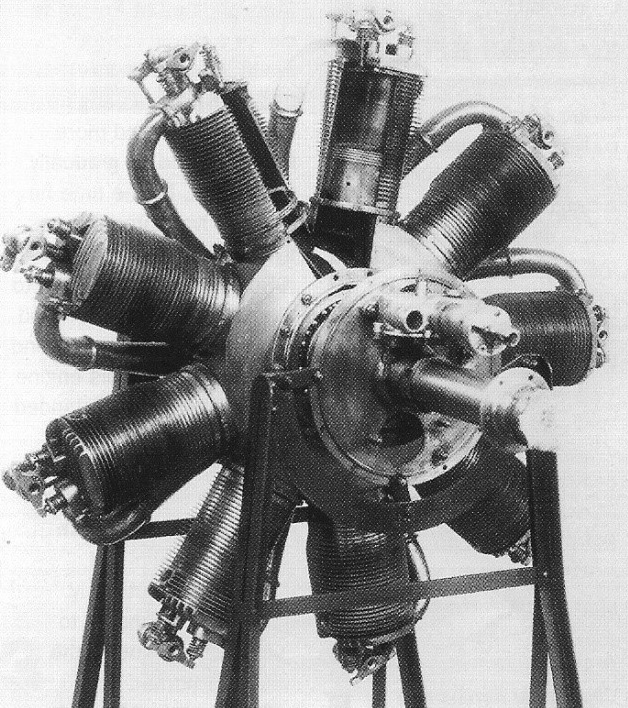
Le Rhône was the name given to a series of popular rotary aircraft engines produced in France by Société des Moteurs Le Rhône and the successor company of Gnome et Rhône. First run in 1910, they powered a number of military aircraft types of the First World War. Le Rhône engines were also produced under license worldwide.
Although not powerful (the largest wartime version produced 130 horsepower (97 kW)), they were dependable rotary engines. The Le Rhône 9 was a development of the Le Rhône 7, a seven-cylinder design.
The copper induction tubes had their crankcase ends located in different places on the 80 and 110 horsepower (60 and 82 kW) versions – the 80 hp versions had them entering the crankcase in a location forward of the vertical centerline of each cylinder, while the 110 hp version had them located behind the cylinder’s centerline. This resulted in the 80 hp version’s intake plumbing being “fully visible” from the front, while the 110 hp version had the lower ends of its intake tubes seemingly “hidden” behind the cylinders.
A complicated slipper bearing system was used in the Le Rhône engine. The master rod was of a split-type, which permitted assembly of the connecting rods. It also employed three concentric grooves, designed to accept slipper bearings from the other cylinders. The other connecting rods used inner-end bronze shoes, which were shaped to fit in the grooves. The master rod was numbered as number one and the shoes of numbers. two, five and eight rode in the outer groove, the shoes of three, six and nine in the middle groove and four and seven in the inner groove. Although this system was complex, the Le Rhône engines worked very well.
The Le Rhône engines used an unconventional valve actuation system, with a single centrally-pivoting rocker arm moving the exhaust valve and the intake valve. When the arm moved down it opened the intake valve and when it moved up it opened the exhaust value. To make this system work a two-way push-pull rod was fitted, instead of the more conventional one-way pushrod. This feature required the cam followers to incorporate a positive action, a function designed in by using a combination of links and levers. This design functioned but it did prevent the incorporation of valve overlap which limits power output. Due to the structural and cooling limitations of the overall engine design the Le Rhône engines produced as much power as they were capable of, regardless.
As well as production by Société des Moteurs Gnome et Rhône, which had bought out Société des Moteurs Le Rhône in 1914, the Le Rhône was produced in Germany (by Motorenfabrik Oberursel), Austria, the United Kingdom (by Daimler), Russian Empire and Sweden.
Le Rhône 80 hp (60 kW) engines were made under license in the United States by Union Switch and Signal of Pennsylvania.
Variants:
Le Rhône Type 7A
(1910) 50 hp (37 kW), seven-cylinder rotary engine – twenty built for use on Borel Monoplanes and Sommer Biplanes.
Le Rhône Type 7B
(1911) 50 hp (37 kW), seven-cylinder rotary engine – Thirty-five prototype engines built.
Le Rhône Type 7B2
(1912) 60 hp (44.7 kW), seven-cylinder rotary engine – 350 built at Societe Moteurs le Rhône.
Applications:
Airco DH.5
Avro 504
Bristol M.1
Bristol Scout
Caudron G.3
Caudron G.4
Hanriot HD.1
Fokker Dr.I
La Cierva C-6, autogyro, 1924
Macchi M.14
Morane-Saulnier N
Mosca MB 2 bis
Nieuport 11 “Bebe”
Nieuport 17
Nieuport 27
Sopwith Camel
Sopwith Pup
Standard E-1
Texas-Temple prototype
Thomas-Morse S-4C
Le Prieur-Aihara Glider / Daiichi Senior High School Glider
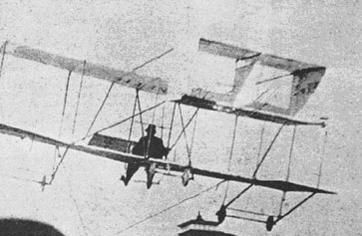
An earlier glider had been designed by Le Prieur based on a drawing from a French pamphlet. But when a test flight failed, Le Prieur turned to his friend Aibara for assistance, and Aibara brought in Tanakadate, an aviation pioneer in his own right, to help with the design.
The glider was developed by Yves Le Prieur, a military attache at the French Embassy in Tokyo, Lieutenant Shiro Aibara of the Japanese Navy, and Professor Aikitsu Tanakadate of Tokyo Imperial University’s School of Science, now the University’s Faculty of Science (at the time the University of Tokyo was named Tokyo Imperial University). Also known as the Aihara-Le Prieur, built by Japanese Lieutenant Shiro Aihara and French 2nd Lieutenant Le Prieur using bamboo for the structure.
The team first planned to use an automobile to pull the glider, but on the day of the trial the car broke down and didn’t make it to the test site. Instead they put a small boy aboard and a group of students pulled on the cable attached to the craft.
On the morning of December 5, 1909, a bamboo-framed and white cloth-covered glider was hauled onto the Daiichi Senior High School’s athletic field, Ueno Park, Toyko, today a part of the University of Tokyo’s Faculty of Agriculture on the Yayoi campus. A large number of students took hold of a rope attached to the glider, and then ran as fast as they could, pulling the glider behind them. Soon, spectators witnessed the craft, with a boy aboard, ascend slowly and fly at a height of 3.6 meters for a distance of some 15 meters before drifting down to a smooth landing. “
This was apparently the first, though unofficial, glider flight in Japan, and it represents the very beginning of airplane research.
In the subsequent December 9 test flight, piloted by Le Prieur himself, a car was used, which drove along a street near Shinobazu Pond, Tokyo, towing the glider. This was the first certified fixed-wing aircraft flight in Japan.

