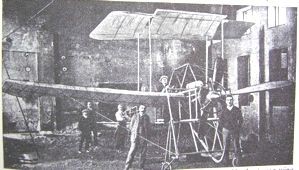
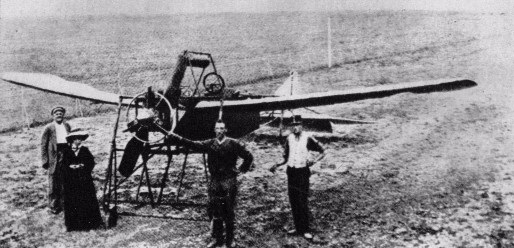
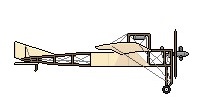
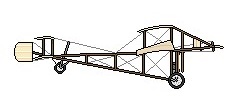
In 1910 Edmund Libański of Lwów (then under Austrian rule, presently in Ukraine) designed an aircraft that was supposed to have advantages of both mono- and biplane through use of lift areas of different size (with upper plane much smaller than the lower one). The 1911 Polish Libański Jaskółka featured a 3-cylinder Delfose rotary engine placed ahead of its propeller. During the take-off to first flight the engine exploded leading to crash. Designer dropped the idea of rebuilding the plane and instead designed a year later a much more succesful two-seat airplane named Jaskółka (Swallow). It was later transported to Vienna where it made many succesful flights. The Jaskółka (Swallow) never flew with the additional upper wing, although it did fly in August 1911 as a monoplane at Wiener Neustadt – without its proven-to-be-impractical top plane.
In 1910 Edmund Libański of Lwów (then under Austrian rule, presently in Ukraine) designed an aircraft that was supposed to have advantages of both mono- and biplane through use of lift areas of different size (with upper plane much smaller than the lower one).
The mono-biplane was built by Libansky and W. Rumbowicz.
During the take-off to first flight the engine exploded leading to crash. Designer dropped the idea of rebuilding the plane and instead designed a year later a much more successful two-seat airplane named Jaskółka (Swallow).
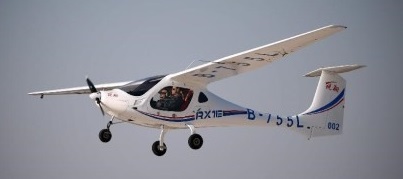
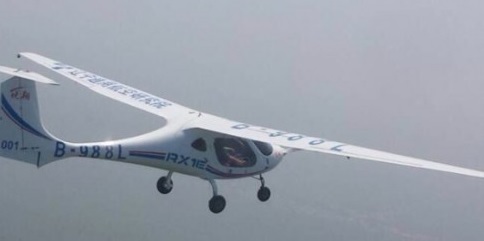
The Liaoning Ruixiang General Aviation Manufacture Company RX1E is a Chinese two-seat electric aircraft, designed by the Liaoning General Aviation Academy at Shenyang Aerospace University and manufactured by the Liaoning Ruixiang General Aviation Manufacture Company Limited of Shenyang.
The result of a three-year development process started in June 2012, the RX1E is an electric powered, two-seat side-by-side configuration, carbon fibre composite construction aircraft with a T-tail and tricycle landing gear and is one of the first electric airplanes in production. The RX1E is powered by rechargeable lithium batteries. One 90 minute charge means that the aircraft can operate for around 45-60 minutes.
The aircraft was first shown at the Zhuhai China Airshow, in November 2012 and in 2015 at the AERO Friedrichshafen show in Germany. The manufacturer claimed that the aircraft conforms to US Light-sport Aircraft requirements and has a Type Design Approval from the Civil Aviation Administration of China, issued in 2015. As of September 2016 it does not appear on the US Federal Aviation Administration list of approved LSAs and, in fact, the category excludes electric-powered aircraft and requires a single reciprocating engine. Several electric airplanes have obtained certification including the RX1E (LSA).
In production since 2015, the company said in April 2015 that they had 28 orders for the design. The first two customer aircraft were delivered in June 2015. The launch customer was the Liaoning Ruixiang General Aviation Co., which will employ the aircraft in the flight training role. The 2014 unit cost being US$163,000.
The Light Helicopter Turbine Engine Company T800 is a turboshaft engine for rotary wing applications. It is produced by the LHTEC, a joint venture between Rolls-Royce and Honeywell. The commercial and export version is the CTS800. The engine was primarily developed for the United States Army’s RAH-66 Comanche armed reconnaissance helicopter, but has found use in other applications.
LHTEC (Light Helicopter Turbine Engine Company) is a joint venture between Rolls-Royce and Honeywell founded in 1985. The company was originally a partnership between the Allison Engine Company and AlliedSignal Aerospace . In 1995 Rolls-Royce acquired Allison, and AlliedSignal merged with Honeywell in 1999, and adopted its name.
The partnership (Headquarters in Indianapolis, IN, USA) was formed to develop the T800 turboshaft engine for the United States Army’s RAH-66 Comanche armed reconnaissance helicopter. Despite the cancellation of this 650+ aircraft project, the company has been able to sell the T800, and its civil CTS800 model, for other applications, namely the AgustaWestland Super Lynx and Future Lynx.
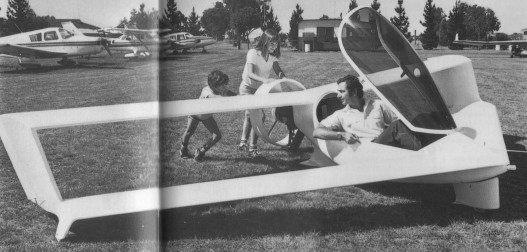
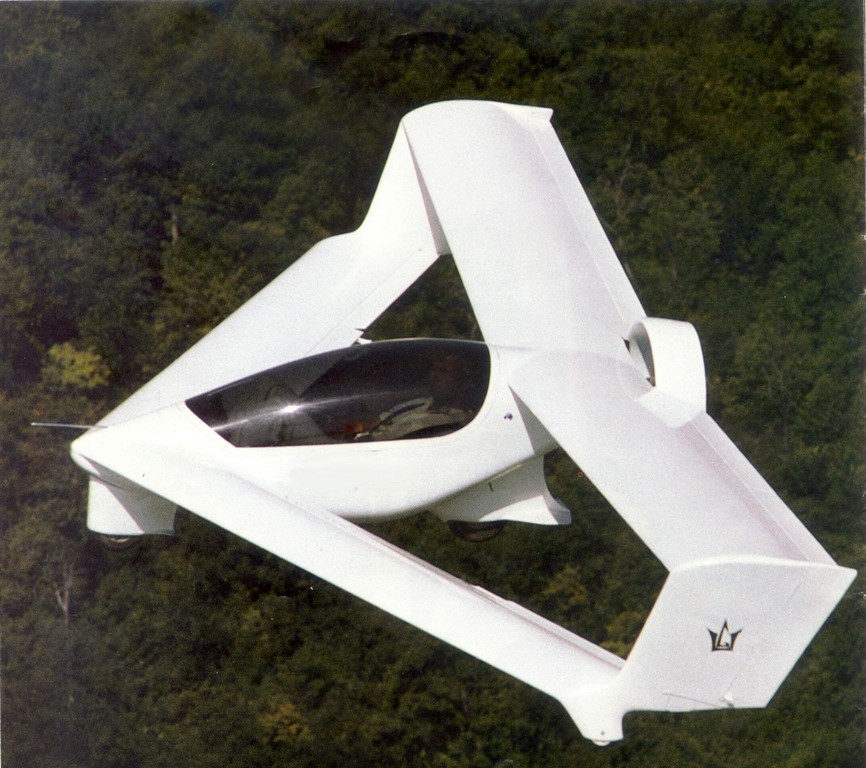
The LGT Stratos is a high performance ultralight developed and constructed by Charles Ligeti. It is a single seat with a swept-back canard joined to the high main wing at the wing tips by split flap rudders. Construction is of composite materials and controls are conventional 3-axis.
A lightplane prototype, although its future remains in doubt following the death of its designer.
The Stratos is an Australian type that first flew in April 1985. The aeroplane was designed to confirm Mr Ligeti’s conviction of the aerodynamic and structural advantages inherent in such a hybrid type, which combines the efficiency of the canard configuration, the combined large wing area and small overall span of the tandem-wing configuration, and the strength of the braced biplane configuration. The compact dimensions of the Stratos make it possible for the fully assembled machine to be towed on a trailer. The core of the Stratos is the short but streamlined fuselage, which is an all-composite structure built up of Kevlar and glassfibre skins over shaped rigid foam. The fuselage supports the bicycle main units of the fixed landing gear, which are supplemented by outrigger stabilizers under the tips of the canard foreplanes, as well as the powerplant and flying surfaces. The powerplant comprises a small piston engine driving a pusher propeller enclosed, for improved efficiency, in a circular duct of 25.5-in (0.65-m) internal diameter. The flying surfaces are of the same basic construction as the fuselage, with carbonfibre spars, and comprise straight rear-mounted wings ending in vertical surfaces that stretch down to form the wings’ physical and aerodynamic link with the canard foreplanes, which run back from the nose just forward of the cockpit.
Engine: Konig 430 3-cyl. Prop: 3-6 blade ducted fan 61 cm dia. Wing span: 5.31 m. Length: 2.42 m. Fuel capacity: 22 ltr. Econ cruise speed: 90 kts. Stall: 28 kts. Seats: 1.
Engine: Konig SD 570 four-cylinder air-cooled radial piston, 28-hp (21 -kW) Seats: 1 Maximum speed 124 mph (200 km/h) Initial climb rate 670 ft (205 m) per minute Service ceiling 14,760 ft (4500 m) Range 447 miles (720 km) Empty weight: 172 lb (78 kg) Maximum take-off weight: 414 lb (188 kg) Wingspan 17 ft 7 in (5.36 m) Length 8 ft 2 in (2.49 m) Height 3 ft 3 in (0.99 m) Wing area 81 sq.ft (7.53 sq.m) including canard foreplanes.
Formerly known as the KB-17, this Yugoslav two seater high performance trainer was designed and built by the Letalski Institut Branko Ivanus, Slovenija – LIBIS at Ljubljana.
Of largely wooden construction, with a fabric covered welded steel tube fuselage, the LIBIS-17 has a cantilever single-spar high-set wooden wing, with a plywood covered leading edge torsion box supported by Styrofoam, the remainder of the wing being fabric covered. The fabric covered wooden Frise ailerons are also filled with Styrofoam, and there are Hiittertype wooden plate spoilers in the wing upper surfaces immediately aft of the spar. The angular tail unit is also a wooden structure filled with Styrofoam, and is made up of an all-moving one-piece fin and tailplane, each with a servo tab. The landing gear consists of a non-retractable unsprung Borovo main wheel and nose sheel in tandem, with a LIBIS mechanical brake. The two pilots are seated in tandem under a forward-hinged one-piece blown canopy; a ventilation system is provided and blind flying instrumentation, radio and oxygen equipment can be fitted if required.
It is cleared for looping, spinning and cloud flying as well as normal flight; it is also suitable for flying solo up to the Silver and Gold C standards.
The prototype LIBIS-17 first flew on October 1961, and the first production aircraft flew in June 1963; by 1972 there were 23 examples of the type on the Yugoslav civil register.
Span: 55 ft 9 in Length: 25 ft 1 in Height: 8 ft 11.5 in Wing area: 237.9 sqft Aspect ratio: 13.0 Empty weight: 739 lb Max weight: 1,135 lb Max speed: 138 mph (in smooth air) Max aero-tow speed: 87 mph Min sinking speed: 2.82 ft/sec at 47 mph Best glide ratio: 27:1 at 58 mph
The LIBIS KB-11 Branko was a 1950s Yugoslavian four-seat monoplane. The aircraft design office of the Letalski Institut Branko Ivanus Slovenija brought together teachers and students of the Ljubljana technical high school for the KB-11 Branko.
The KB-11 Branko was a development of the earlier two-seat KB-6 Matajur. First flown in December 1959 the KB-11 was an all-metal cantilever low-wing monoplane with retractable tricycle landing gear and an enclosed heated and ventilated cockpit for four persons. Intended for use as an air-taxi our business use but only small numbers were built.
Engine: 1 × Lycoming O-435-1, 138 kW (185 hp) Wingspan: 10.59 m (34 ft 9 in) Length: 8.23 m (27 ft 0 in) Height: 2.45 m (8 ft 0 in) Wing area: 1.152 sq.m (12.40 sq ft) Aspect ratio: 7.76:1 Airfoil: NACA 3415 at root, USA 35B at tip Empty weight: 800 kg (1,764 lb) Gross weight: 1,250 kg (2,756 lb) normal loaded without tip tanks Maximum speed: 214 km/h; 116 kn (133 mph) at sea level Cruise speed: 171 km/h; 92 kn (106 mph) at 1,525 m (5,000 ft) and 75% power Stall speed: 98 km/h; 53 kn (61 mph) Range: 950 km (590 mi; 513 nmi) Service ceiling: 5,334 m (17,500 ft) Rate of climb: 4.3 m/s (850 ft/min) Crew: 1 Capacity: 4 total
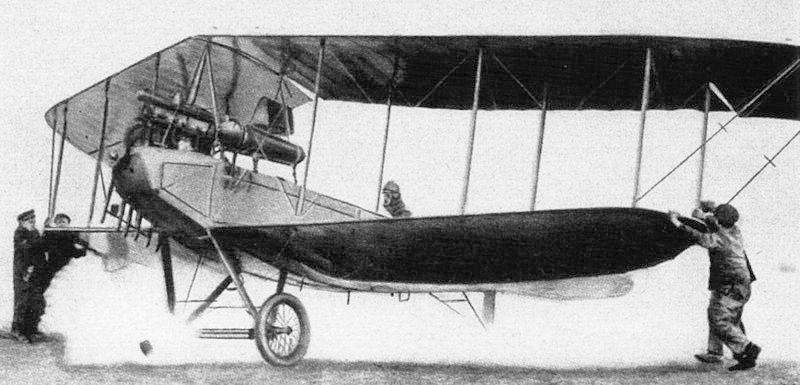
A swept wing, single engine, two seat biplane built in 1914 by the Luft-Fahrzeug-Gesellschaft in Reinickendorf (Berlin). Before the outbreak of World War I Bernard Langer flew the machine shown, equipped with a 100 hp Mercedes D.I engine and an extra tank above the fuselage in place of the passenger, on a non-stop sixteen hour flight. During WW1 at least one Pfeilflieger served with the Schutztruppe (Protection Force) in German South West Africa, now Namibia, between 1914 and 1915.