Lockheed 8 Sirius / 8 Altair / Y1C-25 / XRO-1 / Detroit Aircraft Corp DL-2

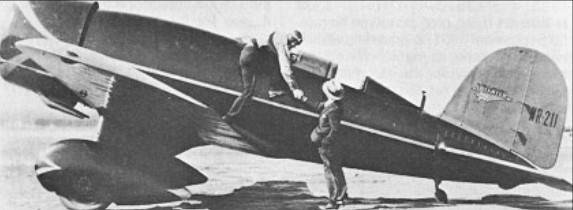
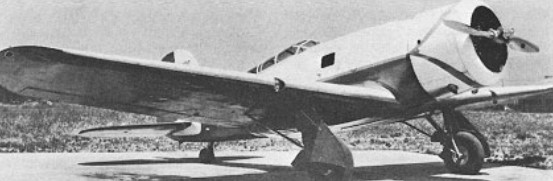
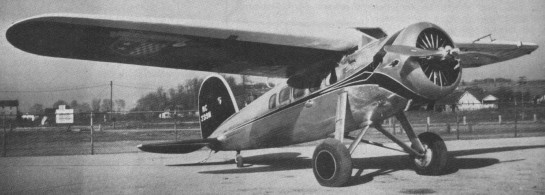
Developed originally to meet a requirement of Charles Lindbergh for a low-wing monoplane of high performance, the Lockheed 8 Sirius combined what was basically a Vega wooden monocoque fuselage with a new low-set cantilever wing. The fuselage is wood laminated and glued, covered with glued plywood. The wings are plywood covered. Ailerons and tail surfaces are plywood covered.

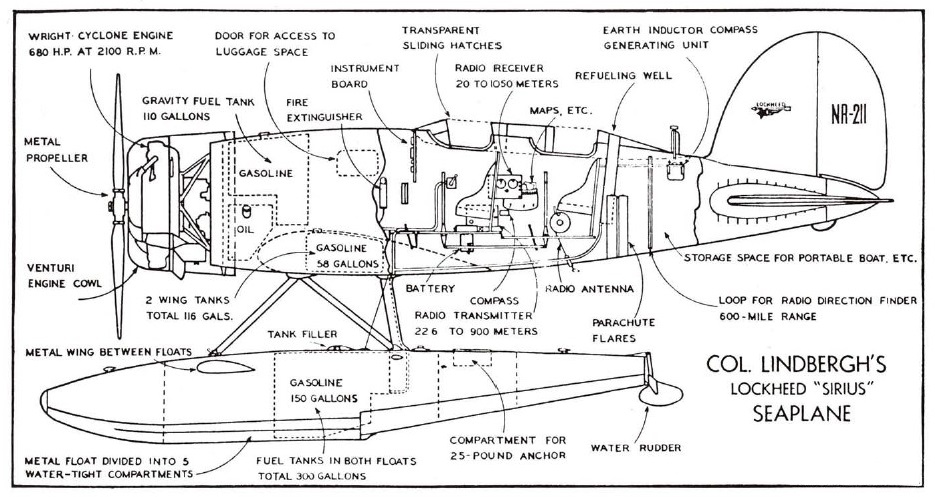
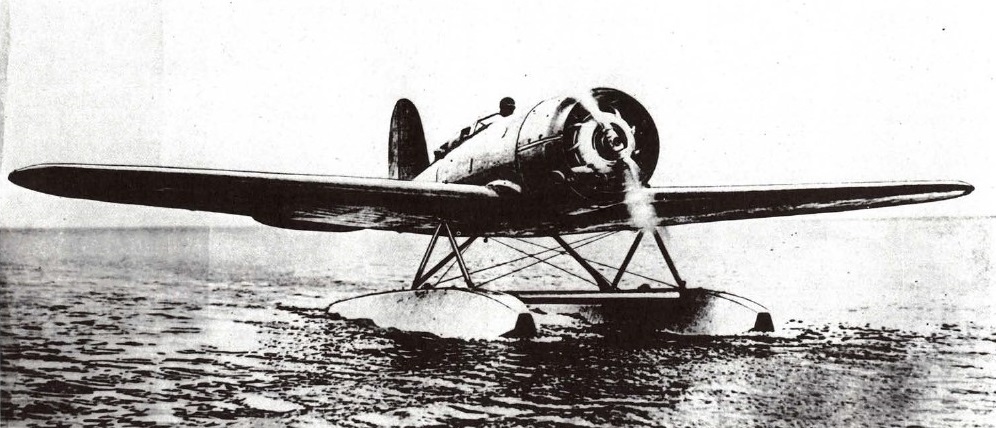
First flown in November 1929, and then powered by a 336kW Pratt & Whitney Wasp radial engine, the Sirius had non-retractable tailwheel landing gear and two open cockpits in tandem. Before accepting this aircraft, Lindbergh had a sliding canopy installed to enclose the two cockpits. In the following year, before Lindbergh set out on a survey flight for Pan American Airways, a 429kW Wright Cyclone engine and twin-float landing gear were installed. For its final survey flight in 1933, it was powered by a 529kW Wright Cyclone engine.

The success of Lindbergh’s aircraft led to the construction of 13 more by Lockheed, comprising four similar Sirius 8, eight Sirius 8A with enlarged tail surfaces, and a single four-seat Sirius 8C aircraft which had an enclosed cabin for two between the engine and pilot’s cockpit. One Sirius built by the Detroit Aircraft Corporation, with a metal fuselage and Lockheed wooden wing, had the designation DL-2 Lindbergh’s Sirius spanned 13.04m, weighed a maximum of 3220kg, was capable of a maximum of 298km/h, and had a range of 1570km, all in landplane configuration.

Sirius 8

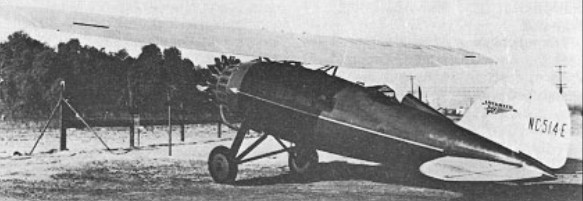
When acquiring his Sirius, Charles Lindbergh had intimated that he might be interested in having retractable landing gear, with a result that the company designed an alternative wing to accept inward-retracting main landing gear units. Although this feature was not adopted by Lindbergh, it became available as a retrofit for Sirius aircraft, first flown on a company-owned Sirius 8A during September 1930. Redesignated Lockheed Altair 8D in this form, the aircraft was loaned to the US Army Air Corps during 1931 and in November of that year, with a new 336kW Pratt & Whitney R-1340-17 engine installed, was acquired by the USAAC under the designation Y1C-25.

Four more aircraft were converted, two Sirius 8As becoming Altair 8D aircraft, the Detroit Aircraft DL-2 being redesignated Altair DL-2A and, most famous of all, one Sirius receiving the designation Sirius 8 Special. This last aircraft was later acquired by Sir Charles Kingsford Smith and, modified to Altair 8D configuration and named Lady Southern Cross, was used by this pilot, with P. G. Taylor as his navigator, to make the first crossing of the Pacific Ocean from Australia to the United States between 20 October and 4 November 1934.

In addition to the conversions, six Altairs were built as new, one of them an Altair DL-2A built by Detroit Aircraft and powered by a 481kW Wright R-1820E Cyclone which was acquired by the US Navy under the designation XRO-1.

Lockheed Sirius
Engine: Wright Cyclone, 680 hp at 2100 ft
Prop: Hamilton Standard
Wingspan: 42 ft 10 in
Wing area: 275 sq.ft
Airfoil section: Clark Y
Length: 27 ft 6 in
Height: 9 ft 2 in
Empty weight: 2978 lb
Gross weight: 4600 lb
Gross wt w/pontoon overload: 6000 lb
Power loading: 8.83 lb/hp
Wing loading: 21.8 lb/sq.ft
Top speed: 175 mph
Cruise: 145 mph
ROC: 1200 fpm
Service ceiling: 20,000 ft
Radius: 2000 mi
Fuel capacity: 225 gal
Pontoon fuel capacity: 300 gal

Sirius 8
Wing span: 13.04m
Maximum weight: 3220kg
Maximum speed: 298km/h
Range: 1570km

Sirius 8A

Sirius 8C
Seat: 4

Altair 8D / Y1C-25
Engine: 336kW Pratt & Whitney R-1340-17

Detroit Aircraft Corporation DL-2 / Altair DL-2A / XRO-1
Engine: 481kW Wright R-1820E Cyclone
Max take-off weight: 2220 kg / 4894 lb
Wingspan: 13.03 m / 42 ft 9 in
Max. speed: 333 km/h / 207 mph

Lockheed 3 Air Express / 4 Air Express / 7 Air Express

The success and reliability of the Vega made this aircraft of interest to many airlines, but Western Air Express required some of its own ideas incorporated. With a fuselage, landing gear and tail unit generally similar to the Vega, this aircraft differed primarily by having an increased-span parasol wing, a cabin seating four passengers or carrying 2.83cu.m of mail, with the pilot’s open cockpit moved to the rear of the cabin, as the Lockheed 3 Air Express.

Power was provided as standard by a 306kW Pratt & Whitney Wasp, but at least one was flown with a Wasp engine of 391kW, and some of these engines were enclosed by the NACA-developed low-drag cowling.
A total of seven of these aircraft was built, plus one Air Express Special with which Laura Ingalls intended to make a non-stop transatlantic flight in 1931. Western Air Express, which had inspired this development of the Vega, acquired only a single example.

The Lockheed 4 Explorer variant of the Air Express/Vega series with low-set monoplane wing, fixed landing gear and 336kW Pratt & Whitney Wasp, had a wingspan was 14.78m and maximum take-off weight 4086kg. Designed for a non-stop trans-Pacific flight to Japan, only two were built. The first crashed during take-off for the record attempt in July 1929, and the replacement aircraft, with jettisonable landing gear, crashed during trials in September 1929. The theoretical range was 8850km.

The Lockheed 7 Explorer variant was an improved version of the Model 4 with a 336kW Wasp C. The first aircraft crashed during trials in May 1930, and second made some moderately successful flights before being written off

Roscoe Turner had a Lockheed Air Express modified with a parachute in a compartment for his attempts in parachuting an airplane safely to the ground.

Lockheed 3 Air Express
Max take-off weight: 1984 kg / 4374 lb
Wingspan: 12.95 m / 42 ft 6 in
Max. speed: 269 km/h / 167 mph

Lockheed 4 Explorer
Engine: 336kW Pratt & Whitney Wasp
Wingspan: 14.78m
Maximum take-off weight: 4086kg

Lockheed 7 Explorer
Engine: 336kW Wasp C

Lockheed 1 Vega / 2 Vega / 5 Vega / DL-1 / UC-101

Vega DL-1

Jack Northrop, with assistance from Gerard F. Vultee, was working on a project of his own while working for Douglas. It was an airplane design incorporating new structural and aerodynamic thinking that would make his air¬plane the most advanced of its time. Since Douglas was tied up with his World Cruiser project, Northrop took his design to Lockheed, where the airplane became known as the Lockheed Vega, with fully cantilevered wooden wings and finely streamlined monocoque, wooden stressed skin fuselage, made in two halves and glued together.

Lockheed Vega Article

The two half-shells of plywood had been pressure-formed to shape in a concrete mould. Low-drag landing gear was of fixed tailwheel type (but Vegas were used frequently with floats or skis), enclosed cabin for a pilot and four passengers, and powerplant for the initial version of the Vega, later identified as the Vega 1, was a 168kW Wright J-5 Whirlwind radial engine.
The initial aircraft was flown for the first time on 4 July 1927 and was acquired by newspaper-owner George Hearst to compete in the Oakland to Hawaii Dole Race, sponsored by James D. Dole, which began on 16 August 1927. The Vega, by then named Golden Eagle and flown by Jack Forst and Gordon Scott, disappeared without a trace en route.

The unexplained loss of this aircraft did not prohibit further sales. A host of achievements brought fame. These included the first trans-Arctic flight and the first exploratory flight over Antarctica (Wilkins and Eielson in the Vega 1 X3903); the first solo transatlantic flight by a woman from Newfoundland to Ireland (Amelia Earhart in the Vega 5B NC7952); and the first solo round-the-world flight (Wiley Post in the Vega 5B The Winnie Mae). In 1931 Wiley Post flew around the world in 8 days, 15 hours and 51 minutes in a Vega with a jettisonable undercarriage. Wiley Post his navigator, Harold Gatty, and the Winnie Mae left New York on June 23, 1931, flying east. Fourteen stops later, after only eight days, 15 hours and 51 minutes, it was back in New York. The actual flying time was four days, 10 hours, and 8 minutes.

Flying the Lockheed Vega

The Vega DL 1 was fitted with a metal fuselage.
At least one Vega 5C was sold to the AAF and designated UC 101.

Vega S Special

A “one-off” Vega S Special which was modified for attacks on speed records. The wing was lowered and the angle of attack changed, but equally important was the adoption, for the first time, of the now familiar “bubble” canopy. The inscriptions indicate that NR-496M (c/n. 619) was owned by Crosley Radio Corporation, on loan to the record-breaking aviatrix Ruth Nichols – sponsored by Life Savers Candy.

Vega S Special

When production ended a total of 128 Vegas had been built: 115 by Lockheed, nine by Detroit Aircraft Corporation (of which Lockheed was a division from 1929-31) and four by others.

Gallery

Vega 1
Engine: 168kW Wright J-5 Whirlwind radial

Engine: P&W Wasp, 750hp.

Vega
Engine: One 425 h.p. Pratt & Whitney Wasp.
Length 27.5 ft (8.37 m).
Wing span 41 ft (12.5 m).
Weight empty 2,050 lb (930 kg).
Seats: 7.
Cruise speed: 135 mph (218 kph).
Max speed: 204 mph.
Ceiling: 17,250 ft (5,250 m) fully loaded.
Range: 900 miles (1,450 km).

Vega 5C (landplane)
Engine: 1 x Pratt & Whitney Wasp SC-1 radial, 336kW / 550hp
Max take-off weight: 2155 kg / 4751 lb
Empty weight: 1163 kg / 2564 lb
Wingspan: 12.5 m / 41 ft 0 in
Length: 8.38 m / 27 ft 6 in
Height: 2.59 m / 8 ft 6 in
Wing area: 25.55 sq.m / 275.02 sq ft
Max. speed: 298 km/h / 185 mph
Ceiling: 5485 m / 18000 ft
Range: 885 km / 550 miles

Vega 5
Engine: Wright J-5, 220hp.
Seats: 5.

Vega DL 1
Engine: Pratt & Whitney Wasp SC 1, 450 hp.

Engine: P&W Wasp Jr, 300 hp
Span: 41 ft
Length: 27 ft 6 in
Weight: 3600 lb
Max speed: 160 mph
Cruise 120 mph

Lockheed 33 Little Dipper / Air Trooper

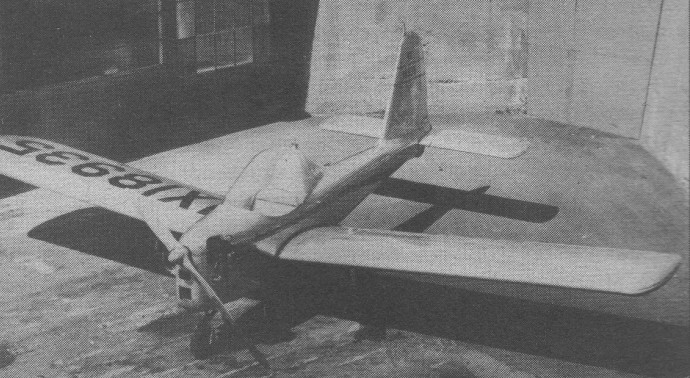
John Thorp had designed the Lockheed Model 33 Little Dipper also known as the Air Trooper in 1944. Only one example was built and flown before the program was cancelled.

After WWII, Thorp designed the Thorp T-211 Sky Skooter and allowed his employee George Robertson to manufacture extra parts and convert a T-211 back into a single seat aircraft to replicate the original Lockheed Air Trooper.

Replica:
Robertson Sky Skeeter

Lockheed Model G

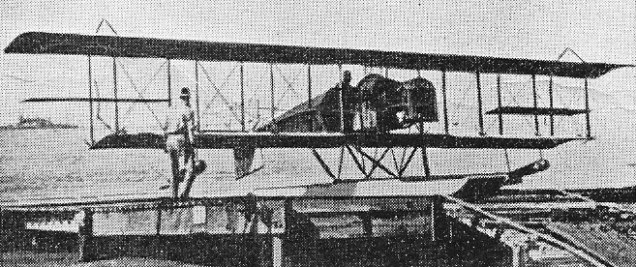
Allan and Malcolm Loughead built their first aircraft, the seaplane, in 1913. A wood and fabric covered three-seat seaplane with flat bottom floats. The aircraft featured ailerons mounted midway between the unequal-span mainplanes.

The Model G was test flown by the Loughead brothers at Santa Barbara, California.

The Model G was a main attraction at the Panama Pacific International Exposition held at San Francisco. Hundreds of visitors to the exhibition had their first experience of air travel in the Model G.

Engine: Curtiss O
Span upper: 46 ft
Span lower: 36 ft
Length: 30 ft
Height: 10 ft
AUW: 2200 lb
Useful load: 584 lb
Max speed: 63 mpg at SL
Seats: 3

Lockheed

Loughead Aircraft Manufacturing Company
Lockheed Aircraft Company

Of the Loughead three brothers Victor (the oldest), Allan and Malcolm, Allan started as a mechanic for a local aviation enthusiast who owned a Curtiss pusher, and he soon became a barnstormer and flight in-structor.
Allan and Malcolm Loughead built their first aircraft, the Model G seaplane, in 1913.
With Malcolm, he formed the Loughead Aircraft Manufacturing Company at Santa Barbara, California, in 1916,
With the help of designer Jack Northrop, Lockheed built the F1 twin-engined flying-boat in 1918, but it was turned down by the Navy. In 1923 Northrop left to take a job with Donald Douglas, and later founded his own corporation.

Loughead Aircraft Manufacturing Company survived until the end of World War 1, when thousands of surplus aircraft and engines flooded the market. Malcolm left to join the automobile industry. The original Lockheed Com¬pany built the moulded-plywood S-1 sports plane. It could not compete with cheap war-surplus aircraft, and the company suspended manufac¬ture in 1920 and was liquidated in 1921.

In 1926, Allan refounded the Lockheed Aircraft Company of Hollywood, and with a young designer, John K. Northrop, soon turned out a radical all wood, monocoque, cantilever monoplane the Lockheed Vega from 1925, a fast two-seater intended for airline work. 141 were built between 1925 and 1932.

Company moved to Burbank 1928. Vega gave rise to low-wing series of transports, the Altair/Orion/Sirius, differing in seating arrangements. Many records and notable flights performed on these aircraft.

In 1929, Lockheed came under the control of the Detroit Aircraft Corpora¬tion, then came the Depression. After the Great Crash Detroit Aircraft Corporation went bankrupt in 1931 and with it, Lockheed. The company went into receivership and, in partnership with Carl Squier a Lloyd Stear¬man, Robert Gross bought the assets in 1932 for $40,000.

Lockheed brothers had left the company, formed Lockheed Brothers Aircraft Corporation Company purchased by Robert E. Cross and Lloyd Stearman for a consortium, resumed trading under old name.

Launched a new series of twin-engined transports, starting with the Lockheed 10A Electra. To¬gether with Stearman and a young de¬signer, Hall Hibbard, Gross supervised development of the Lockheed 10 the original Electra. If the project failed, the company would surely collapse. Midway through the development, wind tunnel tests revealed that the plane had insufficient rudder control. Working in a wind tunnel at the University of Michigan, a young graduate student modified the design and added a twin tail. It solved the problem, and Gross, recognizing talent, immediately hired the student. His name was Clarence “Kelly” Johnson.
In 1934, the Lockheed 10 Electra flew.

In 1937 the L-14 Super Electra appeared, a smaller executive version of the L-10A. RAF bought 250 bomber variants of 14, called Hudson, in 1938. L-18 Lodestar flew 1939, a lengthened and more powerful Model 14.
The Lockheed P-38 Lightning of 1939, introduced as a high-altitude interceptor, had worldwide use, mainly as ground-attack and fighter-bomber aircraft.

In 1939 TWA formulated a requirement for a long-range transport and C. L. Johnson designed the 558km/h Constellation, which first flew in 1943. First 22 requisitioned as military transports. Built up to 1958 in increasingly powerful, larger-capacity and longer-range versions.

Ventura of 1941 was a bomber variant of Model 18. Naval PV-1 came in 1942 and the torpedo-carrying PV-2 Harpoon in 1943. Success of the Harpoon led to long-range Neptune, main equipment of patrol squadrons 1947-1962.

Lockheed was employing 94,000 people by June 1943, but by the end of 1944 were down to 60,000, and by the summer of 1945 they were down to 35,000 – fewer than 1939.

By April 1948 their employment was down to 13,800.

First flight August 1954 of C-130 Hercules tactical military turboprop transport, later also produced in commercial form; delivered from 1956 and remaining in production in 1999 in latest C-130J form with fully integrated digital avionics, advanced engines and propellers, and other improvements (well over 2,200 Hercules transports built).

Company also produced the four-turboprop Electra airliner (first flown December 1957) and derived P-3 Orion long-range maritime patrol/reconnaissance aircraft (first flown August 1958, and remaining in production in the U.S.A. until 1995, although Japanese Kawasaki-built examples continued in production).

Around 1960 Fokker was looking for and American partner. Lockheed turned down the proposal because they thought it could not be profitable, but Northrop agreed to by a twenty-one percent share.

C-130 followed by much larger strategic C-141 StarLifter transport (first flown December 1963) and C-5A Galaxy (first flown June 1968) which, at 348,810kg gross weight and with a span of 67.88m, was then the world’s largest operational aircraft; C-5B followed for USAF and two C-5As modified to carry outsized space cargoes as C-5Cs.

First U.S. jet fighter was Lockheed P-80 Shooting Star (first flown January 1944) which later saw service in Korea. F-104 of 1954 was smallest-span-ever American service aircraft (wings spanned 6.7m) and first fighter capable of sustained Mach 2.0. Saw widespread service as part of U.S. offshore arms and aid deals. Subsequent activities included CP-140 Aurora for Canada as a development of the Orion ;S-3 Viking carrier-borne anti-submarine aircraft (first flown January 1972 and later also used by the U.S. Navy in ES-3A electronic reconnaissance and signals/ communications intelligence, and US-3A carrier onboard delivery variants); and L-1011 TriStar widebodied airliner (first flown November 1970).

A secret “Skunk Works” at Palmdale, California, was responsible for the military U-2 Dragon Lady spyplane (first flown August 1955), A-12 Mach 3.6 strategic reconnaissance aircraft sponsored by the CIA (first flown April 1962) and developed into the YF-12 interceptor and fully operational SR-71A Mach 3+ strategic reconnaissance aircraft for the USAF, and the F-117A stealth fighter for subsonic night attack on priority targets (first flown June 1981), among other types.

In September 1977 Lockheed Aircraft Corporation took new name Lockheed Corporation.
The Tactical Military Aircraft division of General Dynamics bought by Lockheed Corporation in March 1993, becoming Lockheed Fort Worth Company. In March 1995 Lockheed Corporation merged with Martin Marietta to form Lockheed Martin Corporation. Intended merger with Northrop Grumman, announced in July 1997, did not take place. Company set-up then included Lockheed Martin Tactical Aircraft Systems in charge of F-16 production and updates and part of the F-22 program; Lockheed Martin Aeronautical Systems tasked with F-22, military transport and maritime patrol aircraft work, plus production and support of C-130 and P-3; and Lockheed Martin Skunk Works which undertakes advanced, secret and innovative design/development, work including support and improvement of F-117A, U-2 / TR-1, X-33 reusable launch vehicle and more. There are many other divisions.

1990 Lockheed Martin programs include continued production of the F-16 fighter and C-130 transport, development and production of the F-22 Raptor air dominance fighter (first flown September 1990, with first flight of an engineering and manufacturing development aircraft September 1997, and deliveries of full production to start to USAF in 2002 to allow initial operational capability in 2005); and development in association with Northrop Grumman and BAe of Joint Strike Fighter for U.S. forces.
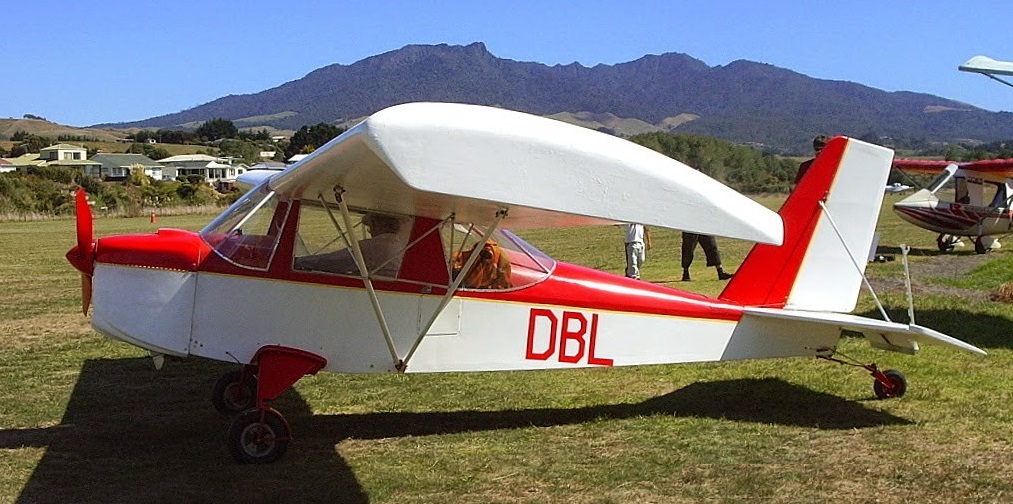
Locke Mini-twin

ZK-DBL (c/n DBL 4)

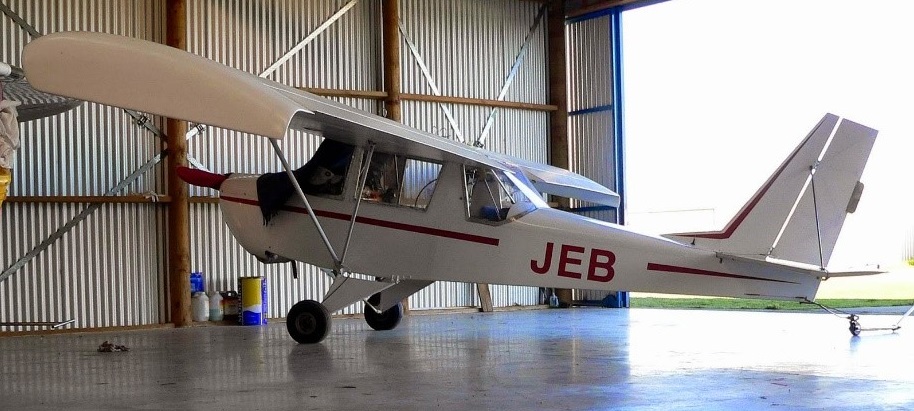
The two- seat Mini-twin was developed from the TEAM “Z” Hi-Max which was a single seater, with the width and wingspan both increased.

First registered ZK-JEB in 13 May 1996, David Locke test flew the aircraft in May 1996. ZK-JEB (c/n DBL 3) is officially a David Boehm Locke Hi Max Minitwin, and it took 1500 hours to construct over a period of 2 years. Powered by a 45 HP Zenoah engine it has a cruise of 65 mph. MAUW is 660 pound (299 Kg). It was a good aeroplane but not really fast enough for cross country flying so Dave Locke turned his attention to the Minitwin Mk II. On 15/1/01 ownership transferred to B StC C McKenzie of Auckland, then on 25/6/02 to S A Hyde, also of Auckland. It then headed to the South Island, to C G L Pennell of Rangiora with whom it had a forced landing following power loss on 8/12/05. It then went to A C Reid of Fairlie and finally to J D Simpson of Karamea.

ZK-DBL (c/n DBL 4) is officially a D Locke Mintwin II. It took 2500 hours to construct and it is powered by a 63 HP 3 cylinder 657cc DOHC water cooled engine from a Suzuki Cappucino sports car. It has a 3:1 reduction gearbox that Dave designed and built himself. Cruise is around 85 to 90mph. Empty weight is 630 pounds (287 Kg) and MAUW is 1,070 pounds (485 Kg). It is still owned by Dave Locke.

Wingspan: 27 ft 3 in
Seats: 2.