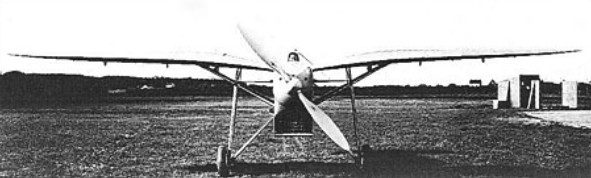
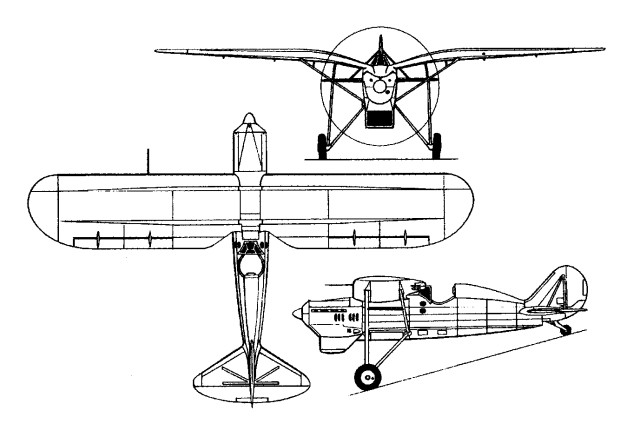
Loire 43

In 1929 Ateliers et Chantiers de la Loire initiated design of a lightweight fighter for which alternative engines were proposed. These were the 300hp Gnome-Rhone Titan II (Loire 40), the 500hp Hispano- Suiza 12Mc (Loire 41) and the 420hp Gnome-Rhone 9Asb Jupiter VII (Loire 42).

When, in 1930, the lightweight fighter concept was discarded by the Service Technique de l’Aeronautique (STAe), a new C1 (single-seat fighter) programme was initiated for which there were 10 official contenders. All of these were powered by the supercharged Hispano-Suiza 12Xbrs 12-cylinder liquid-cooled engine. As one of these contenders, the Loire 43 was a further development of the Loire 40 series of fighter projects.

Nine designers created the Loire 43 completely in metal. Even trim control surfaces was duralumin with a metal fixed pitch prop. It was a gull-winged, braced monoplane of all-metal stressed-skin construction with an armament of two synchronised 7.7mm MAC-built Vickers guns.

The Loire 43 was flown on 17 October 1932, but on 14 January 1933, and before it could undergo official evaluation, on January 14, 1932, its pilot apparently lost consciousness after climbing to 9000m and the aircraft spun into the ground.

Engine: 1 x Hispano-Suiza 12Xbrs
Max take-off weight: 1725 kg
Empty weight: 1245 kg / 2745 lb
Wingspan: 12.00 m / 39 ft 4 in
Length: 7.93 m / 26 ft 0 in
Wing area: 20.60 sq.m / 221.74 sq ft
Max. speed: 360 km/h / 224 mph
Range: 600 km / 373 miles
Loire / Loire-Gourdou-Leseurre / Groupe Loire-Nieuport / Ateliers et Chantiers de la Loire

Shipbuilder of St Nazaire and la Baule which entered aviation on acquiring Gourdou and Leseurre in 1925 to become Loire-Gourdou-Leseurre. The latter left in 1929 and Loire started their own aviation department. The first original design appeared in 1931. In 1933, Nieuport- Delage merged with Loire to become the Groupe Loire-Nieuport. They built single and multi-engined flying-boats, both civil and military, and fighters for the navy. Also constructed Bloch 200 and Dewoitine 500 for the Armee de I’Air. In 1936 became part of SNCAO.

Lohner-Daimler Arrow

Lohner-Daimler was formed in 1911, producing Arrow biplanes. One sold to Austro-Hungarian Army late 1911.

In 1912 made a world’s altitude with passenger record at 4,530 metres (14,862 feet).

Four were built during 1912.

1911
Engine: Aust. Daimler, 60 hp
Speed: 50 mph / 80 kph

1912-13 Pfeilflieger
Engine: Aust. Daimler, 125 hp
Span: 44 ft 3 in / 13.50 m
Length: 32 ft / 9.70 m
Wing area: 450 sq.ft / 42 m²
Total weight: 926 lb / 420 kg
Speed: 62 mph / 100 kph

Lohner Marineflieger III / Seeflugzeug Nr.3

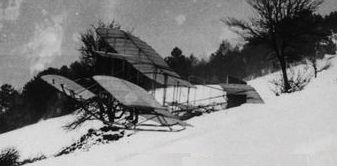
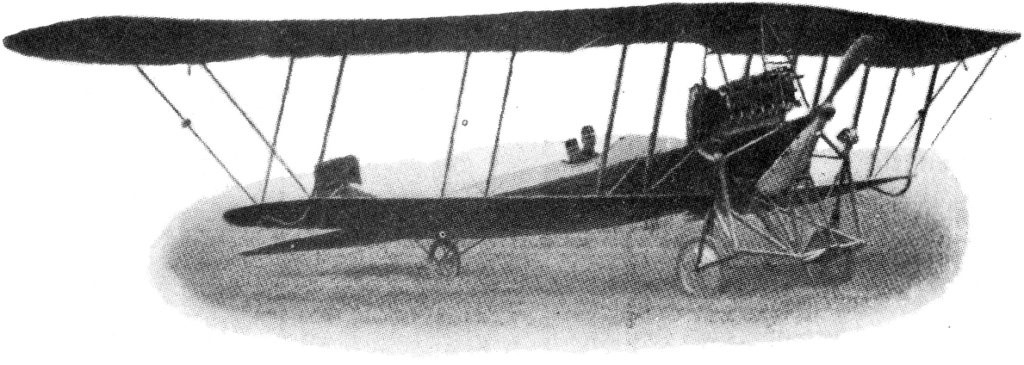
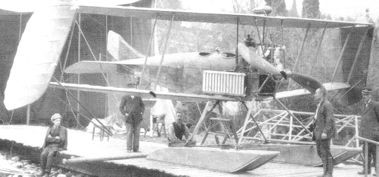
The third aeroplane of the Austrian navy, a “Pfeilflieger” biplane with a 120 hp Daimler Engine. Lohner was asked to develop a biplane for the Austro-hungarian navy in 1911 which was finished in March 1912 with a temporary undercarriage to be able to test on the land. Typical of the design was the high mounted propeller – driven by a chain – and the big wings (unequal span, 4 struts at a side).

Lohner Pfeilflieger Sport type

Second model

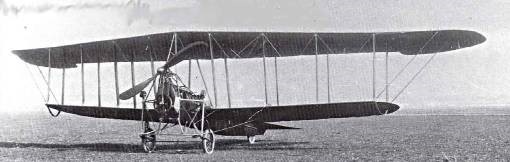
Two copies were built of the 1912 Pfeilflieger Sporttype light arrow-biplane with 85 hp Hiero engine. One for the k.u.k. Luftfahrtruppe got the name “Cyklon”. A second model was sold to Herman Hold. It could be fitted with wheels or floats. This photo was taken when Hold flew the aircraft at the Adriatic See at Portorož (today Slovenia) in 1913.

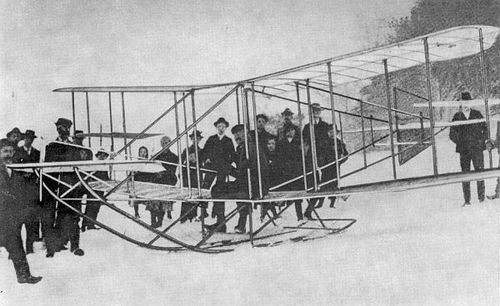
The 1910 Lohner-Daimler “Pfeilflieger I” biplane was designed by Karl Paulal Built by J. Lohner & Co. Vienna, Austria.