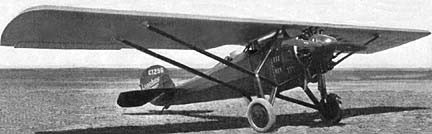
Yakolev AIR-1

After success with the glider young designer decided to build single-seat ‘flying motorcycle’ with 18hp engine. But consultations with his advisor and good-wisher Vladimir Pyshnov changed Yakolev’s plans. There was a need in two-seat trainer with much more powerful engine. A 60hp ‘Cirrus’ was chosen. Wood-and-fabric construction was common for light trainers, with front and upper parts of the fuselage covered with plywood.
Finally the project was approved by Osoaviakhim, and Yakolev received money collected by Moscow Pioneers. After day’s work on the airfield he turned into designer, treasurer and administrator at the same time. Among his backers at this critical time was S.V.Ilyushin.
But some ill-wishers were around too. They not just expressed their skepticism. One of students at the Academy handed in a report about errors in Yakolev’s calculations. Yakolev was summoned by the Osoaviakhim executives and was examined on aircraft airworthiness. He was discouraged and almost lost trust in his project. But V.Pyshnov checked his calculation and gave Yakolev written certificate with his personal approval.
AIR-1 was finished on May 1, 1927 and performed its maiden flight on May 12 with Yu.I.Piontkovsky at the controls. It was a complete success. All test requirements were fulfilled within the following two weeks, without serious rebuilds. The aircraft was approved for a trial flight Moscow-Kharkov-Sevastopol-Moscow. It was piloted by Yu.I.Piontkovsky, A.S.Yakolev participated as a passenger. They took off early on June 12, 1927 from Moscow. After landing and refueling in Kharkov they touched down in Sevastopol in the evening of the same day.
The return leg was made by Piontkovsky alone. He flew non-stop for 15h 30min and covered distance 1420km, creating two records in the aircraft class: for distance covered and time being airborne. Designer and test-pilot were given money rewards and diplomas. But the greatest reward was Yakolev’s acceptance by Air Force Academy (VVA).
During the fall of 1927 AIR-1 participated in military exercises of Odessa military district, serving as communication aircraft. It proved to be superior over other presented light aircraft (powered by 18-20hp engines). Later AIR-1 was operated by flying clubs.

Engine: 1 x A.D.C. Cirrus I, 44kW
Max take-off weight: 535 kg / 1179 lb
Empty weight: 335 kg / 739 lb
Wingspan: 8.9 m / 29 ft 2 in
Length: 7.0 m / 23 ft 12 in
Height: 2.7 m / 9 ft 10 in
Wing area: 18.7 sq.m / 201.28 sq ft
Max. speed: 140 km/h / 87 mph
Cruise speed: 120 km/h / 75 mph
Ceiling: 3800 m / 12450 ft
Range: 480 km / 298 miles
Crew: 2
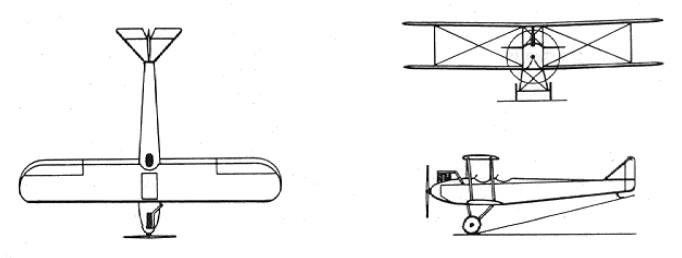
Yakolev VVA-3 / AIR-1

Yakolev

While working as a mechanic at Khodynka airfield, Yakolev had access to an aircraft graveyard in a ravine next to the flight area. In the course of a dozen years it was filled with wrecked airframes from all over the world, and Alexandre Sergeevich fully used his chance to study variety of construction methods, examine the nature of breakdowns and to discover the weak points in damaged parts.
Aieksandr Sergievich Yakolev won a design competition for lightplanes even before entering an engineering academy in 1927. His design bureau was established 1935, and first military design was the Yak-4 twin-engined fighter, completed 1939. The Yak-1/3/9 series of single-seat fighters served the Soviet Union well in combat during Second World War and were built in larger numbers than any other Soviet wartime fighter. A Yak-3 airframe was modified to produce the Yak-15 jet fighter in 1945, developed subsequently as the Yak-17. The Yak-23 of 1947 was a complete redesign, resembling the earlier fighters only in fuselage configuration.
Other post-war Yakolev designs included the Yak-12 high-wing utility aircraft, produced also in Poland and China, Yak-11 and Yak-18 trainers, Yak-28 twin-jet bomber and reconnaissance aircraft (production began 1960) and related Yak-28P radar-equipped all-weather interceptor (first flown 1960), and Yak-40 (first flown October 1966) and Yak-42 (first flown March 1975 and still in production) short-range transports. The important Yak-38 operational VTOL combat aircraft (first flown January 1971 for Russian naval use) was followed by a new VTOL prototype known as the Yak-41 (first flown March 1987) which was subsequently abandoned, as was the projected next-generation STOVLYak-43 and the Yak- 44 shipborne AEW&C aircraft. The Yak-142 transport is a new variant of Yak-42D, featuring mostly US digital avionics and other improvements. Projected airliners include the short-range twin-turbofan Yak-46-1 for 126 passengers, short-range Yak-46-2 with propfan engines, and Yak- 242138-180 passenger short-range airliner.
In the field of general aviation, Yakolev developed the Yak-18T 4-seat multipurpose lightplane development of Yak-18 (first flown 1967 and still available), Yak-50 aerobatic sporting aircraft (first flown 1972), Yak-52 tandem two-seat piston trainer (first flown 1974 and still built in Romania), Yak-54 two-seat aerobatic trainer (first flown December 1993), Yak-55M single-seat aerobatic aircraft (first flown 1989), Yak-58 six-seat business transport with a pusher piston engine (first flown April 1994), and Yak- 112 four-seat light aircraft (first flown October 1992). General aviation projects include Yak-48, thought to be derived from the Israeli-designed Galaxy, Yak-56 piston-engined primary trainer and Yak-57 single-seat aerobatic competition aircraft. Yakolev is also a partner with Aermacchi of Italy in the Yak/Aem-130 and Yak-131 jet trainer and light combat aircraft program. In total, Yakolev has produced over 70,000 aircraft of more than 100 types since 1927, and the present Design Bureau is joined by the Saratov and Smolensk manufacturing facilities under Yak Aircraft Corporation.

On 22 August 1989, Alexander Yakovlev died at age 83.

Yackey BRL-12

Yackey BRL-12 on expedition

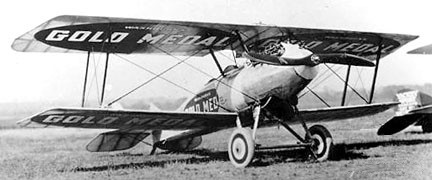
The 1926 Yackey BRL-12 Transport was a conversion of war surplus Breguet 14.B2 with corrugated-metal fuselage.

One was converted for Dr Matthew Stirling 1926 New Guinea expedition, as “The Ern” for $7,500. When glue on the wooden floats deteriorated after two months, the plane was abandoned on the Mamberamo River.

On river bank after one pontoon failed – courtesy Howard Hamer

Engine: Liberty 12, 420hp
Wingspan: 48’3″
Length: 29’1″
Useful load: 2400 lb
Max speed: 120 mph
Cruise speed: 114 mph
Stall: 32 mph
Seats: 3

Yackey Thomas-Morse TM-1

Yackey Prototype C1296

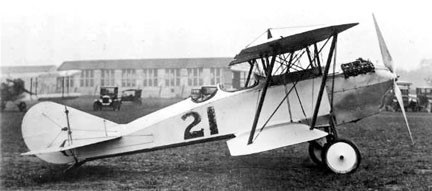
The Yackey Aircraft Co was involved in converting surplus Thomas-Morse TM-1s into 2-3p civil models in 1923 for $1,275-1,475, as well as surplus Renault-powered Breguets into transports for $4,750 and up. Designed by Art Chester, two were completed; C672 and C1296.

Engine: Wright J-5, 225hp
Wingspan: 41’2″
Length: 26’2″
Max speed: 140 mph
Cruise: 115 mph
Stall: 40 mph
Seats: 3

XtremeAir XA 42 / Sbach 342

The XtremeAir Sbach 342 is a German high performance two-seat aerobatic and touring monoplane designed by Philipp Steinbach with Albert Mylius and built by XtremeAir GmbH of Hecklingen.
The Sbach 342 (a marketing name for the XA42) is a composite structure low-wing monoplane with a fixed conventional landing gear with a tailwheel. It is powered by a 315 hp (235 kW) Lycoming AEIO-580-B1A piston engine driving a three-bladed propeller. It is the tandem version of the single-seater XA 41 (XtremeAir Sbach 300) which was designed by the same team in Speyer in 2004. The XA42 received a type certificate from the European Aviation Safety Agency in March 2011. On 5 November 2012 it received its type certification through the FAA.
At least 37 have been produced.

Engine: 1 × Lycoming AEIO-580-B1A, 245 kW (315 hp)
Length: 6.67 m (21 ft 11 in)
Wingspan: 7.5 m (24 ft 7 in)
Height: 2.54 m (8 ft 4 in)
Overall height, ground attitude: 2.3 m / 7.5 ft
Wing area: 11.25 sq.m (121 sq.ft)
Aspect ratio: 5
Stabilizer / Elevator span: 3.20 m / 10.5 ft
Stabilizer / Elevator area: 2.98 sq.m / 32.1 sq.ft
Empty weight: 610 kg / 1344 lb
Max. Take off weight Aerobatic: 850 kg / 1875 lbs
Max. Take off weight Utility: 999 kg / 2200 lbs
Wing loading Aerobatic: 75.5 kg/sq.m / 15.4 lb/sq.ft
Wing loading Utility: 84.4 kg/sq.m / 17.3 lb/sq.ft
Maximum speed @ 3000 ft: 416 km/h (256 mph)
Cruise 75%: 185 kts
Stall speed: 53 kts
Rate of climb: 3200 ft/min
Service ceiling: 4572 m (15000 ft)
Range @ 75% 205kts TAS @ 10,000ft: 800 nm
VA: 174 kts / 322 km/h
VC: 185 kts / 345 km/h
VNE: 225 kts / 416 km/h
Load Factor Aerobatic flight: +/-10G
Load Factor Utility: +4,4G / -2G
Roll rate: 450°/sec
Take off over 50 ft obstacle: 260 m / 853 ft
Landing over 50 ft obstacle: 400 m / 1312 ft
Seats: 2

XtremeAir XA41 / Sbach 300

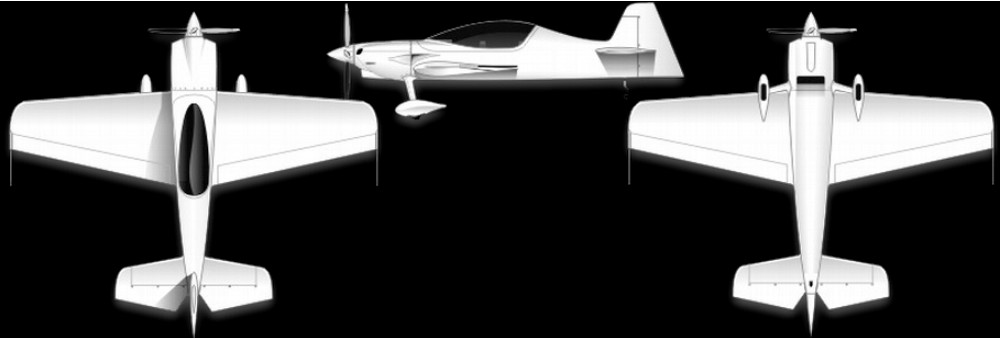
The XtremeAir Sbach 300 is a German aerobatic aircraft, designed by Philippe Steinbach and produced by XtremeAir, of Cochstedt. The aircraft was supplied in 2012 as a complete ready-to-fly-aircraft. The aircraft bears the company designation XA41, but is marketed under the name Sbach 300.
The Sbach 300 is an all-composite design, predominately constructed of carbon fibre. It features a cantilever low-wing, a single-seat enclosed cockpit under a bubble canopy, fixed conventional landing gear and a single engine in tractor configuration.
The aircraft’s wing mounts full-span ailerons with spades to lighten control forces, which give a roll rate of 450° per second. The standard engine employed is the 324 hp (242 kW) Lycoming IO-580 four-stroke powerplant.

The Sbach 300 was flown to a German national aerobatic championship in the unlimited class.
The 300 was later developed into a two-seat version, the XtremeAir Sbach 342, which was introduced in 2007.

XtremeAir XA-41 (Sbach 300)
Engine: 1 × Lycoming IO-580 B1A, 242 kW (324 hp)
Propeller: 3-bladed constant speed
Length: 6.30 m (20 ft 8 in)
Wingspan: 7.50 m (24 ft 7 in)
Height: 2.3 m (7 ft 7 in) in three-point attitude
Wing area: 11.25 sq.m (121.1 sq ft)
Aspect ratio: 5:1
Stabilizer / Elevator span: 3.20 m / 10.5 ft
Stabilizer / Elevator area: 2.98 sq.m / 32.1 sq.ft
Empty weight: 570 kg (1,257 lb)
Gross weight: 850 kg (1,874 lb) for aerobatics
Gross weight: 999 kg (2,200 lb) for non-aerobatic flight
Fuel capacity: 245 litres (54 imp gal; 65 US gal)
Maximum speed: 389 km/h; 242 mph (210 kt) @ 3000 ft
Cruising speed 75%: 345 km/h (214 mph; 186 kn)
Stall speed: 94 km/h (58 mph; 51 kt)
Never exceed speed: 417 km/h; 259 mph (225 kn)
VA: 174 kts / 322 km/h
VC: 185 kts / 345 km/h
Range 75% pwr: 1,482 km; 921 mi (800 nmi)
Load Factors Aerobatic: +/-10G
Load Factors Utility: +4,4G / -2G
Rate of climb: 3500 ft/min
Roll rate: 450°/second
Wing loading Aerobatic: 57,8 kg/sq.m / 11.8 lb/sq.ft
Wing loading Utility: 66,7 kg/sq.m / 13.7 lb/sq.ft
Take off over 50 ft obstacle: 230 m / 750 ft
Landing over 50 ft obstacle: 380 m / 1250 ft
Crew: one