The L-4 Model 90 was a four-seater of 1934
Era
Luscombe Phantom
Only 22 of the Phantom were built, production ending in 1934.
Luscombe Aircraft Engineering Company of Kansas City, produced the Phantom I, the first U.S. metal light aircraft and a very successful design developed by Ivan Driggs from the Monocoupe D-145; 125 were built. Fabrication of parts was farmed out, reducing overhead costs on the production line. Production ceased during Second World War because of metal shortage, but was resumed in 1949.
Luscombe Monocoupe / Velie Monocoupe
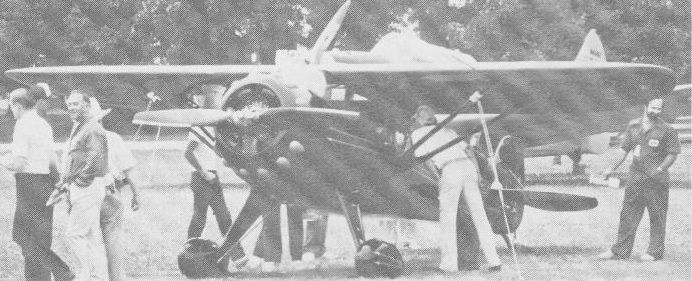
More known for his carriages, automobiles and racers, and motors, Velie (grandson of John Deere) also capitalized and manufactured the initial 55-65hp Monocoupe aircraft upon acquisition of controlling interest in Central States Aircraft Co in 1927, hence early popular reference to “Velie Monocoupes” signifying not only the powerplant but the constructor.

When Velie died of an embolism in Oct 1928, his son took the reins but he, too, suffered a heart attack in Mar 1929 and Don Luscombe took over.
Don A. Luscombe’s first aircraft, the Monocoupe, was built by the Central States Aero Company of Davenport, Ohio. It was a small two-seat sporting monoplane known as the Central States Monocoupe. Powered by a 70 hp engine, it was reputedly able to become airborne within five seconds of starting its take-off run.
Luscombe Airplane Corp
Don A. Luscombe’s first aircraft, the Monocoupe, was built by the Central States Aero Company of Davenport, Ohio. Became in 1928 the Mono Aircraft Corporation of Moline, Illinois, with Luscombe as president and chief engineer.
Luscombe left in 1933 and next year set up the Luscombe Aircraft Engineering Company of Kansas City, producing the Phantom I, the first U.S. metal light aircraft and a very successful design developed by Ivan Driggs from the Monocoupe D-145; 125 were built. Fabrication of parts was farmed out, reducing overhead costs on the production line. Production ceased during Second World War because of metal shortage, but was resumed in 1949. Following the L-4 Model 90 four-seater of 1934 came the 1937-1938 Model 8a, of which 1,100 were built, and the 1940 Silvaire, of which production had reached 6,000 by 1961. The Skybaby and two other low-powered versions were built. The postwar company, based at Dallas, Texas, went bankrupt in 1949, but was revived with finance from Texas Engineering and Manufacturing Company Inc under the old name. The emergency of the 1950s caused suspension of production and the company was bought by Temco Aircraft Corporation, which sold manufacturing rights of the Silvaire Model 8 in 1955 to the Silvaire Aircraft Company.
Lunardi 1784 Balloon

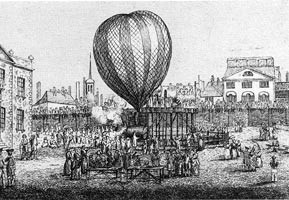
The Lunardi balloon of 1784 was the first gas balloon to make an ascension on the British Isles – September 15, 1784. Later exhibited at the London Pantheon by the flamboyant Italian aeronaut Vincenzo (Vincent) Lunardi, secretary to Prince Caramanico, the Neopolitan ambassador to the Court of St. James.
Lukhovitsy SL-39WM Terminator
The Lukhovitsy Machine Building Plant built five SL-39WM “Terminator” two-seat lightplanes from Interavia 1-1 components before assembling Interavia 1-1 Ls.
Lukhovitsy Machine Building Plant
Russia
Founded 1953 as division of GAZ-30 factory (now MAPO), with assembly of aircraft since 1968. In addition to constructing the MiG-29 and other aircraft, built five SL-39WM “Terminator” two-seat lightplanes from Interavia 1-1 components before assembling Interavia 1-1 Ls.
Luftverkehrs B.1
Luftverkehrs first own design was the B.1 of 1913. An efficient aircraft remaining in service for observation and training for some years, it was the forerunner of all German two-seat observation aircraft of 1914-1918.
Luftverkehrs GmbH
Germany
Based at Johannisthal, Berlin; one of the largest German aircraft companies during First World War. Built Farmans under license, its own first design being the B.1 of 1913. An efficient aircraft remaining in service for observation and training for some years, it was the forerunner of all German two-seat observation aircraft of 1914-1918. Developed lengthy series, including very popular C.V and C.VI as well as prototype fighters and bombers. Converted several postwar for service with civil airlines.
Luft Torpedo 5DI
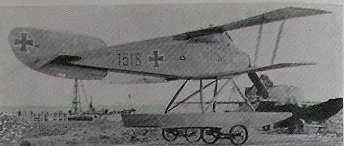
150 hp Benz 1916-17

