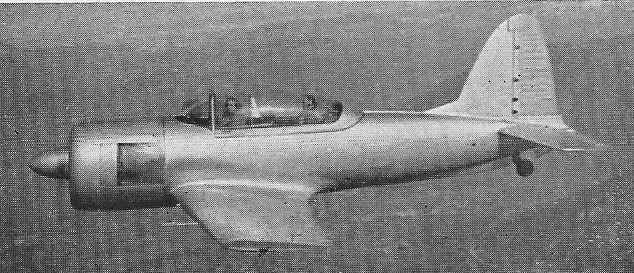
The 1952 Macchi MB.323 was designed to meet an Italian Air Force specification for a two-seat basic trainer. The first prototype was powered by a 610 hp Pratt & Whitney Wasp, and the second had an Alvis Leonides 502/5 Mk.24.
Engine: 610 hp Pratt & Whitney Wasp Max speed: 242 mph at 5905 ft Cruise: 199 mph at 9842 ft ROC: 1436 fpm Service ceiling: 21,325 ft Range: 808 mi Empty weight: 4409 lb Loaded weight: 5575 lb Wingspan: 39 ft 4.5 in Length: 29 ft 11.5 in Height: 13 ft 1.5 in Wing area: 217u sq.ft
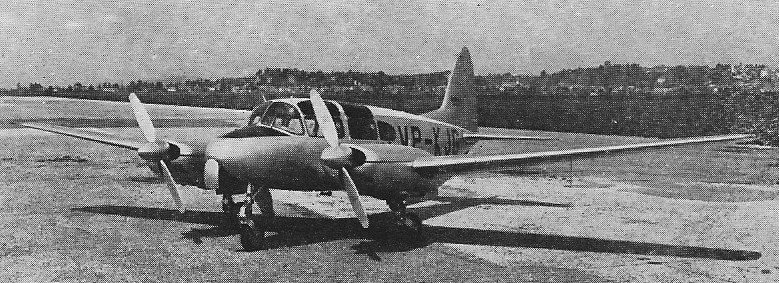
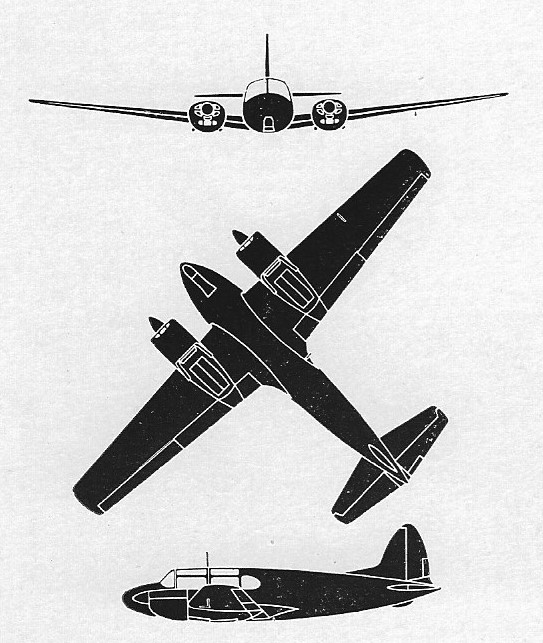
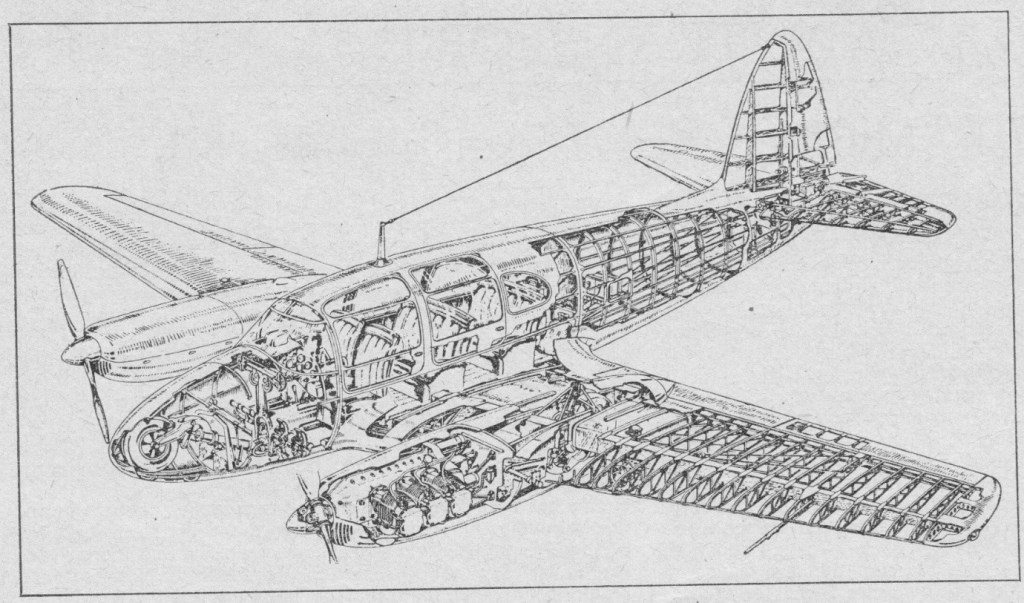
The MB.320 is a development of the post-war MB.314. Powered by two Continental E.185 engines of 185 hp driving Piaggio mechanical variable pitch or Aeromatic automatic constant speed propellers. The cantilever low-wing has a NACA 2300 section and wooden single-spar covered by plywood, fitted with differential slotted ailerons and flaps. The fuselage is built in three sections with a detachable metal e cone and woo centre and rear with plywood skins. The centre section contains the cabin and baggage compartments. The wood tail section has trim tabs in the starboard elevator and rudder. The undercarriage is retractable with the fully swivelling nose wheel retracting backwards into the nacelles. Sound proofed and air conditioned, the cabin seats six, two pilots side-by-side, and four passengers. A baggage compartment is aft of the rear seats.
Introduced in 1949, the MB.320 was produced in limited numbers.
A manufacturing licence was acquired by Societe Francaise de Constructions Aeronautiques Lignel, which planned manufacture as the VEMA-51. This licence was not taken up.
In addition to various Italian commercial concerns, three were sold to East African Airways.
One of three supplied to East African Airways.
Engines: 2 x Continental E-185, 185 hp Wingspan: 42 ft 7 in Wing area: 226 sq.ft Length: 28 ft 4 in Height: 10 ft 6 in Empty weight: 3670 lb Loaded weight: 5511 lb Max speed: 186 mph at SL Cruise: 156.6 mph Min speed: 65 mph ROC: 925 mph Climb to 6500 ft: 5 min 5 sec Service ceiling: 24,930 ft Range: 665 mph Seats: 6
The Schneider Trophy never experienced any casualties during competition, but several pilots were killed training for the races. Italy had five casualties: Vittorio Centurione in 1926 in a Macchi M-39; Giuseppe Motta in 1929 in a Macchi M-67; Tomasso Dal Molin in 1930 in a Savoia S.65; Giovani Monti and Stanislao Bellini in 1931 in a Macchi MC-72.