Mac Para Velvet

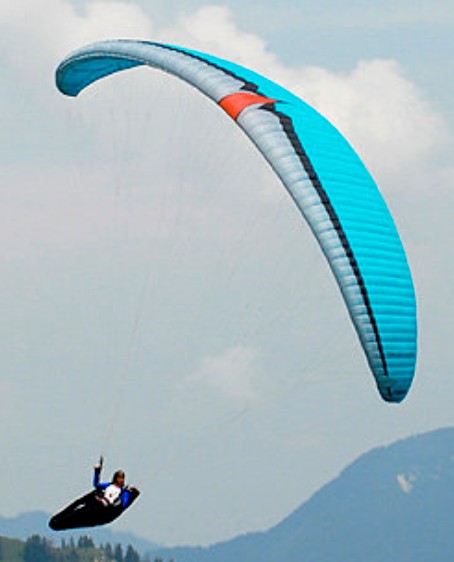
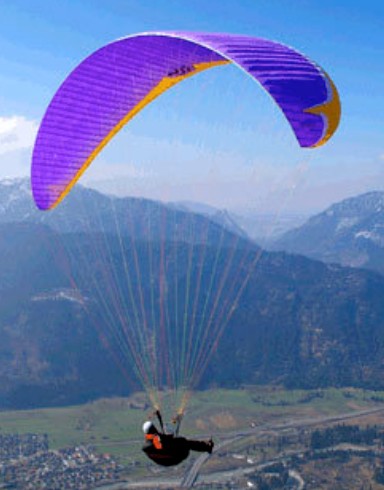
The Velvet is a paramotoring glider and was designed for a wide range of intermediate and advanced paramotoring pilots looking for relaxed flying.
The elliptical form of the canopy has an aspect ratio of 5.5. The Velvet has 56 cells with full diagonals. Lines are attached to every third rib and this construction allows the lines to be reduced to two tiers. The serial production version of the Velvet is equipped with rear-riser trimmers with a 5 cm range to compensate torque.(-2 cm to decelerate the glider and +3cm to accelerate the glider). Additionally the risers are split to facilitate Big Ears. The positioning of the outermost “A” line makes progressive closure easy. Launching characteristics are typical of all MAC PARA gliders. The R&D team paid extra attention to the handling of the glider during take off and to the landing flare. This characteristic offers the pilot easy landings in nil-wind conditions even when heavily loaded. The light brake pressure allows pleasant turns during long flights, but increases progressively toward the end of its travel to offer safety reserves. The glider is undemanding and resistant to collapse even in rough airt due to the customized semi-reflex airfoils. It features excellent stability throughout the full weight and speed range. The canopy is moderately damped in all axes and offers flexibility and agility in turns. It does not overshoot or sit back. The Velvet can also be flown without a motor. Thanks to the serial trimmers, its sink rate can be decreased. With closed trimmers is its climbing performance is at a similar level to normal paragliders. The Velvet is equipped as standard with especially soft brake handles with magnetic clips and Velcro. There are no swivels on the Velvet brake lines to minimize the risk of damage to the propeller if the handle contacts it.
Thanks to the Velcro, placing the handles on the risers in flight or during take-off preparation is much easier. Velcro closures on the wingtips make access easier to remove any sand, grass or small stones from the glider.

Price 2009: $3,400.00
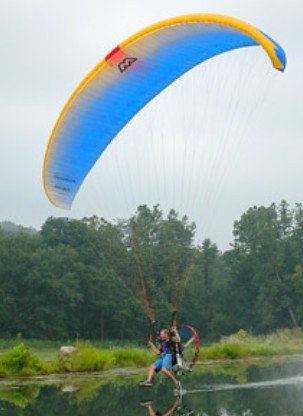
Mac Para Spice

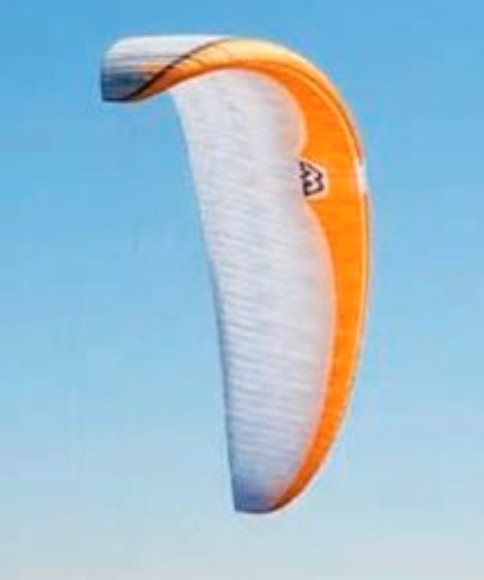
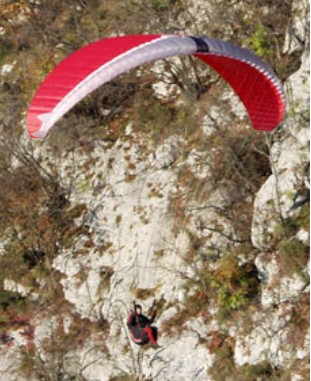
The Spice was specifically designed for paramotoring, with emphasis on stability, maximum speed, and of course, excellent manoeuvrability. TheMuse and Eden 2 have both built a reputation for use under power and the Spice completes the range as a high performance paramotoring glider.
Newly developed airfoils allowed for higher speed and for low fuel consumption. Immediate and precise reaction to control input, manoeuvrability, easy take-offs with ample lift, and easy landings are the Spice.
The Spice has 63 cells and an aspect ratio of 5.8. The construction uses diagonal ribs, “Depowering lines” and line configuration as used for the Intox. Colours and designs are the same as those used for the Magus.
The Spice comes with a 4 point riser system and is equipped with split A risers giving more stability by accelerated flight. It also helps for big-ears.

Price 2009: $3,200.00

Mac Para Magus

After the success of their Magus protos in the Europeans, very well handled by top pilots like female Champion Petra Krausova and Thomas Brauner (3rd overall), Mac Para announces the release of the Magus 5. The new race machine benefits from the results of 8 different prototypes flown by test pilots during this season, and one of the main differences with the Magus 4 is a higher aspect ratio and less lines. Protos with 3 and 4 row line systems were tested and compared, and the 4-lines system proved to offer better characteristics. The Magus 5 has a similar planform to its predecessor “with very small changes”, a new airfoil and different wingtips. The result is a glider with “very good climbing performance, good stability, extraordinary gliding, and high maximum speed” according to Mac Para. The Magus 5 will be available in four sizes to cover a weight range from 75 to 130 kg.

The Magus XC is a high performance glider designed for Cross Country flights that should only be flown by experienced pilots. MacPara has transformed experience from Magus series developments into serial class of high performance paragliders.

The Magus XC has an aspect ratio of 6.2. Use of Magus 5´s airfoils give the paraglider an excellent glide performance both at trim and on accelerated flight. Magus XC inflates very easily and has pleasant ground handling characteristics. The reinforcement flap system in the centre of canopy combined with the bunching system on the wing tips give precise handling with outstanding climbing performance. Just a short brake input is needed for a flat turn. This brake system pulls together a part of the trailing edge when applying the brakes. The handling is precise in turns with average pressure and not tiring even on long flights.

Best glide can be achieved with released brakes. The maximum speed measured with a high wing loading is 52-54 km/h. This is less then competition glider Magus 5 but the reduction of max. speed has lead to softer reactions by asymetric collapses of 70% on accelerated flight. Spiral dive is easy to enter. The Magus XC is not spiral stable, meaning that the glider exits the spiral when the pilot releases the brakes and returns his weight-shift to a neutral position.

Macpara Magus XC M

Mac Para Pasha

A biplace Pasha II is certified DHV 1-2. Development of this replacement for Pasha took more than a year, and the final result is a classic construction, with every second rib attached to lines, and diagonal tapes. The handling and performance were kept similar to the first one; with some improvements like its new airfoil shape specially developed for easy take-offs, stable glider and light brakes, according to the Team at Mac Para. The weight range goes from 140 to 220 kg, glide is around 8,3 and the size is about 42 sq.m.

Pasha 3

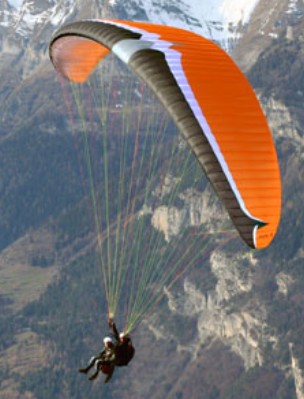
The Pasha 3 is a tandem wing for both professional and recreational tandem pilots. With easy take-off and great landing behaviour the glider is well suited to commercial use. Its excellent performance combined with light and precise handling will delight cross-country pilots.

The Pasha 3 is an elliptical canopy with 54 cells and flat aspect ratio of 5.35. Mac Para use their “Pg” software to aid design, giving cleaner sails and offering less drag to improved glide performance. The classic construction with diagonal V-tapes and a system of de-powering lines and tapes gives the canopy stability and helps maintain a clean profile. Lines are attached to every second rib and this construction allows the lines to be reduced to two tiers except at the wing tip. To improve the sink rate in big ears a wide area of the surface is attached to the outermost lines and those lines are reduced to three tiers. A simple line layout employing 3 A, B and C and 2 D main lines allows easy preparation prior to take off. The Pasha 3 has a 5 point riser including a trimmer system with claw buckles. Additionally the risers are split to facilitate Big Ears. The positioning of the outermost A line makes progressive closure easy. The Pasha 3 is equipped as standard with brake handles with a swivel and magnetic clips. Velcro closures on the wingtips make access easier to remove any sand, grass or small stones from the glider.

Like the Pasha 2 the glider inflates very easily in all conditions even in a light, nil or cross wind. The Pasha 3 has pleasant ground handling characteristics. The canopy does not over-shoot the pilot. It takes only a few steps with lightly applied brakes to fly. The Pasha 3 is very stable in flight with good speed even when lightly loaded. The handling is precise in turns and not tiring even on long flights thanks to the trailing edge bunching brake system. This brake system pulls together the trailing edge when applying the brakes. Just a short brake input is needed for a flat turn. Trimmers offer you more safety and control of speed when you have a lighter passenger or when the wind is strong. Maximum speed can be achieved with released trimmers. The maximum speed measured with a high wing loading is 42-43km/h. Spiral dive is easy to enter. The Pasha 3 is not spiral stable, meaning that the glider exits the spiral when the pilot releases the brakes and returns his weight-shift to a neutral position. The exit is quite simple and the pitch remains well damped. The landing is the biggest improvement when compared to the Pasha 2. The flare is with good control of speed. With good piloting you do not need to take a step forward when landing, specially if you open the trimmers before landing.
The Pasha 3 is available in sizes 38 sq.m and 42 sq.m.

Price 2009: $3,800.00

Mac Para Envy

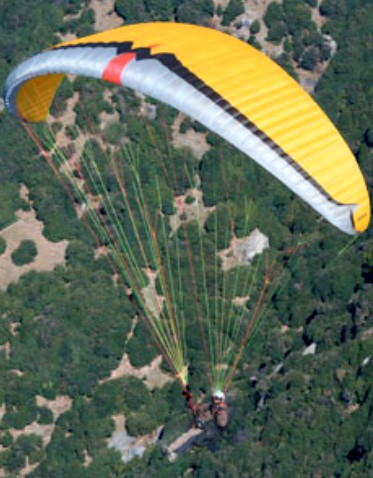
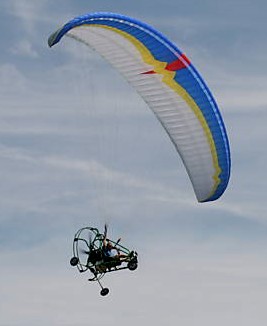
The DHV2 Envy from the Mac Para was made for experienced cross country pilots “looking for relaxed flying”. At MAC PARA say that the Envy has the same stability of their Eden 3 (DHV1-2) with higher maximum speed and performance, and a more precise handling. The slim elliptical form of the canopy has an aspect ratio of 5.71. The Envy has 56 cells with full diagonals. Lines are attached to every third rib and this construction allows the lines to be reduced to two tiers. According to the manufacturer, the glider is undemanding and resistant to collapse even in rough air. “The moderate brake pressure allows pleasant turns with good climbing performance and increases progressively towards the end of its travel to offer safety reserves. The canopy is moderately damped in all axes and offers flexibility and agility in turns. It does not overshoot or sit back”. Other flying characteristics claimed by Mac Para are smooth and predictable reopening after a collapse, easy inflation and launch, and easy landings. The Envy was designed to “Fly In Peace“, and passed certification is sizes 25,27 and 30 (23 was in process). The Envy is available in 4 sizes and 6 colour schemes.

The Envy was made for experienced cross country pilots looking for relaxed flying.
The elliptical form of the canopy has an aspect ratio of 5.71, and has 56 cells with full diagonals. Lines are attached to every third rib and this construction allows the lines to be reduced to two tiers.
It is no more demanding than a 1-2 in any respect, despite the greater aspect ratio. The glider is undemanding and resistant to collapse even in rough air and features excellent stability throughout the full weight and speed range. The moderate brake pressure allows pleasant turns with good climbing performance and increases progressively toward the end of its travel to offer safety reserves. The canopy is moderately damped in all axis and offers flexibility and agility in turns. It does not overshoot or sit back.
In an induced collapse the glider does not rotate quickly and will usually reopen within 60 degrees. The opening is smooth and predictable.
The use of high-quality materials and constant quality control during the Mac Para manufacturing process together with consistent development work produces high quality products.

Price 2009: $3,400.00

Mac Para Eden

Eden 4

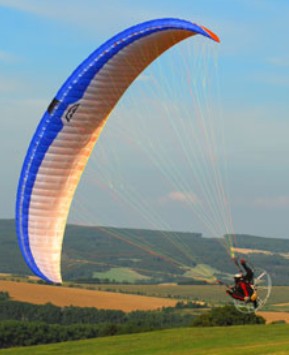
The Eden 3 has excellent launch and stability features, and is proven in paragliding and paramotoring. The concept of the Eden 3 and transferred it to a completely new design. This was the Eden 4.
Price 2009: $3,150.00

Eden 24
Wing area: 24.4 sq.m
Certification: Afnor
Pilot weight: 65-90 kg
No. of cells: 46
Wing span: 11.3 m
Aspect ratio: 5.23
Min sink: 1.15 m/s
Max speed: 46 kph
Price (1998) 15700 Fr

Eden 27
Wing area: 27.6 sq.m
Certification: Afnor
Pilot weight: 80-110 kg
No. of cells: 46
Wing span: 12.04 m
Aspect ratio: 5.25
Min sink: 1.15 m/s
Max speed: 46 kph
Price (1998) 15700 Fr

Eden 29
Wing area: 29.85 sq.m
Certification: Afnor
Pilot weight: 95-130 kg
No. of cells: 46
Wing span: 12.52 m
Aspect ratio: 5.25
Min sink: 1.15 m/s
Max speed: 46 kph
Price (1998) 15700 Fr

Macomber Rotary Engine Company Macomber

In 1911 the Macomber Rotary Engine Company of Los Angeles marketed one of the first axial internal-combustion engines, manufactured by the Avis Engine Company of Allston, Massachusetts. A four-stroke, air-cooled unit, it had seven cylinders and a variable compression ratio, altered by changing the wobble-plate angle and hence the length of piston stroke. It was called a “rotary engine” because the entire engine rotated apart from the end casings.
Ignition was supplied by a Bosch magneto directly driven from the cam gears. The high voltage current was then taken to a fixed electrode on the front bearing case, from which the sparks would jump to the spark plugs in the cylinder heads as they passed within 1/16 inch from it. According to Macomber’s literature, it was “Guaranteed not to overheat”.
The engine was claimed to be able to run at 150 to 1,500 rpm. At the normal speed of 1,000 rpm, it reportedly developed 50 hp. It weighed 230 pounds (100 kg) and it was 28 inches (710 mm) long by 19 inches (480 mm) in diameter.
Pioneer aviator Charles Francis Walsh flew an aircraft powered by a Macomber engine in May 1911, the “Walsh Silver Dart”.