Mahindra

Mr Mahindra and his uncle Keshub Mahindra, who joined the group in 1947 and has been its chairman since 1963. Keshub Mahindra sits on the Prime Minister’s Council on Trade & Industry, while last month, Anand Mahindra was named Ernst & Young’s entrepreneur of the year and business channel NDTV’s business leader of the year.

The Mahindra group’s businesses include financial services, automotive products, trade, retail and logistics, information technology and infrastructure development. It is one of the world’s biggest tractor makers, with plants in India, China and the United States, and an assembly site in Brisbane, Australia. In Australia, it also sells the Mahindra Pik-Up, a light utility.

The Mahindra family and associates hold a stake of about 13 per cent in the main group company, Mahindra & Mahindra, which has a market capitalisation of $7bn.

Mr Mahindra, vice-chairman and managing director of the $7 billion conglomerate that bears his family’s name, aspired to turn the group’s aerospace arm into an Indian version of the Brazilian Embraer. The Mahindra brand is better known for its tractors and utility vehicles, and building a regional jet is a complex and time consuming business that usually starts with the production of much smaller turbo prop aircraft. To speed up the process Mahindra agreed to pay about $40 million for a controlling stake in two small Australian aviation companies, Gippsland Aeronautics and Melbourne-based component maker Aerostaff Australia.

Gippsland Aeronautics, based in Victoria’s Latrobe Valley and maker of the popular 8-seat GA8 Skyvan utility plane, planned to beef up its range with an updated 18-seat version of the controversial Australian-made Nomad twin turbo-prop. It bought the rights to the Nomad’s type certification in 2008.

Aerostaff Australia makes high precision aircraft components and assemblies for makers such as Boeing and Lockheed Martin.

Mahindra group’s experience in aviation extends to the co-design of a five-seater plane with the National Aeronautics Laboratory (NAL) of India – designated the NM5 – and the production under licence of a light Australian plane, the Seabird Seeker, for the Middle East.

“The driving force behind our Australian acquisitions is to be the Embraer of India,” Mr Mahindra said. “We are not gunning for Embraer. It’s more a case that we see it as a role model.”

The NM5 programme is unique in the sense that NAL / National Aerospace Laboratories has started work for creation of an airplane, in equal partnership with a private production agency cum development partner, M/s Mahindra Plexion Technologies Private Ltd., a unit of the Mahindra & Mahindra industrial house. NAL signed an MoU with M/s Mahindra Plexion Pvt Ltd (MP) to jointly develop the 5 seater general aviation aircraft, NM5 and to undertake its production and marketing.
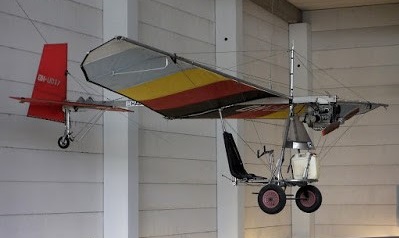
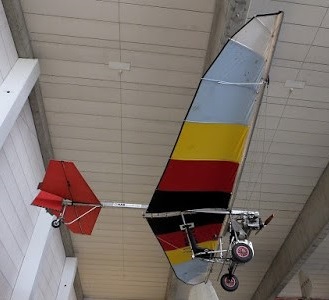
Mahe Pfadfinder

OH-UO17

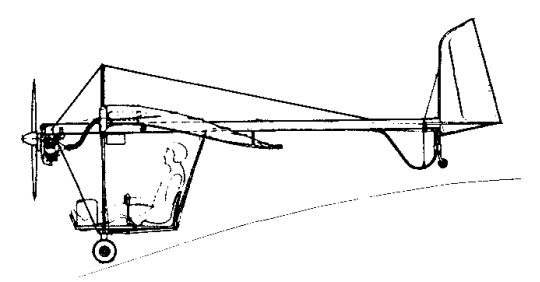
Single seat single engined high wing monoplane with two axis control. Wing has unswept leading edge, swept forward trailing edge, and tapering chord; conventional tail. Pitch control by fully flying tail; yaw control by fully flying rudder; no separate roll control; control inputs through stick for pitch/yaw. Wing braced from above by kingpost and cables, from below by cables; wing profile single surface. Undercarriage has three wheels in tail dragger formation, with suspension on tailwheel and steel spring suspension on main wheels. No ground steering. An aluminium tube framework, without pod. Engine mounted below wing driving tractor propeller.

The Pfadfinder is in fact a version of the Australian Scout built under licence in West Germany by Mahe.

The Pfadfinder uses a noticeably different wing from the original Scout and is fitted with the Konig SC430 engine. Used at 4400 rpm, this gives 27 hp with a three blade ground adjustable propeller. Options include floats, instruments, and a document and map case.

Length overall 17.1 ft, 5.22 m.
Height overall 6.9 ft, 2.09 m.
Wing span 28.4 ft, 8.67 m.
Chord at root 5.7ft, 1.75m.
Chord at tip 1.3 ft, 0.41 m.
Sweepback: 0 degs.
Tailplane span 10.7ft, 3.25m.
Fin height 4.9 ft, 1.50m.
Total wing area 125 sq.ft, 11.6 sq.m.
Rudder area 8.3 sq.ft, 0.77 sq.m.
Total elevator area 17.0 sq.ft, 1.58 sq.m.
Wing aspect ratio 6.5/1.
Wheel track 4.8 ft, 1.47 m.
Wheelbase 12.5 ft, 3.78 m.
Tailwheel diameter overall 11 inch, 27 cm.
Main wheels diameter overall 11 inch, 27 cm.
Engine: Konig SC430, 27 hp at 4400 rpm.
Propeller diameter 51 inch, 1.30 m.
Belt reduction, ratio 1.511.
Max static thrust 155 lb, 70 kg.
Power per unit area 0.22 hp/sq.ft, 2.3 hp/sq.m.
Fuel capacity 2.6 US gal, 2.2 Imp gal, 10.0 litre.
Empty weight 132 lb, 60 kg.
Max take off weight 375 lb, 170kg.
Payload 243 lb, 110kg.
Max wing loading 3.00 lb/sq.ft, 14.7 kg/sq.m.
Max power loading 13.9 lb/hp, 6.3kg/hp.
Load factors; +6.0, NC ultimate.
Max level speed 56 mph, 90 kph.
Never exceed speed 65 mph, 105 kph.
Max cruising speed 56 mph, 90 kph.
Economic cruising speed 47mph, 75kph.
Stalling speed 28 mph, 45 kph.
Max climb rate at sea level 500 ft/min, 2.5 m/s.
Best glide ratio with power off 7/1.
Take off distance 130 ft, 40 m.
Landing distance 82 ft, 25 m.
Range at average cruising speed 112 mile, 180 km.

Magni-Aviazione

Italy
Founded by Piero Magni in 1919, primarily research and development organization but manufactured aircraft for other designers, including Jona J-6 tilting-wing sesquiplane and the conventional-winged J-6S military trainer. Magni’s own aircraft included PM-3-4 Vale 1937 single-seat aerobatic aircraft and the derived PM-4-1 Supervale.

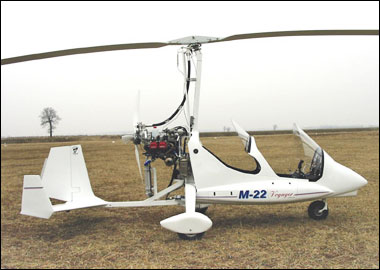
Magni M22 Voyager Tandem

Magni Gyro has announced the June, 2005 availability of the M-22 Voyager. Based on the M-16 Trainer model, it sports large baggage strakes on each side of the tandem enclosure. Baggage space includes available space under both seats. The M-22 Voyager eliminates the rear seat flight and engine controls to allow full utilization of available spaces for baggage. (rear controls cannot be added to the M-22. The M-16 is not adaptable to M-22 modifications.)

The M-22 Voyager is the same performance and price as the dual control 914, M-16 Trainer. The M-22 is available only with the Rotax 914UL engine. All appropriate M-16 options are available on the M-22, such as the rear seat windscreen.
The M22 provides approximately 150 liters of available storage space. External compartment doors provide easy access. Sold as kit or fully assembled, the M22 can be fitted as an ag sprayer. The M22 features a 4130 steel tube frame, streamlined composite, wheel pants, leaf-spring and tail planes.
2009 Price: 48280 EURO

M22
Engine: 115 hp Rotax 914UL
Propeller: 67″ composite 3-blade ground adjustable
Rotor Blades: 27′ composite (fiberglass and carbon fiber)
Specifications: 914
Min Speed 20 mph
Cruise: 78 kt / 90 mph / 145 kmh
VNE: 100 kt / 115 mph / 185 kmh
Empty Weight 595 lbs
Useful Load 617 lbs
Gross Weight 1,212 lbs
Width 5’11”
Height 8’6″
Length 15’3″
Climb Rate 950 ft/min / 5 m/s
Glide Ratio: 1:4
Take-off distance (50ft obstacle): 230 ft / 70 m
Landing distance (50ft obstacle): 100 ft / 30 m

Magni M 22 Voyager
Rotor diameter: 8.54m
Overall length: 4.65m
Overall width: 1.80m
Overall height: 2.60m
Propeller diameter: 1.70m
Weight empty: 272kg
Max take-off weight: 550kg
Max level speed: 185km/h
Cruising speed: 145km/h
Rate of climb at sea level: 5m/s
Service ceiling: 4000m
Range, no reserves: 481km
Endurance: 3.4 hr