Makhonine Mak-10 / Mak-101

With wings completely extended

In the early 1930s several designers became interested in the possibility of changing the configuration of wings between take off and fast flight. Two routes were explored, the first primarily involving camber and hence lift coefficient reduction and the other a decrease of wing area by span reduction at high speed. The Makhonine Mak-10 of the second.

The Makhonine Mak-10, was a variable geometry research aircraft, built to investigate variable area / telescopic wings during 1931 in France. Details of the Mak-10 are sparse but its novel feature was a telescopic wing which increased the span for take-off by 8 m (26 ft 3 in) or 60% of its high-speed configuration. The outer panels retracted into the central ones, their inner ends supported on bearings rolling along one or more spars. The ends of the centre section were reinforced with cuffs. The wing apart, it was a conventional cantilever low wing monoplane, with twin open cockpits, the rear one sometimes faired in, and faired, fixed landing gear. It was powered by a 480 kW (644 hp), three bank, W-configuration, twelve-cylinder Lorraine 12Eb engine.

Mak-10 with wings almost completely retracted

The first flight of the Mak-10 was on 11 August 1931 During four years of development the Mak-10 was re-engined with a 600 kW (800 hp) Gnome-Rhône 14K Mistral Major fourteen cylinder, two row radial engine which gave it a top speed of 380 km/h (240 mph) and the new designation Mak-101.

Mak-10
Engine: Lorraine 12Eb, 480 kW (644 hp)
Propeller: 2-blade
Wingspan: 13 m (42 ft 8 in) retracted
21 m (69 ft) extended
Wing area: 33 sq.m (230 sq ft) retracted
33 m2 (360 sq ft) extended
Gross weight: 5,000 kg (11,023 lb)
Maximum speed: 300 km/h (190 mph, 160 kn)
Crew: 2

Mak-101
Engine: Gnome-Rhône 14K Mistral Major, 600 kW (800 hp)
Propeller: 2-blade
Wingspan: 13 m (42 ft 8 in) retracted
21 m (69 ft) extended
Wing area: 21 m2 (230 sq ft) retracted
33 m2 (360 sq ft) extended
Top speed 380 km/h (240 mph)
Makhonine, Ivan

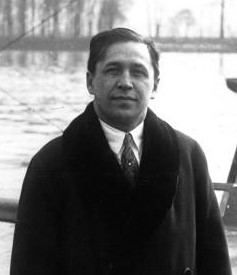
Ivan (Jean) Makhonine (Махонин Иван)

Born in Russia in 1895, Yvan Makhonine, finds himself in the war of 14/18 in a state research center to invent weapons and ammunition of all kinds, which brings him fortune.

Makhonine Article

Around 1917, he invented a way to produce synthetic fuel, able to run without noticeable changes, all types of combustion engines typically powered by gasoline or other fuels.

Unlike gasoline, his fuel can not be ignited in the cold, but only when hot as fuel. But though it can only be ignited with difficulty by auto ignition, unlike gasoline, it can help to significantly increase the efficiency of combustion engines by simply raising their compression rate.

This fuel, a little fatter than gasoline, with the appearance of diesel, is easily sprayable by carburetor engines, provided you bring the electric air preheating systems to facilitate cold starts and to increase the efficiency of the usual means of heating the body of the carburettor.

Some adjusting the weight floats and sizes of the nozzles are to be made because of the density of the product, markedly higher than gasoline, and close to 1.0.

Around 1918, Mr. Makhonine built an electric-powered locomotive with motors driving the wheel axles are powered by a power generator itself driven by an internal combustion engine with a high compression ratio. The cars of this train were also equipped with electric motors.

According to witnesses, it leaves a vapor with the appearance of a thick smoke, which feeds directly into the combustion engine electric generator.

If this “smoke” is sent to a conventional distillation apparatus, it condenses as fuel that can be stored for later use.

This electric powered locomotive, ultra modern for its time compared to intensive steam engines, was used in Russian cars until 1920 or 1921.

Beginning 1922, Mr. Makhonine with his wife (the singer Nathalie Ermolenko) and fortune, arrived in France, and decided to sell his invention to the French State.

For many years the fuel was used successfully in all vehicles equipped with an internal combustion engine, automobiles, trucks, boats, planes etc.

Finally everything stopped around 1927, when he found himself almost ruined after suffering the fate of many inventors.

Mr. Ivan Makhonine, engineer, Russian inventor, died in France in 1973 in a retirement home for Russian emigrants, without disclosing the precise secret of his invention, i.e., the exact technology that transformed the machine hydrocarbon vapors and other carbon products in a “smoke” condensable giving this famous fuel and this with tremendous efficiency, which we are unable to achieve with our current science.

Mr. Makhonine knew just make an ideal fuel that was neither petrol nor diesel, but an intermediate product.

He could manufacture this fuel from raw materials most unfit for this, i.e., coal tars, the worst coal, crude oil, vegetable oils and all hydrocarbon or carbonaceous waste.

What we know is that it was preparing the base product with means that differed product (see French Patent No. 622036 below), so as to extract a steam that was posing in a kind large insulated tube externally – not described in the patent system – whose other end is connected directly to an engine, or a conventional distillation apparatus where the fuel comes out.

We know that production of this exceptional fuel yields were approximately 95% crude oils and coal tars. These results are not comparable with that obtained in quantity and quality by conventional methods which are known to us.

We also know that the engines burning the fuel, in addition to their exceptional performance, did not pollute, produced no smoke or the usual unpleasant smell, but only a sort of hot gas with a slight pleasant odor.

Mainz 1911 Doppeldecker

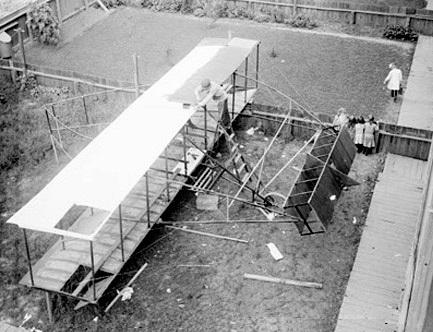
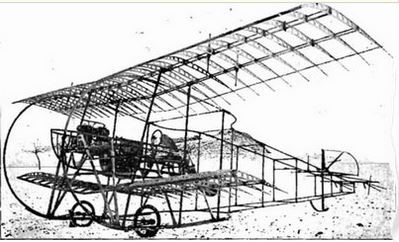
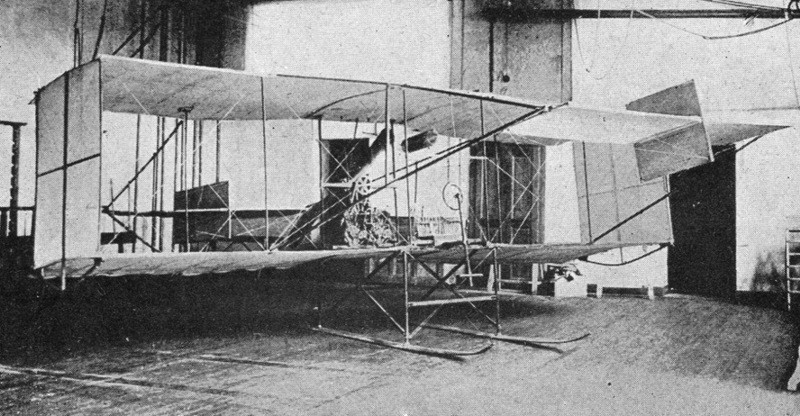
The Mainz Motor School airplane, known as the “One and a Half Decker” was built at the German Motor School at Mainz, Germany. The upper wing of this two-decker had 10 m span, the lower deck 7 m. The 50 hp Argus engine was placed in the front of the fuselage and drove the pusher propeller by means of a transmission. In the gondola-like cockpit there was space for the pilot and two passengers. Radiators were fixed on both sides of the fuselage.

Mainguet La Dorade / Sea-bream

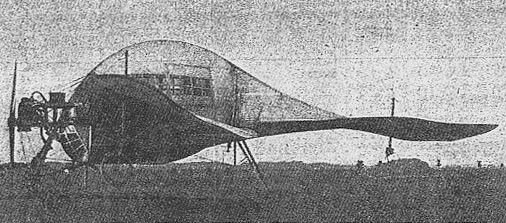
The Henri Mainguet La Dorade / Sea-bream of 1910 was intended to hold ten passengers in an enclosed cabin. Distinctive for its bulbous fuselage and lack of a stabilizing vertical tail fin, the pilot was seated outside, at the nose of the all-covered fuselage, the engine set out above him.

The passengers sat in the enclosed cabin with mica windows which made up the bulk of the streamlined guppy fuselage; aft, it tapered down to a long sweeping horizontal tail. No vertical surface appears to have been fitted. The oval somewhat drooping wings were mounted at a very high angle of attack, and had wheels set below the tips; the whole machine was resting on a long skid with two trailing wheels forward and one under the rear of the cabin. The engine seems to have been a 40 hp 3-cylinder Anzani. With a higher-powered engine, Mainguet at first succeeded at first only in running into the trees, and later in some prolonged hops.

Henri Mainguet built this tractor monoplane, in 1910 at Chartres: it appeared for the first time on 21 May.

It flew but without passengers.

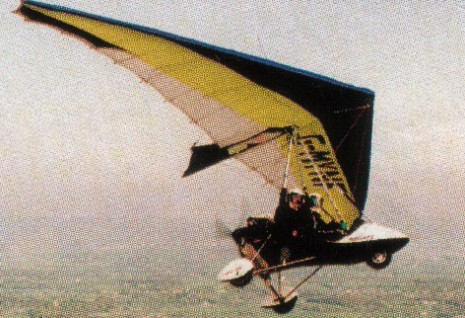
Mainair Mercury

Mainair marketed the Mercury single- or two-seat flex-wing monoplane in assembled or kit forms to BCAR S.

Engine: Rotax 582, 64 hp
hp range: 50-80
Wing span: 36 ft
Wing area: 168 sq.ft
Empty weight: 380 lb
Gross weight: 858 lb
Fuel capacity: 11.6 USG
VNE: 89 kt / 102 mph / 165 kmh
Max speed: 85 mph
Cruise: 65 mph
Stall: 22 kt / 25 mph / 41 kmh
Range: 200 sm
Rate of climb: 850 fpm
Takeoff dist: 200 ft
Landing dist: 200 ft
Take-off distance (50ft obstacle): 600 ft / 184 m
Landing distance (50ft obstacle): 750 ft / 230 m
Glide Ratio: 1:8
Service ceiling: 15,000 ft
Seats: 2

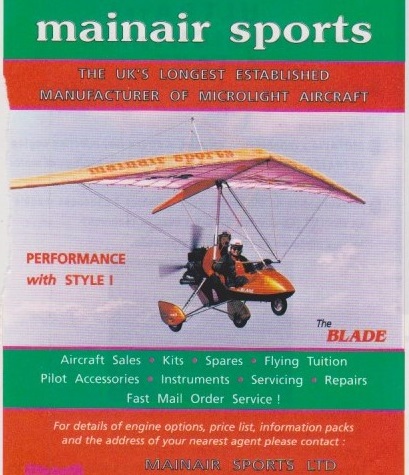
Mainair Blade

Mainair marketed the Blade tandem two-seat flex-wing microlight in assembled form to BCAR S.

Blade 582

By 1998 the 582 was the mainstream model, with a 462 or 503 available. The Rotax 912 was available on the most expensive model. The model includes carb heat, and was originally available as an export only, before being made available for the UK market.

Blade 912
1998

Max speed: 75 mph
Cruise: 55 mph
Range: 200 sm
Rate of climb: 550 fpm
Takeoff dist: 220 ft
Landing dist: 200 ft
Service ceiling: 10,000 ft
Engine: Rotax 503, 46 hp
hp range: 46-65
Fuel capacity: 11.6 USG
Empty weight: 330 lb
Gross weight: 814 lb
Wing span: 36 ft
Wing area: 167 sq.ft
Seats: 2

Blade 582
Empty weight: 173 kg
Wing span: 10.4 m
Wing area: 15.6 sq.m
Fuel capacity: 44 lt
Certification: BCAR S
Engine: Rotax 582, 64 hp
MAUW: 390 kg
Seats: 2
Max speed: 140 kph
Cruise speed: 106 kph
Minimum speed: 48 kph
Climb rate: 4.2 m/s
Fuel consumption: 10 lt/hr
Price (1998): £12,340

Blade 912
Empty Weight: 195 kg / 430 lbs
Wing span: 10.60 m
Wing area: 15.6 sq.m
Fuel capacity: 44 lt
Certification: BCAR S
Engine: Rotax 912 UL, 80 hp
MTOW Weight: 390 kg / 860 lbs
Seats: 2
VNE: 88 kt / 101 mph / 163 kmh
Max speed: 145 kph
Cruise: 59 kt / 68 mph / 109 kmh
Minimum speed: 26 kt / 30 mph / 48 kph
Climb rate: 1000 ft/min / 5 m/s
Take-off distance (50ft obstacle): 460 ft / 140 m
Landing distance (50ft obstacle): 640 ft / 195 m
Fuel consumption: 9 lt/hr
Price (1998): £19,618