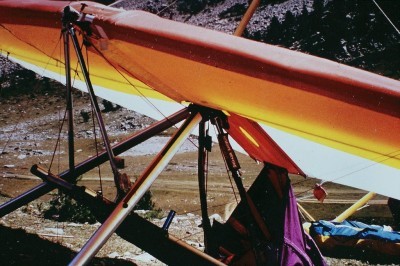
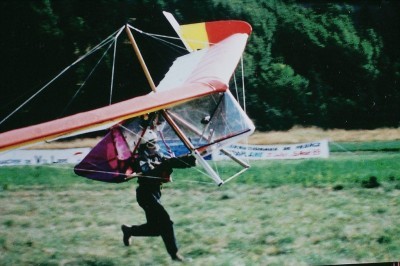
The Pegasus is a high performance truncated-tip Rogallo that can be handled by intermediate level pilots. It features high penetration and quick roll response yet has a gentle stall. Its sail is cambered, roached, and truncated with pockets of pre-formed ribs, applied leading edge pockets and applied keel pocket. The high aspect ratio and generously cambered sail give both low minimum sik and high L/D.
The control bar is fully adjustable for prone or swing seat flying, folds down easily for carrying, has neoprene cushioning and optional wheel assembly. The Pegasus also features adjustable keel reflex, optional take down to 6 ft 6 in, and no tool set-up or take-down.
The airframe is made from 6061-T6 1.in x .049 anodised aluminium tubing with hardwood dowels and with bushings. Rigging cable is 3/32in 7×7 stainless steel with snap-on cable cover optional. The cabling is double swagged at every connection point.
All bolts are AN os MS quality, self-locking nuts. Stainless steel noseplate, tangs and thimbles. The sail is made from 3.8oz stabilised dacron, double zig-zag stitching, reinforced at stress points, spar-flex compensation for clean inflight shape, perpendicular-sewn seams for dimensional stability, and was available in 10 colours.
The Pegasus came with a flying seat with individual leg straps, or optional harness.
Leading edge: 18 ft Keel length: 10 ft Wing span: 29.75 ft Wing area: 188 sq,ft Aspect ratio: 4.92 Nose angle: 110˚ Sail billow: 2.5˚ Weight: 47 lb Pilot weight: 170-210 lb Takeoff speed: 16 mph Stall speed: 14 mph Max speed: 45 mph Best glide ratio (L/D): 7-1 Best L/D speed: 24 mph Min sink: 250 fpm
Manufactured by Manta Produts and, with slightly different materials and construction, by Flight Realities, the Windlord I is a Rogallo design for advanced pilots. It features a shorter keel, greater aspect ratio and glide ratio than a standard Rogallo.
The airframe is made from 6061-T6 1.5in x .049 anodised aluminium tubing with hardwood dowels and with bushings. Rigging cable is 3/32in 7×7 stainless steel with snap-on cable cover optional. The cable is double swagged at every connection point.
The sail is 3.8oz stabilised dacron, double zig-zag stitched, reinforced at stress points, with spar-flex compensation for clean inflight shape, perpendicular-sewn seams for dimensional stability. It was available in 10 colours.
All bolts are AN or MS quality, and are self-locking nuts. Noseplate, tangs and thimbles are stainless steel. The control bar is fully adjustable for seated flying with individual leg straps, or the optional prone harness. The control bar folds down, has neoprene cushioning and optional whee assembly. It also featured adjustable keel reflex, optional take-down to 6 ft 6 in, and a no-tool set-up or take-down.
Manufactured by Manta Products and, with slightly different materials and construction, by Flight Realities, the Windlord III is a higher performance Rogallo. It has an increased glide ratio, penetration, positive control response and higher speed for maximum glide, making it easy to handle in higher winds and turbulence as well as marginal soaring conditions.
Windlord III
As with the Windlord I, the airframe is made from 6061-T6 1.5in x .049 anodised aluminium tubing with hardwood dowels and with bushings. Rigging cable is 3/32in 7×7 stainless steel with snap-on cable cover optional. The cable is double swagged at every connection point.
The sail is 3.8oz stabilised dacron, double zig-zag stitched, reinforced at stress points, with spar-flex compensation for clean inflight shape, perpendicular-sewn seams for dimensional stability. It was available in 10 colours.
All bolts are AN or MS quality, and are self-locking nuts. Noseplate, tangs and thimbles are stainless steel. The control bar is fully adjustable for seated flying with individual leg straps, or the optional prone harness. The control bar folds down, has neoprene cushioning and optional whee assembly. It also featured adjustable keel reflex, optional take-down to 6 ft 6 in, and a no-tool set-up or take-down.
Windlord I 18×15 Leading edge: 18.5 ft Keel length: 15 ft Wing span: 26.75 ft Wing area: 190 sq,ft Aspect ratio: 3.81 Nose angle: 92˚ Sail billow: 3˚ Weight: 39 lb Pilot weight: 140-170 lb Takeoff speed: 19 mph Stall speed: 18 mph Max speed: 38 mph Best glide ratio (L/D): 6-1 Best L/D speed: 21 mph Minimum sink: 350 fpm
Windlord I 19×15 Leading edge: 19.5 ft Keel length: 15.5 ft Wing span: 27.5 ft Wing area: 210 sq,ft Aspect ratio: 3.81 Nose angle: 92˚ Sail billow: 3˚ Weight: 40 lb Pilot weight: 160-190 lb Takeoff speed: 19 mph Stall speed: 18 mph Max speed: 38 mph Best glide ratio (L/D): 6-1 Best L/D speed: 21 mph Minimum sink: 350 fpm
Windlord I 20×16 Leading edge: 20.5 ft Keel length: 16 ft Wing span: 29 ft Wing area: 230 sq,ft Aspect ratio: 3.81 Nose angle: 92˚ Sail billow: 3˚ Weight: 41 lb Pilot weight: 175-220 lb Takeoff speed: 19 mph Stall speed: 18 mph Max speed: 38 mph Best glide ratio (L/D): 6-1 Best L/D speed: 21 mph Minimum sink: 350 fpm
Windlord III 17×14 Leading edge: 17.5 ft Keel length: 14 ft Wing span: 23.5 ft Wing area: 155 sq,ft Aspect ratio: 3.56 Nose angle: 85˚ Sail billow: 3.5˚ Weight: 38 lb Pilot weight: 110-135 lb Takeoff speed: 16 mph Stall speed: 15 mph Max speed: 42 mph Best glide ratio (L/D): 5-1 Best L/D speed: 20 mph Min sink: 400 fpm
Windlord III 18×15 Leading edge: 18.5 ft Keel length: 15 ft Wing span: 24.8 ft Wing area: 176 sq,ft Aspect ratio: 3.49 Nose angle: 85˚ Sail billow: 3.5˚ Weight: 39 lb Pilot weight: 130-155 lb Takeoff speed: 16 mph Stall speed: 15 mph Max speed: 42 mph Best glide ratio (L/D): 5-1 Best L/D speed: 20 mph Min sink: 400 fpm
Windlord III 19×16 Leading edge: 19.5 ft Keel length: 16 ft Wing span: 26.3 ft Wing area: 197 sq,ft Aspect ratio: 3.51 Nose angle: 85˚ Sail billow: 3.5˚ Weight: 40 lb Pilot weight: 150-180 lb Takeoff speed: 16 mph Stall speed: 15 mph Max speed: 42 mph Best glide ratio (L/D): 5-1 Best L/D speed: 20 mph Min sink: 400 fpm
Windlord III 20×17 Leading edge: 20.5 ft Keel length: 17 ft Wing span: 27.5 ft Wing area: 220.5 sq,ft Aspect ratio: 3.43 Nose angle: 85˚ Sail billow: 3.5˚ Weight: 41 lb Pilot weight: 175-220 lb Takeoff speed: 16 mph Stall speed: 15 mph Max speed: 42 mph Best glide ratio (L/D): 5-1 Best L/D speed: 20 mph Min sink: 400 fpm
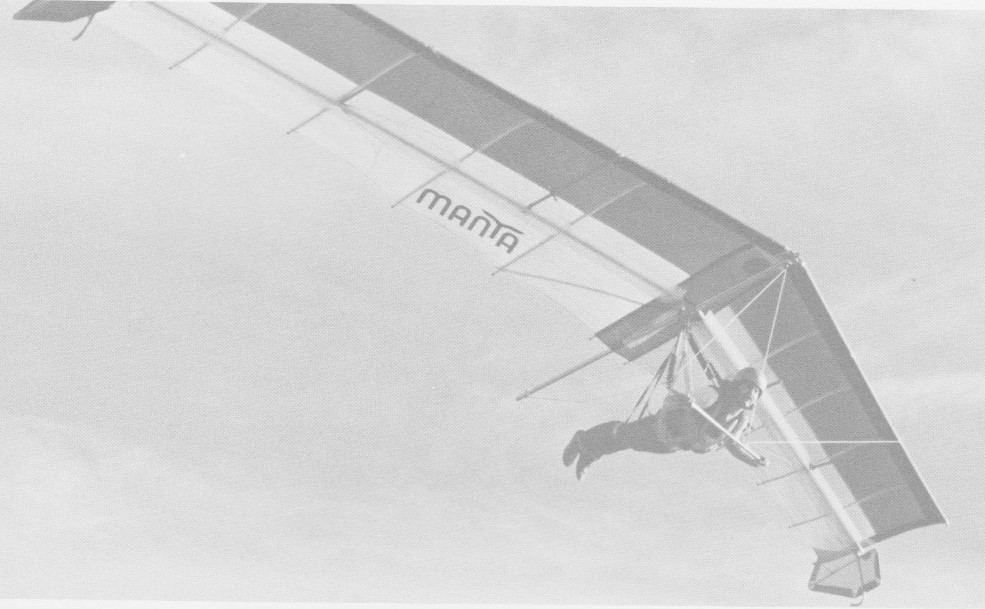
The Manta 80S is a standard Rogallo developed for beginning through advanced pilots. It is stable, predicable, and responsive when tracking or turning. The 80˚ nose angle gives high penetration qualities and wide speed range.
The 80S airframe is of 6061-T6 1.5 x .049 in anodised aluminium tubing with hardwood dowels and bushings. Cables were 3/32in 7×7 stainless steel with snap-on cable covers optional. The cables were double swaged at every connection. All bolts are AN or MS quality, nuts are self-locking, and noseplate, tangs and thimbles are stainless steel.
The 80S sail is 3.8 oz stabilised dacron, double zig-zag stitched, reinforced at stress points, with spar-flex compensation for clean inflight shape and perpendicular-sewn seams for dimensional stability. It was available in 10 colours.
The 80S came with a flying seat with individual leg straps or optional prone harness. The control bars is fully adjustable for prone or swing seat, folds down for carrying, has neoprene cushioning and optional wheel assembly. The 80S also features adjustable keel reflex and optional take down to 6 ft 6 in.
Manta 80SK
The Manta 80SK has a slightly shorter keel than the Manta 80 for a moderate performance gain and increased handling sensitivity. It has the same penetration stability and maneuverability characteristics as the Standard. The shorter keel relieves parasitic drag, improves speed and ncreases pitch response.
The Manta 80SK control bar is fully adjustable for prone or swing seat flying, folds down for transport, has neoprene cushioning and optional wheel assembly. They also featured adjustable keel reflex and optional take down to 6 ft 6 in, requiring no tools.
The airframe is of 6061-T6 1.5in x .049 anodised aluminium with hardwood dowels and bushings. The cables are 3 3/32 7×7 stainless steel with snap on cable covers optional. Double swagged at every connection point.
All bolts are AN or MS quality, with self-locking nuts, stainless steel noseplate, tangs and thimbles.
The sail is 3.8oz stabilised dacron, double zig-zag stitched, reinforced at stress points, with spar flex compensation for clean inflight shape and perpendicular sewn seams for dimensional stability.
The Manta 80SK2 was designed for intermediate pilots ready to advance to a higher performing glider. Its shortened keel increased the aspect ratio, improved pitch response and reduced parasitic drag. The 80SK2 has an increased speed range and greater maneuverability.
Manta 80SK2
The control bar is fully adjustable for prone or swing seat flying, folds down for easy carrying, has neoprene cushioning and optional wheel assembly. It also features adjustable keel reflex, optional take-down to 6 ft 6 in, and no tool set-up or take-down.
The 80SK2 airframe is 6061-T6 1.5in x .049 adodised aluminium tubing with hardwood dowels and bushings. The riggin cable is 3/32” 7×7 stainless steel with snap-on cable covers optional. Double swagged at every connection point. All bolts are AN or S quality with self-locking nuts. Stainless steel noseplate, tangs and thimbles.
The 80SK2 sail is 3.8oz stabilised dacron, double zig-zag stitched, reinforced at stress points, with spar-flex compensation, and perpendicular-sewn seams. It was available in 10 colours.
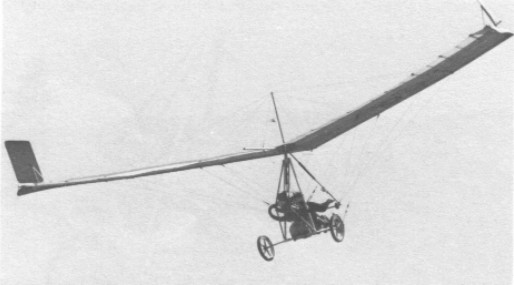
The Foxbat/FIedge III was a single seat single engined high wing monoplane with hybrid control. An American ultralight aircraft that was designed by Bill Armour and produced by Manta Products Inc of Oakland, California. The aircraft was supplied as a kit for amateur construction.
The Foxbat was designed to comply with the US FAR 103 Ultralight Vehicles rules, including the category’s maximum empty weight of 254 lb (115 kg). The aircraft has a standard empty weight of 200 lb (91 kg). It features a cable-braced high-wing, a single-seat, open cockpit, tricycle landing gear and a single engine in pusher configuration. Undercarriage has three wheels in tricycle formation; steel spring suspension on nosewheel and glass fibre suspension on main wheels. Push right go left (push right go right optional) nosewheel steering independent from yaw control. Brakes on main wheels. Wing has swept back leading and trailing edges, and tapering chord; no tail. Wing braced from above by kingpost and cables, from below by cables; 90% double surface.
The aircraft is made from bolted-together 6061T6 aluminum tubing, with the wing covered in Dacron sailcloth. Its 32.5 ft (9.9 m) span wing is supported by cables strung from an inverted V style kingpost. The wing is derived from the Manta Fledge hang glider wing. The control system is unconventional and uses a hang glider style control bar for weight shift control of pitch and roll, augmented with wing tip rudders for yaw, activated by hand controls on the control bar. The fuselage is an open frame structure that is attached to the wing via a flexible single point mount, to allow weight shift control. The pilot is accommodated on a sling seat in trike unit, using bar to control pitch and roll by altering relative positions of trike unit and wing. Yaw control by tip rudders operated by control bar sliders. The landing gear is of tricycle configuration, with a steerable nose wheel.
Strictly speaking, this machine is not a trike, since it does not use a Rogallo wing, but in essence it is the same concept: a combination of a hang glider with a power pack/seating/undercarriage unit. In this case, the hang glider is Manta’s own rigid wing hybrid control Fledge III rather than a Rogallo, combined with the purpose designed Foxbat ‘trike unit’. A feature of the Foxbat is its geared down nosewheel steering, which allows the pilot to keep the nosewheel firmly on course during rough field take offs and landings.
Manta Products announced in January 1983 the adoption for the Foxbat of the Kawasaki TA440A 38.5 hp engine. Previously these aircraft had been equipped in standard form with the Cuyuna 430D or on option a 430R or Zenoah G25B (22 hp) engine with a reduction drive of 2.25/1.
The pilot is comfortably installed in a bucket seat and the four semi rigid tie in points of the trike unit to the sail act as a shock absorber. The options include electric start, a three blade variable pitch propeller, a wider body with larger seat, floats and a strobe light. Price complete is $5360 in 1982. No longer in production.
The Foxbat wing can be folded for ground transport and storage.
Engine: Kawasaki TA440A, 38.5 hp at 6000 rpm. Toothed belt reduction, ratio 2.0/1. Power per unit area 0.24hp/sq.ft, 2.6hp/sq.m. Fuel capacity 5.0 US gal, 4.2 Imp gal, 18.9 litre. Length overall 10.0 ft, 3.05 m. Height overall 6.0ft, 1.83m. Wing span 33.5ft, 10.21m. Chord at root 5.8ft, 1.75 m. Chord at tip 4.6 ft, 1.40 m. Sweepback 16 deg. Total wing area 157 sq.ft, 14.6sq.m. Wing aspect ratio 6.7/1. Wheel track 5.2 ft, 1.57 m. Wheelbase 6.0ft, 1.83 m. Main wheels diameter overall 20 inch, 51 cm. Empty weight 215 lb, 98kg. Max take off weight 549 lb, 249kg. Payload 334 lb, 151kg. Max wing loading 3.50 lb/sq.ft, 17.1 kg/sq.m. Max power loading 14.3 lb/hp, 6.5 kg/hp. Max level speed 55 mph, 88 kph. Never exceed speed 55 mph, 88 kph. Max cruising speed 45 mph, 72 kph. Economic cruising speed 35 mph, 56 kph. Stalling speed 22 mph, 35 kph. Max climb rate at sea level 425 ft/min, 2.2 m/s. Min sink rate 300ft/min, 1.5m/s. Best glide ratio with power off 9/1. Take off distance 75 ft, 23 m. Landing distance 50 ft, 15 m. Range at average cruising speed 130 mile, 209km.
FX-3 Engine: 1 × Cuyuna 430, 30 hp (22 kW) Propellers: 2-bladed wooden Length: 8 ft (2.4 m) Wingspan: 32 ft 6 in (9.91 m) Wing area: 157 sq ft (14.6 sq.m) Empty weight: 190 lb (86 kg) Gross weight: 425 lb (193 kg) Wing loading: 2.7 lb/sq ft (13 kg/m²) Fuel capacity: 5 U.S. gallons (19 lt / 4.2 imp gal) Cruise speed: 35 mph (30 kt / 56 km/h) Stall speed: 22 mph (19 kt / 35 km/h) Range: 100 mi (87 nmi / 161 km) Endurance: 2.75 Maximum glide ratio: 12:1 Rate of climb: 400 ft/min (2.0 m/s) Crew: one
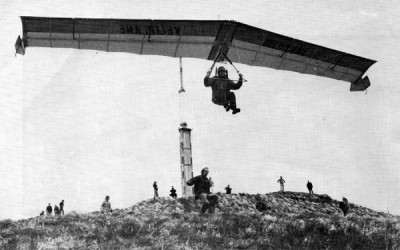
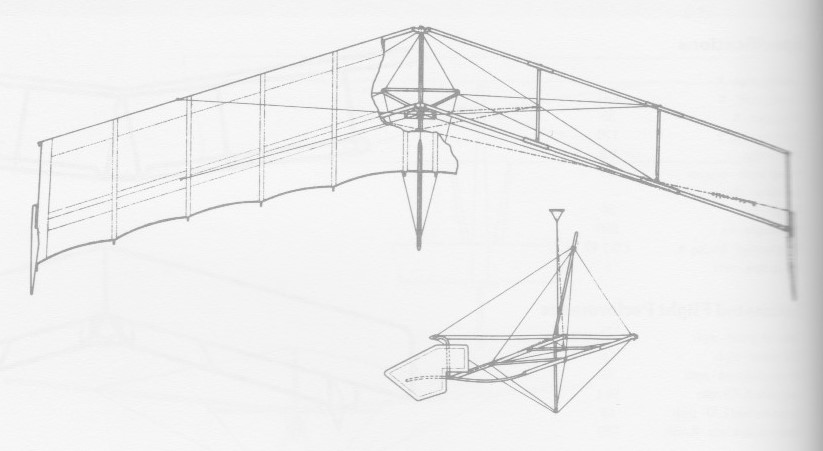
A 1974 hang glider for advanced pilots. The Fledgling uses two identical spars that carry equal loads. The rear spar is in a streamlined pocket. The Fledgling is completely self-launchable and folds down to a Rogallo size package. The rudders that aid stability and turning are actuated by control cables attached to the swing seat, harness or by twist grip, supine.
Fledgling
The airfoil remains rigid in flight by use of pre-formed, removable ribs. No tools are required for set-up. The spars are made from 6061-T6, 1.5in x .049 tubing and rigging cable is 3/32in 7 x 7 stainless steel. All hardware is aircraft quality.
The sail is made from 3.8oz stabilised dacron, then available in 11 colours. A flying supine seat with individual leg straps, or prone harness were optional.
Some of the greatest characteristics of the Fledge was the ability to penetrate high winds. It was always fun to spin.
Fledge 2
The Fledge 2 was a 1980 hang glider.
The Fledging IIB was motorized to give the Pterodactyl Fledging, one of the first ULM.
The 1983 Fledge 3 was nasty in a spin when the center of drag (the Fledge) traded places with the center of mass (the pilot). Next thing, flying upside down at 1 negative G. Some say it was an absolute bitch to rig and weighed a ton and ground handling was terrible, trying to get used to yaw induced roll.
Fledgling 3
The Fledge Voyager was a 1980 version for advanced pilots.
Fledge Voyager
The 3ET (extending type) has 1.50 m extra on each side plus and Casper shutters that augers the potence at the wingtip in turn it turns flat, does perfect loops at + 6g positive and negative.
Fledgling A Chord length: 5.5 ft Wing span: 29 ft / 8.85 m Wing area: 142 sq,ft / 13.2 m² Aspect ratio: 6 Sweep angle: 18˚ Hang glider Weight: 50 lb / 28 kg Pilot weight: 120-170 lb / 54-70 kg Takeoff speed: 18 mph Stall speed: 16 mph / 23 km/h Max speed: 55 mph / 75 km/h Best glide ratio (L/D): 11-1 Best L/D speed: 28 mph Min sink: 225 fpm / 1 m/s
Fledgling B Chord length: 5.5 ft Wing span: 33 ft / 10.07 m Wing area: 162 sq,ft / 15.05 m² Aspect ratio: 6.8 Sweep angle: 18˚ Hang glider Weight: 56 lb / 28 kg Pilot weight: 160-220 lb / 70-100 kg Takeoff speed: 18 mph Stall speed: 16 mph / 23 km/h Max speed: 55 mph / 75 km/h Best glide ratio (L/D): 11-1 Best L/D speed: 28 mph Min sink: 225 fpm / 1 m/s
Fledge 2 A Wing area: 13.2 m² Wing span: 8.9 m Aspect ratio: 6 Hang glider weight: 26 kg Minimum pilot weight: 50 kg Maximum pilot weight: 70 kg Number of battens: 6 Nose angle: 144°
Fledge 2 B Wing area: 15 m² Wing span: 10.7 m Aspect ratio: 6.8 Hang glider weight: 29 kg Minimum pilot weight: 60 kg Maximum pilot weight: 100 kg Number of battens: 7 Nose angle: 144°
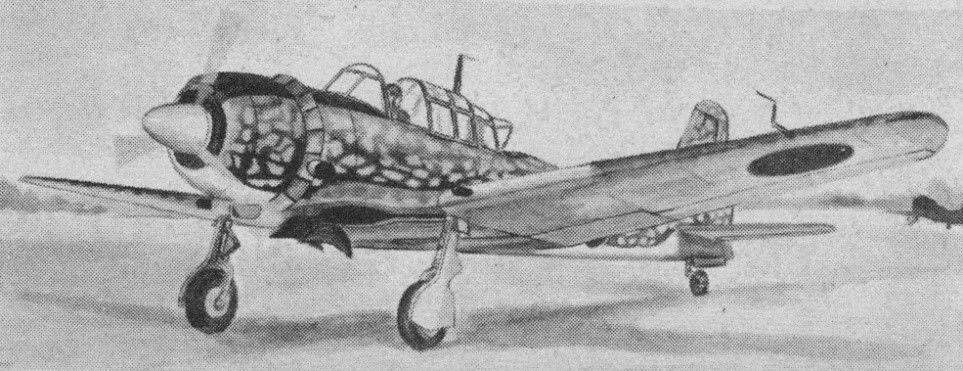
The Mansyu Ki-79 was an advanced trainer based on the Nakajima Ki-27 fighter. The Nakajima Ki-27 had been the first monoplane fighter to enter service with the JAAF, but by 1942 it was virtually obsolete, and a number had been converted to act as trainers. Mansyu went one step further, designing a dedicated training version of the aircraft, the Ki-79. Initiated in 1942 in China. It came out in four variants and remained in production until the end of the war.
The Ki-79 entered production in two versions. The Ki-79a (Army Type 2 Advanced Trainer Model A) was a single-seat trainer, while the Ki-79b (Army Type 2 Advanced Trainer Model B) was a two-seat trainer with tandem cockpits. The two separate cockpits took up about the same amount of space as the long canopy over the original single cockpit, with the front windscreen in the same place as on the single-seater. Both models shared the same all-metal construction as the Ki-27, were powered by the 510hp Hitachi Ha-13a engine and were armed with one forward firing 7.7mm machine gun.
During 1943 the Ki-79 was used to equip the Sendai and Tachiarai Army Flying Schools and the Tokorozawa Army Aviation Maintenance School. The Ki-79b was also used by the Tokyo, Otsu and Oita Army Boys Flying Schools, where they were used to give high school students a taste of flying. The Army designation was Mansyū Army Type 2 Advanced Trainer.
Ki.79a
During 1944 the JAAF founded a number of Flight Training Companies, and although a total of 1,329 Ki-79s were built numbers began to run short. Mansyu responded by designing the Ki-79c and Ki-79d. Theses aircraft used a new airframe, with a steel framework covered by a plywood skin, designed to reduce the amount of duralumin needed in their construction. The Ki-79c matched the Ki-79a, while the Ki-79d matched the Ki-79b. Both types had only just entered production at Mukden when the war ended.
In the post-war period the Ki-79 was used as a trainer by the Chinese Communists. A large number of aircraft were captured intact in Manchuria after the Soviet invasion. The Communists hired Manchurian and Japanese pilots to get the training programme under way, and the Ki-79 became the first standard training aircraft for the People’s Liberation Army Air Force.
The Ki-79 was also used by Indonesian forces fighting the Dutch on Java and Sumatra, where a number of aircraft were reconstructed after being found on Japanese scrap-heaps. A Ki-79b became the first aircraft to be flown by the Indonesians.
Mansyu Ki.79b (two-seat version) from Air Force of Indonesia, 1946.
Ki-79a entirely built in metal. Engine: Hitachi Ha.13a-I, 510 hp Wing span: 11.50 m Wing area: 18.56 m2 Length: 7,85 m Height: 3.00 m Empty weight: 1300 kg Max speed: 340 km/h at 3500 m Time to 5600m: 10m 24 Service range: 920 km Armament: 1 x 7,7-mm Type 89 machine gun Seats: 1
Ki-79b made of metal Engine: Hitachi Ha.13a-I, 510 hp Seats: 2
Ki-79c A single-seat trainer made of wood and steel Engine: Hitachi Ha.13a-III, 510 hp Seats: 1
Ki-79d made of wood and steel Engine: Hitachi Ha.13a-III, 510 hp Seats: 1
Established by Imperial Ordnance issued June 1938, incorporating aircraft manufacturing facilities of Manchuria Aviation Company at Harbin which developed Hayabusa six passenger cabin monoplane airliner, powered by Nakajima Kotobuki radial. Acquired Tachikawa Hikoki Kabushiki Kaisha in 1940. Produced wartime combat aircraft and trainers.