Marçay-Moonen 1911 monoplane

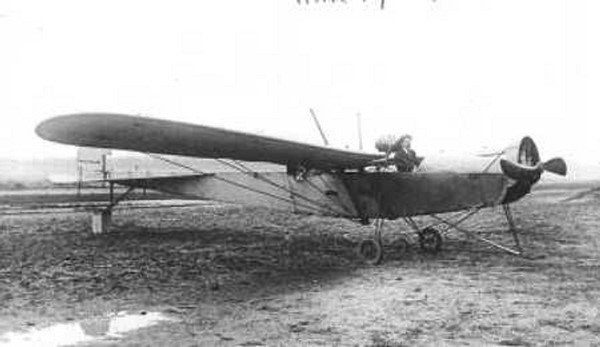
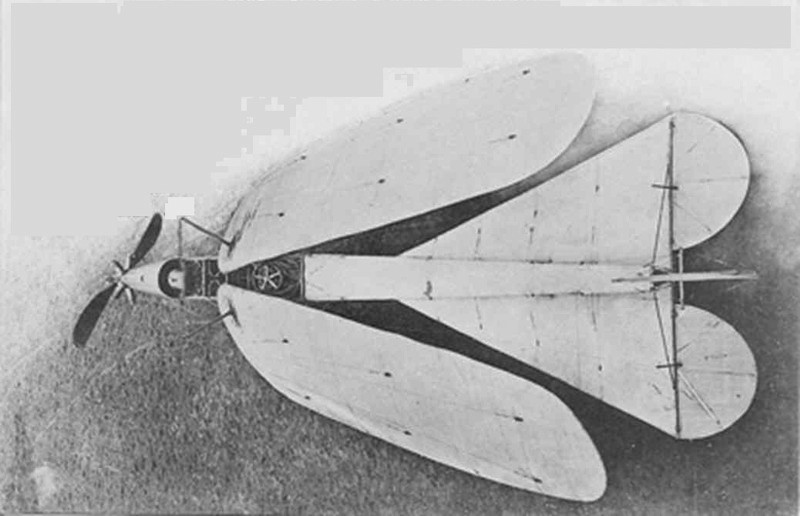
In 1911 the French army wanted to have an aircraft easily transportable and quickly dismountable from one location to another by road or railway. It was also required that the aircraft could be reassembled quickly. Baron Edmond de Marçay and Emile Moonen simplified the problem by imagining a device with wings folding along the fuselage, which was triangular and completely covered. The pilot could fold the wings without help and afterwards, according to the inventors, drive the machine on the road like a car, using the steerable rear wheels. The machine was first presented at the 1911 exhibition.
MAPO ‘MiG’

Name (since 1995) for constructor of Mikoyan aircraft, comprising MAPO production factory and ANPK “MiG”named after A.I. Mikoyan Aviation Scientific-Production Complex (Mikoyan & Gurevich). Part of larger MIG “MAPO-M”organization (MIG “MAPO”).
Currently producing MiG-21 upgrade as MiG-21 -93, MiG-29 Fulcrum lightweight close-air-combat fighter (first flown October 1977 and over 1,500 built, serving since 1983), improved MiG-29M (first flown April 1986) and MiG-33 export version, MiG-29K shipborne fighter prototype (first flown July 1988, first landing on aircraft carrier Admiral KuznetsovNovember 1989, and development restarted in 1996 after earlier program halt), MiG-35 multirole fighter (first flight 1999?), MiG 1-44 uniquely configured newgeneration combat aircraft (first seen February 1999), and MiG-AT/UTS/AC series of advanced and combat trainers. MiG-301/321 are reported hypersonic reconnaissance aircraft, thought to be under development. Also developing MiG-110 light multipurpose transport and MiG-115 and MiG-125 transports.

MAPO

Russia
Voenno-Promyshlennyi Komplex Moscow Aviation Production Organization can trace its lineage to 1893 and the original factory in Moscow. Constructed French Nieuports and Farmans during First World War, and in 1918 was named State Aircraft Works No. 1. Retitled MAPO in 1991 and in 1996 became MIG “MAPO” (Military Industrial Group ‘MAPO’) as state-owned concern comprising MAPO “MiG” (see Mikoyan and Gurevich), Kamov and several other important Russian aviation-related companies and organizations.
In 1997 Myasishchev Design Bureau was added, giving rise to MIG “MAPO-M” title. In addition to combat aircraft production and development of transports, also manufactures smaller civil aircraft such as Aviatika-890, T-101 Grach, I-1L, and IL-103 for others, plus maintenance and servicing.

Manzolini Libellula II

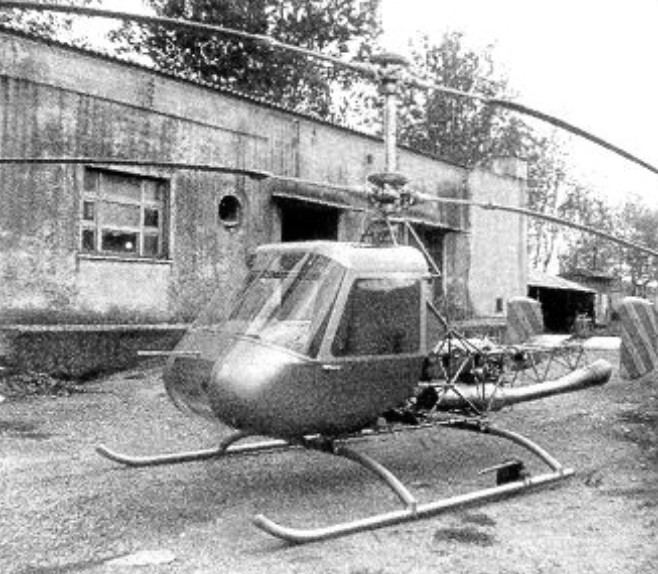
The Libellula II used a higher powered 105hp Walter Minor 4-III engine and had an enclosed cockpit. This aircraft, I-MANZ, gained an RAI type certificate on October 15, 1962, but no manufacture was undertaken.

Libellula II
Engine: Walter Minor III, 78kW
Main rotor diameter: 9.0m
Fuselage length: 4.75m
Height: 3.30m
Max take-off weight: 650kg
Empty weight: 500kg
Max speed: 109km/h
Hovering ceiling: 1250m
Range: 200km

Manzolini Libellula

Proposed final version

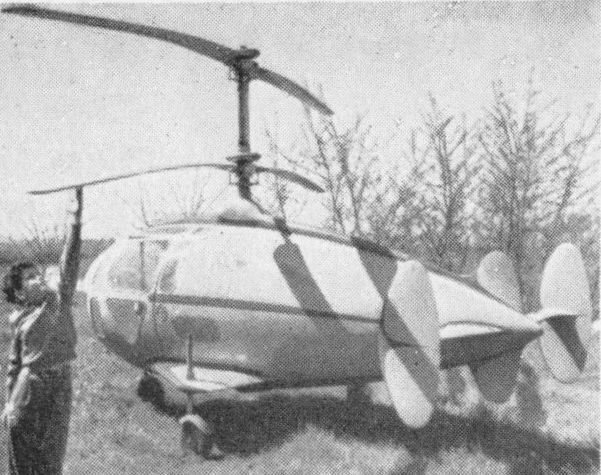
The Libellula was the brainchild of Count Ettore Manzolini. With an open framework fuselage and fixed skid undercarriage, Manzolini devised a coaxial rotor system for the Libellula and flew his ‘stripped’ prototype on 7 January 1952.

A mock-up of a proposed final version was prepared.

Engine: Hirth 105 hp
Rotors: 2 x 2-blade co-axial
Rotor diameter: 26 ft
Loaded weight: 1,430 lb
Cruising speed: 65 mph
Seats: 1