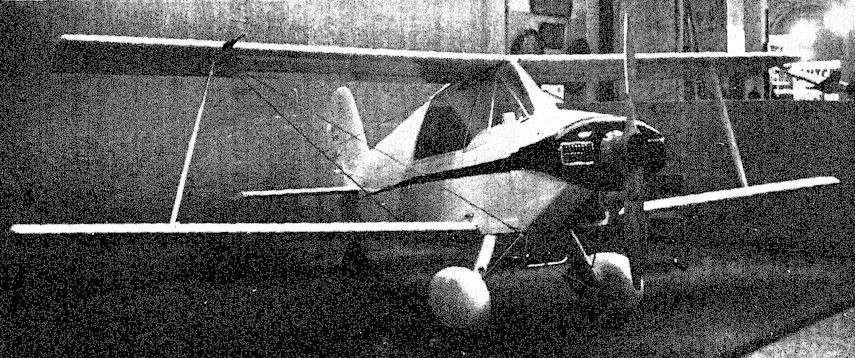
The MDG LD.45 was a single-seat biplane of 1946.
The M.D.G LD-46 of 1947 was two-place.
LD-45
Powerplant: 1 × 40 hp Mathis G2F engine
The MDG LD.45 was a single-seat biplane of 1946.
The M.D.G LD-46 of 1947 was two-place.
LD-45
Powerplant: 1 × 40 hp Mathis G2F engine

M&D Flugzeugbau are a German company based in Friedeburg, Lower Saxony in north-western Germany. M&D Flugzeugbau manufacture the Samburo motorglider and also provide maintenance services for other light aircraft.
In 2007 M&D identified the potential benefits of installing a small jet turbine sustainer in gliders but considered the range of jet turbines available for model aircraft had limitations. Such engines had not been designed from the outset to consider certification or in-flight starting. M&D decided that rather than convert a model aircraft jet turbine into a glider sustainer, it would be better to develop and certificate a new engine.
The key features of the TJ42 engine are:
Single spool jet turbine
Two stage axial-centrifugal stator-less compressor with a compression ratio of 1:3.8
Cannular combustor with multiple fuel injectors and combustion zones contained within a single annulus casing
Glow-plug ignition system (used in start-up sequence only, ignites top combustion zone only)
Single stage axial turbine with stators
Convergent nozzle
Front-mounted, direct drive electric starter motor for initial spool up
The maximum thrust is nominally 42 kgf at 100,000 rpm with an estimated fuel consumption of 66.4kg/hr at full thrust. At the idle speed of 30,000 rpm the thrust is less than 2 kgf. The weight is 3.3kg and overall dimensions 400 mm long and 150 mm diameter.
The TJ42 has a kerosene start-up (as opposed to gas start engines) which eliminates the need for separate gas canisters and long complex start-up procedures.
The start-up sequence is:
Glow-plug heats up for 10 seconds
Electric starter motor spools up engine to 8,000 rpm
Starter fuel solenoid pulses with fuel being injected into the top combustion zone only
Fuel ignited in top combustion zone by glow-plug
Engine spools up to 15,000 rpm
Normal fuel solenoid pulses with fuel being injected into all combustion zones (starter fuel solenoid closes)
Engine spools up to idle speed of 30,000 rpm
Fuel rate controlled by throttle, and matched to density altitude and rpm by ECU
The shut-down sequence is:
Fuel cut off and combustion ceases
With no fuel, the engine speed decreases and EGT decreases
The ECU senses EGT and rpm, and if the engine speed is too low to promote rapid cooling, the electric starter motor runs an automatic cooling cycle (spooling the engine up to 3,000 rpm, then switching off)
Once the EGT has dropped below 50°C the ECU signals that the engine can be retracted
The engine and pylon are enclosed by cowlings manufactured from fiberglass and aluminum (or possibly stainless steel subject to clarification of certification requirements).
The MD-TJ42 is certified for installation on self-sustaining sailplanes only, i.e. it is not intended for take-off operation, EASA Type Certificate EASA.E.099. The first type certificated application was on the Jonker Sailplanes JS-1 Series.
Because of the use of these engines in sailplanes, there are several assumptions to simplify the requirements for certification. These assumptions are:
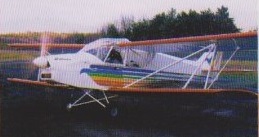
The two seat, side by side Sherpa has a spaceframe fuselage and wings of riveted sheet dural.
Engine: Rotax 912, 80 hp
Wing span: 9.4 m
Wing area: 20 sq.m
MAUW: 450 kg
Empty weight: 198 kg
Fuel capacity: 60 lt
Max speed: 160 kph
Cruise speed: 130 kph
Minimum speed: 60 kph
Climb rate: 5 m/s
Fuel consumption: 8-14 lt/hr
Seats: 2
Price (1998): 250 000 Fttc
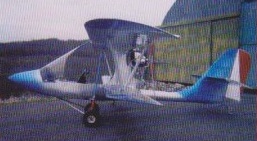
The Airland has a composite fuselage with wings of riveted sheet dural. The two seats are in tandem.
Engine: VW 1835, 63 hp
Wing span: 8.60 m
Wing area: 18 sq.m
MAUW: 450 kg
Empty weight: 190 kg
Fuel capacity: 45-60 lt
Max speed: 160 kph
Cruise speed: 120 kph
Minimum speed: 60 kph
Climb rate: 5 m/s
Seats: 2
Fuel consumption: 10-12 lt/hr
Price (1998): 150 000 Fttc
Kit price (1998): 100 000 Fttc
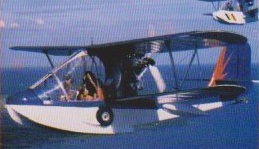
The tandem, two seat MD 03 amphibious pusher biplane has a fuselage of spaceframe and composites, while the wings are the same as on other Delpech models.
Engine: Rotax 582, 64 hp
Wing span: 8.60 m
Wing area: 18 sq.m
MAUW: 450 kg
Empty weight: 198 kg
Fuel capacity: 45-60 lt
Max speed: 160 kph
Cruise speed: 130 kph
Minimum speed: 60 kph
Climb rate: 5 m/s
Seats: 2
Fuel consumption: 9-14 lt/hr
Kit price (1998): 110 000 Fttc
1998:
La Cassagne
F-24120 Terrasson
France
UL builder
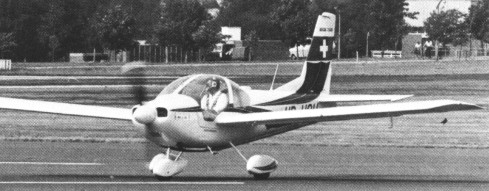
An aerobatic trainer / tourer, the prototype first flying in 1983.
MDB Flugtechnik AG was founded 1991 to continue development of the MD3-160, as begun by MDC Max Datwyler AG, which was being manufactured in Malaysia by SME Aviation as the MD3-160 AeroTiga. The first Malaysian-built example in flew 1995.
MD-3-160
Engine: Lycoming O-320-D2A
Seats: 2
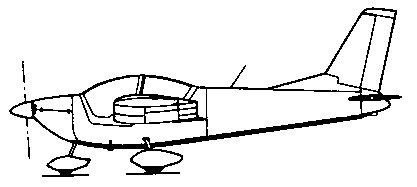
Max Dätwyler & Co, based at Bleinbach-Leupenthal, produced in 1960 a glider-tug based on the Piper Super Cub, designated MDC-Trailer.
Switzerland.
Max Dätwyler & Co, based at Bleinbach-Leupenthal, produced in 1960 a glider-tug based on the Piper Super Cub, designated MDC-Trailer. Produced subsequently a modernised version of the Bucher Bu 131 Jungmann, known as the Lerche. First flew in 1983 the prototype MD-3 Swiss Trainer.
Switzerland
Founded 1991 to continue development of the MD3-160, as begun by MDC Max Datwyler AG, which was being manufactured in Malaysia by SME Aviation as the AeroTiga.

