Yeremeyev Staliniets-1

From a visit to the IX National Competition gliding in the town of Koktebel in Crimea between 12 August and 20 September of 1933, a group of students and instructors Pilot School Navales of the RKKA VVS named Stalin decided to develop self-built gliders to participate in these competitions. The apparatuses carried the denomination Staliniets (Сталинец), which can be translated as Staliniano, in relation to the name of the school.

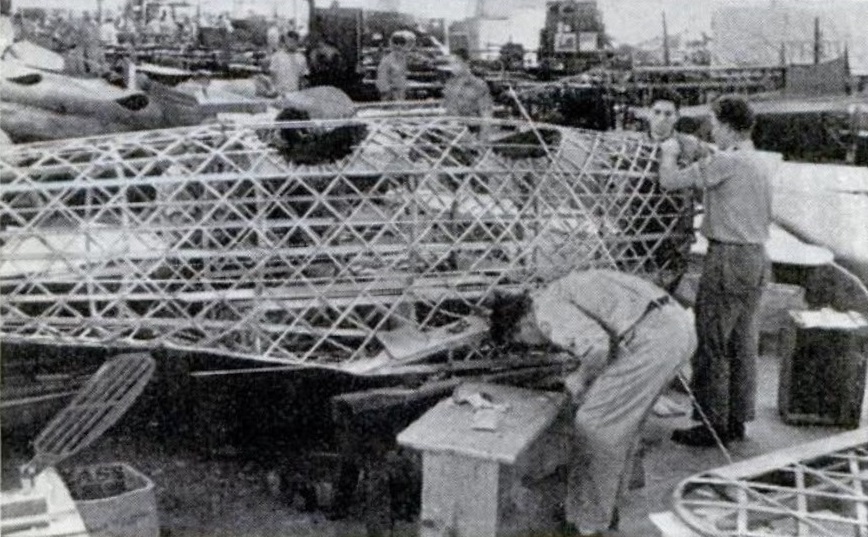
Designed by Pavel Avkcientievich Yeremeyev, the Staliniets-1 (Russian: Еремеев “Сталинец-1”) was designed as an aerobatics training glider made entirely of wood and designed for towed flight.

Structurally, it was conceived as a monoplane with a high wing braced by V-uprights. The wing, with R-165 profile, had a single spar structure.

The fuselage, with an oval section and covered in plywood, made the transition in the tail area towards a small keel to which the offset rudder was fixed and elliptical in shape. The stabilizers were located in the middle of the empennage, braced by uprights to the rear fuselage structure.

The pilot was located in an open cockpit in the forward region of the fuselage. The landing gear was of the conventional type and featured small wheels located on the sides of the fuselage.

Built in 1934 in Yeisk, Staliniets-1 was registered to participate in the 10th edition of the national glider competitions, held from September 1 to October 6, 1934. The glider arrived at Koktebel towed by air from Yeisk. However, after evaluation, he was denied the possibility of participating in the competition.

Staliniets-1
Wingspan: 10.10 m
Wing area: 12.20 m²
Aspect ratio: 8.4
Length: 4.80 m
Height: 1.60 m
Empty weight: 130 kg
Wing loading: 17.2 kg / m²
Glide ratio: 12.3
Minimum descent speed: 0.95 m / s
Surface of the horizontal planes: 1.52 m²
Vertical plane surface: 0.76 m²
Ailerons surface: 1.00 m²
Accommodation: 1

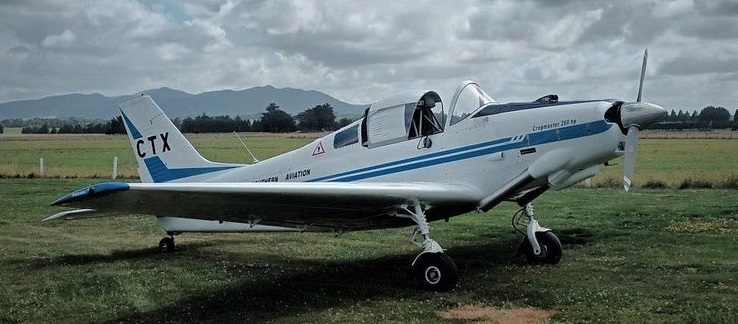
Yeoman YA-1 Cropmaster 250 / KS.3 Cropmaster 250 / Fieldmaster 285

YA-1

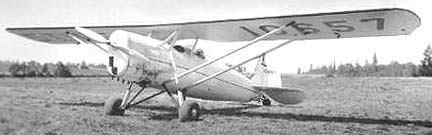
Australian designed and built, based on the CAC CA-6 Wackett trainer. A new wing, tail, and engine were fitted and twenty-one were built between 1959 and 1967. The first flying in February 1960.

Production versions were the KS.3 Cropmaster 250 and Fieldmaster 285.

Yeoman Cropmaster YA 1 250R

At least one was converted to three seats and, as a Yeoman Hanes 250, fitted with an extended glazed canopy to cover all seats.

Gallery

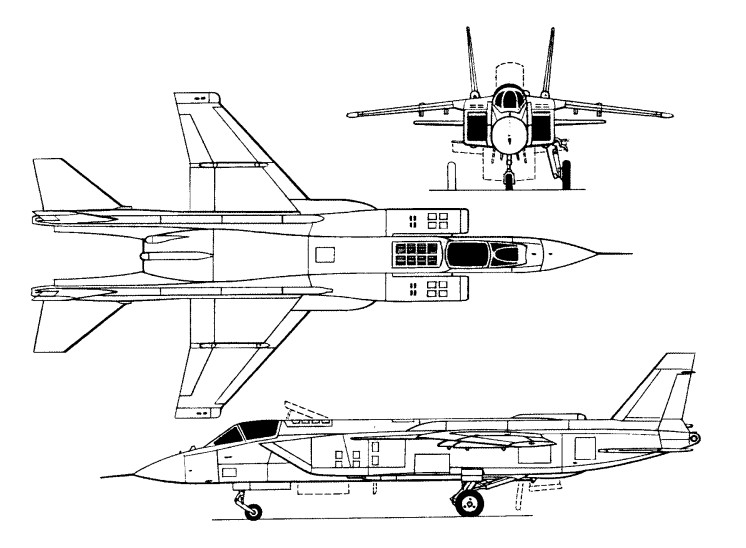
Yakolev Yak-141

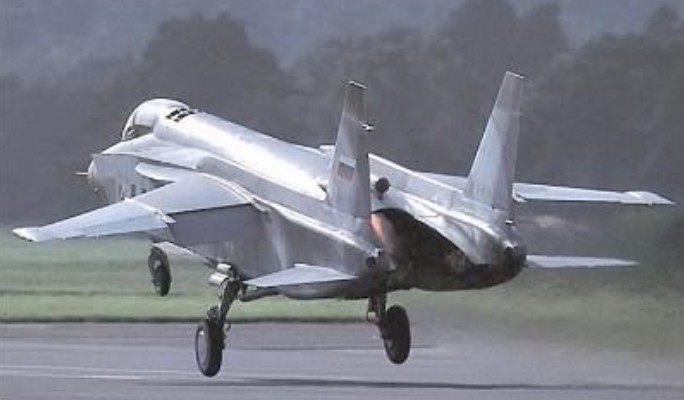
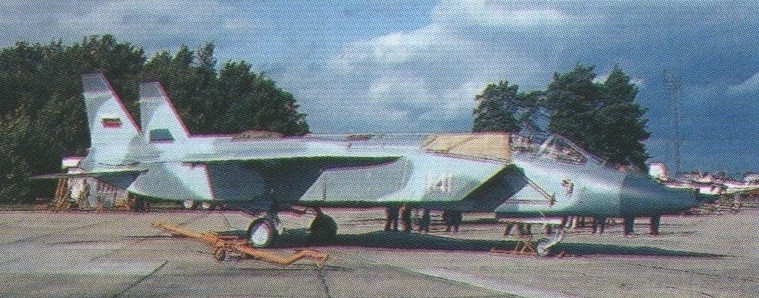
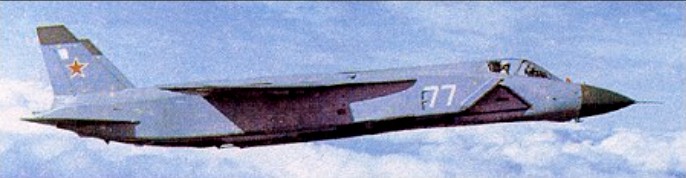
The Yak-141, being the world’s first supersonic STOVL (short take-off/vertical landing) aircraft, has three engines: one lift-cruise R-79 with a thrust of 15500kg and two small-sized RD-41 of 4100kg each. The powerplant allows the plane to lift off vertically with a weight of up to 15,800kg. Alternatively, the Yak-141 can perform short take-offs (60-120m) with a weight of up to 19,500kg. In the latter case the combat radius increases by 1.5-2 times and patrol time in the combat zone by two times. The pilot can use afterburner even when the nozzles are deflected. The Yak-141’s integral flight-control system sets power and deflection of the nozzles so as to optimise making vertical/short take-offs and landings.

The Yak-141 first flew in March 1989, piloted by Andrei Sinitsin.

The Yak-141M was meant primarily for ground-basing. Introduction of new flight regimes, as well as new take-off/landing techniques, has entailed changes in the airframe, leading to a new design, the Yak-141M.

Engine: 1 x R-79V-300, 152.0 kN , 2 x RD-41, 41.8 kN
Max take-off weight: 19500 kg / 42990 lb
Empty weight: 11650 kg / 25684 lb
Wingspan: 10.1 m / 33 ft 2 in
Length: 18.3 m / 60 ft 0 in
Height: 5.0 m / 16 ft 5 in
Wing area: 31.7 sq.m / 341.22 sq ft
Max. speed: 1850 km/h / 1150 mph
Ceiling: 15500 m / 50850 ft
Range w/max.fuel: 2100 km / 1305 miles
Range w/max.payload: 1400 km / 870 miles
Crew: 1
Armament: 1 x 30mm cannon, 1000kg (VTOL) or 2650kg (STOL)
Hardpoints: six

Yakolev Yak-141