Micro Aviation (NZ) B-20 Bantam

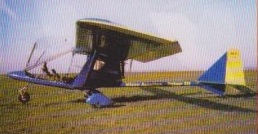
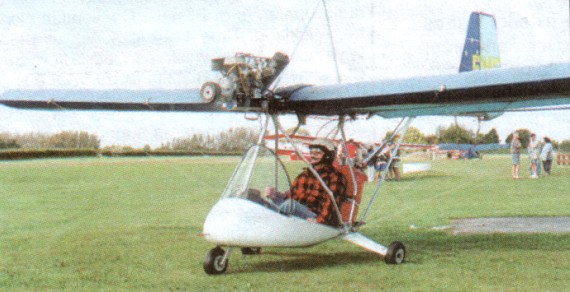
The B-10, too heavy for Class 1 microlight operation, was refined into the lighter B-20 with a new wing and tailplane section, less drag and a lighter engine. Refinements to the B10 design included pull-on sailcloth and fabricated ribs, resulting in the B20 designation. Appearing much trimmer and performing as well, if not better, than the heavier and more elaborate B-10 Bantam. First flown on 23 December, the B-20 was designed specifically to a lower empty weight in order to meet the microlight philosophy of a very basic flying machine. The result was a Bantam with somewhat better performance than the B-10 and the only penalty being a smaller fuel tank with consequently less endurance. The geared Rotax fitted to the B-20 is much quieter than the belt driven version fitted to the B-10, one B-10 owner has already made the conversion to a geared engine.
Designed by the Max Clear and John Smith design team at Te Kowhai, the B-20 has replaced the B-10 on the production line. The first production B-20 (s/n 0015) was delivered south by pilot Otto Gram to the South Island’s West Coast in early February. After a production run of 17 were built during 1985, the B-20 itself was superseded by the B-22. Two were exported to Australia. There were minor differences, the most significant being the “flaperons” which enhanced an already excellent take-off performance with a reduced approach speed. Conventional 3-axis controls.

Whereas the B 10 was an individually constructed (or at least individually finished) aircraft, the B 20 was the built as the start of the assembly line at Micro Aviation at Te Kowhai.

The B 20 had the same basic airframe as the B 10 but with a differently shaped pod and without the drooped wingtips. It had a tapered wing and a different airfoil to the B 10. It also had pre-sewn covers for the flying surfaces (whereas the B 10 had ceconite fabric glued to the airframe). Original examples had a Rotax 447 engine. 15 Bantam B 20s were made at Te Kowhai before production geared up with Micro Aviation producing the two seat Bantam B 22.

Engine: Rotax 447, 40 hp.
Wing span: 8.69m.
Length: 5.15m.
Empty wt: 114 kg.
MAUW: 250 kg.
Max cruise: 93 kph.
Range: 170 km.
Micro Aviation (NZ) B-10 Bantam

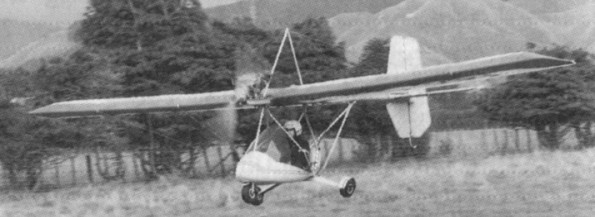
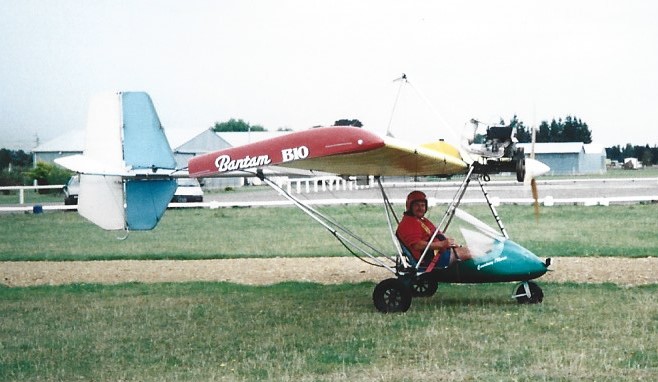
The MICRO Aviation (NZ) B-10 Bantam became the first New Zealand designed microlight to receive full CAD type approval following successful flight trials at Te Kowhai. Production facilities at Te Kowhai were set up in 1984 to manufacture the first ten Bantams (all pre-sold) and since the type approval further Bantams have been built.

Designed by John Smith and Max Clear, and based on the Phantom ultralight, the B-10 first flew, piloted by Keith Trillo, on 16 November 1983. A further 12 B-10 Bantams followed, more or less identical apart from paint schemes and fin and rudder configuration. All performed well – so well in fact that the owner of the last B-10 built borrowed the plans and another two came into being in the Cambridge district at the hands of the Williams brothers.

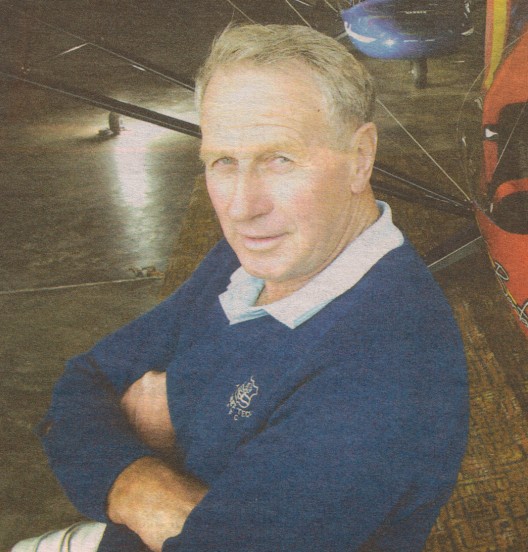
ZK-KGG –Owner/Pilot Brian Fletcher

The B-10, too heavy for Class 1 microlight operation, was refined into the lighter B-20 with a new wing and tailplane section, less drag and a lighter engine. Production ended when superseded by the B-20 Bantam. Conventional 3-axis controls.

Engine: Rotax 503, 50 hp.
Wing span: 28 ft 6 in (8.69m).
Wing Area: 146.459sq.ft.
Length: 17 ft (5.15m).
Empty wt: 127 kg.
MAUW: 250 kg.
Maximum Design Load Factors: +9G, -6G.
Maximum Level Speed: 54 knots
Maximum Cruising Speed: 50 knots
Economical Cruise: 40 knots
Stalling Speed: 21 knots
Vne: 70 knots
Maximum Rate Of Climb: 550fpm
Range: 200 nautical miles.

Micro Aviation (NZ) Ltd

In 1983 Max Clear (Inventor, and founder of Micro Aviation) saw the need for a fun, stable, affordable aircraft, which could be mostly maintained by the owner, so he designed and built the first Bantam Mircolight.
1985: Micro Aviation (NZ) Ltd, C/- Post Office, Te Kowhai.
In March 1993, Max Clear bought out his partners John Dick and John Smith.

Max Clear

2009: Limmer Rd, Te Kowhai, RD 8, Hamilton 3288, New Zealand.

Max Clear died in November 2010 and the entire manufacturing operation was made available for sale.

By 2013 almost half of the production was exported to seven countries. The Bantam Aircraft Manufacturing Plant was relocated to Mandeville, New Zealand, with Colin & Maeva Smith having spares available for all models.

The latest production Model Bantam – the B22UL, with a 4 cylinder, 4 stroke UL 260i engine, was undergoing its final Certification tests.

Micro Aviation Pulsar

Pulsar III

Of all metal construction, the Pulsar III’s use of an aerofoil section for the leading edge spar plus round-out improved its speed range and low-end performance.

Pulsar III
Engine: Rotax 582, 64 hp
Wing span: 9.2 m
Wing area: 15 sq.m
MAUW: 450 kg
Empty weight: 146 kg
Fuel capacity: 60 lt
Max speed: 160 kph
Cruise speed: 130 kph
Minimum speed: 50 kph
Climb rate: 6 m/s
Fuel consumption: 10 lt/hr
Certification: Espagnole
Seats: 2
Price (1998): 135 000 Fttc
Kit price (1998): 71 900 Fttc

Micro-Aviation Two-seat Trainer

Side by side two seat single engined high-wing monoplane with conventional three axis control. Wing has swept back leading and trailing edges, and tapering chord; no tail. Pitch/roll control by stabilators; yaw control by tip rudders; control inputs through stick for pitch/roll and pedals for yaw. Cantilever wing; wing profile NACA 23015; double-surface. Undercarriage has three wheels in tricycle formation; suspension on all wheels. Push right go right nosewheel steering connected to yaw control. Brake on nosewheel. Aluminium tube/wood/steel tube framework, partially enclosed. Engine mounted below wing driving pusher propeller.
Seeing the need for training aircraft, Micro Aviation decided at the end of 1981 to launch some two seater microlights. To this end, the firm asked Don Mitchell to give it the benefit of his experience in this matter and a prototype called the Two Seat Trainer was duly shown at Oshkosh in August 1982.
By 1983 it has not gone into serious production. The aircraft shown was a direct development of the B10 Mitchell Wing, enlarged and strengthened. It was intended that the two-seater should use a Konig SD570 four cylinder two stroke engine.

Engine: Konig SD570, 28 bhp at 4200 rpm.
Power per unit area 0.16hp/sq.ft, 1.7 hp/sq.m.
Wing span 38.0 ft, 11.58 m.
Mean chord 4.8 ft, 1.45 m.
Total wing area 181 sq.ft, 16.8 sq.m.
Wing aspect ratio 8.0/1.
Empty weight 240 lb, 109kg.
Max take off weight 640 lb, 290 kg.
Payload 400 lb, 181 kg.
Max wing loading 3.55 lb/sq.ft, 17.3 kg/sq.m.
Max power loading 22.9 lb/hp, 10.4kg/hp.
Load factors +6.0, 6.0 design.
Stalling speed 24 mph, 38 kph.
Max climb rate at sea level 400ft/min, 2.0m/s.
Take off distance 350ft, 107m.

Mickl Marineapparat I

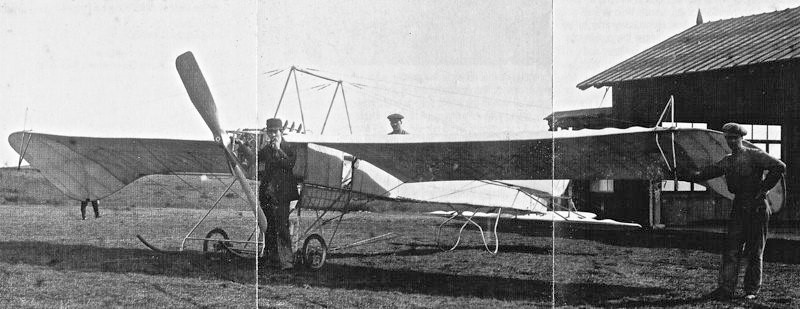
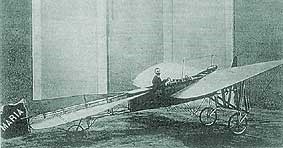
Joseph Mickl designed many flying boats during the first World War for the k.u.k. navy, and after the war for Yugoslavia. The machine is seen here in its initial monoplane form in summer 1911. It was first flown at the Pola Aerodrom at Valtursko Polje, Austria-Hungary, on 29 July 1911, probably by the Graz born Viktor Klobucar. Later that year it was converted to a biplane with floats as the first aircraft of the k.u.k. Navy.

Michigan Aero-Engine Rover

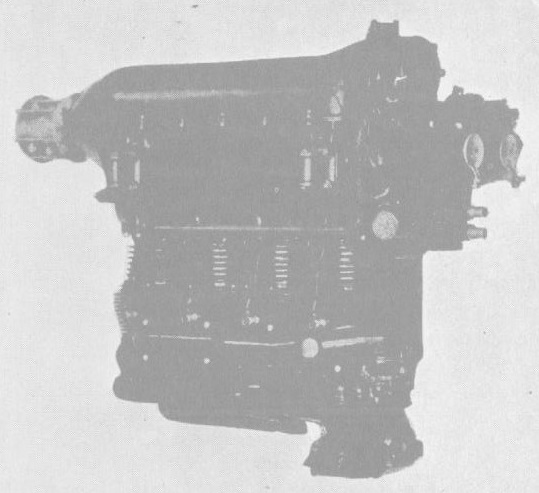
The Rover features ribbed, die-cast aluminium alloy cylinder heads, cast nickel iron cylinders, and an integral five bearing crankshaft. Connecting rods are dropped forged Dural.

An inverted type, valve gear ports are completely enclosed. The lubrication system is designed completely within the engine. With a dry sump, all oil is carried in an external tank. There is an independent scavenger system for each end of the crankcase.

All accessories are arranged at the rear. Standard equipment was a main cooling air scoop, complete exhaust system, carburettor air heater with control, propeller hub, tool kit and instruction book.

Available at extra cost was a hand or electric starter.

Type: 4 cylinder inverted inline air cooled
Commercial Rating: 75 hp at 1970 rpm
Displacement: 267.28 cu.in
Compression ratio: 5.15-1
Bore: 4 1/8 in
Stroke: 5 in
Length: 42 1/4 in
Width: 11 1/8 in
Height: 31 7/8 in
Weight: 232 lb
Fuel consumption: not more than .18 lb/hp/hr
Oil consumption: not more than .055 lb/hp/hr
Lubrication: 3 gear scavenging pump, 2 gear pressure pump
Ignition: 2 Scintilla magnetos
Carburation: 1 Stromberg NA*R3 with altitude adj.
Spark plugs: 2 per cylinder AC
Price: $1200