Microturbo / Turbomeca S.A.

Turbomeca was founded August 29, 1938 by Joseph Szydlowski and André Planiol following their patent of a supercharger in 1937. Hispano-Suiza ordered a demonstrator to equip its 12 Y engine, used among others on the MS 405 C1.

Turbomeca changed rapidly from an artisanal production to an industrial one benefiting from the politics of re-armament. This is shown by the production figures of the following three years: 18 compressor in 1938, 300 in 1939 and 1200 in 1940. Although the factory at Mézières-sur-Seine was only really operational in June 1940, the government advised the move to the south of France due to the German advance. During the same month, Turbomeca had relocated in newly requisitioned workshop in Saint-Pé-de-Bigorre near the Hispano-Suiza engine factory in Tarbes. The buildings were found to be too small and in 1941 a place is bought in Bordes near Pau. Between the autumn of 1941 and June 1942 Turbomeca moved. In November 1942, Szydlowski fled to Switzerland. Between October 1942 and 1944, the production stale and the workforce went from about 300 to about 50.

From 1950, Turbomeca produced the tiny centrifugal flow Palas turbojet, producing 1.6 kN (353 lbf). The Palas was also produced by Blackburn and General Aircraft in the UK and Continental in the USA. From 1957, it manufactured the Bastan turboprop for the Aérospatiale N 262 airliner. Blackburn had a licence for producing other Turbomeca designs.

Rolls-Royce Turbomeca Limited was established in 1968 to develop the Adour jet engine for the Anglo-French SEPECAT Jaguar. The company went on to develop the RTM322 turboshaft, which powers Westland WAH-64, and some models of the AgustaWestland EH101 and NHI NH90.

In 2001 Turbomeca and Rolls-Royce won a $1 billion USD contract to equip 399 German, French and Dutch NH90 helicopters with their RTM322 engines.

SNECMA Group acquired the company in September 2001.

Headquarters: Bordes, France
Revenue (2006): € 870 million
Employees (2006): 5,178

As of 2012, Turbomeca turbines power civil, parapublic and defence helicopters for all the leading helicopter manufacturers (mainly Eurocopter, but also AgustaWestland, Sikorsky, NHI, Kamov, HAL).

Engines of Microturbo:

Palas
SG 18
TRS 18
TRS 25
TRI 40
TRI 60
TRI 80
J403
Cougar
Eclair
Eclair II
Lynx
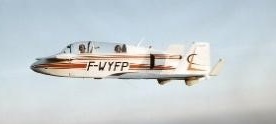
Microstar Variviggen

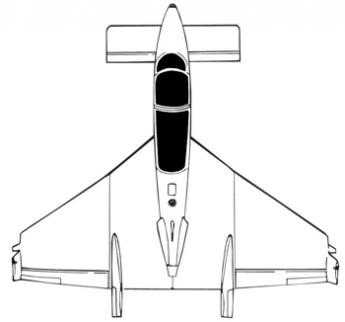
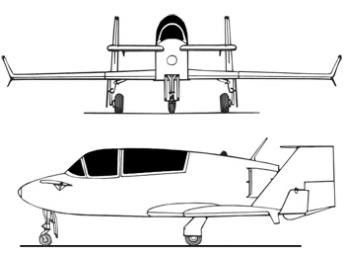
Burt Rutan design VariViggen started when he was a student at Cal Poly (California Polytechnic State University) in the early 1960s. He started building the prototype in his garage in 1968. After four years of work, the aircraft made its first flight 27 February 1972.

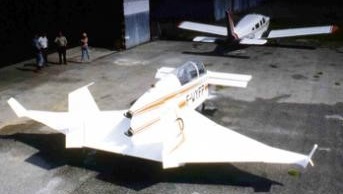
Leo Chagnes built the MicroStar based on plans of the VariViggen over four years.

The wing is styrofoam foam with epoxy coating and the fuselage is spruce and birch plywood. It is powered with 2 TRS18 Microturbo turbojet engines. Microturbo was responsible for the engine, with the completion of the frame, the calculation of the implementation and the centering of the two engines. This installation required a modification of the rear. The increase in surface area required a 20 cm increase.

The air inlets are fiberglass, and the cowling is made of sheet aluminium. The electronics are located just outside the engines, and is accessed by doors. The power units are separated from the airframe by three fire partitions.

The wheels are derived from a Cesna150 and the assembly is retractable via an electric servo coupled with a manual override. The luggage compartment behind the rear seat has been replaced by a 200 lt kerosene fuel tank, additional to two 35 lt tanks housed in the wings.

After more than 4 hours running and jumps, Leo Chagnes made the first flight on July 20, 1979.

Burt Rutan flew with Jacques Costes aboard MicroStar on December 19, 1981.

Speed max: 400 km / h
Speed cruise: 320 km / h
ROC: 6 m / s
Stall: 85 km / h
TO dist (15 m): 320 m
Ceiling: 8000 m
Empty weight: 545 kg
Max weight: 889 kg
Fuel capacity: 271 lt

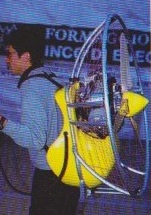
Prodelta Pulsar

Pulsar 100
Empty weight: 19.8 kg
Engine: Solo, 14 hp
Reduction: yes
Fuel capacity: 5.8-8 lt
Price (1998): L 4 700 000

Pulsar 100K
Empty weight: 19.8 kg
Engine: König, 21 hp
Reduction: direct
Fuel capacity: 8-10 lt
Price (1998): L 7 500 000

Pulsar 120
Empty weight: 20.5 kg
Engine: Solo, 14 hp
Reduction: yes
Fuel capacity: 5.8-8 lt
Price (1998): L 4 700 000

Pulsar 120K
Empty weight: 20.6 kg
Engine: König, 21 hp
Reduction: direct
Fuel capacity: 8-10 lt
Price (1998): L 7 500 000

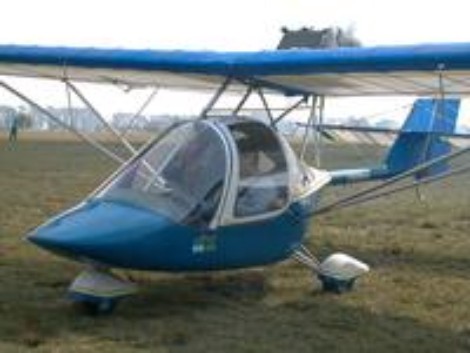
Microleve ML500

Basic ultralight, tricycle landing gear, with rigid wing. Now with a full closed cabin.

Stall: 26 kt / 30 mph / 48 kmh
Cruise: 78 kt / 90 mph / 145 kmh
VNE: 96 kt / 110 mph / 177 kmh
Empty Weight: 220 kg / 485 lbs
MTOW Weight: 500 kg / 1102 lbs
Climb Ratio: 1000 ft/min / 5 m/s
Glide Ratio: 12:1
Take-off distance (50ft obstacle): 330 ft / 100 m
Landing distance (50ft obstacle): 330 ft / 100 m

Microleve ML450

A two place, side by side with trigear or tail wheel. First flown in 1989.

Engine: Rotax 582, 65 hp
HP range: 55-74
Height: 6.9 ft
Length: 22.4 ft
Wing span: 33.8 ft
Wing area: 177.4 sq.ft
Empty weight: 484 lb
Gross weight: 980 lb
Fuel capacity: 17 USG
Top speed: 100 mph
Cruise: 70 mph
Stall: 20 mph
Range: 289 sm
Rate of climb: 1000 fpm
Takeoff dist: 200 ft
Landing dist: 100 ft
Service ceiling: 10,000 ft
Seats: 2
Landing gear: nose or tail

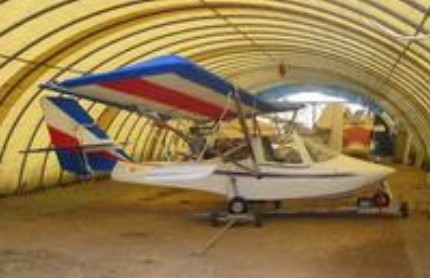
Microleve Corsario

Mk.V

A two place, side by side LSA amphibian with retractable trigear or tail wheel. First flown in 1989.

Mk.III
Engine: Rotax, 74 hp
HP range: 66-80
Height: 6.9 ft
Length: 22.4 ft
Wing span: 33.8 ft
Wing area: 177.4 sq.ft
Empty weight: 540 lb
Gross weight: 1100 lb
Fuel capacity: 17 USG
Top speed: 100 mph
Cruise: 75 mph
Range: 289 sm
Rate of climb: 800 fpm
Takeoff dist land: 260 ft
Takeoff dist water: 330 ft
Landing dist land: 220 ft
Landing dist water: 250 ft
Service ceiling: 10,000 ft
Seats: 2
Landing gear: nose or tail wheel

Mk.5
Engine: Rotax 912, 80 hp
HP range: 80-100
Length: 22.6 ft
Wing span: 33 ft
Wing area: 175 sq.ft
Empty weight: 685 lb
Gross weight: 600 kg / 1320 lb
Cruise: 85 mph
Stall: 42 mph
Fuel capacity: 20 USG
VNE: 120 kt / 138 mph / 222 kmh
Range: 460 sm
Rate of climb: 900 fpm
Glide Ratio: 10:1
Seats: 2
Cockpit width: 44 in
Landing gear: nose or tail wheel
2009 Price: US$17000