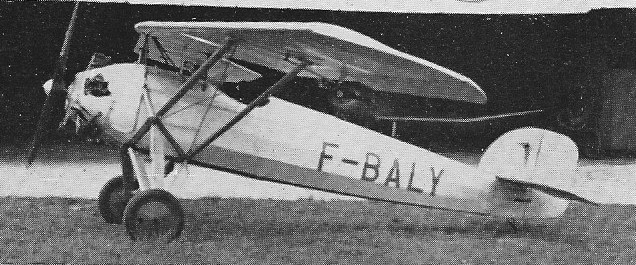
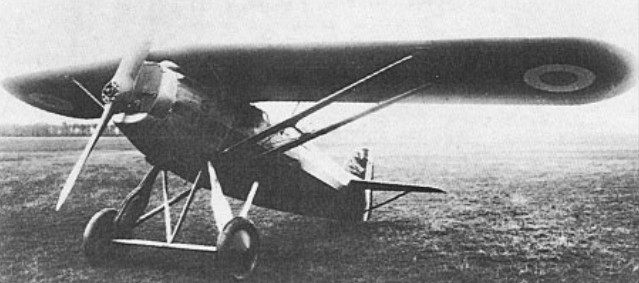
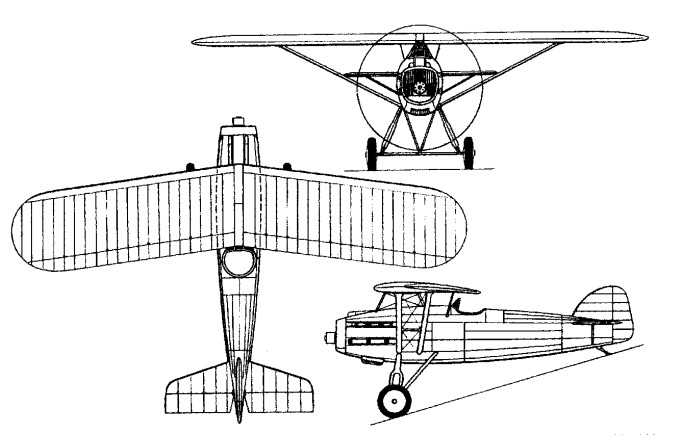
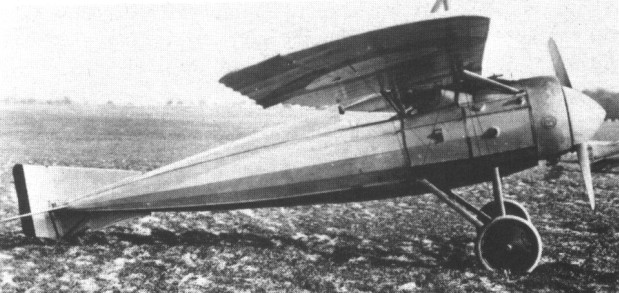
The MS.180 and more powerful MS.181 were produced by Morane-Saulnier in 1930 for the flying schools of the Cie Francais d’Aviation. They were standard equipment for CFA flying schools for several years.
MS.181
The MS.185 is generally similar to the MS.181.
MS.181
MS.180 Engine: Salmson 9Ad, 40 hp
MS.181 Engine: Salmson 5Ac, 60 hp Wingspan: 29 ft 6 in Length: 19 ft 10 in Empty weight: 630 lb Loaded weight: 960 lb Max speed: 88 mph Cruise: 72 mph ROC: 630 fpm Range: 365 mi
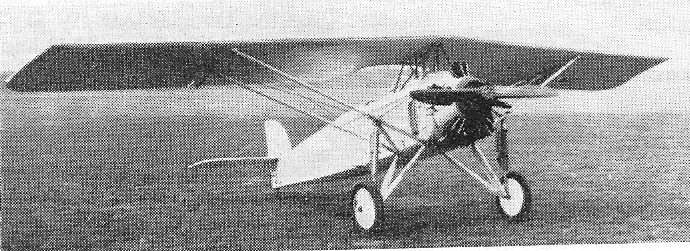
The Morane-Saulnier MS.129 and its derivatives in the MS.130 series were a family of military trainer aircraft produced in France in the 1920s. They were conventional, parasol-wing monoplanes with open cockpits in tandem and fixed tailskid undercarriage. The initial version, the MS.129, was produced in small numbers for the Romanian Air Force and civil users, but the major production version was the MS.130, which equipped the French Navy and a number of foreign air arms.
The second MS.130 prototype won the 1929 Coupe Michelin, flown by Michel Detroyat with an average speed of 190 km/h (120 mph)
Morane-Saulnier MS.130 flown in the 1929 Coupe Michelin by Michel Détroyat.
MS.130
The MS.130 was further developed as the MS.230, and at least two MS.130s were later rebuilt to this new standard.
Operators of the MS.140 were Aéronavale and Aéronautique Militaire, Brazilian Air Force and Varig (15), Belgium (2), China, Guatemala, and Turkey. Romania operated MS.129, and the Portuguese Air Force operated 1 x MS.130 and 4 x MS.133.
Variants:
MS.129 initial production version Engine: Hispano-Suiza 8Ab
MS.130 major production version Engine: Salmson 9AB, 170 kW (230 hp) Wingspan: 10.70 m (35 ft 1 in) Wing area: 19.7 m2 (212 sq ft) Length: 6.97 m (22 ft 10 in) Height: 2.85 m (9 ft 4 in) Empty weight: 793 kg (1,740 lb) Gross weight: 1,149 kg (2,528 lb) Maximum speed: 208 km/h (130 mph, 110 kn) Range: 510 km (320 mi, 280 nmi) Service ceiling: 5,000 m (16,000 ft) Crew: Two, pilot and instructor 146 built
MS.130 Coupe Michelin single aircraft for Coupe Michelin 1929
MS.131 MS.130 converted for US military attaché in Paris Engine: 230 hp (170 kW) Lorraine 7Me I converted
MS.132 for French Navy Engine: Salmson 7Ac 5 built
MS.133 Engine conversion Engine: Gnome-Rhône 5Kc 3 from MS.129, 1 from MS.130
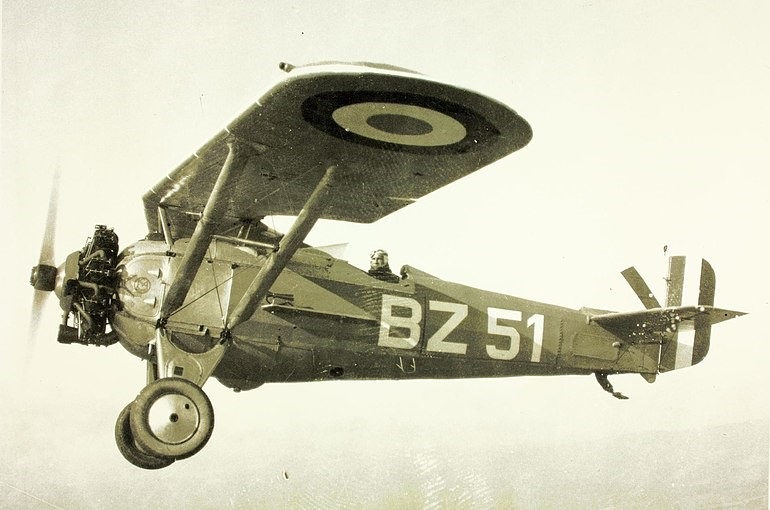
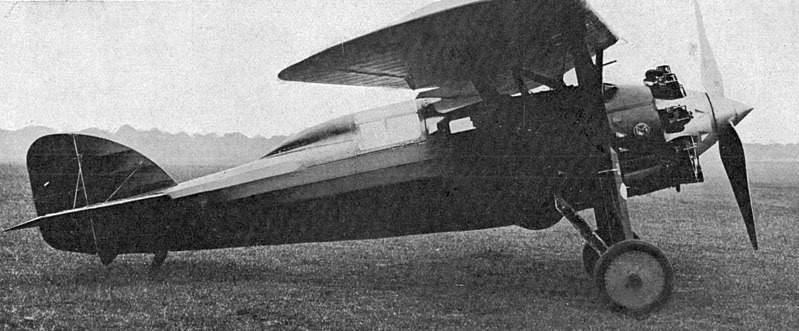
As a direct result of concern over the escalating costs of fighter manufacture, a programme for the development of so-called chasseurs legers, or light fighters, for France’s Aviation Militaire was promoted in 1926. To become known unofficially as the Jockey programme, this envisaged the use of moderate power, minimal equipment and a pair of 7.7mm Vickers guns with only 300 rounds each. Emphasis was to be placed on climb rate, an endurance of one-and-a-half hours at full throttle was called for and a ceiling of 8000m was specified. To meet this requirement, Morane-Saulnier designed and built its first post-World War I fighter, the MoS 121, the prefix being changed to M.S. shortly after the appearance of the prototype in 1927. Possessing lower wing and power loadings than other contending designs (with the exception of the M.S.221 developed in parallel, the M.S.121 was a single-seat parasol monoplane of mixed construction and powered by a 465hp Hispano-Suiza 12Jb 12-cylinder water-cooled engine. It proved underpowered and incapable of attaining specified climb rates, and was, in consequence, discarded in favour of the more powerful M.S.221.
Max take-off weight: 1276 kg / 2813 lb Empty weight: 1011 kg / 2229 lb Wingspan: 9.80 m / 32 ft 2 in Length: 6.72 m / 22 ft 1 in Height: 2.88 m / 9 ft 5 in Wing area: 16.00 sq.m / 172.22 sq ft Max. speed: 257 km/h / 160 mph
First flown in 1915, the AR was a two-seat parasol-wing monoplane constructed largely of wood with fabric covering. About 400 were built after World War I (when it was known as the MS.35), mainly as intermediate trainers in three principal versions: MS.35R with a 59.6kW Le Rhone 9c rotary engine; MS.35A with an Anzani engine; and MS.35C with a Clerget 9B engine. The MS.35EP2 served with French Aeronautique Militaire ‘Ecoles de Pilotage’ up to 1929. Other military users were Poland (60), Argentina, Belgium, Brazil, Guatemala, Romania, Soviet Union (30) and Turkey. A number also went to civil users.
At the IAR Brasov plant, the production of 250 Potez XXVs, made of Canadian timber, was preceded by 30 Morane Saulnier MS.35 EP2s. These high wing trainers, serialled ‘Black’ 1 to 30, were powered by an 80hp (59kW) Gnome Rhone engine and were manufactured between 1927 and 1928.
MS.35 EP2 Engine: 1 x Gnome Rhone, 59kW / 80hp Max take-off weight: 700 kg / 1543 lb Empty weight: 450 kg / 992 lb Wingspan: 10.6 m / 34 ft 9 in Length: 6.8 m / 22 ft 4 in Height: 3.6 m / 11 ft 10 in Wing area: 18.0 sq.m / 193.75 sq ft Max. speed: 135 km/h / 84 mph Cruise speed: 120 km/h / 75 mph Ceiling: 4600 m / 15100 ft Crew: 2
Engine: Gnôme 80 Lambda, 79 hp Length: 21.883 ft / 6.67 m Height: 8.53 ft / 2.6 m Wing span: 31.168 ft / 9.5 m Wing area: 180.835 sq.ft / 16.8 sq.m Max take off weight: 1025.3 lb / 465.0 kg Weight empty: 701.2 lb / 318.0 kg Max. weight carried: 324.1 lb / 147.0 kg Wing load: 5.74 lb/sq.ft / 28.00 kg/sq.m Crew: 1
A batch of 200 numbers (A116 to A316) allocated in 1916 to General Headquarters of the British Expeditionary Force for allocation to aircraft purchased in France. French manufacturers benefiting from this also included Nieuport and Spad, the series being eventually taken up by an assortment of types from these three manufacturers.
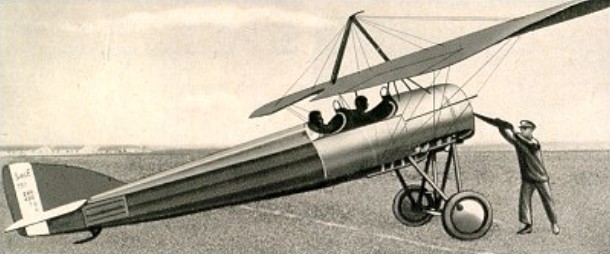
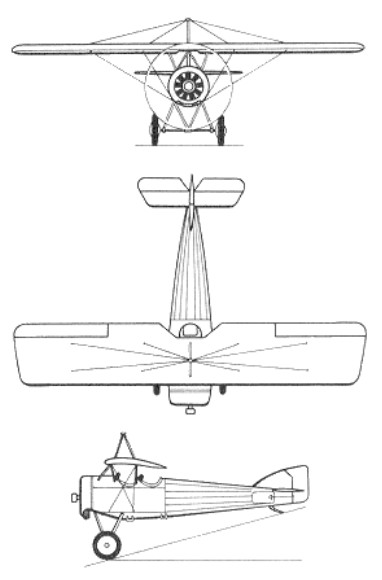
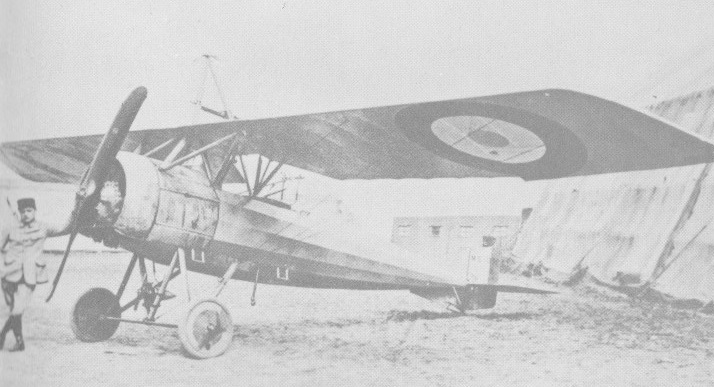
During the summer of 1916, Morane-Saulnier produced two different single-seat fighter versions of the Type P reconnaissance two-seat parasol monoplane. Both were powered by the 110 hp Le Rhóne 9J nine-cylinder rotary, but whereas the first single-seater was a simple conversion retaining the forward cockpit of the two-seater and carrying a single synchronised 7,7-mm Vickers gun, the second version featured a lower-mounted wing, an armament of twin synchronised 7,7-mm guns and an aft-positioned cockpit.
The airframe was a wire-braced parasol-wing monoplane with two-spar wooden wings. The wooden fuselage had light stinger rings to give a circular section. The entire airframe was fabric covered. There were conventional contols, with no fixed tailplane.
Allegedly the first Allied twin-gun fighter, the latter was 183 lb (83 kg) heavier than the former in loaded condition and 56 mph (9 km/h) slower at sea level, recorded performance figures proving inferior to those of the two-seat Type P.
Two prototypes of the initial version and at least one prototype of the two-gun version were evaluated by the Aviation Militaire, but neither was adopted for series production and the single-seat Type P was officially abandoned in December 1916.
Max speed, 102 mph (165 km/h) at sea level Time to 3,280 ft (1 000 m), 3.35 min Span, 28 ft 74 in (8.75 m) Length, l9ft l in(5,8l m)
two-gun version Max speed, 97 mph (156 km/h) at sea level Time to 6,560 ft (2 000 m), 8.67 min Endurance, 2.5 hrs Empty weight, 955 lb (433 kg) Loaded weight, 1,528 lb (693 kg) Span, 36 ft 9 in (11,20 m) Length, 23 ft 7½ in (7,20 m) Height, 10 ft 8¾ in (3,27 m)
Engine: Le Rhone, 110 hp Wing span: 36 ft 8 in Length: 23 ft 7 in Height: 11 ft 5 in Empty weight: 952 lb MTOW: 1612 lb Max speed: 97 mph at 6000 ft Service ceiling: 16,000 ft Endurance: 2.2 hr Armament: 1 x Vickers mh, 1 x Lewis mg Seats: 2
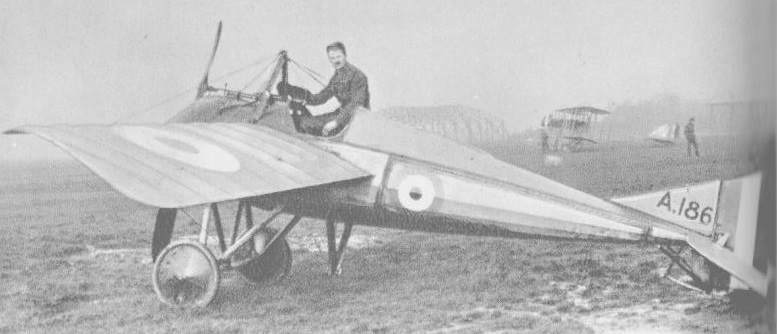
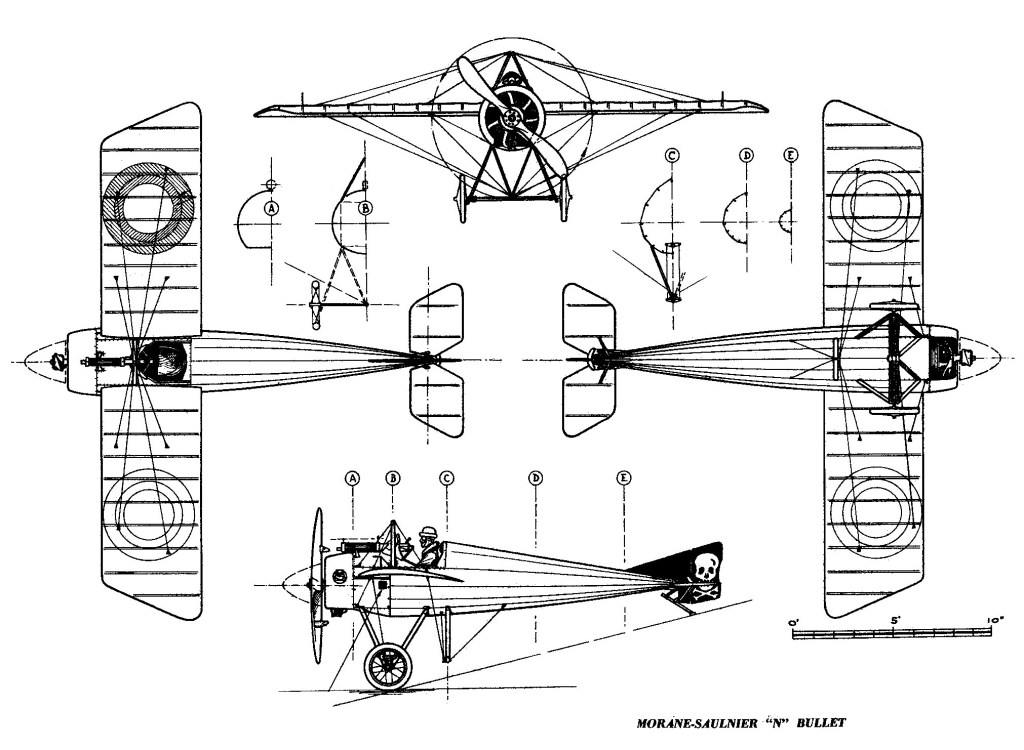
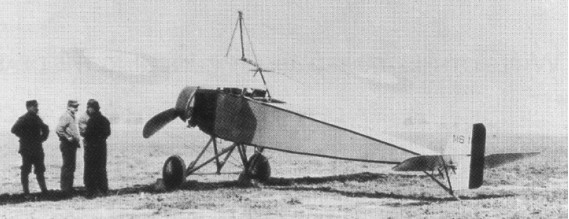
The Type N was a streamlined version of the L and thus obtained the nickname of “Bullet” from the RFC. Its lines were accentuated by the large airscrew spinner, dubbed “casserole” by the French. The Type N or Monocoque Morane was a mid wing fighter powered by either the 80 h.p. Gnome or 110 h.p. Le Rhone engine. Fabric covered, the two-spar wooden wings used wing warping. The fabric covered wooden fuselage has ring stringers to give a circular section. The tail surfaces were fin, rudder and elevators.
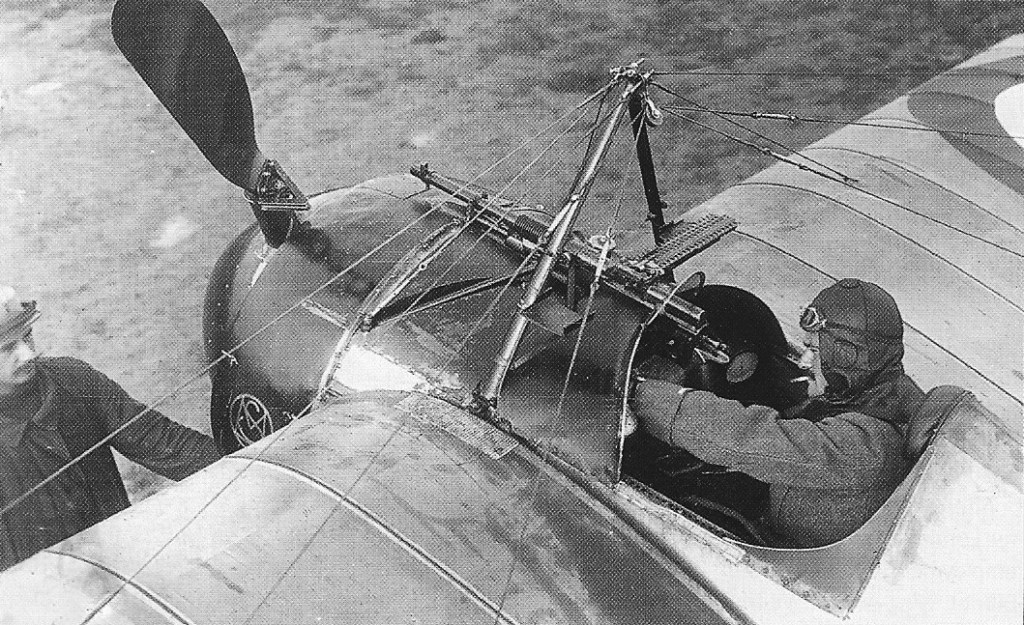
Armament varied; earlier versions flown by the French were armed with the Hotchkiss or more often with the St. Etienne machine gun fitted above the fuselage immediately behind the propeller blades. Later the Vickers gun, with a crude form of interrupter gear, became standard. British versions were fitted with the Lewis gun.
During the period May August 1916 the N served with No. 60 Squadron RFC. It was during this time that an official order was issued to the effect that all “Bullets” must have their spinners and other external metallic parts doped red, to avoid confusion with the similar shape of the Fokker monoplanes.
Effectively the earliest single-seat fighters were the Morane-Saulnier Type N and its German contemporary, the Fokker E I, although the Type N had not been conceived with a military application in mind. Both types were flown in May 1914, the Type N being demonstrated in the following month at Aspern, Vienna. Retaining the wing warping lateral control of earlier Morane-Saulnier shoulder-wing monoplanes, but embodying noteworthy aerodynamic refinements, the Type N was powered by an 80 hp Le Rhône 9C rotary engine, and its operational use was pioneered by Eugene Gilbert who flew an early example fitted with a forward-firing 8-mm Hotchkiss machine gun with propeller-mounted steel bullet dcflectors and dubbed Le Vengeur, this armament being similar to that of the Type L flown by Roland Garros. The performance of Le Vengeur prompted an official order for a small series of aircraft for use by the Aviation Militaire and these entered service in the summer of 1915. In January 1916, 24 Type N aircraft were ordered for the Royal Flying Corps, these being delivered between March and June 1916, and becoming known unofficially to the service as “Morane Bullets”. A few were delivered to the Russian Military Air Fleet, but most had been withdrawn from French operational service before the end of 1915, and those delivered to the RFC were phased out in the following summer. As supplied to the RFC, the Type N was fitted with either the Lewis or Vickers machine gun, both of 7,7-mm calibre.
Only 49 were built, designated MS.5C.1 in French service. The Morane-Saulnier Type N was followed into service by two larger, more powerful and better-armed variants, the Type LA and Type P.
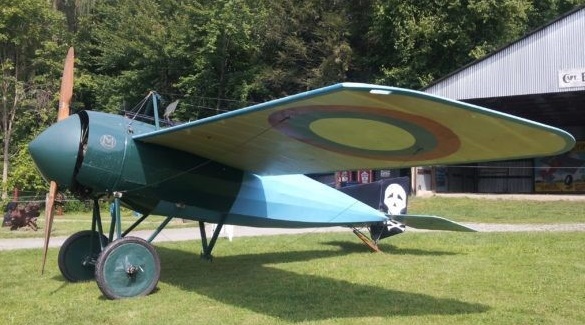
The Old Rhinebeck Morane Saulnier N was constructed from an original Morane Saulnier A.I fuselage, obtained by Cole Palen in 1981, and new wings were fabricated to complete the reproduction. It is finished in the colors of Alexander Kazakov’s aircraft.
Old Rhinebeck Morane Saulnier N
Replica: Circa Reproductions Morane Saulnier N / Bullet Bianchi / Personal Plane Services Morane N
Engine: 1 x 110hp Le Rhone 9J rotary engine Max take-off weight: 510 kg / 1124 lb Span, 26 ft 8 5/8 in (8,15 m) Length, 19 ft 1½ in (5,83 m) Height, 7 ft 4½ in (2,25 m) Wing area, 118.4 sq ft (l1,00 sq.m). Max. speed: 165 km/h / 103 mph at 6,500ft Service ceiling: 4000 m / 13100 ft Armament: 1 x 7.7mm machine-gun Endurance: 1¾ hrs Time to 3,280 ft (1 000 m), 4.0 min
Engine: 1 x 110hp Le Rhone 9J rotary engine Span: 27 ft 3 in Length: 22 ft Height: 8 ft 3 in Empty weight: 735 lb Max take-off weight: 1122 lb Max. speed: 103 mph at 6,000ft Service ceiling: 13,000 ft Endurance: 1 hr 30 min Armament: 1 x Hotchkiss, Vickers, or Lewis machine-gun
The Morane Saulnier and Morane Borel concerns built racing aeroplanes before the first world war, and the earliest of their “parasol” monoplanes, literally meaning sunshade, was the type L of 1913. This was one of the first fighter aeroplanes, and was used in large numbers by the French Army as well as the British Expeditionary Force in France.
The most famous parasol monoplane of its period, the Type L two-seater, which appeared in 1913, was to see service as a fighter as a result of fortuity rather than original intent. Derived from the Type G-19, the first aircraft of Leon Morane and Raymond Saulnier to feature a parasol wing configura¬tion, the Type L emulated previous Morane-Saulnier types in its use of wing warping for lateral control, 50 examples being ordered by Turkey immediately prior to WWI. With the commencement of hostilities, the Turkish aircraft were im¬mediately sequestered for use by France’s Aviation Militaire, and, in October 1914, chosen by Commandant Bares, the Chef du Service Aéronautique aux Armées, for fighting duties. Powered by either the seven-cylinder Gnome or nine-cylinder Le Rhóne 9C rotary, both rated at 80 hp, the Type L was described as a Morane de chasse, and, at times, was armed with an 8-mm Hotchkiss or 7,7-mm Lewis machine gun fired from the rear cockpit. Sometimes flown as a single-seater in the fighting role, the Type L was to have the distinction of carrying into combat the first fixed forward-firing machine gun to be used operationally by a tractor aircraft. Just over 50 Type L aircraft were delivered to the Royal Flying Corps, with which they performed unspectacular service throughout 1915 in the reconnaissance role, and others were supplied to the Russian Military Air Fleet.
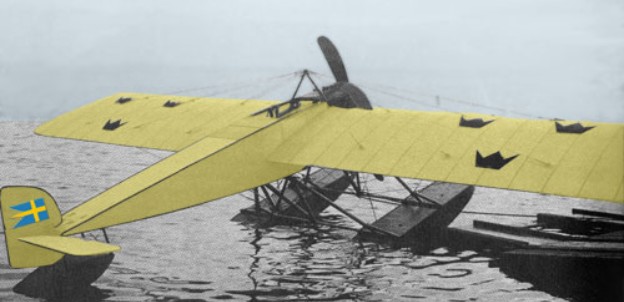
Thulin B was a licenced copy of the Morane Saulnier MS 3L. Two of these aircraft, fitted with floats, were presented to the Swedish Navy. They got the Navy registrations M I (delivered in 1915) and M II (1916). Both were fitted with a 90 hp Gnome engine, manufactured by AETA under the name ”Thulin A”.
Both aircraft made their service at the south coast of Sweden. They were both struck by accidents and written off in September 1917.
Standard two-seat Type L Max speed, 71 mph (115 km/h) at 6,560 ft (2 000 m) Time to 3,280 ft (1 000 m), 5.75 min Endurance, 2.5 hrs Empty weight, 849 lb (385 kg) Loaded weight, 1,444 lb (655 kg) Span, 36 ft 9 in (11,20 m) Length, 22 ft 6¾ in (6,88 m) Height, 12 ft 10¾ in (3,93 m) Wing area, 196.98 sq ft (18,30 sq.m)
Morane Saulnier LMS Parasol Length : 20.669 ft / 6.3 m Height : 9.678 ft / 2.95 m Wingspan : 33.465 ft / 10.2 m Wing area : 195.905 sq.ft. / 18.2 sq.m Max take off weight : 1234.8 lb / 560.0 kg Weight empty : 723.2 lb / 328.0 kg Max. payload : 511.6 lb / 232.0 kg Max. speed : 66 kt / 123 km/h Initial climb rate : 246.06 ft/min / 1.25 m/s Service ceiling : 13123 ft / 4000 m Wing load : 6.36 lb/sq.ft / 31.0 kg/sq.m Range : 216 nm / 400 km Endurance : 4 h Engine : Le Rhône Jb-9, 108 hp Crew : 2
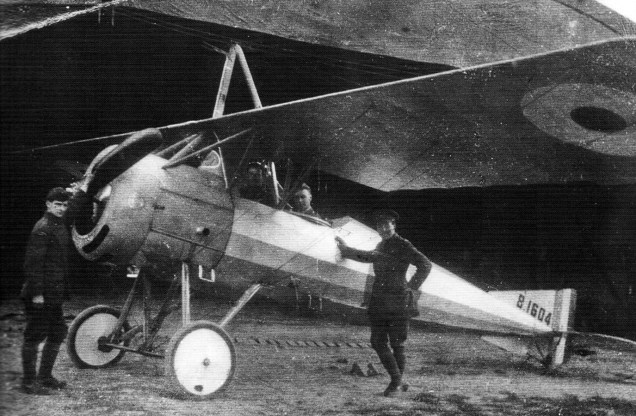
The Type I single-seat fighter was fundamentally a Type N re-¬engined with a 110 hp Le Rhóne 9J nine-cylinder rotary and stemmed from interest evinced by Maj-Gen Trenchard in a more powerful version of the basic aircraft and an order placed in January 1916 on behalf of the RFC for one aircraft. Twelve more were ordered during the following March when the first example was flown for the first time. The Type I was intended to have a single 7,7-mm Lewis gun with French Alkan synchronising mechanism. but the four examples supplied to the RFC mid-July 1916 were fitted with a centrally-mounted Vickers gun. No additional Type I fighters were supplied to the RFC as, meanwhile, it had been overtaken by the similarly-powered, but extensively redesigned Type V which afforded greater endurance, and the Type I was not adopted by the Aviation Militaire.
Max speed, 104 mph (168 km/h) at sea level Time to 6,560 ft (2 000 m), 6.75 min Endurance, 1.33 hrs Empty weight, 736 lb (334 kg) Loaded weight, 1,124 lb (510 kg) Span, 27 ft 04 in (8,24 m) Length, 19 ft 1 in (5,81 m) Height, 8 ft 24 in (2,50 m) Wing area, 1184 sq ft (11,00 sq.m)