MS.755 Fleuret

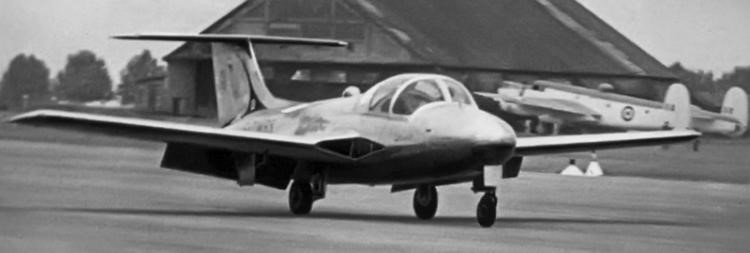
Two French companies, Fouga and Morane Saulnier, saw a market for such a basic jet trainer and realised the potential of the Turbomeca engines for this application. Fouga presented a proposal for a tandem two seat trainer to the French Air Ministry, the CM.130R, which was powered by two 353 lbst (160kgst) Palas engines. The design was refined and a contract for three of the resulting twin Marbore II powered CM.170R aircraft was placed with Fouga in December 1950. The Morane Saulnier company were working along similar lines at this time, and their drawing boards brought the MS.755 Fleuret. It was designed under the direction of engineer Paul-René Gauthier, who was then director of Morane-Saulnier engineering department.

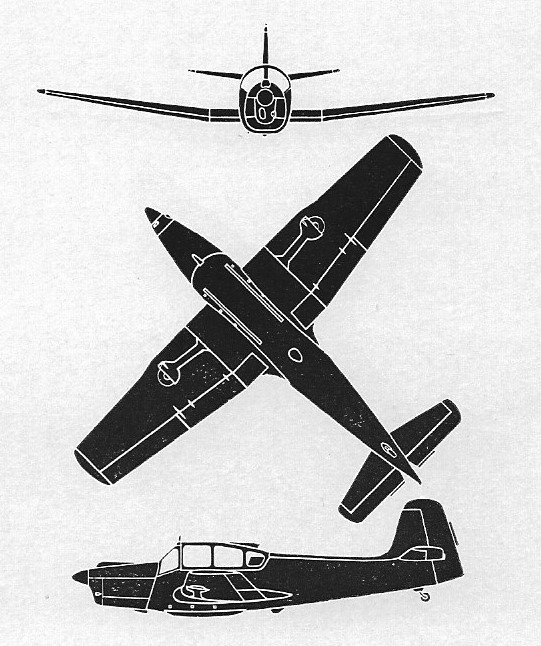
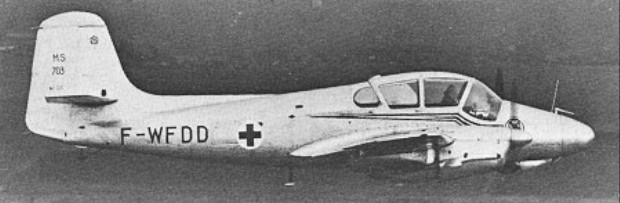
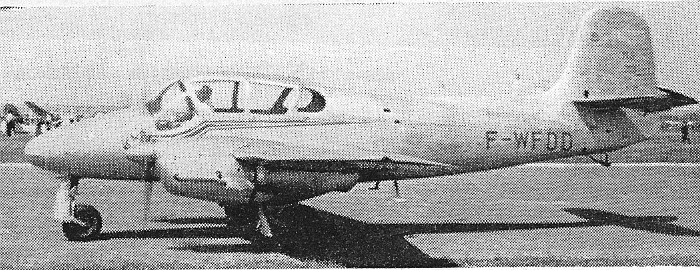
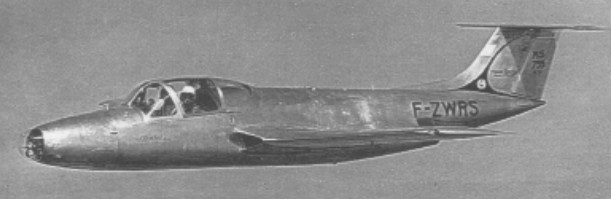
It was an all-metal mid-wing cantilever monoplane with a T-type tail. The MS.755 Fleuret featured side by side seating, the wing was set slightly lower on the fuselage and had a lower aspect ratio, the tail surfaces were conventional and the two Turbomeca Marbore II turbojet engines were faired more into the fuselage than the semi podded arrangement evident on the Magister. Air intakes were located in the wing roots. The two pilots seats were attached to an aerodynamically balanced trap in the fuselage, which operated following jettison of a hatch in the underbelly in an emergency and ejected the two occupants through the floor of the cockpit.

The construction of two prototypes was launched at the same time. Cn 01 (F-ZWRS) began its taxi tests in January 1953 (while its competitor, the Fouga Magister, made its first flight on July 23, 1952). The MS-755 made its maiden flight on 26 January 1953, with Morane-Saulnier chief test pilot Jean Cliquet at the controls, accompanied by flight engineer Ferdinand Naudy. Jean Cliquet took off from Melun-Villaroche for a 15 minute flight. The aircraft did not exceed the altitude of 800-900 m considered a limited ceiling. Two other flights were made the next day. On January 31, a flight was performed with the commander Grigaut (Head of Bretigny AB. *Flight Test Center (CEAM)). February 12 was the official flight presentation of the aircraft to President Robert Morane and the executive committee.
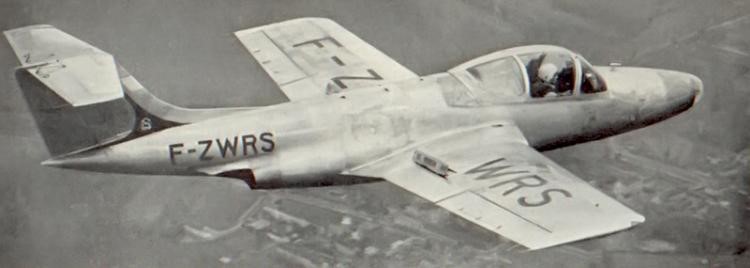
On 30 April 1953, the aircraft is delivred to Bretigny Flight Test Center for official qualifying tests. At that time 57 flights and almost 35 hours of flights have been made.

After stopping the program, Cn 02 was converted into four-seater as the MS-760 01.

After evaluating the merits of both aircraft, the French Air Force expressed a preference for tandem seating, and in 1953 placed an initial order for ten pre production and 95 production CM.170R Magister aircraft.

The initial success of the Magister was not lost on Morane¬Saulnier, who decided not to compete head on and thus developed the Fleuret into a four seat light communications aircraft by enlarging the cabin, increasing the internal fuel capacity and strengthening the airframe. This became the MS.760 Paris.
Gallery

Engines: 2 x Turbomeca Mabores
Wing span: 33ft (10m)
Overall length: 31.83ft (9.7m)
Height: 8.92 ft (2.7 m)
Wing area: 193.7 sq.ft (18 sq.m)
Wing aspect ratio: 5.12
Empty wt: 4190 lb (1902 kg)
Normal T/O wt: 5830 lb (2646 kg)
MTOW: 6710 lb (3046 kg)
Internal fuel cap: 150 Imp.Gal. (681 lt)
External fuel cap: 55 Imp.Gal. (250 lt)
Wing loading: 30.1 lb/sq.ft (147 kg/sq.m)
Pwr loading: 3.3 lb/lbst (3.3 kg/kgst)
Max speed: 446 mph (717 kph)
Initial ROC: 3350 fpm (17 m/sec)
TO dist 50 ft: 2400 ft (732 m)
Range: 435 sm (698 km)
Morane-Saulnier MS.730 / MS.731 / MS.732 / MS.733 Alcyon

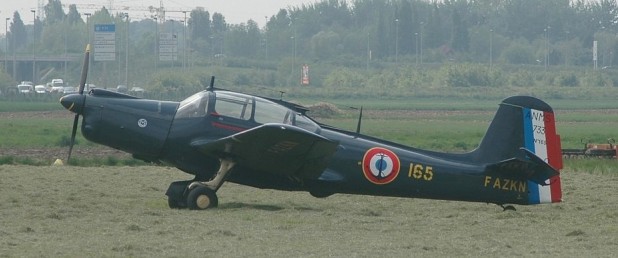
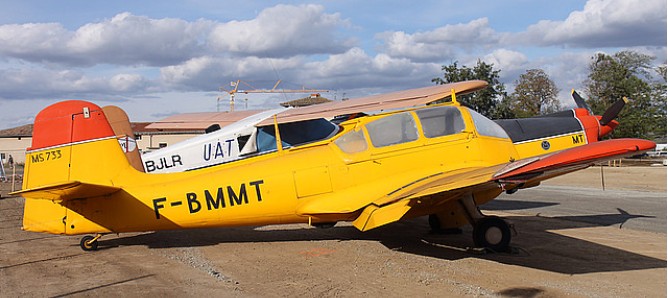
Development of the Morane-Saulnier M.S.733 Alcyon (Kingfisher) basic trainer began with the M.S.730.01 prototype, which flew for the first time on 11 August 1949. With the original 134kW Mathis 8G.20 inverted V-8 engine replaced by a 179kW Argus As 10, the prototype flew again in November that year as the M.S.731.

Morane-Saulnier Alcyon Article

Morane-Saulnier MS-733 Alcyon

Two M.S.732 prototypes were flight tested in early 1951, each of them powered by a Potez 6D.30 engine and having the previous cantilever fixed landing gear replaced by a new design in which the main units retracted. The first example of the definitive version flew on 16 April 1951 as the M.S.733.01; five pre-production aircraft followed and series aircraft totalled 200; 40 for the French navy, 15 for Cambodia, and the balance for service with the Armee de I’Air as the Alcyon, 70 of them being fitted with machine-gun armament for use as gunnery trainers. In 1956 some of the gunnery trainers were converted for counter-insurgency duties, with machine-gun and anti-personnel bomb armament, for use against the nationalist rebels in Algeria. These aircraft were redesignated M.S.733A, of which a number were sold later to Morocco.

Gallery

M.S.730.01
Engine: 134kW Mathis 8G.20

M.S.731
Engine: 1 x 179kW Argus As 10

M.S.732
Engine: 1 x Potez 6D.30, 179kW/ 237 hp

MS.733
Engine: 1 x Potez 6D.30 inverted inline, 179kW/ 237 hp
Max take-off weight: 1670 kg / 3682 lb
Empty weight: 1260 kg / 2778 lb
Wingspan: 11.28 m / 37 ft 0 in
Length: 9.32 m / 30 ft 7 in
Height: 2.42 m / 7 ft 11 in
Wing area: 21.90 sq.m / 235.73 sq ft
Max. speed: 260 km/h / 162 mph
Ceiling: 4800 m / 15750 ft
Range: 497 nm / 920 km / 572 miles
Wing loading: 15.58 lb/sq.ft / 76.00 kg/sq.m
Crew: 2
Payload: 1-2 Pax

Morane-Saulnier MS.700 / MS.701 / MS.703 / MS.704

First twin-engine design by this company since World War I, the Morane-Saulnier M.S.700 of 1948 was a cantilever low-wing monoplane with retractable tricycle landing gear, the cabin accommodating five in either an executive transport or air taxi role.

Powered by two Potez 4D-33 inline engines, each of 119kW, the M.S.700 had a maximum speed of 290km/h. It was followed by the M.S.701 with two 134kW Mathis 8G-20s, the larger, six-seat M.S.703 with two 179kW Argus As 10Cs, and the M.S.704, similar to the M.S.703 but with two 164kW Potez 4D-31s. The M.S.703 had a maximum speed of 300km/h, being flown for the first time in 1951. None of the variants was built in quantity, only four being entered on the French civil register.

MS.703

Morane-Saulnier MS.660 / MS.661 / MS.662

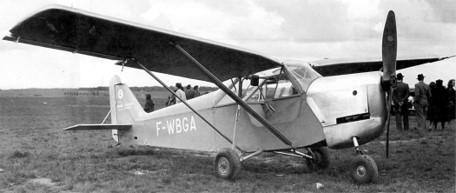
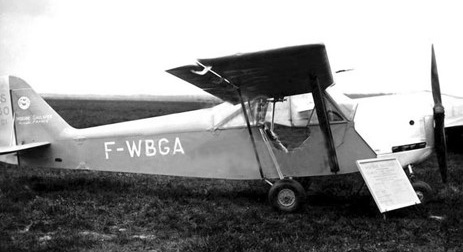
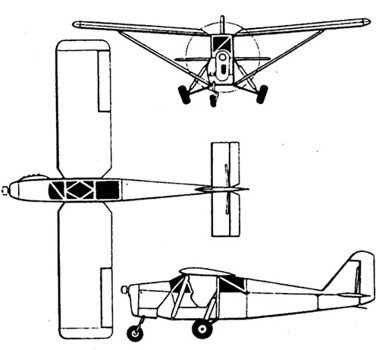
Immediately after the end of World War II, the management of Morane-Saulnier thought about creating a light aircraft for amateur pilots. The design of such a machine was supposed to be extremely simple, to allow pilots to assemble it with minimal technical training. As a result, at the end of 1945, the MS.660 project appeared, based on the development of M. Dupont. The MS.660 was intended to be sold just in the form of plans, or pre-fabricated for self-construction.

The prototype (F-WBGA) flew for the first time on the 17th of February 1946, powered by a Train 4E01 engine with 50 hp. The second prototype, with more rounded shapes, a different landing gear and 60 hp Aster engine, was further modified later to become the MS.662.

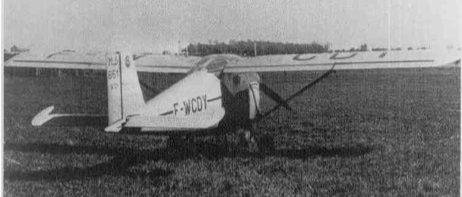
On April 22 1946, MS.660 was officially presented at the exhibition of light aircraft organized by the French Ministry of Aviation. The angular and clumsy machine with average flight data did not arouse any interest among customers. In 1947, Morane-Saulnier made another attempt with a seriously redesigned MS.661, but it also ended in failure.

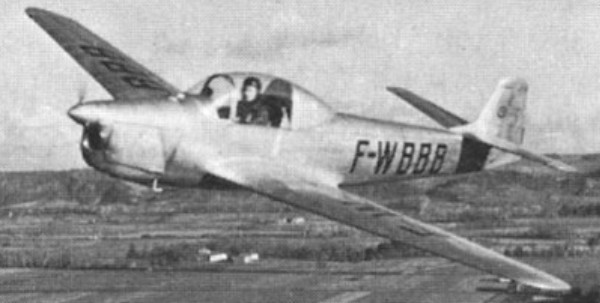
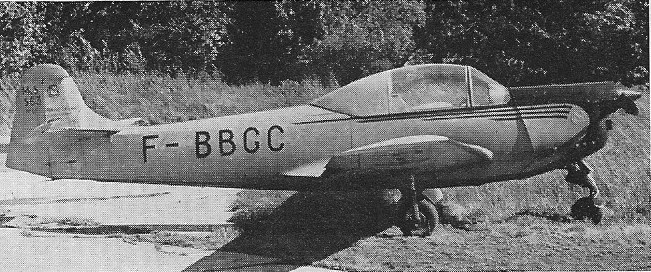
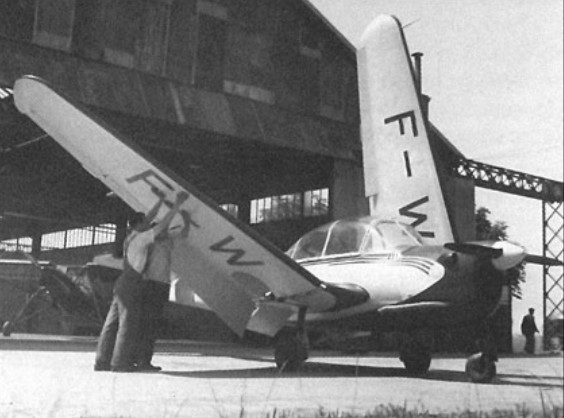
MS-661 no.1 F-WCDY

Gallery

MS-660
Engine: Train 4E01, 50 hp
Wingspan: 7.20 m
Length: 4.60 m
Height: 2.20 m
Empty weight: 232 kg
MTOW: 360 kg
Maximum speed: 160 kph
Cruising speed: 127 kph
Ceiling: 4500 m
Range: 500 km
Crew: 1

Morane-Saulnier MS.560 / MS.561 / MS.562 / MS.563

The prototype Morane-Saulnier M.S.560 single-seat low-wing aerobatic monoplane was built in 1946. It had retractable landing gear, a rearward-sliding cockpit canopy and its powerplant, comprising a 56kW Train 6D-01 engine, gave a maximum speed of 235km/h. Three variants followed, namely the M.S.561 and the M.S.563 of 1947 each with a 75kW Mathis G.4 engine, and the M.S.562 with a 75kW Cirrus Minor.

MS.563

Gallery

MS.560
Engine: 75 hp Train 4D-01

MS.561
Engine: 100 hp Mathis G-4Z
Wingspan: 28 ft
Length: 23 ft 8.5 in
Height: 7 ft 2.5 in
Empty weight: 1138 lb
Loaded weight: 1490 lb
Max speed: 155 mph at SL
Max speed: 145 mph at 9840 ft
ROC: 680 fpm
Range: 680 mi
Service ceiling: 16,400 ft

M.S.562
Engine: 75kW Cirrus Minor

MS.563
Engine: 105 hp Walter Minor 4-III

Morane-Saulnier Ms.470 Vanneau / MS.472 / MS.474 / MS.475 / MS.479

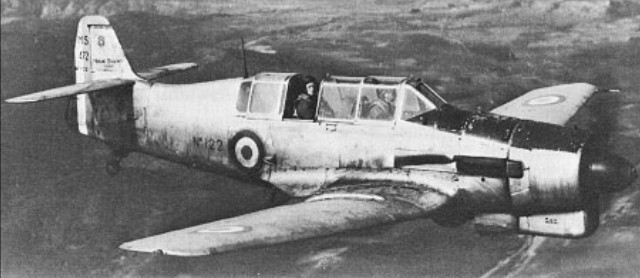
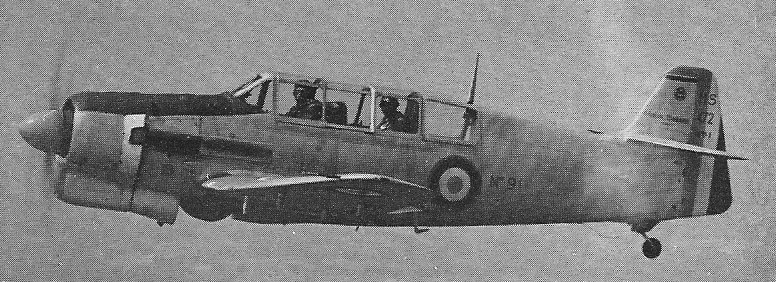
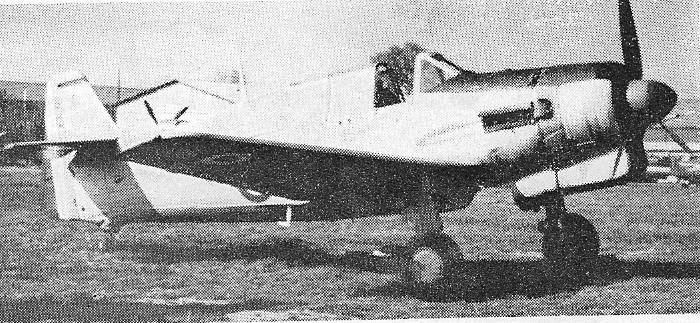
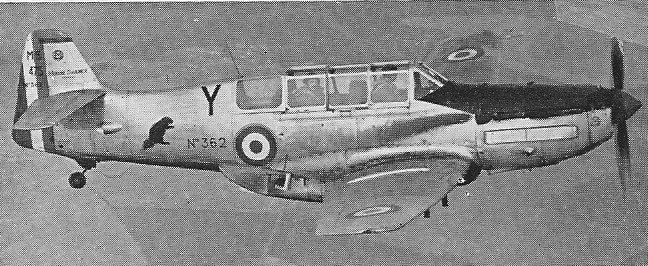
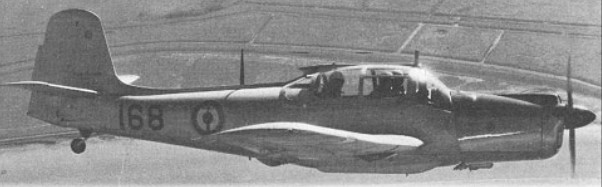
Developed under the Vichy regime by Morane-Saulnier chief designer Gauthier, the Morane-Saulnier M.S.470.01 Vanneau two-seat advanced trainer prototype made its first flight on 22 December 1944. Successful tests led to a decision by the Armee de I’Air to buy the Vanneau (Plover) to train its new generation of pilots, and three prototypes of the revised M.S.472 were ordered, M.S.472.01 flying on 12 December 1945.

In configuration the M.S.470 was an all-metal low-wing cantilever monoplane with pupil and instructor housed under a long glazed canopy. The main landing gear legs retracted inwards to lie partially exposed in the fuselage underside, a feature which was intended to reduce damage in the event of ‘wheels-up’ landings. The M.S.472 replaced the 515kW Hispano-Suiza 12X engine of the M.S.470 with a 522kW Gnome-Rhone 14M radial. The M.S.472 first flew on 12 February 1945.

M.S.472

230 Series M.S.472s were delivered from December 1946 onwards, and 69 series M.S.474 aircraft, modified for carrier operations, were delivered to the Aeronavale from December 1947, an M.S.472 having been temporarily converted to serve as the prototype M.S.474 in February of that year.

MS.472

Total production of the M.S.472 Vanneau II was 230 and of the M.S.474 Vanneau IV 70. Another series version was the M.S.475 Vanneau V, the prototype making its maiden flight on 8 August 1947. Production deliveries of the 200 series aircraft to the Armee de I’Air began in March 1950, the M.S.475 differed only in detail from its predecessors except for installation of a 634kW Hispano-Suiza 12Y-45 V-12 engine.

MS.475

The M.S.475 proved superior to its predecessors in manoeuvrability, speed and rate of turn, incorporating a wing of improved design, but a more radical modification with an increase in wing surface area was incorporated in one production machine, which was then re-designated M.S.476.01. Another M.S.475 was re-engined with an SNECMA Renault 12S-02 of 433kW and became the M.S.477.01, flown in November 1950. The M.S.478.01 project, to be powered by an Italian Isotta Fraschini Delta engine, was not built, and the last experimental development of the Vanneau was M.S.472 no. 295 modified as the M.S.479.01 to take an SNECMA 14X Super Mars engine of 611kW. It began its flight test programme in March 1952, but development was soon abandoned. The Vanneau II, IV and V remained in service at training bases of the Armee de I’Air and Aeronavale into the late 1960s.

M.S.470
Engine: Hispano 12X, 720 hp

M.S.472
Engine: Gnome-Rhone 14N-9, 700 hp
Wingspan: 34 ft 11 in
Length: 28 ft 3 in
Height: 11 ft 10.5 in
Empty weight: 3717 lb
Loaded weight: 5290 lb
Max speed: 290 mph
Cruise: 258 mph
Range: 950 mi
Armament: 2 x 7.5mm mg
Seats: 2

M.S.475
Engine: 1 x Hispano-Suiza 12Y 45 V-2, 641kW
Max take-off weight: 3125 kg / 6889 lb
Empty weight: 2351 kg / 5183 lb
Wingspan: 10.65 m / 34 ft 11 in
Length: 9.05 m / 29 ft 8 in
Height: 3.62 m / 11 ft 11 in
Wing area: 17.30 sq.m / 186.22 sq ft
Max. speed: 445 km/h / 277 mph
Ceiling: 8500 m / 27900 ft
Range: 1500 km / 932 miles
Armament: 2 x MAC 1934 7.5mm wing-mounted machine-guns, light bombs

M.S.479
Engine: 800hp SNECMA 14X-04

M.S.472

Morane-Saulnier MS 450 / Dornier-Werke D-3802A

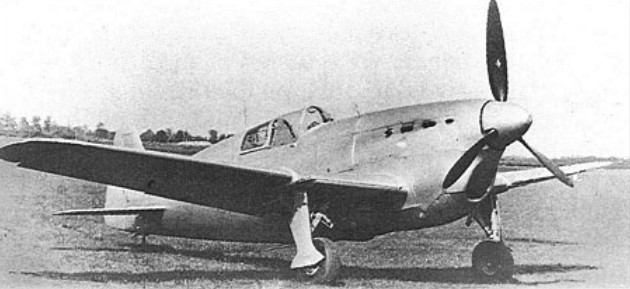
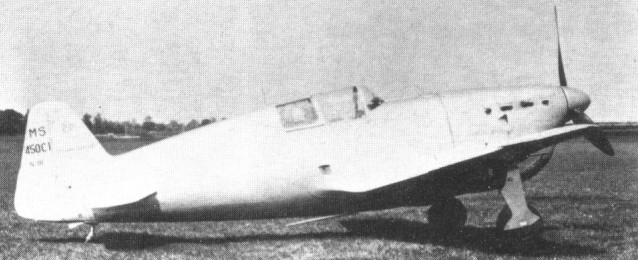
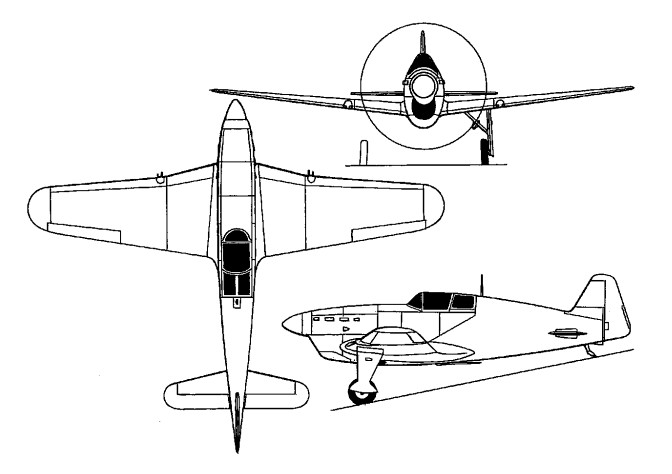
On 27 January 1937, a new requirement was issued by the Service Technique Aéronautique and one of the fighters designed to conform with its requirements was the MS 450. Featuring a dural monocoque fuselage and Plymax-skinned metal wings, the MS 450 was powered by an Hispano-Suiza 12Y51 engine affording 1,050 hp for take-off and carried an armament of one 20-mm engine-mounted cannon and two wing-mounted 7,5-mm machine guns. The first of three prototypes of the MS 450 was flown on 14 April 1939, but a month earlier, an initial production order had been placed for the competitive Dewoitine D 520, and although the MS 450 test programme was continued the second prototype being completed in November 1939 its failure to display any marked advantage prevented the placing of a production order for the Armée de l’Air. Development of the basic design was continued, however, culminating in the MS 540 which was built in Switzerland by the Dornier-Werke AG (Doflug) as the D-3802A.

Engine: Hispano-Suiza 12Y51, 1,050 hp
Span, 34 ft 9 5/8 in (10,62 m)
Length, 28 ft 11¼ in (8,82 m)
Height, 9 ft ¼ in (2,75 m)
Wing area, 184.07 sq ft (17,10 sq.m)
Max speed, 348 mph (560 km/h) at 16,405 ft (5 000 m)
Range, 466 mls (750 km)
Loaded weight, 5,813 lb (2 637 kg)

Morane-Saulnier M.S.450

Morane-Saulnier MS 430 / MS.435

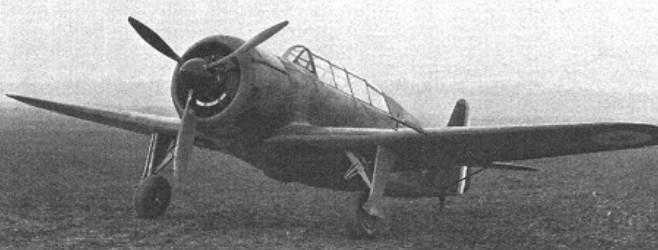
Drawing heavily on components of the M.S.405 fighter, the Morane-Saulnier design team put forward an advanced trainer under the designation Morane-Saulnier M.S.430, the prototype flying for the first time on 3 March 1937. A cantilever low-wing monoplane with inward-retracting landing gear, the M.S.430 located its pupil and instructor in tandem cockpits beneath a continuous glazed canopy, and power was provided by a 291kW. Salmson 9Ag radial engine. Tests continued into 1939, and a single-seat version was evaluated with the designation M.S.408A version with a Gnome-Rhone 7Kfs radial, designated M.S.433, was never completed.
The M.S.435.01 took off for the first time on 6 December 1939. Powered by a 410kW Gnome-Rhone 9Kdrs engine, it had a redesigned fuselage of increased cross-section. An order for 60 series machines had been received from the French air ministry six months earlier, but priority in production went to the M.S.406 fighter, with the result that no series M.S.435 P.2 category (two-seat advanced trainer) aircraft were delivered before the French collapse in June 1940.

M.S.435.01
Wingspan: 10.71 m / 35 ft 2 in
Max. speed: 395 km/h / 245 mph

Morane-Saulnier MS 412 / D-3801

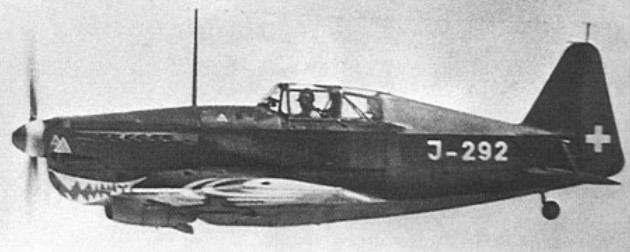
Prior to the Franco-German Armistice, the M.S.412, an improved version of the M.S.406, was under development primarily to fulfil a Swiss requirement. As an interim development aircraft, the twelfth pre-series M.S.405 had been fitted with the more powerful Hispano-Suiza 12Y45 engine and flown as the M.S.411, but a prototype of the M.S.412 with the still more powerful HS 12Y51 engine was not completed in France, the programme continuing in Switzerland as the D-3801. Flown for the first time in October 1940, the D-3801 had an HS 12Y51 rated at 1,050hp for take-off, a fixed radiator bath similar to that developed for the M.S.410 and the same armament as that of the D-3800. Although protracted teething troubles were suffered by the Saurer-built HS 12Y51 engine, series production of the D-3801 was undertaken by the Eidgenossisches Flugzeugwerke, the Dornier-Werke AG (Doflug) and SWS, deliveries commencing in 1941 and continuing until 1945, and a total of 207 being manufactured. These were augmented by a further 17 built in 1947-48 from spare assemblies remaining from the main production run. After withdrawal from first-line service, some D-3801s remained in use as advanced trainers and target- tugs until 1959.

Max take-off weight: 2 720 kg
Empty weight: 2124 kg / 4683 lb
Wingspan: 3.32 m / 10 ft 11 in
Length: 8.17 m / 26 ft 10 in
Height: 2.71 m / 8 ft 11 in
Wing area: 17.10 sq.m / 184.06 sq ft
Max. speed: 535 km/h / 332 mph
Range: 1200 km / 746 miles

Morane-Saulnier M.S.412 (D-3801)

Morane-Saulnier MS 410

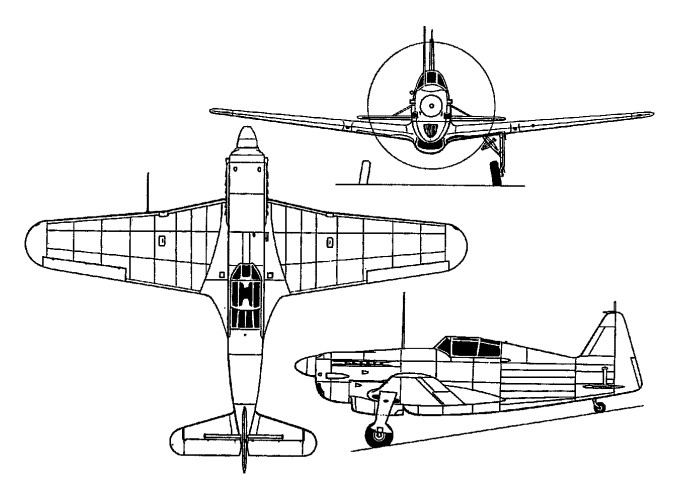
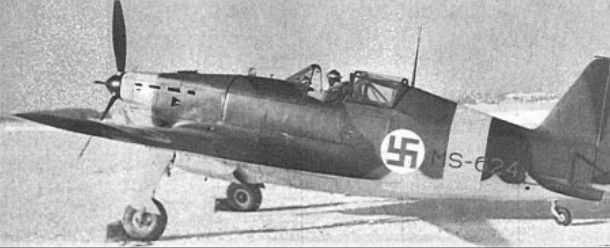
During the winter of 1939-40, development of an upgraded version of the M.S.406 was begun as the M.S.410. The programme was based on the use of existing M.S.406 airframes which were to be fitted with a fixed radiator bath to overcome problems presented by the standard semi-retractable radiator and a revised wing permitting installation of two belt-fed 7.5mm guns rather than one drum-fed weapon. It was also proposed to fit ejector exhausts. The radiator bath and modified wing were flight tested during January and February 1940, 500 pairs of two-gun wings being ordered, and the ejector exhausts were tested in April 1940, these boosting max speed to 509km/h at 4000m. The events of May 1940 interrupted the programme when only five M.S.410s had been completed. At the time, a further dozen conversions were virtually complete and some 150 sets of modified wings had been produced. After the Armistice, a modification centre was established under the auspices of the German authorities, repairable M.S.406s being sent to this centre for conversion to M.S.410 standard. In the event, 74 aircraft were fitted with the new wings, but some were completed as hybrids in that they retained the semi-retractable radiator, and none was fitted with the ejector exhausts. Eleven M.S.410s were delivered to Finland and otherswere included among the Morane-Saulnier fighters supplied to the Croat Air Force.

Max take-off weight: 2581 kg / 5690 lb
Empty weight: 1923 kg / 4240 lb
Wingspan: 10.62 m / 34 ft 10 in
Length: 8.17 m / 26 ft 10 in
Height: 2.71 m / 8 ft 11 in
Wing area: 17.10 sq.m / 184.06 sq ft
Max. speed: 470 km/h / 292 mph
Ceiling: 8500 m
Range: 1100 km