Moyes Delta Gliders / Moyes Microlights

Moyes Delta Gliders
Moyes Microlights
LiteFlite

Started in 1967, Moyes Delta Gliders was a Company solely dedicated to hang gliding.
1995: 2-4 Taylor St, Waverly, 2024 NSW, Australia.

1998: 1144 Bottany Road, NSW 2019 Botany, AUSTRALIA

2001: 200 Hillcrest Dr, Auburn, CA 95603, USA.
LiteFlite is owned and operated by Bill Moyes. Bill is based in Sydney at the Liteflite factory and frequently travels the world to sell and support his products. Bill has been flying and manufacturing aircraft since 1966 and has a long list of accolades to show for his efforts.

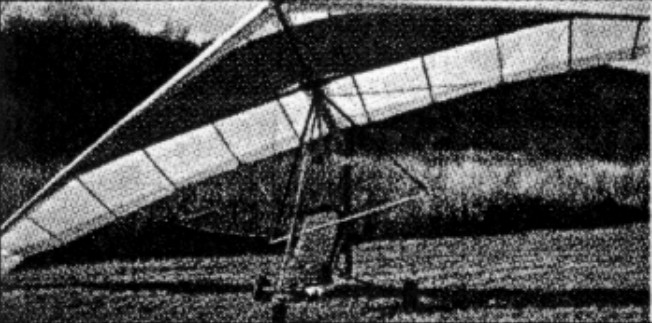
Bill Bennett and his partner Bill Moyes worked improvents into the Rogallo tow kites and Moyes towed to 1000 feet in 1967. After the towboat ran into a sand bar one day and the kite gently glided down, they began to deliberatelycut loose and experiment with untethered flight. This led the skiers up mountain sides where they made ski launches, sometimes gliding as far as five miles.

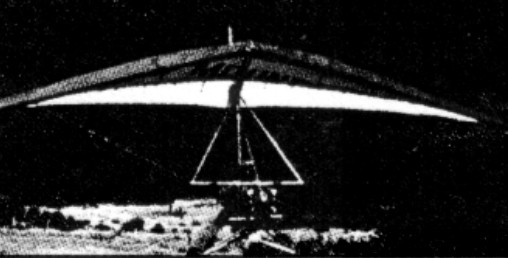
Bennett went to the USA in 1969 and began a tou of exhabitions which included flying over the Golden Gate Bridge to land on Alkatraz, and, on July 4th, circling the Statue of Liberty. American fliers were still using the Lilienthal-type parallel bars and hanging by their armpits but Bennett brought with him a trapeze style control bar and swinging seat.

After the success of his tour he settled down in LA and began to manufacture and promote hang gliders to the growing market in Southern California.

LiteFlite is a manufacturer of ultra light aircraft and hang gliding accessories. The main product from the LiteFlite stable is the Dragonfly, an ultra light aircraft most commonly used for towing hang gliders into the air. The Dragonfly has been in production since 1990 with approximately 100 aircraft being made, and is internationally recognised for its slow flying speed and great manoeuvrability.


Bill Moyes
Bob Bailey

2009: Moyes Microlghts Pty. Ltd, 173 Bronte Road, Waverly 2024, NSW, Australia.

Moy Aerial Steamer

The Moy Aerial Steamer was an experimental 15-foot span tandem-wing monoplane, powered by a 3 hp steam engine driving two, 6-foot diameter pusher- propelling paddle wheels. Built by Englishman Thomas Moy, the unmanned flying machine was tested in the Spring of 1875, tethered to a pole, running on a circular track, at the gardens of the Hotel DeLuxe in south London. Spuriously reported to have left the ground and “flown” at a height of six inches, the Aerial Steamer may sometimes be claimed to be the first unmanned airplane to fly from level ground.

Mousachevo Kometa-Standard

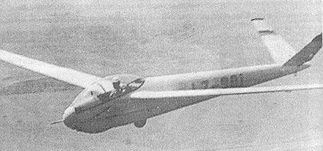
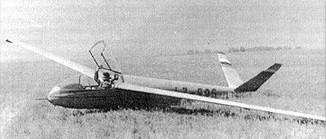
Kometa-Standard

The second postwar Bulgarian sailplane designed by Eng L. Panov and D. Panchovsky, the Kometa-Standard (or Comet Standard) fully aerobatic Standard Class single-seater flew for the first time in prototype form on 5 August 1960; the type later went into small-scale production for the Bulgarian gliding clubs.

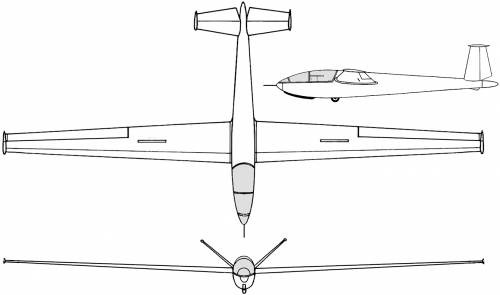
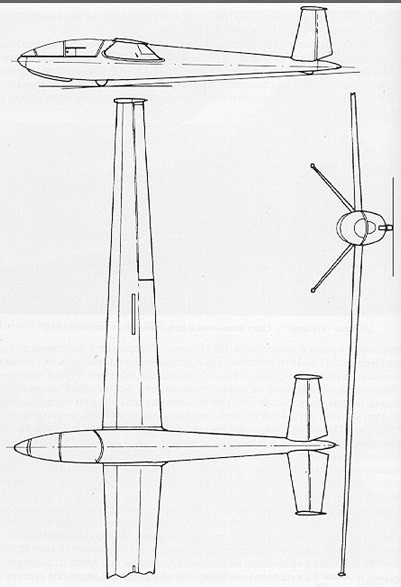
The Kometa-Standard is a cantilever midwing monoplane of conventional wooden construction with a butterfly-type V-tail with an included angle between the tailplanes of 110°. The wings, straight tapered in plan and set at mid-wing position, are single-spar wooden structures with a leading edge plywood torsion box and wing tip ‘salmon’-type fairings; the slotted ailerons are fabric-covered and there are spoilers on the wing upper and lower surfaces. They had 4° of dihedral. The Kometa-Standard had mass-balanced, slotted ailerons and spoilers at 60% chord which opened above and below the wing.

The plywood monocoque fuselage has a metal nose-cap and the landing gear consists of a non-retractable wheel with brake and a rubber mounted skid under the forward fuselage. The tail unit is of wooden construction with plywood and fabric covering, and the pilot is seated under a hinged Perspex canopy, proud of the rear fuselage line, but this was lowered and reshaped on the production Kometa-Standard II, merging into the rear fuselage from which it was hinged.

Kometa – Standard II

The cockpit was changed again in the Kometa-Standard III which had a sliding canopy over a reclining seat, making this variant 30 km/h (19 mph) faster than the Kometa-Standard II. Overall, the fuselage tapered uniformly from the cockpit to the tail. The Kometa-Standard had a 110° butterfly tail, its plywood and fabric covered surfaces terminating, like the wings, in little salmon fairings. Its undercarriage was a fixed monowheel, fitted with a brake and assisted by a forward, rubber sprung skid.

The prototype was flown for the first time on 5 August 1960 and an initial batch of 10 Kometa-Standard IIs was built, followed by two batches, each of 10, of Kometa-Standard IIIs. Flown by Bulgarian clubs, they were fully aerobatic, though not cleared for cloud flying.

Variants:
Kometa-Standard
Prototype LZ-901. 1 built.

Kometa-Standard II
Production variant with lowered, rear hinged canopy. 10 built.

Kometa-Standard III
Further revision to nose/canopy lines with reclining seat and sliding canopy. 20 built.

Specifications:

Kometa-Standard
Year: 1960
Span: 49 ft 0.5 in / 14.95 m
Length: 22 ft 9.5 in / 6.95 m
Wing area: 136.7 sq.ft / 12.90 sq. m
Aspect ratio: 17.6
Empty weight: 573 lb / 240 kg
Max weight: 750 lb / 340 kg
Max speed: 130 mph (in smooth air)
Max aero-tow speed: 93 mph
Min sinking speed: 2.69 ft/sec at 48.5 mph
Best glide ratio: 28:1 at 51 mph

Kometa-Standard II
Length: 6.95 m (22 ft 10 in)
Wingspan: 14.95 m (49 ft 1 in)
Wing area: 12.70 m2 (136.7 sq ft)
Aspect ratio: 17.6
Airfoil: NACA 43012A
Empty weight: 240 kg (529 lb)
Gross weight: 340 kg (750 lb)
Never exceed speed: 210 km/h (130 mph; 113 kn)
Rough air speed max: 150 km/h (93.2 mph; 81.0 kn)
Aerotow speed: 150 km/h (93.2 mph; 81.0 kn)
Winch launch speed: 100 km/h (62.1 mph; 54.0 kn)
Terminal velocity: with full airbrakes 220 km/h (137 mph; 119 kn)
g limits: +6.25 -3.3 at 220 km/h (136.7 mph; 118.8 kn)
Maximum glide ratio: 28:1 at 82 km/h (51.0 mph; 44.3 kn)
Rate of sink: 0.78 m/s (154 ft/min) at 78 km/h (48.5 mph; 42.1 kn)
Wing loading: 26.70 kg/m2 (5.47 lb/sq ft)
Crew: One

BCP Mousachevo Kometa Standard II

Mousachevo Jastreb

The Jastreb (or Hawk) two-seater fully aerobatic trainer was, with the Kometa-Standard single seater, one of the two indigenous Bulgarian designs that went into production in that country after the war.

The Jastreb was designed by Eng L.Panov and D. Panchovsky, the prototype making its first fight on 6 February 1948; the type was put into small-scale production for the Bulgarian clubs.

Of conventional wood and fabric construction, the Jastreb is a braced high wing monoplane with the centre section swept forward 5° at the quarter-chord line to improve the view from the rear seat, the absence of sweep on the outer panels enabling the spar to be uncranked. The wing is a single-spar wooden structure with leading edge plywood torsion box and is 30% fabric-covered; the wooden ailerons are plywood and fabric covered and there are spoilers in the wing upper and lower surfaces. The plywood-covered wooden fuselage has a metal nose-cap and the two pilots are seated in tandem under a sideways-opening Perspex canopy. The cantilever wooden tail unit is covered with plywood and fabric, and the landing gear consists of a fixed unsprung monowheel with no brake and a rubber mounted skid under the forward fuselage.

Span: 49 ft 2.5 in
Length: 26 ft 3 in
Wing area: 209.9 sq ft
Aspect ratio: 11.55
Empty weight: 529 lb
Max weight: 850 lb
Max speed: 124 mph (in smooth air)
Max aero-tow speed: 75 mph
Min sinking speed: 2.95 ft/sec at 37 mph
Best glide ratio: 20.5:1 mph

Mouraret 1910 Hydro-aeroplane

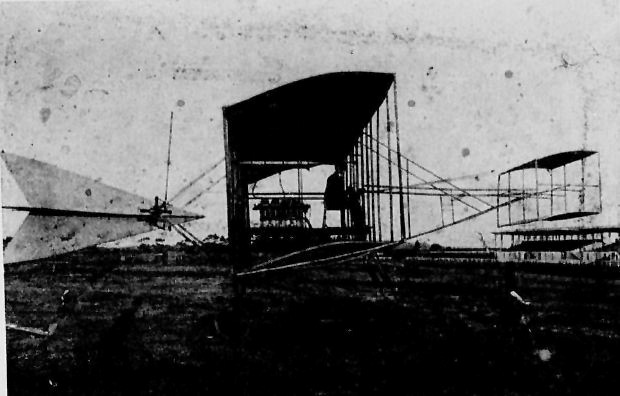
In October of 1910 at the Boufarik Racecourse, Algeria, Leon Mouraret flew his biplane for a distance of 200 meters on his first attempt. On his second attempted at flight the aircraft crashed and was damaged. Boufarik’s flying machine was distinguished by its unusual arrowhead-like tail and by the very high setting of the pilot and frame above the ground. The biplane was powered by a French 60 hp Mutel engine. Mouraret’s biplane was called a “Hydro-aeroplane” and could be fitted with two long floats.

Moundsville Aircraft The Lone Eagle

the first Moundsville Lone Eagle X570E

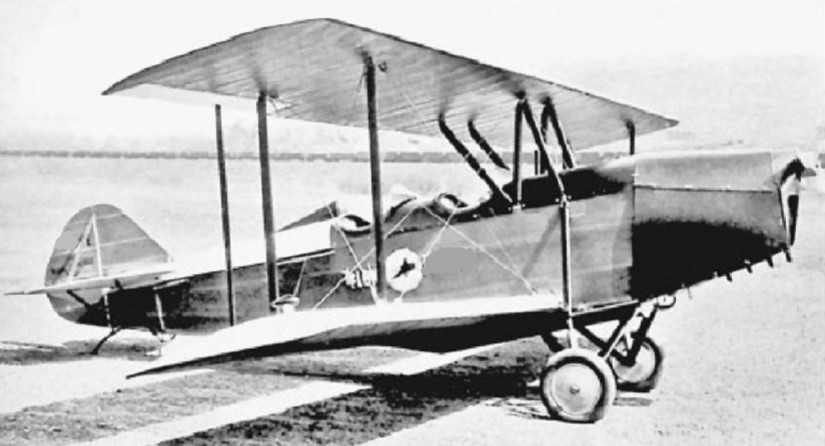
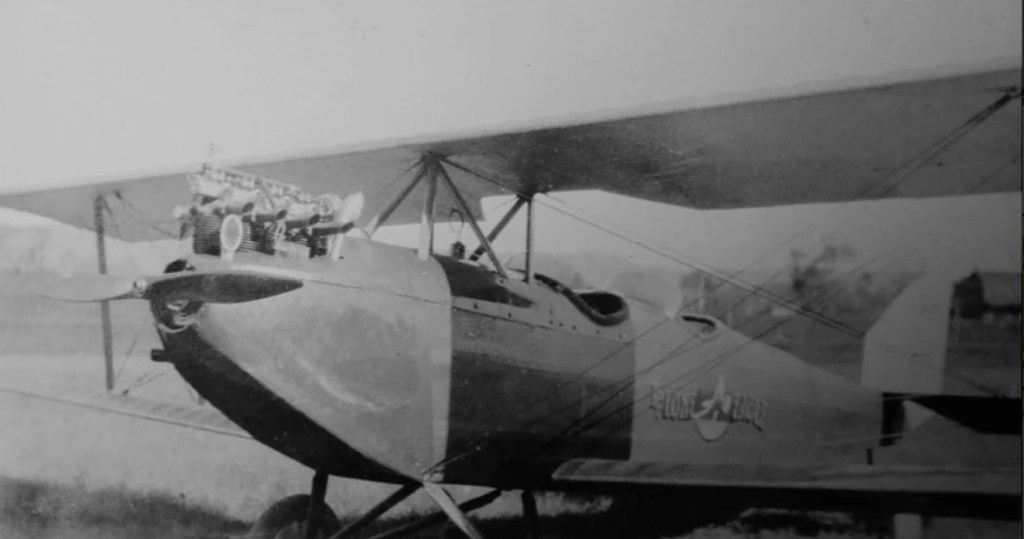
Part of Lindbergh’s 1927 visit to Moundsville included inspecting the Moundsville Airplaine Corporation’s first product– a single-seat bi-plane christened by Jimmy Doolittle as The Lone Eagle, in honor of Charles Lindbergh. Despite Lindbergh’s endorsement, there were not many “Lone Eagles” produced, and the factory went out of business in 1929.

Mouillard Glider No.4

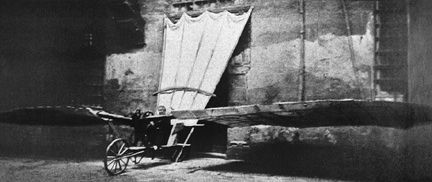
In 1881, Louis Mouillard wrote L’Empire de l’Air (Empire of the Air), in which he proposed fixed-wing gliders with cambered bird-like wings. He had been experimenting with gliders since 1856, and although his own gliders were unsuccessful, he realized the importance of gliding to the future of aviation – a perspective that was later shared by Otto Lilienthal. Photographed in Cairo, Egypt.