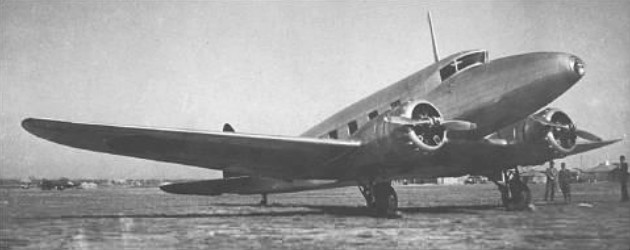
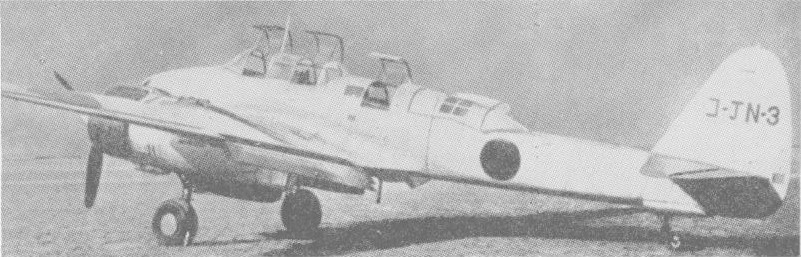
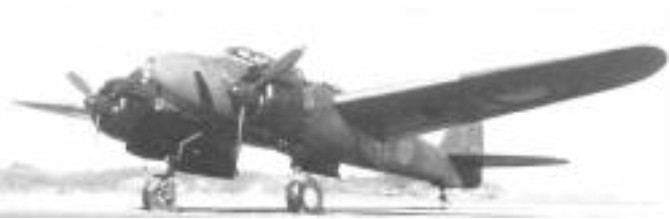
Nakajima acquired from Douglas Aircraft in the USA licence-construction rights for the DC-2 civil transport. In 1935 a smaller, twin-engine light transport based on the configuration of the DC-2 was designed by Nakajima under the designation AT-1. This was not built, but redesign resulted in an improved AT-2 with two 580 hp / 433kW Nakajima Kotobuki 2-1 radial engines, and this was flown in prototype form on 12 September 1936.
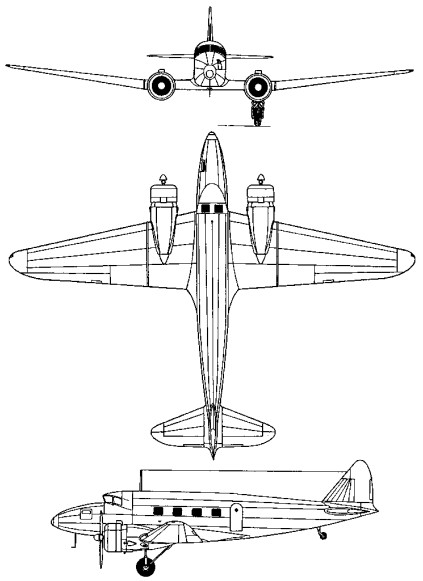
It was an all metal low wing cantilever monoplane with slim tapered wings and tailplane and retractable undercarriage. Power was provided by two Nakajima Kotobuki 2 1 radials. Test flights began on September 12, 1936, from Ojima airfield and proved successful, only minor adjustments and modifications being neces¬sary.
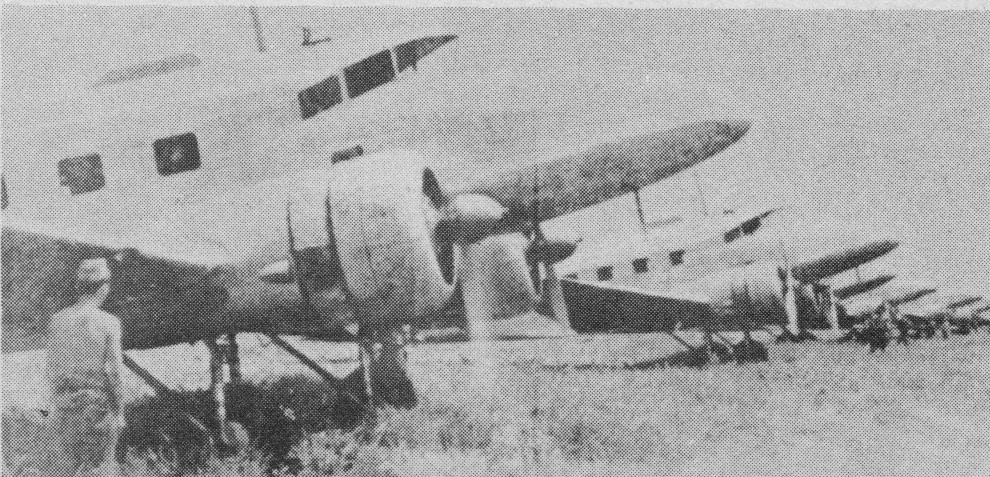
The AT 2 was placed in production for civil use, fitted with later Kotobuki 41 radial engines each of 780 hp. Accommodation was provided for a crew of three and eight passengers in an enclosed cabin. A total of 32 AT 2s were delivered to Dai Nippon Koku K K (Greater Japan Airlines Company) and Manchurian Airlines for use on internal and external routes up to 1940.
In 1937 the Koku Hombu (Japanese army air headquarters) was anxious to introduce a modern transport aircraft into the air force inventory and turned to the AT 2, already established as an efficient aircraft. Designated Ki 34, deliveries began the same year and it immediately went into service as the Army Type 97 Transport.
After producing 19 of the aircraft, Nakajima turned over produc¬tion to the Tachikawa company who built a further 299 up to 1942.
Some of this total were transferred by the army for navy use, and were redesignated Navy Type AT-2 Transport (Nakajima L1N1). Both civil and military versions were allocated the Allied codename ‘Thora’, and were in use throughout the Pacific war.
Ki-34 / L1N1 Engines: 2 x Nakajima “Kotobuki-41”, 529kW Max take-off weight: 5250 kg / 11574 lb Empty weight: 3500 kg / 7716 lb Wingspan: 19.92 m / 65 ft 4 in Length: 15.3 m / 50 ft 2 in Height: 4.15 m / 13 ft 7 in Wing area: 49.2 sq.m / 529.58 sq ft Max. speed: 360 km/h / 224 mph Ceiling: 7000 m / 22950 ft Range w/max.fuel: 1200 km / 746 miles Crew: 3 Passengers: 8
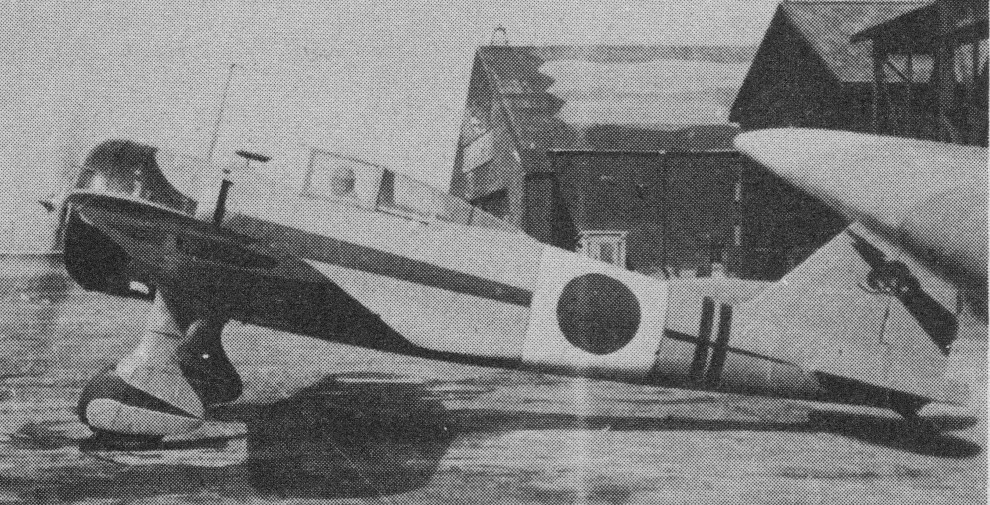
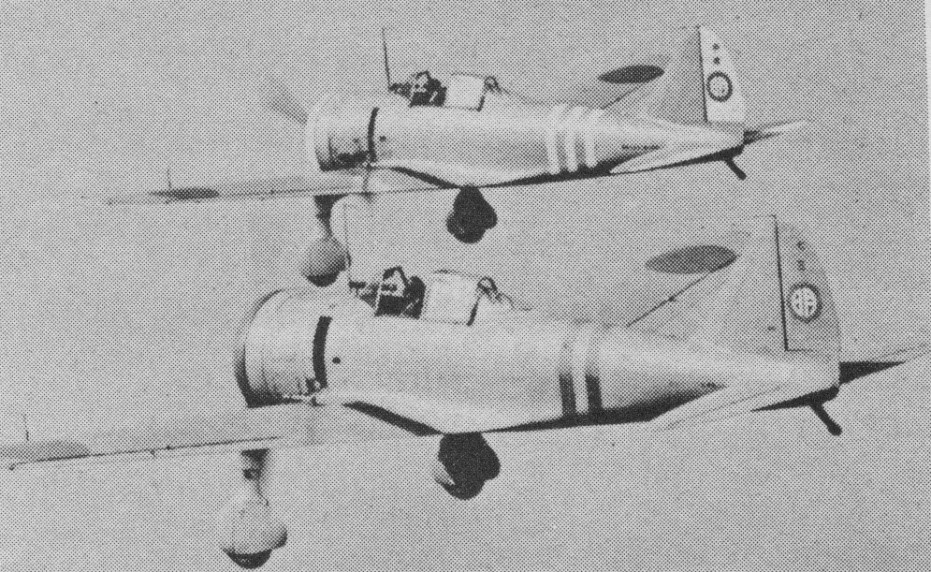
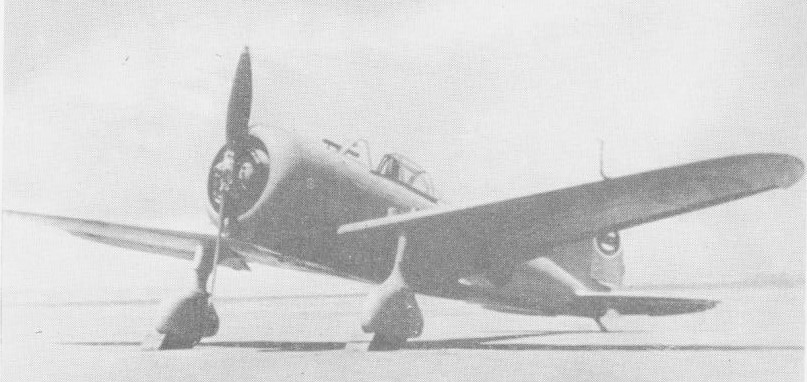
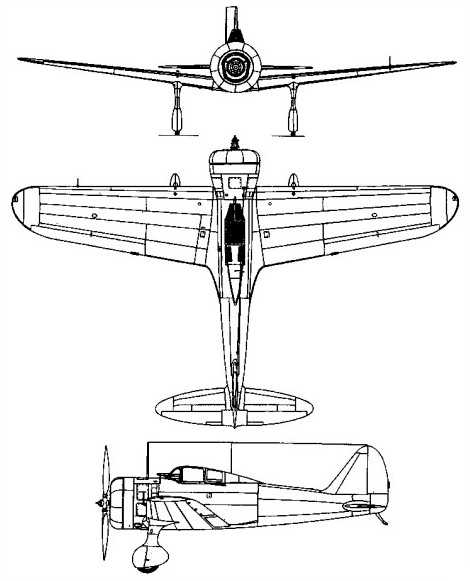
Nakajima’s chief designer Yasumi Koyama had evolved an advanced single seat fighter from the company’s unsuccessful PA or Ki-11 low-wing monoplane prototype during 1934. While this private -venture low wing cantilever monoplane was still under development, Japanese army air headquarters issued a requirement to three major aircraft manufacturers, including Nakajima, for a similar aircraft in mid-1935. Nakajima responded with a single-seat monoplane fighter derived from the company’s Type P.E., which it had started to develop as a private venture.
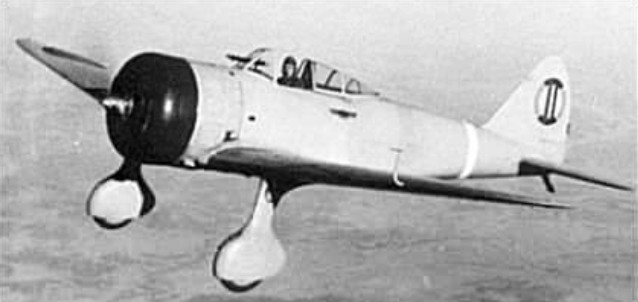
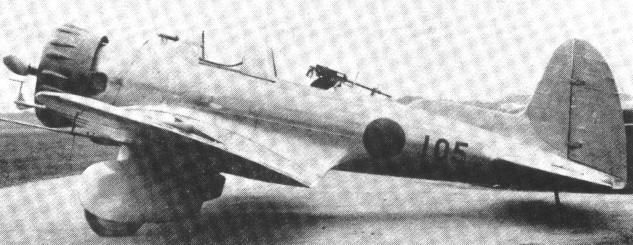
The Ki 11 first flew in July 1936; the first prototype Ki 27, built to the official requirement, flew three months later. They differed only in detail, both being powered by a 650hp Nakajima Ha la radial engine and having a fixed, spatted cantilever single strut undercarriage. The Ki 27 had a redesigned and fully enclosed pilot’s cockpit canopy, and there were changes in the engine cowling, wheel spats and fin and rudder. A second Ki 27 prototype flew in December 1936, followed by ten pre-production aircraft. Different wing forms were tested and the Ki 27s were flown against rival prototypes Kawasaki’s Ki 28 and Mitsubishi’s Ki 33 developed from the navy A5M carrier fighter. Although achieving a maximum speed of’467 km/h (290 mph) at 4000 m (13 120 ft), it was still 15 km/h (10 mph) slower than the Ki 28 and took 28 seconds longer than its rival to reach 5000 m (16400 ft). The Ki 27 was nevertheless preferred to the Kawasaki fighter because of its outstanding manoeuvrability, due in part to the remarkable lightness of the structure and to the special aerofoil section developed by Koyama’s team.
Pre-production Ki 27s had a wing with span increased to 11.31 m (37 ft 1 in) which became standard on Ki 27a production aircraft. These appeared from December 1937 onwards, designated as the Army Type 97 Fighter. The standard engine was the Ha 1b developing 780 hp at 2900 m (9510 ft).
The original allied name assigned to the Ki.27 met in China by the CBI, “Abdul” was also called “Nate” by Col. MacCoy. The name Abdul was still caried in Naval recognition manual as late as February 1943. It was finally dropped in favour of the officially adopted “Nate”.
From spring 1938 Ki 27a fighters flew in northern China, and before the end of 1938 six Sentais (groups) newly established by the army were fully equipped with the Ki 27a. The Ki 27a model was, however, soon phased out of production in favour of Ki 27b, which had a wholly glazed pilot’s canopy and provision for two 130 litre (29 Imp gal) slipper type underwing drop tanks or four 25 kg (55 1b) bombs.
Ki.27a
Ki 27s were again in action in May 1939 when fighting broke out between Japanese and Soviet troops at Nomonhan along the border with Outer Mongolia. About 200 were ultimately engaged in full scale air battles with Soviet Polikarpov I 15bis biplanes and I 16 monoplanes. The Japanese acquitted themselves well in a most bloody conflict, and claimed many victories. The highest score of 58 enemy aircraft destroyed was claimed by Sergeant Shinobara of the 11th Sentai.
The poor state of the Allied air forces in the Far East in 1941 42 allowed Nakajima’s nimble fighter, despite its poor armament of twin synchronized 7.7 mm (0.303 in) Type 89 machine guns, to control the air over Burma, the Philippines and the Dutch East Indies. British, American, Australian and Dutch pilots all acquired a healthy respect for ‘Nate’, as the type was codenamed by the Allies, and they were careful to avoid getting entangled with it in an old style close dogfight. The Ki 27 achieved the distinction of shooting down the first Allied aircraft of the Pacific war, when an aircraft of the 1st Sentai destroyed a Consolidated Catalina flying boat of No 205 Squadron RAF while covering Japanese landings on the Malayan coast.
With the advent of newer types, Ki 27s were relegated to advanced training or home defence. In the latter role they were at a stroke rendered impotent when the Boeing B 29 Superfortress came on the scene, and as the war drew to a close, Ki 27s were adapted as suicide attackers, a number of their pilots sacrificing themselves while endeavouring to crash into enemy ships or land positions carrying a 500 kg (1100 lb) bombload.
Mansyu Kikoki Seizo K K (Manchurian Aeroplane Manufacturing Company), based in the Japanese puppet state, built 1379 Ki-27s at its Harbin factory as against 2020 built by Nakajima up to December 1942, when all production by the parent firm ceased. Production included two Ki 27 Kai prototypes, even lighter than the standard machine, which reached a maximum of 475 km/h (295 mph) during tests in summer 1940.
In 1942 Mansyu redesigned the Ki 27 as an advanced trainer which went into production the same year as the Army Type 2 Advanced trainer.
Ki-27a Engine: 1 x Nakajima Ha-1b, 529kW Max take-off weight: 1790 kg / 3946 lb Empty weight: 1110 kg / 2447 lb Wingspan: 11.31 m / 37 ft 1 in Length: 7.53 m / 24 ft 8 in Height: 3.25 m / 10 ft 8 in Wing area: 18.55 sq.m / 199.67 sq ft Max. speed: 470 km/h / 292 mph Ceiling: 12250 m / 40200 ft Range w/max.fuel: 625 km / 388 miles Armament: 2 x 7.7mm machine-guns Crew: 1
Ki-27b Engine: Hitachi Ha-1b, 750 hp Wing span: 11.31 m / 37 ft 1 in Wing area: 18.56 m2 Length: 7.53 m / 24 ft 8 in Height: 3.28 m / 9 ft 2 in Empty weight: 1110 kg / 2447 lb Loaded weight: 1547 kg / 3946 lb Max speed: 470 km/h at 3500 m Max speed: 286 mph at 16,400 ft Time to 5000m: 5m 22s Service ceiling: 12,250 m Service Range: 627 km Max range: 1100 km Armament: 2 x 7,7-mm Type 89 machine guns Crew: 1 Bombload: 220 lb
Designed by Katsuji Nakamura and Kazuo Ohno and built to an 18-Shi specification for a high-speed single-seat interceptor fighter, the Nakajima J5N1 Tenrai (Heavenly Thunder) began flight tests in July 1944.
A mid-wing monoplane with a raised canopy over the pilot’s cockpit, it was powered by two 1484kW Nakajima NK9H Homare 21 radials and had a maximum speed of 597km/h. Armament comprised two 30mm and two 20mm cannon.
Six aircraft were built, four were lost in crashes or on the ground and none were used operationally. As performance was disappointingly below specification no production resulted.
Nakajima J5N “Tenrai” Engines: 2 x Nakajima NK9H “Homare-21”, 1484kW Max. speed: 597 km/h / 371 mph Armament: 2 x 30mm cannons, 2 x 20mm cannons Crew: 1
The G10N Fugaku, was a twelve engine (six coupled pairs) heavy bomber project. Planned was a speed of 780km/h, carried 20,000kg of bombs, and a range of 19,400 km. The G10N had a weak defensive armament of four 20mm cannon in single turrets. It was in advanced stage of competition at VJ day.
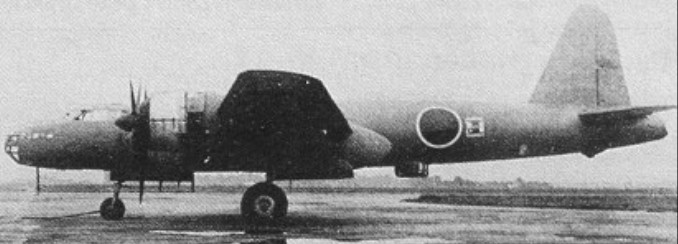
Developed as the Experimental 18-Shi Heavy Bomber Renzan (Nakajima G8N1), this was a very advanced long-range bomber powered by four 1491kW Nakajima Homare 24 radials which gave it a maximum speed of 592km/h at 8000m. Maximum range was 7465km. Armament consisted of six 20mm cannon in twin power-operated dorsal, ventral and tail turrets, two 13mm machine-guns in a power-operated nose turret, and single machine-guns of similar calibre in port and starboard beam positions. A maximum bombload of 4000kg could be carried over short ranges.
Four prototypes were built up to June 1945, but the proposed production programme was disrupted by Allied bombing and was abandoned when the navy’s role became defensive rather than offensive. These prototypes were allocated the Allied codename ‘Rita’.
G8N1 Engine: 4 x Nakajima NK9K-L “Homare-24”, 1500kW Wingspan: 32.54 m / 106 ft 9 in Length: 22.94 m / 75 ft 3 in Height: 7.2 m / 23 ft 7 in Wing area: 112 sq.m / 1205.56 sq ft Max take-off weight: 26800-32150 kg / 59084 – 70879 lb Empty weight: 17400 kg / 38361 lb Max. speed: 590 km/h / 367 mph Cruise speed: 390 km/h / 242 mph Ceiling: 10200 m / 33450 ft Range: 4000 km / 2486 miles Range w/max.fuel: 7500 km / 4660 miles Armament: 6 x 20mm cannons, 4 x 12.7mm machine-guns, 1000-4000kg of bombs
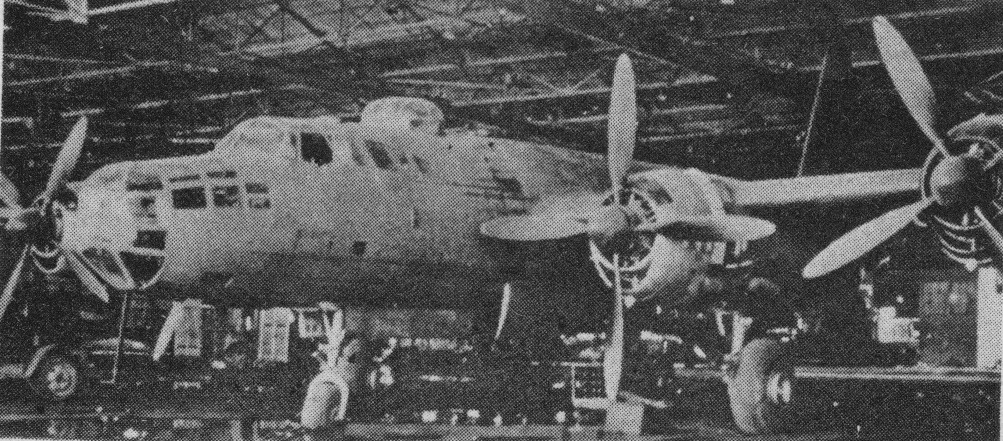
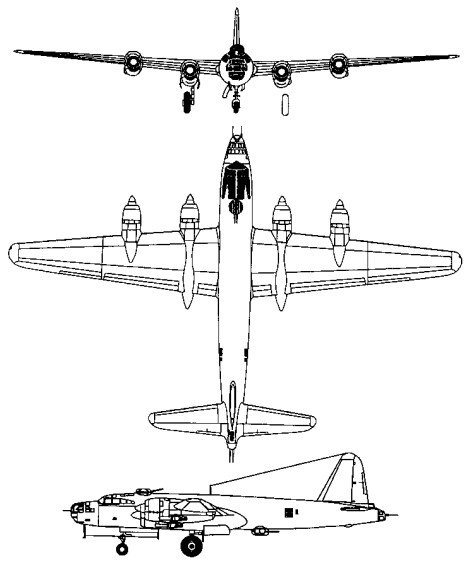
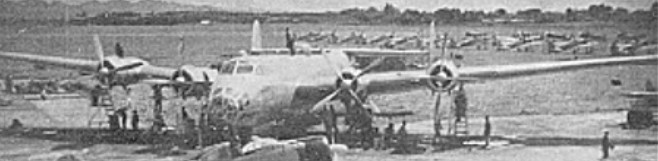
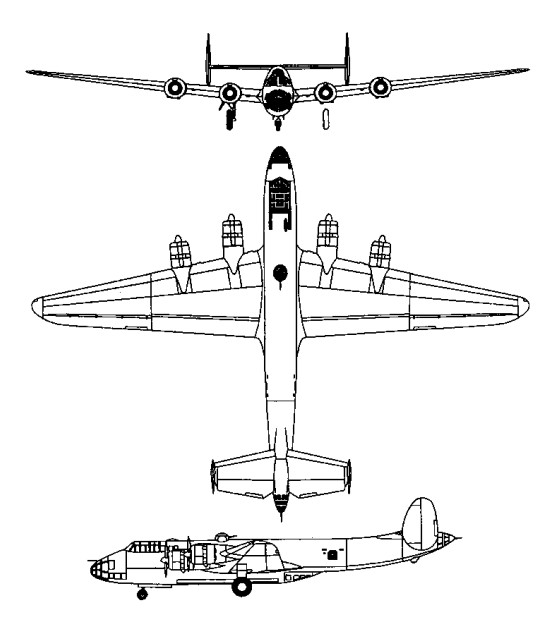
The first application of the Nakajima Mamoru engines was on the first prototype of the G5N1 Genzan, first flying on April 10, 1941. The G5N1 had been designed on the basis of the Douglas DC-4E as Japan’s first four-engine bomber, and proved to be a disappointment. These problems were compounded by the unreliability of the early Mamoru engines, which had to be de-tuned and left the G5N1 underpowered. The G5N1’s maiden flight was on 10 April 1941, and a further four prototypes were built with the Mamoru. In an attempt to salvage the project, two additional airframes were fitted with 1,530 hp Mitsubishi MK4B 12 “Kasei” engines and redesignated G5N2s. Although the Mitsubishi engines were more reliable than the original Mamoru 11s, further development was halted. Of the six completed Shinzans, four of them (two G5N2s and two G5N1s re-engined with the Kasei 12) were relegated for use as long-range Navy transports under the designation Shinzan-Kai Model 12 Transport G5N2-L.
First spotted by an Intelligence Officer from AAF Headquarters in Washington, the bomber was coded ‘Liz’ after his daughter.
G5N1 Engine: 4 x Nakajima NK7A Mamoru-11, 1400kW Max take-off weight: 28150-32000 kg / 62060 – 70548 lb Empty weight: 20100 kg / 44313 lb Wingspan: 42.12 m / 138 ft 2 in Length: 31.02 m / 101 ft 9 in Wing area: 201.8 sq.m / 2172.16 sq ft Max. speed: 420 km/h / 261 mph Cruise speed: 370 km/h / 230 mph Ceiling: 7450 m / 24450 ft Range: 4260 km / 2647 miles Crew: 7 Armament: 2 x 20mm cannons, 4 x 7.7mm machine-guns Bombload: 2000-4000kg
G5N2 Engines: 4 x 1,530 hp Mitsubishi MK4B 12 Kasei Wingspan: 42.12 m / 138 ft 2 in Length: 31.02 m / 101 ft 9 in Wing area: 201.8 sq.m / 2172.16 sq ft
G5N2-L Shinzan-Kai Model 12 Engines: 4 x 1,530 hp Mitsubishi MK4B 12 Kasei Wingspan: 42.12 m / 138 ft 2 in Length: 31.02 m / 101 ft 9 in Wing area: 201.8 sq.m / 2172.16 sq ft
Although the Imperial Navy had discarded the two-seat fighter requirement that had resulted in the NAF-1 and -2, western developments in this category of aircraft stimulated some interest on the part of the Army to which, in 1933, Nakajima offered an advanced company-funded two-seat fighter project. Designed by Shigejiro Owada and Toshio Matsuda, and assigned the designation Ki-8 by the Army, the aircraft was an all-metal low-wing cantilever monoplane with a monocoque fuselage and spatted cantilever fixed under-carriage. Powered by a Nakajima Kotobuki 3 engine rated at 710 hp for take-off and carrying an armament of two fixed forward-firing 7,7-mm guns and one 7,7-mm gun on a flexible mount, the Ki-8 was conceptually advanced and five proto¬types were built between March 1934 and May 1935. Army evaluation revealed stability and other problems, and al¬though these were subsequently rectified, doubts concerning the practicability of the two-seat fighter concept led to the discontinuation of further development.
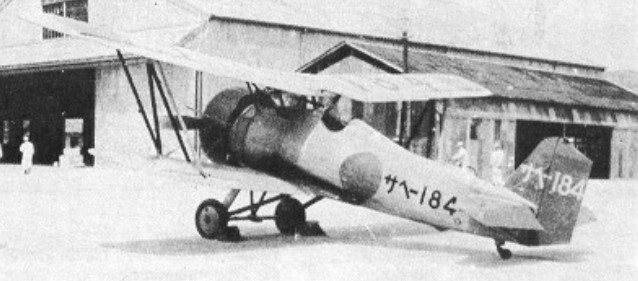
The 1930s Nakajima set to work to build a conventional single-seat biplane fighter. The resulting YM prototype being an unequal-span biplane of mixed construction and clearly owing much to the obsolescent A2N. Nevertheless, it was considered essential by the Navy until more modern types could be perfected and Nakajima was authorised to proceed with development of the biplane concept.
The resulting Navy Type 95 Carrier Fighter (Nakajima A4N1) had a divided landing gear designed to cope with carrier landings, a tailwheel instead of a tail-skid, and other minor changes. The increase in speed being due entirely to the more powerful Hikari engine.
Production totalled 221 between 1935 and 1937.
A4N1 Engine: 1 x Nakajima “Hikari”, 544kW Wingspan: 10 m / 32 ft 10 in Length: 6.64 m / 21 ft 9 in Height: 3.07 m / 10 ft 1 in Wing area: 22.89 sq.m / 246.39 sq ft Max take-off weight: 1760 kg / 3880 lb Loaded weight: 1276 kg / 2813 lb Max. speed: 350 km/h / 217 mph Ceiling: 7740 m / 25400 ft Range: 845 km / 525 miles Armament: 2 x 7.7 mm machine-guns, 120kg of bombs Crew: 1
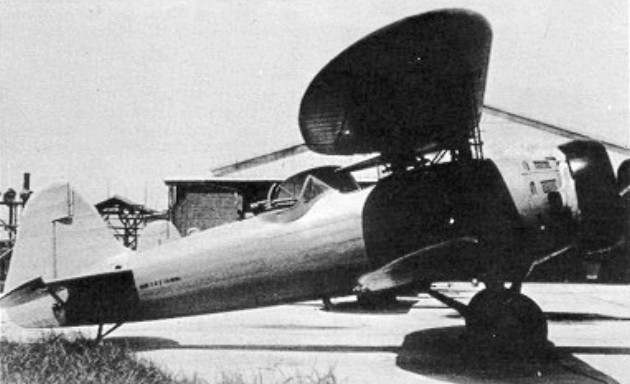
Extensively test-flown in 1934, the Nakajima Ki-4 sesquiplane had divided landing gear with streamlined wheel spats, and accommodated pilot and observer in tandem open cockpits, the pilot just below a cut-out in the trailing edge of the upper wing. With twin forward firing 7.7¬mm (0.303 in) Type 89 machine guns in front of the pilot and single or twin guns on a ring mounting in the rear cockpit. With fewer guns, it could carry a 50 kg (110 lb) bombload and be used for ground attack or dive-bombing. The powerplant was a single 600 hp Nakajinia Ha 8 Hikari radial engine, fitted with an exhaust collector ring and driving a two blade propeller. Landing gear was nor¬mally of the twin mainwheel type, with a tail skid.
The Ki-4 went into production and service in 1935 to replace the earlier Kawasaki KDA 2 (Type 88), as the Army Type 94 Reconnaissance Aircraft Model 2 which dispensed with the wheel fairings and had a redesigned tail unit.
The Type 94 was used widely in China by the Japanese army on direct co-operation duties, in close support of the ground forces. The Japanese army tested two Ki-4s as seaplanes, one with twin floats and the other with one main and two stabilising floats. A landplane was used for flotation bag tests to check buoyancy in the event of an emergency put-down on water.
A total of 516 were built, some aircraft being licence-built by Tachikawa.
Ki-4 Type 94 Engine: 1 x Ha-8, 477kW Span upper: 12 m (39 ft 4 in) Span lower: 8.52 m (27 ft 11 in) Length: 7.73 m (25 ft 4 in) Gross weight: 2616 kg (5767 lb) Maximum speed: 300 km/h (186 mph). Armament: 4 x 7.7mm machine-guns, 50kg of bombs Crew: 2
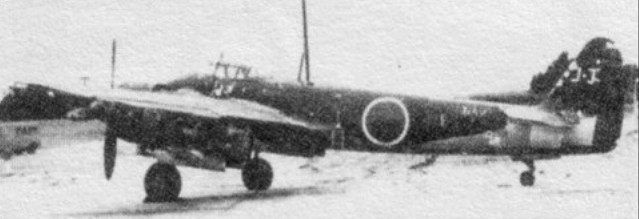
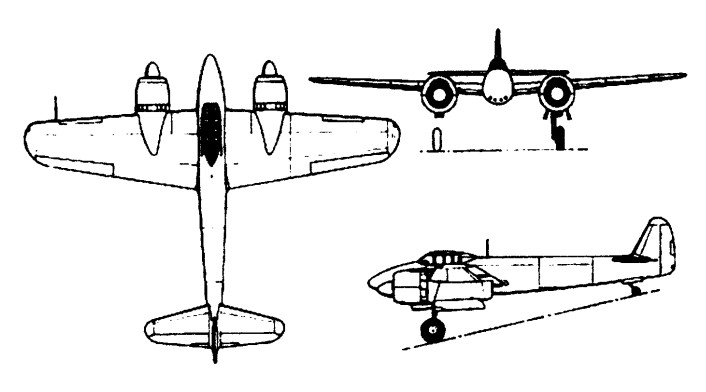
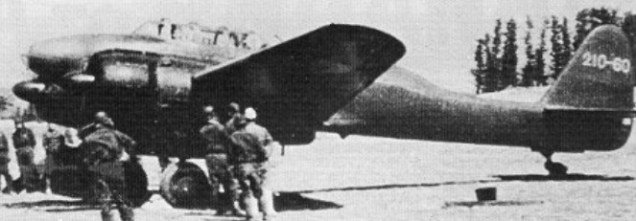
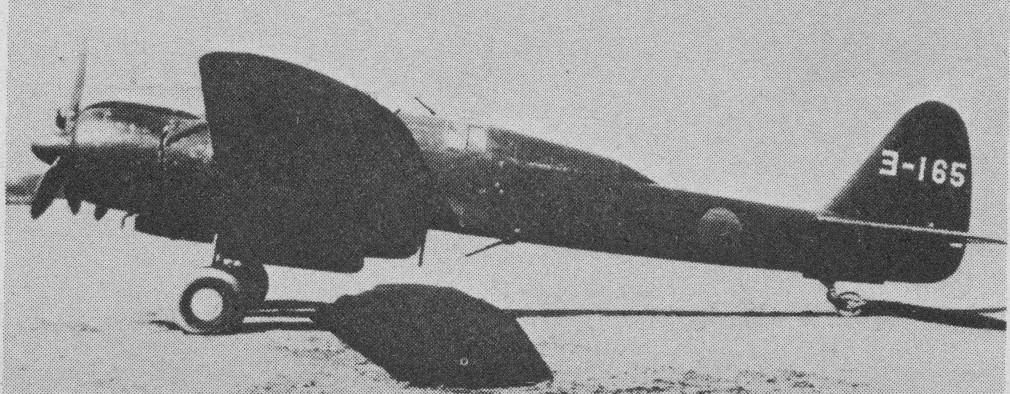
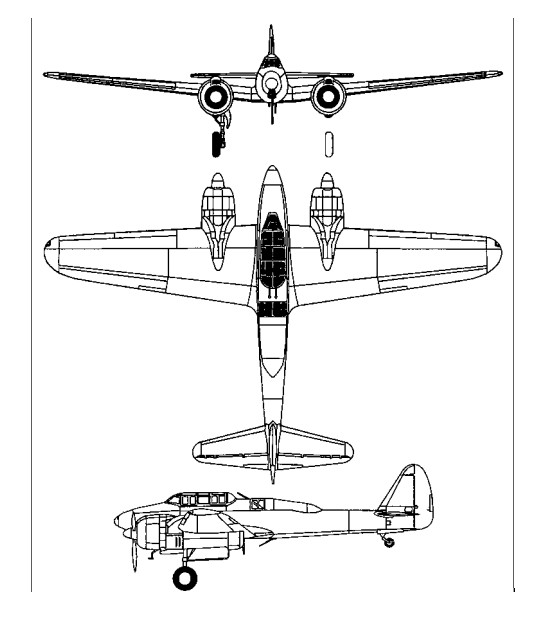
Work on the Nakajima J1N Gekko (Moonlight) design began in 1938 to a Navy specification for a long range escort fighter, and the prototype J1N1 made its maiden flight in May 1941. Flight test revealed several factors against its suitability as a fighting aircraft but in July 1942 it was ordered into production for the reconnaissance role as the J1N1-C.
When first encountered in action during the Solomons campaign the aircraft was mistakenly thought to be a Naval ‘Nick’. Codenamed ‘Irving’ by the Allies covering many different model, it soon narrowed down to the reccon and night fighter versions, J1NC-1 Type 2 and J1N1-S Gekko respectively.
As night air attacks were stepped up by the Americans it was the commanding officer of the 251st Kokutai, Commander Yasuna Kozono, then based at Rabaul, New Guinea, who first suggested adaptation of the J1N as a night-fighter by installing two 20mm cannon in the observer’s cockpit, fixed to fire obliquely forward and upward at an angle of 30 degrees, and another pair firing forward and downward. When two Consolidated B-24s were quickly destroyed, the modifications came to the attention of the Japanese naval staff and an order was placed with Nakajima to go ahead with a dedicated night-fighter version, designed and built as such from scratch.
These were followed by a few turret-mounting J1N1-F and later by the J1N1-S Gekko, built from the onset for night-fighting, some later bearing primitive centimetric AI radar in the closing stages of the war, and some aircraft also carried a small nose searchlight.
This version, the J1N1-S, entered production in August 1943 and continued until December 1944, during which period a total of 420 J1Ns were produced, the great majority of them J1N1-S night-fighters. These differed from the earlier reconnaissance version in having the crew reduced from three to two, the observer’s cockpit being eliminated and faired over. All aircraft retained the upward-firing cannon, but the downward firing guns (found difficult to aim and seldom used) were omitted from later aircraft, while a third upper gun and a forward-firing 20mm cannon was fitted in the J1N1-Sa.
Total production of the J1N, including prototypes, amounted to 479. Some of these were employed on bombing duties with an offensive load of up to 2432 lb.
In service with the 251st, 302nd and 322nd Kokutais, the J1N1-S night-fighters proved fairly effective against the B-24, which was not in any case well-suited to night operations, but with the appearance of the Boeing B-29 the Japanese night-fighters proved too slow and were seldom able to make more than a single firing attack. Most of them were expended during the final months of the war when, equipped to carry two 250kg bombs, they were employed in kamikaze attacks against ground targets.
J1N1-S Engines: 2 x Nakajima “Sakae-21”, 843kW / 1130 hp Wingspan: 16.98 m / 55 ft 9 in Length: 12.77 m / 41 ft 11 in Height: 3.99 m / 13 ft 1 in Wing area: 40 sq.m / 430.56 sq ft Max take-off weight: 8185 kg / 18045 lb Empty weight: 4850 kg / 10692 lb Max. speed: 507 km/h / 315 mph at 19,030 ft Service ceiling: 9320 m / 30600 ft Normal range: 1584 mi Range w/max.fuel: 3780 km / 2349 miles Armament: 4 x Type 99 20mm cannons Crew: 2