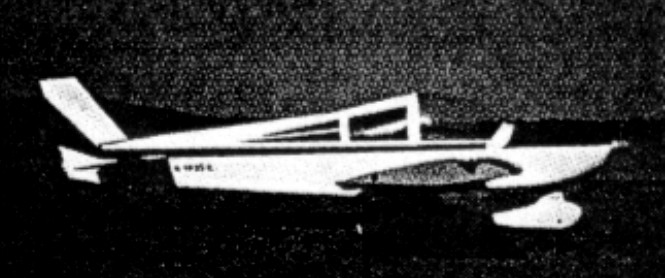
Designed primarily to satisfy the need for a good cross-country per¬former that falls into the sport plane category, the three passenger Tri-Z can be fitted with medium power engines in the 125-to 180-hp category. With only two persons in the front seats, the rear bench can be covered with 210 pounds of baggage. The Tri-Z easily adapts to floats or taildrag¬ger options and is easy to fly. It has docile handling characteristics.
A CH-300 Tri-Z set a new 3,000-mile non-stop record in July 1978.
April 1980
CH-300 Tri-Z Engine: Lycoming, 180 hp Speed max: 170 mph. Cruise: 153 mph Range: 480 sm. Stall: 54 mph ROC: 1400 fpm. Take-off dist: 650 ft Landing dist: 650 ft. Service ceiling: 12,000 ft HP range: 125-180. Fuel cap: 34 USG Weight empty: 1140 lbs. Gross: 1850 lbs Height: 6.67 ft. Length: 22.5 ft Wing span: 26.5 ft. Wing area: 130 sq.ft Seats: 3/4. Landing gear: nose or tail.
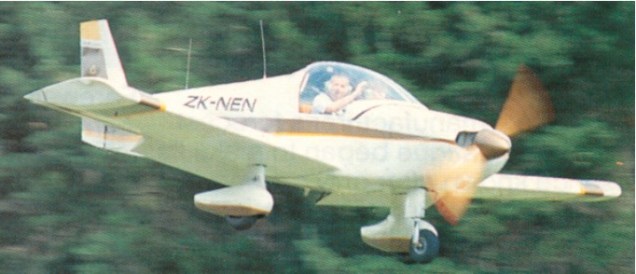
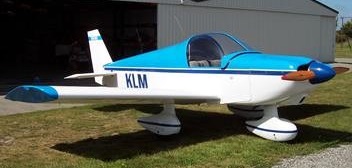
With 100 hp the CH-200 will cruise for four hours at 130 mph carrying two passengers and baggage, while 150 hp and an aerobatic option turns the Zenith into a powerful per¬former. (The Zenith is stressed for engines from 85 to 160 hp). First designed and built in 1974. Two ¬place seating is under a sliding canopy in a fuselage formed by four longerons with stiffened skins, blind riveted to longerons. Five bulkheads carry the top skin. The constant-chord wings have a single cantilevered spar with three sections and electronically-operated flaps. One-piece, all-moving, horizontal and vertical control surfaces constitute the tail.
Price 1982: $8,500 (excludes engine, instruments and paint). Units delivered to June 1981: 450.
Engine: 125-hp Gross Weight: 1500 lbs. Empty Weight: 930 lbs Fuel Capacity: 24 USG. Wingspan: 23 ft Length: 20ft 6in. Wing area: 105 sq.ft Top speed: 151 mph. Cruise speed: 141 mph Stall speed: 54 mph. Climb rate: 1100 fpm Takeoff run (to 50ft): 1400 ft. Landing run (from 50ft): 1400 ft Range: 450 sm. Seats: 2 Design load: +9g.
Engine: Lycoming, 150 hp Max speed: 167 mph. Cruise speed: 152 mph Range: 400 sm. Stall speed: 53 mph ROC: 1700 fpm. Take-off dist: 600 ft Landing dist: 600 ft. Service ceiling: 12,000 ft Fuel cap: 24 USG. Empty wt: 970 lbs Gross wt: 1500 lbs. Height: 6.75 ft Length: 20.5 ft. Wing span: 23 ft Wing area: 105 sq.ft. Seats: 2
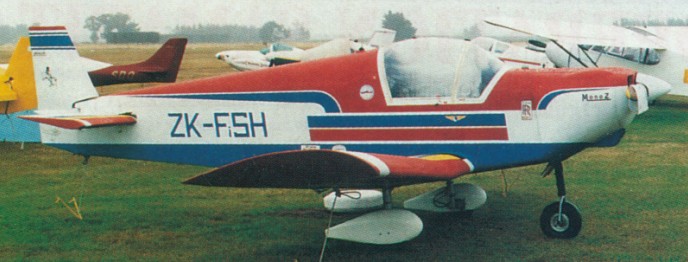
The Mono-Z is a single-place, scaled-down version of the original Zenith first built in 1974. It offers maximum operating economy with VW power at a three gph cruise. Detachable wings leave an 8-foot-wide section for easy road towing, requiring only 20 minutes to install both wings. It is stressed for 9G’s and with 100-hp becomes a powerful aerobatic performer. Engine range from the VW 1600 to 100-hp Continental.
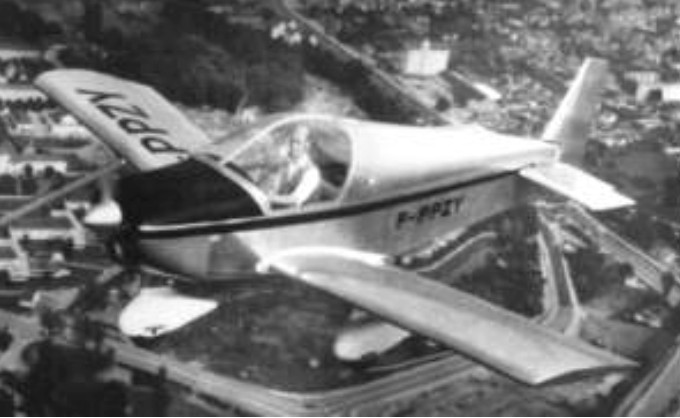
In his spare time, Heintz began to design and build his own aircraft, which he named the Zenith, anagram of Heintz. After a little more than a year’s work, the two-place low-wing Zenith was rolled out and successfully flown on 22 March 1970 as F-WPZY.
Soon after, detailed blueprints and construction manuals of the aircraft were drawn up and offered to the growing number of interested builders and flyers.
Formed 1974 and currently producing the Zenith CH 2000 certificated two-seat Iightpiane (first flown June 1993 and delivered in assembled form from 1994). Also markets the Zenith CH-100 single-seater, Aero CH-150 and CH-180 (aerobatic variants of CH-200), Zenith CH-200 two-seat Iightpiane and Zenith CH-250 long-range version, and Zenith CH-300 (Tri-Z) three/four-seat Iightpiane (as variant of CH 2000), all built from plans and/or kits.
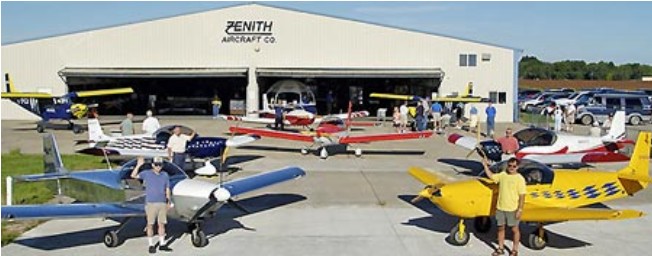
Zenith Aircraft Company is in the exclusive business of designing, developing and manufacturing kit aircraft. The independent, privately-owned company was formed in 1992 in Mexico, Missouri, centrally located in the United States, and is based in leased 20,000+ sq.ft. production facilities at Mexico Memorial Airport. Zenith Aircraft Company has acquired the exclusive rights to manufacture and market Zenair kit aircraft designs from designer Chris Heintz.
Chris Heintz
An aeronautical engineer, Chris Heintz is a graduate of the E.T.H Institute in Switzerland. After serving in the Air Force, Heintz worked for Aerospatiale on the supersonic Concorde jetliner, and later became chief engineer at Avions Robin (France) where he designed several fully-certified two and four seat all-metal production aircraft. In his spare time, Heintz began to design and build his own aircraft, which he named the ZENITH, anagram of Heintz. His all-metal homebuilt aircraft incorporated simple construction methods throughout and after a little more than a year’s work, the two-place low-wing Zenith was rolled out and successfully flown in 1969. Soon after, detailed blueprints and construction manuals of the aircraft were drawn up and offered to the growing number of interested builders and flyers. In 1973, Chris Heintz, his family and the Zenith moved to North America, where Heintz worked for de Havilland (in Toronto) as a stress engineer on the Dash 7 commuter. Chris decided to form his own aircraft company in 1974, and under the name of Zenair Ltd. started to manufacture Zenith kits himself from his two-car garage. Through the company, Heintz has introduced more than twelve successful kit aircraft designs over the years. In 1992, Heintz licensed the kit manufacturing and marketing rights to Zenith Aircraft Company for the STOL CH 701 and the ZODIAC CH 601 designs, and has developed the new STOL CH 801 and the new ZODIAC XL for Zenith Aircraft Company. While Heintz officially retired in 2003, he is still very active as a designer, engineer and consultant.
1996: Huronia Airport, Midland, Ontario L4R 4K8, Canada. PO Box 650, Mexico Memorial Airport, Mexico, MO 65265-0650.
By 1996, Zenair had a production facility in Mexico, Missouri, USA, headed by Sebastion Heintz (son of the designer, Chris Heintz)
Zee Aero (now Wisk), originally under the leadership of Professor Ilan Kroo of Stanford University, developed a proof of concept vehicle with a series of high, vertically-mounted mounted electric propellers. The proof of concept made its first unmanned hover in December 2011, and in February 2014, completed its first transition from hover to forward flight.
Czechoslovakian engineering student Ivo Zdarsky escaped into Austria in a homemade ‘ultralight’ aircraft powered by a 2-cylinder car engine.
In 1984 the plane was confiscated by police but he bribed the police and got it back.
The student, wearing a bright yellow crash helmet, flew the craft only about 100 to 200 yards above the ground for the entire trip. He parked his homemade, 3-wheeled craft with a basket-like seat outside an Austrian Airlines hangar used for DC-9 jets and sat there until airport employees spotted him.
Police said the man took off from the town of Lozorno, about 6 miles inside Czechoslovakia, at 3 a.m. and landed at Vienna’s Schwechat airport about 4:45 a.m., a 25-mile trip. Police said the student told them he had planned his escape for a year, making secret test flights of the ultralight aircraft.
A witness said the student’s plane was powered by a 600-cubic centimeter, 2-cylinder engine and had a fuel tank taken from a Czechoslovak-made Java motorcycle. Ultralights are prohibited in Austria because of noise and environmental regulations.
The 24-year-old Ivo Zdarsky spoke fluent English and asked for political asylum and wanted to emigrate to the United States or Australia, police said.
Zdarsky was able to sell his plane to Checkpoint Charlie German museum that housed escape vehicles. Afterwards he moved to Los Angeles where he started his own company, called Ivoprop, which produced propellers of his own design.
After being denied an exit visa, Zdarsky decided to take matters into his own hands and build his own plane; a hang glider with a 2-cylinder engine. In August of 1984, he set off at 3 a.m. and made his escape to Vienna where he requested political asylum.
Zdarsky was able to sell his plane to a German museum that housed escape vehicles. Afterwards he moved to Los Angeles where he started his own company, called Ivoprop, which produced propellers of his own design. Ivoprop Corporation, founded in 1984 by Ivo Zdarsky, is an American manufacturer of composite propellers for homebuilt and ultralight aircraft, as well as airboats. The company’s headquarters are in Long Beach, California.
Zdarsky started the company after carving his own propeller for a homebuilt ultralight trike that he flew from Cold War Czechoslovakia, over the Iron Curtain to Vienna in 1984. Ivoprop has sold more than 20,000 propellers since then.
The company’s propellers are built from carbon-fiber-reinforced polymer and feature a stainless steel leading edge.
In 1997 Zdarsky decided to move somewhere close to a runway where he could develop his design for an aircraft that could function as both helicopter and airplane. He came across 400 acres in the Utah desert and purchased it for just $99,000.






 All Aero