1998:
315, av. Aristide Briand
F 33700 Merignac
France
LSA engine builder
1998:
315, av. Aristide Briand
F 33700 Merignac
France
LSA engine builder
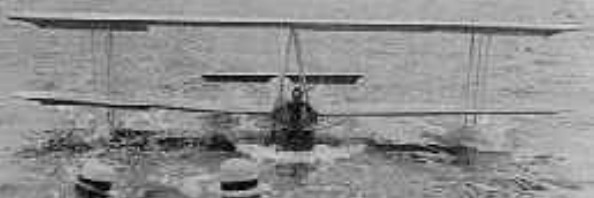
The Peel Glider Boat Company of Flushing Bay, NY was in business around 1930, designing and building the Glider Boat, a biplane glider with stepped flying boat hull and wingtip floats. A number of examples were sold.
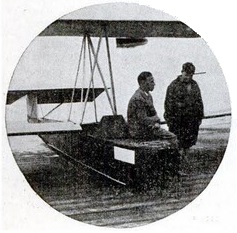
The two occupants sat in tandem in an open cockpit with conventional controls, but without instruments. The structure was wooden spar, steel ribs, fabric covered, and a duralumin hull.
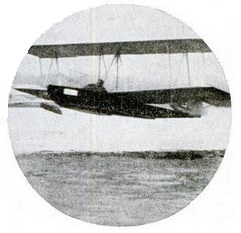
Normal method of launch was behind a motor boat, the towrope being joined to a bridle which attached to either side of the nose outside the front cockpit.
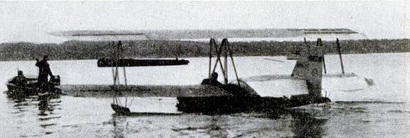
One example belongs to the National Soaring Museum.
Wing span: 9.45 m / 31 ft
Wing area: 25.08 sq.m / 270 sq.ft
Empty Weight: 113 kg / 250 lb
Payload: 159 kg / 350 lb
Gross Weight: 272 kg / 600 lb
Wing Load: 10.84 kg/sq.m / 2.2 lb/sq.ft
L/DMax: 15
Seats: 2
The Peel Glider Boat Company of Flushing Bay, NY was in business around 1930, designing and building the Glider Boat, a biplane glider with stepped flying boat hull and wingtip floats.
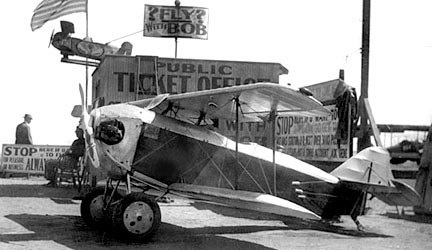
In the late 1920s a single-place biplane was built by, or for Garland Jr & Florence Patrica Kelley Peed.
Santa Monica CA.
USA
Peed was a graduate of the Army Flying School at Kelly Field (TX), later stunt pilot for movies in “Lilac Time” and “Hell’s Angels.” Also a test pilot for Alexander Co on the Bullet.
In the late 1920s a single-place biplane was built by, or for Garland Jr & Florence Patrica Kelley Peed.
Built by Pedal Aeronautics at the Handley-Page plant at Radlett, the Toucan used a Mellinex covered metal tube fuselage of egg-shaped section. Two pilots were seated in tandem under a fully enclosed canopy in the extreme nose.
The mid-set, high aspect ratio wing, was tapered from mid-span. Fitted with a four-unit tails surfaces, with a pusher propellor mounted behind them. A tandem undercarriage was fitted.
It was first flown from Radlett on 23 December 1972.
Wingspan: 123.00 ft
Wing area: 600 sq.ft
Aspect ratio: 25:1
Empty weight: 145 lb
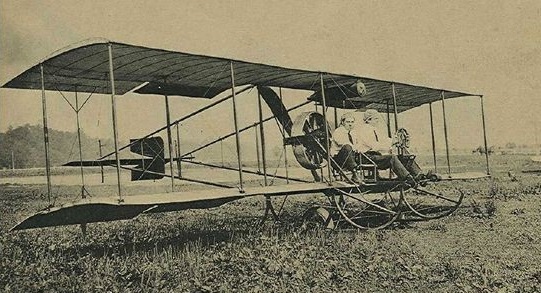
The Columbia Biplane designed by Colonel Paul Peck was fitted with a seven-cylinder, air-cooled rotary rated at 50 hp at 1500 rpm, built by the Gyro Motor Company (Washington), sponsored by, and designed under the direction of Emile Berliner.
A Gordon Bennett Cup entry did not compete.
In American Air Mail Catalogue, Vol 1, 6th Edition, Entry 3: Sep 23-Oct 1, 1911, Garden City-Mineola, NY, International Aviation Tournament. The first official US airmail was flown during the (event) at the Aerodrome on Nassau Boulevard in Garden City. Postmaster General Frank H Hitchcock authorized mail to be flown and Earle L Ovington was sworn in as the first official airmail pilot. T O M Sopwith and Capt Paul W Peck also flew mail during the meet. Ovington flew mail on the first day, and most covers and cards received a circular “Aeroplane Station #1” postmark and a 3-word (“Aerial Special Despatch”) cachet. Covers were postmarked during each day of the meet, but no mail was flown on Sep 29 or Oct 1 due to poor weather conditions. A total of 43,247 pieces of mail was serviced during the meet.
[ibid.] Entry 41: July 19-21, 1912, Coney Island [an amusement park clone in Cincinnati; note roller coaster in background on postcard], Ohio. Paul Beck [spelling error] flew mail each of three days from Coney Island to California, Ohio [the town’s Post Office existed 1865-1935 on the outskirts of Cincinnati, about 1.5 miles from the park]. A Columbia biplane was used and the service was designated as Route 631,003.
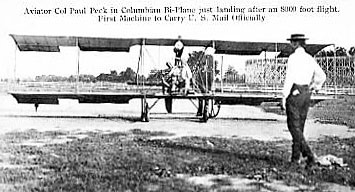
The heavy Gyro motor was fatal to Peck (and passenger) in his crash on Cicero Field, Chicago on September 11, 1912. Peck held American pilot licence No.57 and had set the American duration record at 4 hours 23 minutes, 15 seconds set on May 24, 1912.
Engine: 50hp Gyro rotary pusher
Wingspan 30’0″
Seats: 1

Built by C R “Bud” Pearson and Leland Williams, the 1938 Pearson-Williams PW-1 Mr Smoothie was designed by Rod Nimmo. A racer for the Nationals as Mr Smoothie (piloted by Lee Williams) registered NX94Y.
It originally had retracting gear that was wired down after its mechanism was damaged in shipment to Cleveland by railroad boxcar.
Engine: 825hp Curtiss Conqueror V-12
Wingspan: 24’0″
Length: 26’0″
Seats: 1
(C R “Bud”) Pearson-(Leland) Williams,
Venice CA.
USA
Built the Pearson-Williams PW-1 NX94Y in 1938.

New Zealander Richard Pearse, sometime in March 1902 on a remote South Canterbury, New Zealand, farm, got his aircraft into the air powered by an internal combustion engine of his own design. He took off along the road running near his family’s farms at Waitohi, flew about 50 metres before crashing into a tall gorse hedge.
The precise date is not known because the event was not recorded in any official sense, but it was carried out in front of a small group of mainly children.
Pearce’s achievements were not really known about outside his family and the immediate Waitohi area of South Canterbury until his death in 1953 and the discovery of a partly completed aircraft behind the house where he had last lived in Christchurch, NZ.
Pearse had died in Christchurch’s Sunnyside mental hospital and when it came to tidy up his affairs and clear out his house someone realised that there was something significant here.
The discovery of this aircraft led to interest in this unknown, loner of a man and the subsequent revelations of his achievements.
The argument against Richard Pearse is based on the definition of “flight” and the claim that while Pearse may well have designed and built his own aircraft and got it into the air 17 or 18 months before Orville and Wilbur, he had no real control over it – witness the crash into the hedge – and thus he did not have “controlled” flight.
He flew his aircraft many more times – on one occasion flying up the bed of the nearby Opihi River for almost a kilometre and demonstrating real control. He crashed into the river on this occasion after the engine overheated and ran out of power.
Pearse took off from a paddock, aimed at a cliff that dropped off sheer into the riverbed – a drop of 25 metres that would almost certainly have killed or badly injured him if the aircraft hadn’t flown.
Witnesses say they saw the plane flying from the moment it got up enough speed and they saw Pearse turn the plane to fly up the river.
Waitohi (pronounced Wai-tui locally) at the dawn of the 20th century was still remote and really was on the edge of civilisation. And Pearse worked by himself, for himself. One of the other reasons that so little of Pearse’s exploits were known outside the Waitohi area is that many of the farming families in the region were Plymouth Brethren and regarded his attempts at flight as ungodly and ignored them.
When it became obvious that the history of Richard Pearse needed exploring George Bolt went straight to the tip that every farmer has on his farm. Several small parts of what’s understood to have been the first plane were found.
At least two replicas of what’s understood to be Pearse’s first aircraft have been built. Pearse may have worked alone, but he did file his designs with the patent office and it’s from these drawings that both replicas have been built. The first was the work of long-time Pearse investigator and supporter, Aucklander Geoff Rodliffe and it was powered by a modern, conventional microlight engine. Attempts to fly it were thwarted by bad weather and this machine now lies in a dark and dusty corner, out of sight and out of mind at MOTAT in Auckland.
The second was built in Timaru by a team of four people – two working on the aircraft and two building a replica of the original Pearse engine.

