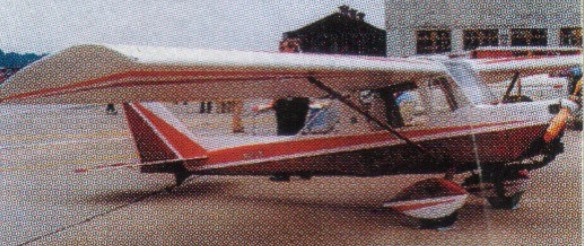
Perkins & Lock New Horizon

Designed and built by D. Perkins and A. Lock in 1958, the New Horizon was a tail-less, parasol wing monoplane, with a pusher propellor and tricycle undercarriage. It featured an inflatable wing.

Man-powered, it was unsuccessful in flight trials inside the Cardington airship hanger.

Development of the inflatable wing concept did lead to the ‘Reluctant Phoenix’.
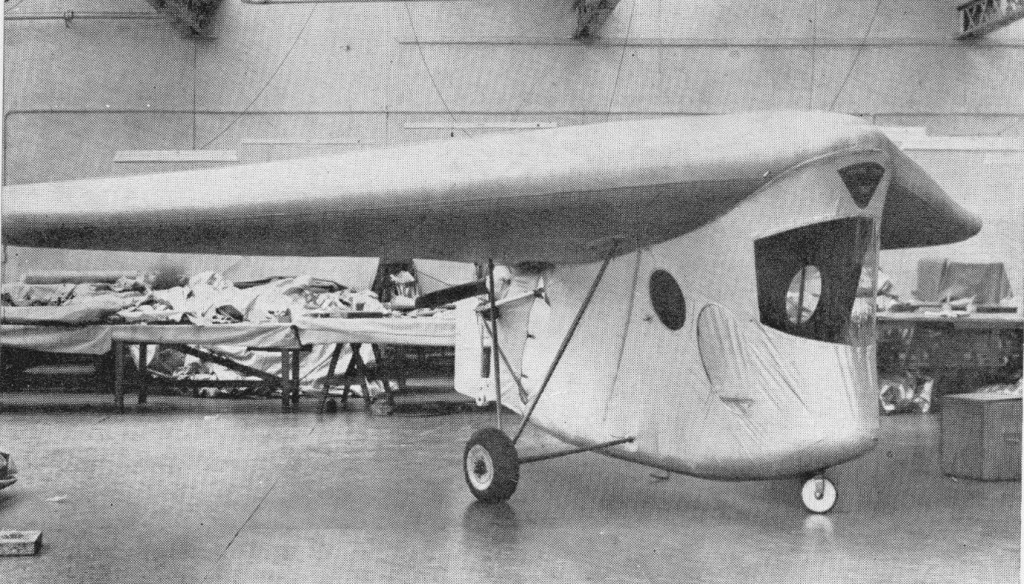
Perkins Reluctant Phoenix

After gaining experience with his ‘New Horizon’, D. Perkins went on to design a tail-less delta inflatable man powered aircraft which he called ‘Reluctant Phoenix’.

It first flew inside the Cardington balloon hanger on 18 July 1966 and went on to make 97 similar flights, all of which were only in ground effect.

Wing span: 27.00 ft
Wing area: 250 sq.ft

Peris JN-1 / Povey JN-1

Construction Wood, Foam, Fiberglass
Plans cost $68.00. Est. Bldg. Time 800 hrs.

Engine: Kawasaki 440, 38 hp
Height: 5.16 ft
Length: 17.33 ft
Wing span: 30 ft
Wing area: 140 sq.ft
Weight empty: 320 lbs
Gross: 600 lbs
Fuel cap: 5 USG
Speed max: 65 mph
Cruise: 60 mph
Range: 110 sm
Stall: 28 mph
ROC: 600 fpm
Take-off dist: 250 ft
Landing dist: 250 ft
Service ceiling: 10,000 ft
HP range: 38-50
Seats: 1
Landing gear: tail wheel

Per il Volo VT

Circra 1998

VT 113
Empty weight: 18.5 kg
Engine: Vittorazi, 15 hp at 9300 rpm
Reduction: 1:3.1
Prop diameter: 113 cm
Fuel capacity: 7.5 lt
Price (1998): 5 500 000 L

VT 113 E
Empty weight: 13 kg
Engine: Vittorazi, 15 hp at 9300 rpm
Reduction: 1:3.1
Prop diameter: 113 cm
Fuel capacity: 7.5 lt
Price (1998): 6 300 000 L

VT 125 E
Empty weight: 20 kg
Engine: Vittorazi, 15 hp at 9300 rpm
Reduction: 1:3.5
Prop diameter: 125 cm
Fuel capacity: 7.5 lt
Price (1998): 5 600 000 L

VT 115
Empty weight: 17 kg
Engine: Monocil 80, 10 hp at 9300 rpm
Reduction: yes
Prop diameter: 113 cm
Fuel capacity: 7 lt

VT 125
Empty weight: 17 kg
Engine: Monocil 80, 10 hp at 9300 rpm
Reduction: yes
Prop diameter: 125 cm
Fuel capacity: 7 lt

Pérez Villa de Paris

Matias Pérez was a Portuguese aeronaut, tent-maker and Cuban resident who, carried away with the ever increasing popularity of aerostation, disappeared while making a gas balloon flight originating from Havana’s Plaza de Marte (now Parque Central) on June 28, 1856. A few days earlier he had made a successful first attempt, traveling several miles. His second try however, became part of Cuba’s folklore as today when someone or something vanishes into thin air, people say: “Voló como Matías Pérez” (flew away like Matias Pérez).