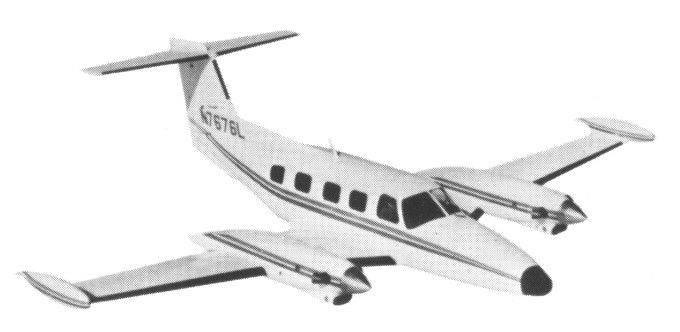
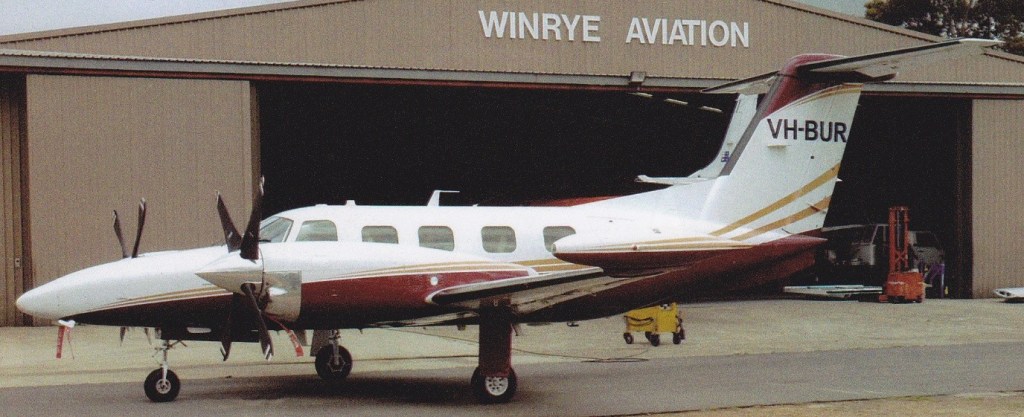
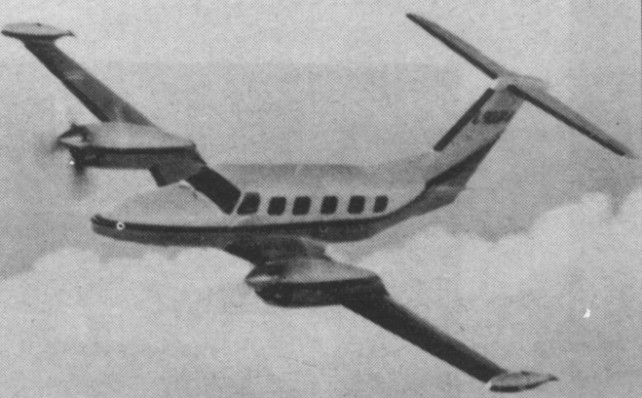
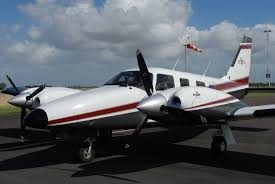
The PA42-1000 Cheyenne IV was announced in 1983 as basically a Cheyenne III with more powerful engines. In September 1983 it was renamed Cheyenne C400LS. The PA-42-1000 Cheyenne 400LS received its type certificate FAA A23SO July 13, 1984. Forty-three were built.
Keeping company with all the new commuter aircraft, the Cheyenne 400 was slightly over-weight, necessitating a 100 lb increase to take-off and landing weights – now 12,050 and 11,100 lbs respectively. In spite of the increased weight Piper engineers have lowered the full flap stall speed from 92 knots to 84 knots I.A.S. and increased the single engine rate of climb from 980 to 997 feet/minute. Piper hoped to improve the accelerate-stop and accelerate-go figures, which were 3275 feet (998 metres) and 3485 feet (1062 metres) respectively.
On 30 June 1980 Piper began production deliveries of a new version, intended as a 6/11-seat corporate or commuter transport, this Cheyenne III differs considerably from its predecessors, having a wing of increased span, lengthened fuselage, a T-tail, and more powerful Pratt & Whitney Aircraft of Canada PT6A turboprop engines installed in lengthened nacelles.
The Cheyenne III in production was complemented by the Cheyenne IIIA which differs primarily by having 634kW PT6A-61 turboprop engines flat-rated at 537kW and offering performance improvements. 149 were built.
In addition to the Cheyenne III, Piper was involved in the certification programme of a new Cheyenne IV during 1983, with two 1,227kW Garrett TPE331-14A/14B counter-rotating turboprop engines, each of them flat-rated at 746kW. Deliveries of the Cheyenne IV began in the early summer of 1984. It was one of the fastest propeller light twins, at over 644km/h.
The Cheyenne was one of the very few Piper products to remain in volume production after the company’s financial reorganisation in 1991/92. Versions on offer included the Cheyenne IIIA of which 59 had been delivered by early 1993. Nine Cheyenne IIIs delivered to the US Drug Enforcement Administration, fitted with AN/APG-66 radar and a ventral FLIR, were used for day and night time surveillance missions. They are known as Customs High Endurance Tracker (CHET) aircraft. Cheyenne IIIs are joined at the Lock Haven production line by the PA-42-1000 Cheyenne 400. Originally the Cheyenne IV, it later became the Cheyenne 400LS. Deliveries total 43.
PA-42-1000 Cheyenne 400LS VH-BUR
PA-42-720 Cheyenne III First built: 1980 Engines: 2 x P&W PT6A-41, 720 shp / 537kW Props: Hartzell 3-blade, 95-in Seats: 9/11 Length: 13.23 m / 43 ft 5 in Height: 14.8 ft Wingspan: 47.7 ft Wing area: 293 sq.ft / 27.22 sq.m Wing aspect ratio: 7.8 Maximum ramp weight: 11,285 lb Maximum takeoff weight: 11,200 lb / 5080 kg Standard empty weight: 6389 lb / 2898 kg Maximum useful load: 4896 lb Zero-fuel weight: 9758 lb Maximum landing weight: 10,330 lb Wing loading: 38.2 lbs/sq.ft Power loading: 7.8 lbs/hp Maximum usable fuel: 3819 lb Best rate of climb: 2236 ft Certificated ceiling: 33,000 ft Max pressurisation differential: 6.3 psi 8000 ft cabin alt @: 28,500 ft Maximum single-engine rate of climb: 531 fpm @ 115 kt Single-engine climb gradient: 277 ft/nm Single-engine ceiling: 14,550 ft Maximum speed: 290 kt Normal cruise @ 28,000ft: 275 kt Fuel flow @ normal cruise: 516 pph Endurance at normal cruise: 6.4 hr Stalling speed clean: 99 kt Stalling speed gear/flaps down: 84 kt Turbulent-air penetration speed: 174 kt
PA-42-1000 Cheyenne IV Engines: 2 x Garrett TPE331-14, 1000shp Prop: Dowty-Rotol, 4 blade, 106 inch dia Length: 43.4 ft Height: 16.4 ft Wingspan: 47.7 ft Wing Area: 293 sq.ft Wing Aspect Ratio: 7.82 Standard Empty Weight: 7,546 lb Max Ramp Weight: 12,135 lb MTOW: 11,950 lb/12,050 lb MLW: 11,100 lb Max Zero fuel wt: 9600 lb Std useful load: 4985 lb Wing Loading: 41.1 lbs/sq.ft Power Loading: 6 lbs/hp Max Usable Fuel: 3,819 lb Max cruise 25,000ft: 351 kt (404 mph) Max cruise 30,000ft: 349 kt (402 mph) Max cruise 35,000ft: 341 kt (392 mph) Max cruise 41,000ft: 302 kt (348 mph) Max range @ 39,000 ft with 45 min res) 8 pax: 1400nm Max range @ 39,000 ft with 45 min res) 2 pax: 2240 nm ROC: 3242 fpm SE ROC: 980 fpm SE Best-rate of-climb Airspeed: 125 kt SE Climb Gradient: 479 ft/nm SE Ceiling: 27,000 ft TO dist 50 ft: 1930 ft Ldg dist 50 ft: 2780 ft Acc-stop dist: 2840 ft Seats: 7/9 Ceiling (Certificated): 41,000 ft Max Pressurization Differential: 7.5 psi 8,000 Foot Cabin Altitude At: 35,000 ft SE Rate Of Climb: 997 fpm Normal Cruise At 35,000 Feet: 334 kt Fuel Flow At Normal Cruise: 600 pph Endurance At Normal Cruise: 4.1 hr Stalling Speed, Clean: 93 kt Stalling Speed, Flaps/Gear Down: 84 kt Turbulent air Penetration Speed: 195 kt
Piper designed this Cheyenne model in the early 1980s to compete with the pro¬posed King Air 350, but ran out of money for development and certified it to lower weight and speed than its ultimate capability. Only 45 were made between 1984 and 1991, although a handful more came out of the Piper factory for Lufthansa trainers.
The PA-41 differs from other, Chieftain-based, Cheyennes with a new airframe and pair of 1000 shp Garrett TPE 331-14-801 big block engines. Counter-rotating Dowty Rotol composite propellers of 106 in diameter transfer the power to the air, giving the 400LS more speed and range than some small jets, with those capabilities being given more weight than large numbers of passengers.
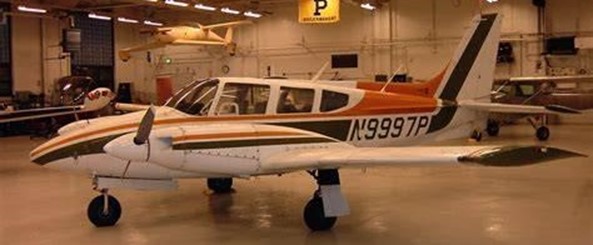
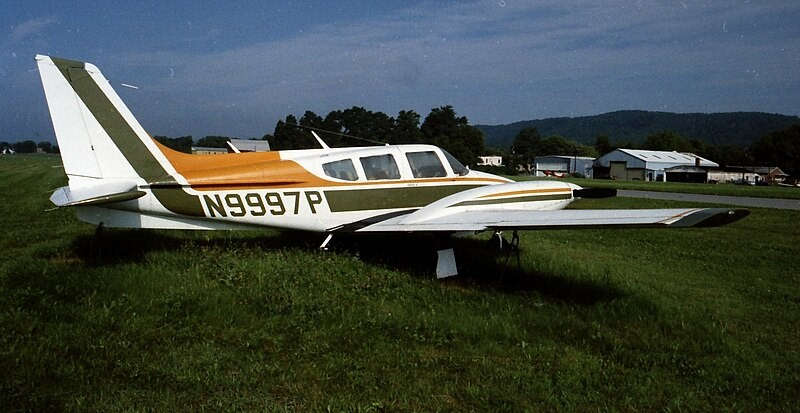
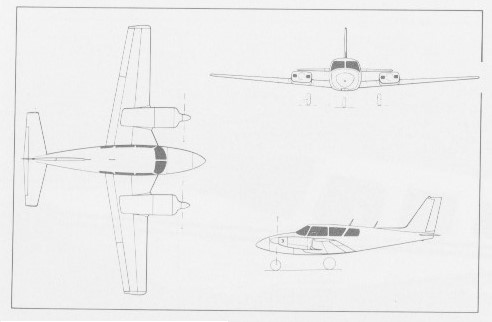
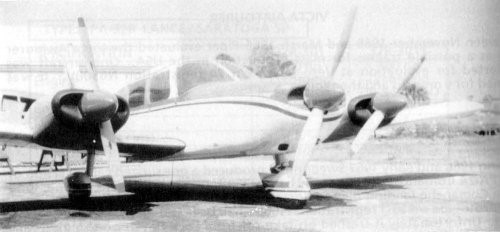
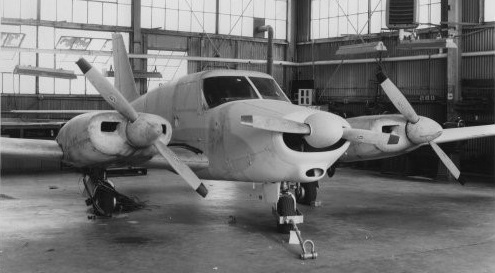
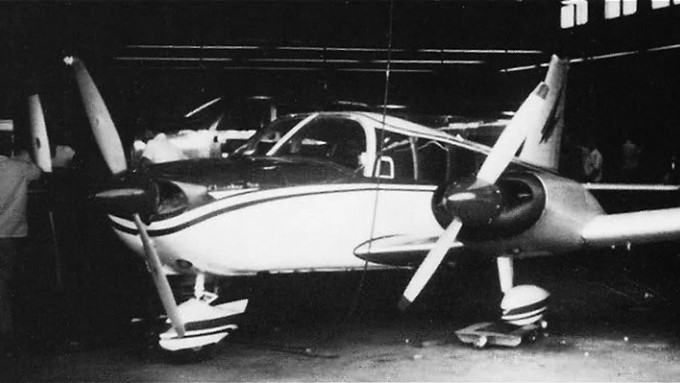
The Piper PA-40 Arapaho twin-engined cabin monoplane designed by Piper as a replacement for the PA-39 Twin Comanche C/R. The Arapaho was similar in size to the Twin Comanche and had six seats but had a taller main landing gear and larger cabin windows. It had two counter-rotating 160 hp Lycoming IO-320 engines.
The prototype was damaged in June 1972 when the factory at Lock Haven, Pennsylvania, flooded and the prototype, registered N9999P, did not fly until 16 January 1973. It crashed on 21 September 1973 during spin trials when the anti-spin drag chute failed to deploy, and the aircraft was redesigned with a taller tailfin. The second modified prototype with normally aspirated engines first flew in April 1974 and was followed by a third aircraft with turbocharged engines.
The PA-40 was type certified on 18 July 1974, as an amendment to the Twin Comanche type certificate. The Arapaho was scheduled to be launched as a 1975 model, but the company decided not to market the aircraft and the project was cancelled in December 1974. Piper stated that the cancellation was for financial reasons as it did not want to establish a new production line during the 1973–1975 recession.
Following cancellation the two aircraft were used by Piper as company liaison and communication aircraft, one based at Lock Haven, the other at Lakeland, Florida. Later, one aircraft was scrapped by Piper and the third, registered N9997P, was privately owned in Texas, following use by the Purdue University student maintenance program.
28-May-21 Barnstormers advert: This is the only remaining Piper PA-40 Arapaho out of 3 built. Extensive mechanical restoration completed. (15 SMOH) Original paint and interior. It was rescued from Purdue University in 2018 and is in airworthy condition. Please review the Specs Page for the extensive amount of work that has been completed and other details before calling with any questions. Delivery available. We are taking offers now and will be showing it publicly for the first time at Oshkosh 2021. This is probably the only one of a kind Piper aircraft that is still flyable and airworthy. ** From the specs page: 1974 Piper PA-40 Arapaho 1270 Total Time Airframe/Engine 15 SMOH both engines and propellers in 2018 Lycoming (L)IO-320-B1A Condition Inspection due August 2021 Original Engines Installed Original Airframe and Engine Logbooks History The PA-40 Arapaho was designed to be the follow-on aircraft to the PA-39 Twin-Commanche. The Arapaho differences include leading edge cuffs both inside and outside both nacelles which lower Vmc and stall speeds by approximately 10-15 kts., a single 60 gallon bladder in each wing, 6 inch taller main landing gear, a completely redesigned hydraulic landing gear operating system, strakes on both sides of the rear fuselage as well as above and below the rear fuselage, a redesigned windshield that extends further rearward at the top of the fuselage, redesigned dual pane side windows, as well as other minor changes. The aircraft has similar cruise speeds to a PA-39 but much lower approach speeds as well as much better pitch authority in the flare which contributes to much nicer landing characteristics. This aircraft is serial number 3 and is the last remaining Arapaho out of 3 built.
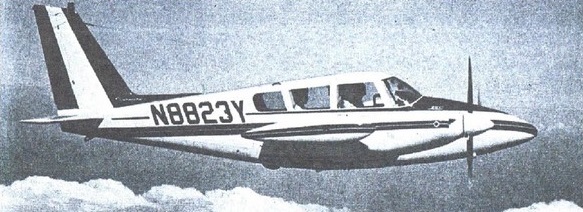
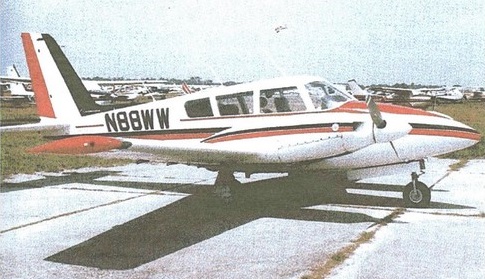
Piper announced the end of PA-30 production in 1970 and introduced a new PA-39 line. Basically a PA30, the PA-39 featured contra-rotating engines and a slight modification to the wings.
Three models were available:
Standard Model
Custom As Standard Model, with Piper Truespeed Indicator, vacuum system with dual engine driven vacuum pumps (dry), dual vacuum gauge, dual 70A engine driven alternators, heated pitot tube and full flow oil filters. Advanced instrument panel with 3in pictorial gyro horizon, 3in directional gyro, rate of climb indicator, OAT gauge, gyro air filter, inertial shoulder harness for two front seats, Piper pictorial turn rate indicator + 47 lb.
Sportsman As Custom Model, with Piper External Power, glare ban instrument lights, fifth & sixth family seats, Palm Beach interior with leather upholstery, four headrests and window curtains + 83 lb.
The 160 hp Lycoming IO-320 B version of the Twin Comanche was produced in limited numbers, all models were certified under FAA A1EA.
Some 155 were built before the 1972 flood at Lock Haven when it was decided not to build any more.
PA-39 Engines: 2 x Lycoming IO-320 B1A, 160 hp Props: Hartzell, Constant speed, full feathering, counter rotating Wingspan: 35 ft 11 in / 35 ft 9.5 in o/tip tanks Length: 25 ft 2 in Height: 8 ft 3 in Wing area: 178 sq.ft Tailplane span: 12 ft 6 in Fuel capacity: 90 USG / 120 USG w/tip tanks Stall: 69-70 mph Baggage: 200 lb Loaded weight: 3725 lb
PA-39 C/R Engines: 2 x Lycoming IO-320 B1A, 160 hp / 119kW Props: Hartzell, Constant speed, full feathering, counter rotating Wingspan: 35 ft 11 in (19.97m) / 36 ft 9.5 (11.22m) in o/tip tanks Wing area: 178 sq.ft Length: 25 ft 2 in (7.67m) Height: 8 ft 3 in / 2.51 m Tailplane span: 12 ft 6 in Empty weight: 2270 lb (1029kg) MTOW norm: 3600 lb (1633kg) MTOW w/tip tanks: 3725 lb (1690kg) Fuel capacity: 90 USG / 120 USG w/tip tanks Baggage: 250 lb / 113 kg Max speed SL: 205 mph Cruise speed SL eco: 181-188 mph Cruise speed SL norm: 198 mph / 172 kt / 319 kph Cruise speed 8000ft: 194 mph Cruise speed 10,000ft eco: 166 mph Stall: 69-70 mph Climb rate: 1460 ft/min / 445 m/min SE Climb rate: 260 ft/min Service ceiling: 20,000 ft / 6095 m SE service ceiling: 7100 ft Takeoff run: 940 ft Takeoff run to 50ft: 1530 ft Landing run from 50ft: 1870 ft Landing run: 700 ft Range norm fuel: 830 mi / 720 nm / 1335 km Range eco: 1110 mi Range max: 1200 mi / 1042 nm / 1930 km Baggage compartment: 20 cu.ft (0.57cu.m) Seats: 4-6
39 Turbo Cruise 12,000ft: 228 mph Cruise 12,000ft eco: 186-193 mph Stall: 69-70 mph Climb rate: 1290 ft/min SE Climb rate: 225 ft/min Service ceiling: 25,000 ft SE service ceiling: 12,600 ft Takeoff run: 990 ft Takeoff run to 50ft: 1590 ft Landing run from 50ft: 1900 ft Landing run: 725 ft Range 12,000ft: 1090 mi Range 12,000ft eco: 1485 mi Range 12,000ft max: 1535 mi Range 24,000ft: 1270 mi Range 24,000ft eco: 1670 mi Range 24,000ft max: 1710 mi Empty weight: 2416 lb Baggage: 250 lb Loaded weight: 3725 lb
PA-39 B Turbo Engines: 2 x Lycoming IO-320 B1A, 160 hp Props: Hartzell, Constant speed, full feathering, counter rotating Wingspan: 35 ft 11 in Length: 25 ft 2 in Height: 8 ft 3 in Wing area: 178 sq.ft Tailplane span: 12 ft 6 in Max speed SL: 240 mph Service ceiling: 30,000 ft SE service ceiling: 19,000 ft Range norm: 1090 mi Range w/tip tanks: 1360 mi Empty weight: 2408 lb Baggage: 250 lb Loaded weight: 3725 lb
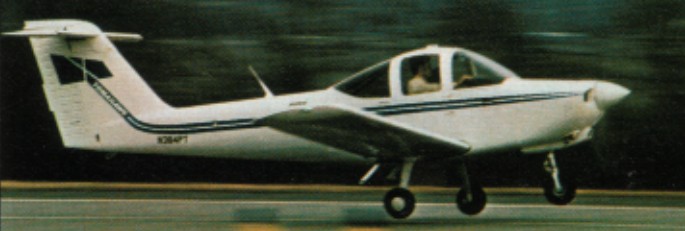
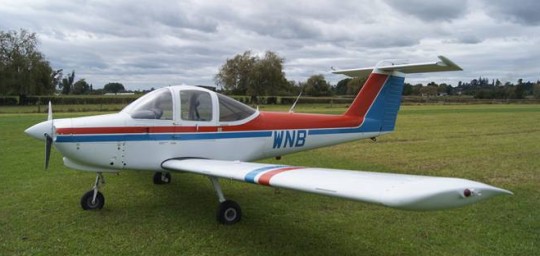
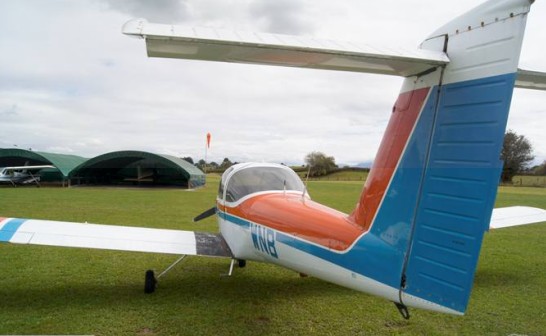
Piper canvassed 10000 flying instructors before it built the “ultimate” training machine for the seventies. A cantilever low-wing monoplane with fixed tricycle landing gear, a T-tail, and side-by-side enclosed accommodation, it was powered by an Avco Lycoming O-235-L2C engine, designated Piper PA-38-112 Tomahawk. The Tomahawk was designed around minimalism and low initial cost (around US$18,000 in 1978) and low ongoing costs.
First flown in mid-1973, Piper’s Tomahawk received FAA type certification (FAA A18SO) on 20 December 1977. The T-¬tail trainer was certified in both the normal and utility categories, and the production lines started rolling in January 1978. The FAA temporarily suspended the airworthiness certificate of Piper’s Toma¬hawk trainer, grounding over 700 Toma¬hawks because of magneto failures. For simplicity, the ailerons and flaps were attached by piano wire hinges and the doors were held closed and locked by wire.
Fitted with a NASA created GA(W)-1 aerofoil, the Tomahawk’s heavy flight controls were intended to impersonate a bigger aircraft. The three position flaps, 34 deg, 21 deg, and up, is normally not used for takeoff. The wing has a fatigue limit of 11,000 hrs and modifications can increase that by 5000 hrs. One mod is to rivet a reinforcement plate to the wing’s spar plug.
Leading edge stall/airflow strips were installed on the aircraft’s wing to temper the stall/spin characteristics and the high crash/fatality rate dropped off noticeably. A 1983 AD required the installation of both inboard and outboard leading edge airflow strips.
Improvements introduced as standard in 1982 resulted in redesignation as the PA-38-112 Tomahawk II. The Tomahawk II introduced bigger wheels, and cured a nose wheel shimmy problem of the original.
Because of economic conditions production was suspended at the end of 1982, at which time 2,519 had been built, and output was nearing 200 units per year.
Piper hoped that it would be possible to resume production during 1984. This was not the case as the Tomahawk was one of the types most affected by the product liability laws and was already struggling to find a market.
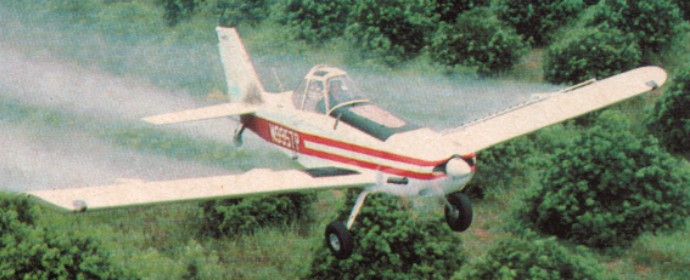
Piper announced in 1972 a completely new version of the PA-25 Pawnee agricultural aircraft which introduced a more powerful Continental Tiara 6-285 flat-six engine of 213kW, a new cantilever wing, new safety features, filtration of the air entering the pilot’s ventilated and heated cockpit, and a larger standard chemical hopper of 0.85cu.m or, optionally, 1.08cu.m capacity. First introduced in Piper’s 1973 model year, over 350 were built up till 1977, all powered by a 285 hp Conti¬nental Tiara engine.
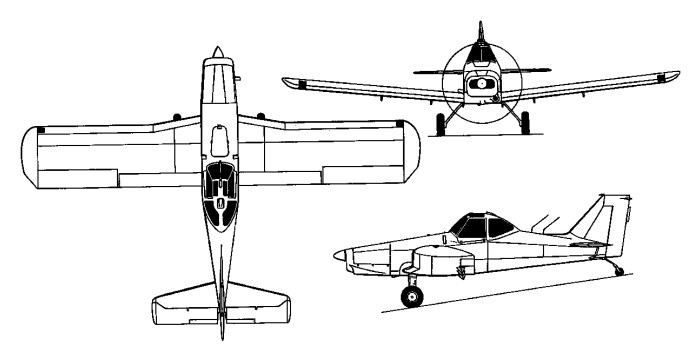
The Brave has a number of innovations to distinguish it from the earlier models of the type. One of the first differences evident is the lack of wing struts, fibreglass leading edges, and the fuel tanks are filled with a plastic foam like “infinite baffle” which is intended to reduce fuel movement and reduce the potential of fire. For the same reason the fuel lines are located behind the main spar. The rear fuselage is “pressurised” from a vent on the tail fin which acts to “push” the super out of the rear fuselage. The system is designed to keep 90% of the dust and dirt out of the fuselage and the easily removable panels make the remaining 10 per cent easy to get at.
A much larger ag aircraft than the original Pawnee, the Pawnee Brave was underpowered in its original 285 hp version. A 300 hp model was introduced in 1977. Designated Piper PA-36 Pawnee Brave, the new model began to enter service in 1973, and in 1977 an additional version with a 300 hp / 224kW Avco Lycoming IO-540-K1G5 engine became available, the designations of these two aircraft then becoming PA-36 Pawnee Brave 285 and PA-36 Pawnee Brave 300.
In 1978 the 300 hp aircraft became the standard model, and a new PA-36 Pawnee Brave 375 being introduced with a 280kW Avco Lycoming IO-720-D1CD flat-eight engine, equipped with the larger of the two chemical hoppers as standard. The engine was a detuned 400 hp Lycoming
These were to remain in production with Piper until rights for both versions of the PA-36 were acquired by WTA Inc. in 1981. This latter company was marketing this agricultural aircraft in two versions, the version with the 280kW engine now being the basic model and redesignated PA-36 New Brave 375. It was available optionally with a 298kW IO-720-D1C engine under the designation PA-36 New Brave 400.
WTA Inc received from Piper rights to PA-18-150 Super Cub lightplane and PA-36 Brave agricultural aircraft; 250 Super Cubs built before becoming once again Piper type, while PA-36 produced as New Brave.
Pawnee Brave Engines: Continental 6-285-C, 285 hp Wingspan: 39 ft 0 in / 11.89 m Length: 27 ft 4.25 in / 8.34 m Empty weight standard: 2050 lb / 930 kg Empty weight sprayer: 2170 lb / 984 kg MTOW weight normal: 3900 lb / 1769 kg MTOW weight restricted: 4400 lb / 1996 kg Wing loading: 17.3 lb/sq.ft Pwr loading: 13.68 lb/hp Equipped useful load: 1803 lb Fuel cap: 522 lb Payload max fuel: 1281 lb Working speed: 117 kt / 135 mph / 217 kph 75% cruise: 128 kt Range max fuel 75% pwr: 531 nm/ 4.2 hr Service ceiling: 13,000 ft Working endurance: 5 hr Stall: 54-62 kt ROC: 790 fpm Min field length: 1650 ft Hopper cap: 225 USG / 30 cu.ft / 0.85 cu.m / 852 lt Opt hopper cap: 275 USG / 38 cu.ft / 1.08 cu.m / 1041 lt / 1900 lb / 862 kg Cockpit width: 3 ft 2 in / 0.97 m Seats: 1
PA36-300 Brave 300 Engine: Lycoming I0-540-KIGS, 300 hp / 224kW Wingspan: 11.89 m / 39 ft 0 in Length: 8.34 m / 27 ft 4 in Height: 2.29 m / 8 ft 6 in Wing area: 20.96 sq.m / 225.61 sq ft Hopper Cap: 30 or 38 cu.ft Wing loading: 17.3 lb/sq.ft Pwr loading: 13 lb/hp Max TO wt: 3900 lb Empty wt: 2180 lb Equipped useful load: 1673 lb Payload max fuel: 1157 lb Range max fuel/ 75% pwr: 480 nm/ 3.9 hr Service ceiling: 12,000 ft 75% cruise: 123 kt / 229 km/h / 142 mph Working speed: 103 kt Stall: 54-63 kt ROC: 770 fpm Min field length: 1650 ft Fuel cap: 516 lb Seats: 1
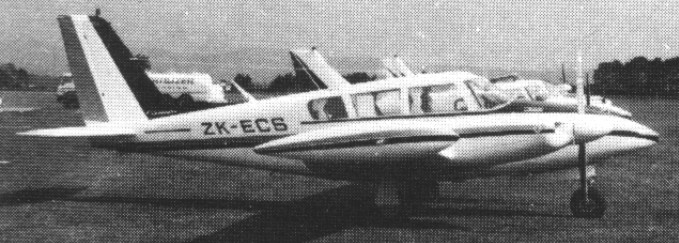
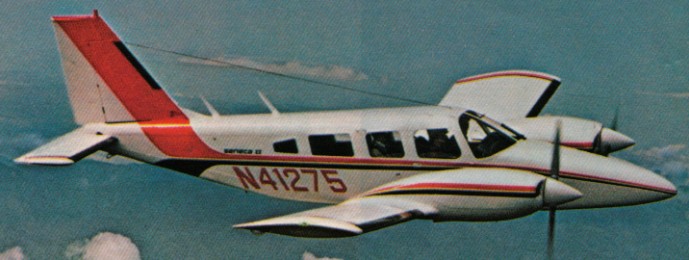
For 1972 Piper introduced the six/seven-seat Piper PA-34 Seneca which, basically, was a twin-engine version of the Cherokee SIX with retractable tricycle landing gear, a new fuselage structure and power provided by two 200 hp / 149kW Avco Lycoming IO-360 flat-four engines.
Early models, the Seneca I, handled awkwardly and were slower than expected and the Seneca II incorporated improvements including: turbo-charging, larger and redesigned ailerons and improved stick forces. For 1975 149kW Continental TSIO-360-E turbocharged and counter-rotating engines were introduced and the landing gear was strengthened for operation at higher gross weight, the designation then changing to PA-34-200T Seneca II.
Many Seneca I have been upgraded to Seneca II standard featuring turbo-charged engines and improvements to ailer¬ons, rudder and the stabilator to improve handling.
In 1982 the Seneca II was superseded by an improved PA-34-220T Seneca III. A total of 28 improvements changed the II into the III, and while most of these are cosmetic, the two most significant are further increases in available power, and weight – most of which means useful load. A five minute take-off power rating increases 20 hp to 220, an rpm increase from 2575 to 2800, and an increase in MTOW of 180 lbs. This translates to a 190 lbs increase in useful load. The Seneca III has Continental TSIO-360-KB turbocharged and counter-rotating engines.
The PA-34-220T Seneca III remained in production in 1984.
Seneca III
During 1976-77 Piper signed an agreement with the Polish foreign trade association Pezetel under which P.Z.L. Mielec will assemble/manufacture the Seneca for sale in eastern Europe. Designated in Poland as the P.Z.L. Mielec M-20 Mewa (Gull), the first Polish-built prototype was flown on 25 July 1979. The production version M-20 03 was one of the very few light-twins on the market.
It was reported in February 1981 that the Forca Aerea Brasileira had placed an order for a follow-on batch of 20 EMB-810 (Seneca II) for liaison work, 11 having the Robertson STOL modifications. The EMB-810 is designated U-7 by the FAB, the initial order having called for 12 aircraft.
In 1994, the “new” Piper Aircraft company introduced the Seneca IV, having acquired its license on November 17, 1993. This model is similar to the Seneca III offering small improvements such as modifying the engine hood for better cruise performance. It still continued to use the counter-rotating technique with the Continental IO-360 and Continental TSIO-360-KB engines and the maximum weights remained the same.
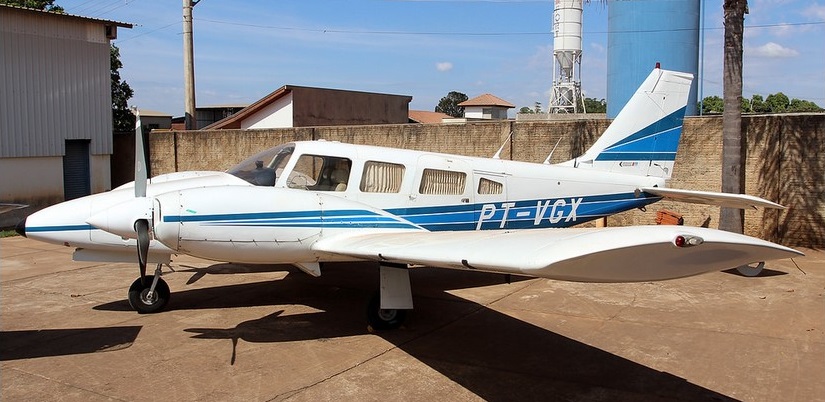
In Brazil, versions with the economical Continental IO 360 aspirated Seneca II (two-bladed propeller) and Seneca III (three-bladed propeller) were a major selling success in the 1970s and 1980s, leading to a licensing agreement between Piper and Brazilian manufacturer Embraer, on a new EMB-810 D and Cuesta designation for the same basic design. Subsequently, the manufacture of the aircraft was transferred to the subsidiary of Embraer, Indústria Aeronáutica Neiva.
Neiva EMB-810D Seneca III
The Seneca IV was the last Piper produced under license by Embraer and that agreement terminated in 1996.
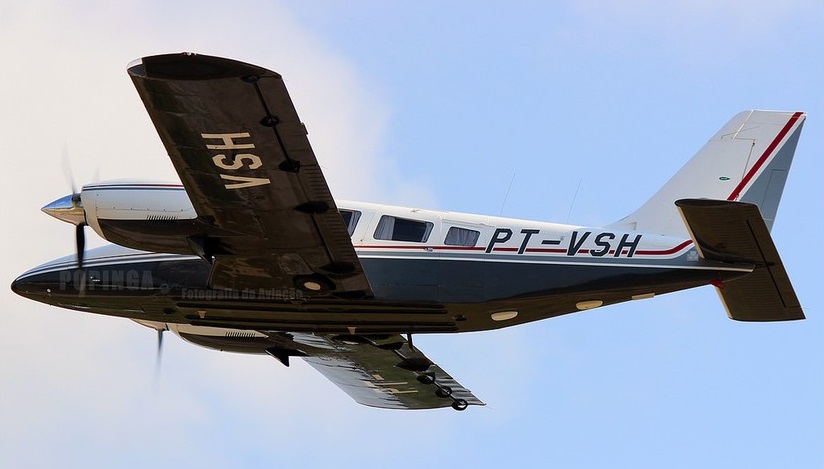
PT-VSH – Neiva EMB-810D Seneca III
A total of 4,464 Seneca were delivered by 1 January 1991.
New Piper continued production of the Seneca V.
Certification was under FAA A7SO for:
PA-34-200 34-7250001 to 34-7250189 when kit number 760607 is installed. 34-7250190 to 34-7250214 when kit number 760611 is installed. 34-7250215 to 34-7350353 34-7450001 to 34-7450220
PA-34-200T Seneca II All, except with kit number 764-048V or 765-110 installed.
PA-34-220T Seneca III All, except with kit number 764-099V or 766-203 installed
PA-34-220T Seneca V 3440991 and up, except with kit number 766-632 installed or Avidyne Entegra System installed
PA-34-200 Engines: Two 200hp Lycoming IO-360 Wingspan: 38’11” Length: 28’6″ Useful load: 1600 lb Max speed: 198 mph Cruise:183 mph Range: 940-1130 mi Ceiling: 20,000′ Seats: 6-7 No. built: 933
PA34-200T Seneca II Engines: 2 x Continental TSIO-360-E, 200 hp at sea level, 215 hp at 12,000 ft Seats: 6/7 Wing loading: 22 lb/sq.ft Pwr loading: 11.4 lb/hp Gross wt: 4570 lb Empty wt: 2788 lb Equipped useful load: 1654 lb Payload max fuel: 916 lb Range max fuel/ 75% pwr: 864 nm/4.5 hr Range max fuel / 55% pwr: 998 nm/ 6.1 hr Service ceiling: 25,000 ft Cruise 75%: 190 kts @ 20,000 ft 55% cruise: 165 kt Vmc: 70 kt Stall: 61-63 kt 1.3 Vso: 79 kt ROC: 1340 fpm SE ROC: 225 fpm @ 90 kt SE Service ceiling: 13,400 ft Min field length: 1568 ft Fuel cap: 588/738 lb Undercarriage: retractable T/O dist (50 ft): 1240 ft Ldg dist (50 ft): 1860 ft Number built: 2588
PA34-220T Seneca III Engine: 2 x Continental, TSIO-360KB & LTSIO-360KB, 220 hp @ 2800 rpm (5 min), 200 hp @ 2600 rpm continuous TBO: 1800 hr Prop: Hartzell 2 blade, constant speed 76 in Seats: 6/7 Length: 28.5 ft Height: 9.9 ft Wingspan: 11.86 m / 39 ft 11 in Wing area: 209 sq.ft Wing aspect ratio: 7.4 Max ramp wt: 4773 lb Max take off wt: 4750 lb / 2155 kg Standard empty wt: 2875 lb Max useful load: 1898 lb Max landing wt: 4513 lb Wing loading: 22 lbs/sq.ft Power loading: 11.4 lbs/hp Max useable fuel: 738 lb Climb rate: 1400 fpm @ 89 kt Climb gradient: 903 ft/nm Rate of climb @ 8000 ft: 1275 fpm Certificated ceiling; 25,000 ft / 7620 m SE rate of climb: 240 fpm @ 92 kt SE climb gradient: 157 ft/nm SE ceiling: 12,300 ft Max speed: 196 kt Cruise @ 65% power @ 8,000ft: 164 kt Cruise @ 65% pwr @ 18,000 ft: 180 kt Fuel flow @ 65% power @ 18,000ft: 121 pph Endurance @ 65% power @ 18,000ft: 5.8 hr Stalling speed clean: 65 kt Stall speed gear/flaps down: 62 kt Turbulent air penetration speed: 140 kt Retractable undercarriage Cabin length: 125 in Cabin height: 49 in Cabin volume: 195.3 cu.ft Fuel capacity: Std: 371 lt, Optional: 484 lt TO dist: 920 ft Landing dist: 1218 ft
Piper PA34 – 220T Seneca IV Engines: 2 x Teledyne Continental TSIO / LTSIO 360 KB, 232 hp Length: 28.576 ft / 8.71 m Height: 9.908 ft / 3.02 m Wingspan: 38.911 ft / 11.86 m Wing area: 208.714 sq.ft / 19.39 sq.m Max take off weight: 4749.6 lb / 2154.0 kg Weight empty: 2853.3 lb / 1294.0 kg Max. payload weight: 1920.6 lb / 871.0 kg Max. speed: 196 kt / 363 km/h Landing speed: 64 kt / 119 km/h Cruising speed: 193 kt / 357 km/h Take off distance: 1211 ft / 369 m Landing distance: 1978 ft / 603 m Service ceiling: 25000 ft / 7620 m Wing loading: 22.76 lb/sq.ft / 111.0 kg/sq.m Range: 990 nm / 1833 km Crew: 2+4
2007 Piper PA34-220T Seneca V Engines: Continental TSIO-360-RB, 220 hp TBO: 1800 hr Fuel type: 100/100LL Propeller: Hartzell CS/2-blade Landing gear: Tri./Retr. Max ramp weight: 4773 lb Gross weight: 4750 lb Landing weight: 4513 lb Empty weight, std: 3393 lb Useful load, std: 1380 lb Usable fuel, std: 122 USgal Payload, full std. fuel: 648 lb Wingspan: 38 ft. 10 in Overall length: 28 ft. 7 in Height: 9 ft. 11 in Wing area: 208.7 sq. ft Wing loading: 22.8 lbs./sq. ft Power loading: 10.8 lbs./hp Wheel size: 6.00 x 6 Seating capacity: 6 Cabin doors: 2/3 Cabin width: 49 in Cabin height: 42 in Cruise speed 75% power: 197 kt Cruise speed 65% power: 190 kt Fuel consumption 75% power: 26.4 USgph Fuel consumption 65% power: 22.8 USgph Cruising range: 828+ nm Vso: 64 kt Best rate of climb (SL): 1462 fpm Service ceiling: 25,000 ft Service ceiling, SE: 16,500 ft Takeoff ground roll: 1143 ft Takeoff over 50 ft. obstacle: 1707 ft Landing ground roll: 1400 ft Landing over 50 ft. obstacle: 2180 ft
PZL Mielec M 20 Mewa Engines: 2 x Teledyne Continental TSIO 360 KB, 217 hp Length: 28.609 ft / 8.72 m Height: 9.908 ft / 3.02 m Wingspan: 38.911 ft / 11.86 m Wing area: 206.454 sq.ft / 19.18 sq.m Max take off weight: 4564.4 lb / 2070.0 kg Weight empty: 2910.6 lb / 1320.0 kg Max. speed: 194 kts / 360 km/h Landing speed: 60 kts / 112 km/h Cruising speed: 168 kts / 311 km/h Initial climb rate: 1496.06 ft/min / 7.60 m/s Service ceiling: 25000 ft / 7620 m Wing loading: 22.14 lb/sq.ft / 108.0 kg/sq.m Maximum range: 990 nm / 1833 km Range: 670 nm / 1240 km Crew: 1+6
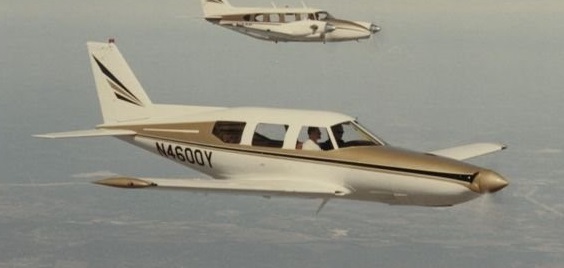
In 1967 a single Comanche, N4600Y, was modified by Swearingen with a pressurised cabin.
The prototype, powered by a 260-hp Lycoming TIO-540 engine and equipped with Twin Comanche landing gear, tail and wings and a new fuselage, was first flown on 11 March 1967.
The Comanche crashed on takeoff from Lock Haven 23 March 1967 when the pilot had problems with the electric nosewheel. The project was then cancelled and removed from the Register in 1969.
The Piper PA-32-3M was basically a PA-32 Cherokee based prototype modified as a Trimotor aircraft with two 115-hp Lycoming O-235 engines fitted to the wings, for development of the PA-34 Seneca at Vero Beach FL. in the early ’70s. This prototype significantly helped many other development projects at Piper.
It was an early attempt to convert the PA-32-260 Cherokee 6 into a simple, low-cost trimotor, retaining the fixed gear and using fixed-pitch props. This was actually tested by adding two 115 hp engines to the wings and throttling the Cherokee 6’s 260 hp engine back to simulate a third O-235 for a total of 345 hp.
Performance on all three engines was fine, but engine out performance was not. Switching the 115 hp engines for 150 hp units solved that problem, but speed was now so high on 450 hp that controllable-pitch props were needed, defeating the original purpose. That model eventually became the Seneca, but with two larger engines, variable-pitch props and retractable gear.
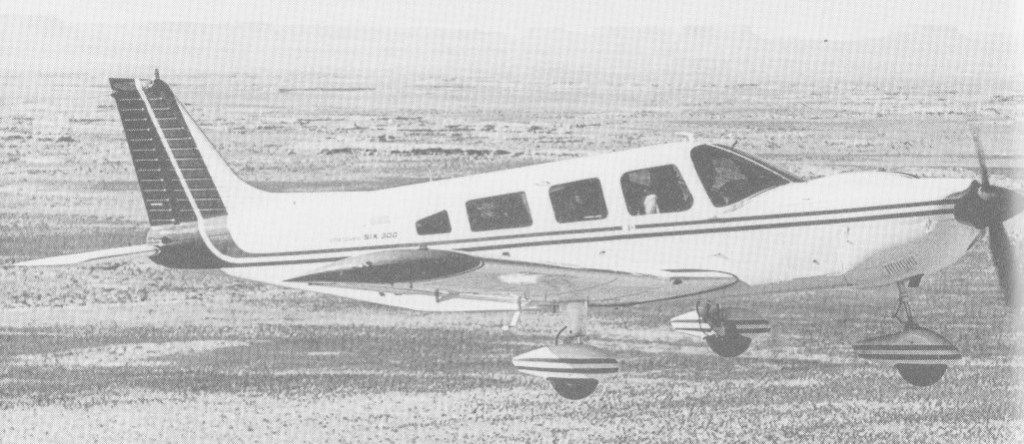
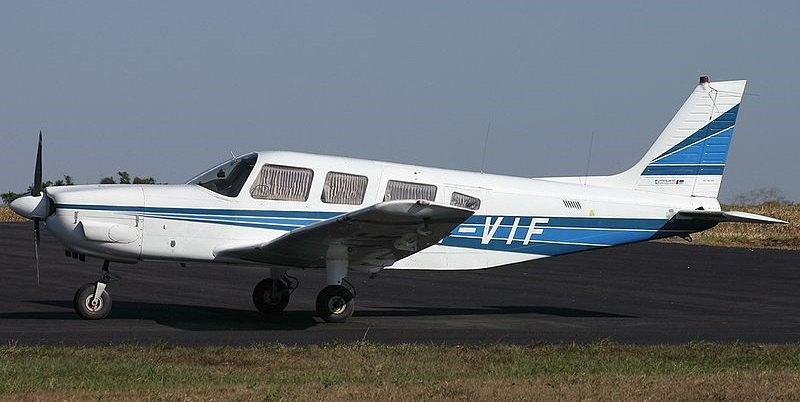
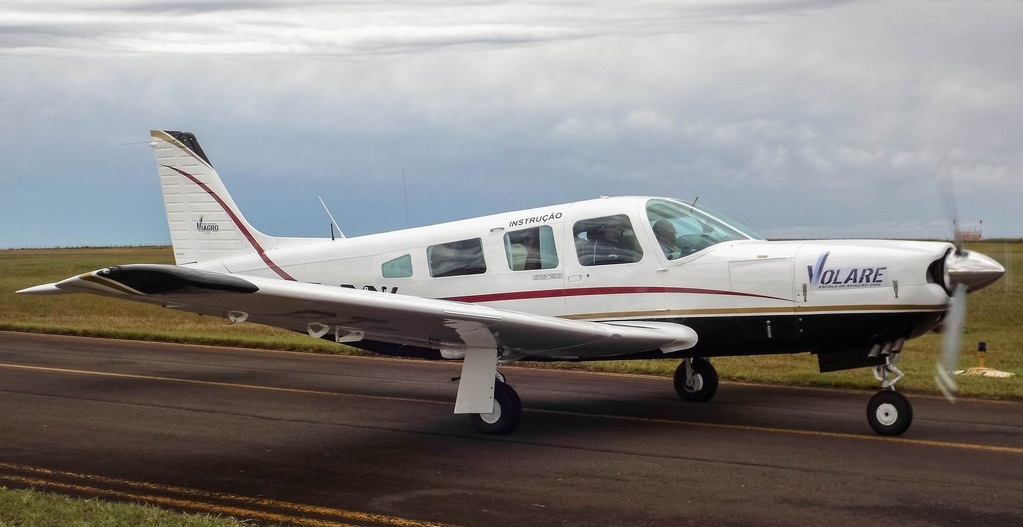
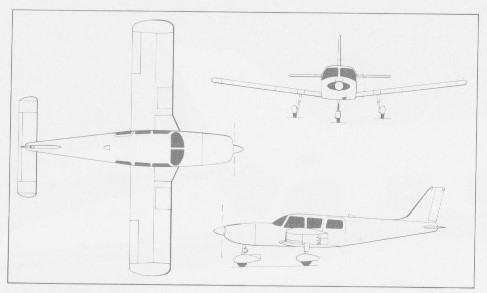
On 6 December 1963 Piper flew the prototype of a six-seat version of the PA-28 Cherokee, retaining the same general configuration but differing primarily by having a slight increase in wing span, the fuselage lengthened by 1.35m, and the installation of the 194kW Avco Lycoming O-540-E4B5 engine. These were the wings, rear fuselage and tail of the Cherokee 235. Designated Piper PA-32-260-6 Cherokee Six, it was available initially in Standard, Custom, Executive and Sportsman versions with differing standards of installed equipment. By 1966 the company designation had changed to PA-32-260 and the Cherokee Six was then available as an optional six/seven-seat aircraft and, as the PA-32-300, with an optional 224kW IO-540-K engine.
Cherokee Six 300
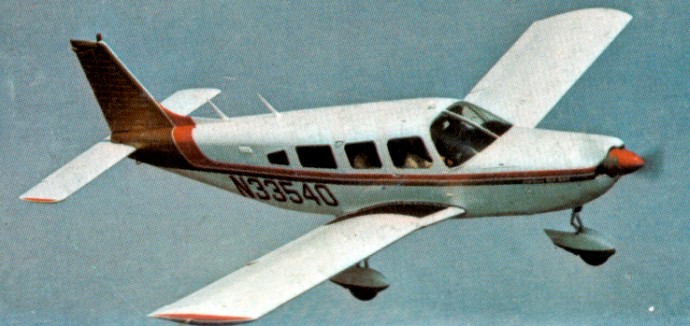
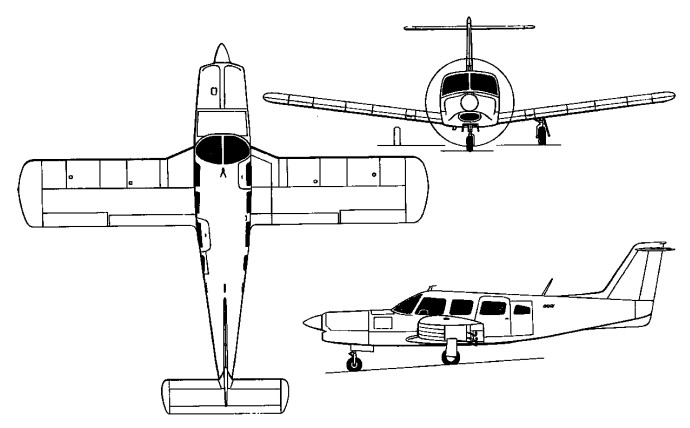
In 1971 Piper restyled the name to Cherokee SIX, but apart from annual product improvement, there were no changes until 1975 when a new version designated PA-32R-300 Cherokee Lance entered production to complement the Cherokee SIX, differing by introduction of a new fuselage structure and retractable tricycle landing gear. The Lance carries 66 pounds more fuel than the similarly powered but fixed gear Cherokee Six, yet it has a 48 pound higher max fuel useful load, and it can produce nearly nine percent more nmpg than the Six at 75 percent power in spite of its 200 pound ¬higher gross weight.
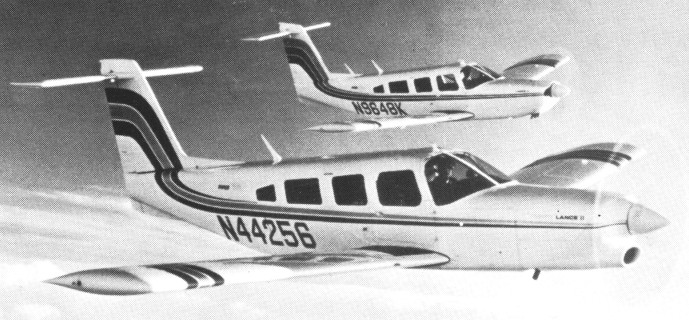
The 1978 version of the Lance had the conventional tail unit replaced by a T-tail, the designation then changing to PA-32RT-300 Lance II and, at the same time, a model with 224kW TIO-540-S1AD turbocharged engines became available under the designation PA-32RT-300T Turbo Lance II.
Production of PA-32-260 Cherokee SIX ended in late 1978, the remaining version then being redesignated PA-32-300 SIX 300, but in the following year this also disappeared, together with the Lance II and Turbo Lance II. These aircraft were superseded by the six/seven-seat PA-32-301 Saratoga (the basic member of the new related family) in 1980 which had an increased-span tapered wing, reversion to a conventional tail unit, fixed tricycle landing gear, and a 224kW IO-540-K1G5D engine driving a constant-speed propeller.
Turbo Lance II & Lance II
Made available simultaneously was the generally similar PA-32-301T Turbo Saratoga, which had a turbocharged version of the same engine, and the corresponding PA-32R-301 Saratoga SP and PA-32R-301T Turbo Saratoga SP which differed by having retractable tricycle landing gear. Only very low volume production continued into the early 1990s.
Embraer EMB-720 Minuano
The Embraer EMB-720 “Minuano” is the Piper PA-32 Cherokee Six produced in Brazil by Embraer and later by its subsidiary Neiva, under license from Piper Aircraft. Equipped with Lycoming engine with direct injection of fuel and 300 HP of power, it develops 270 km / h. Its electronic communication and radionavigation system was considered modern for the time. It can carry up to six people (1 pilot + 5 passengers) with ample luggage space.
Embraer EMB-720D Minuano
293 Minuano aircraft were marketed between 1975 and 1996. Designed to operate in regions with short and unpaved runways, it was widely used to link cities to farms and remote regions, such as garimpo areas.
The Embraer EMB-721 “Sertanejo” is a PA-32R, produced in Brazil by Embraer and later by its subsidiary Neiva, under license from Piper Aircraft.
PT-ROK – Embraer EMB-721D Sertanejo
Chincul SACAIFI manufactured aircraft under license from Piper Aircraft Corporation. The company was a wholly owned subsidiary of “La Macarena S.A.”, Piper’s Argentine agent. Production included 26 Piper PA-32R.
Produced from 1975 to 2000, 208 Sertanejo were built by Embraer in Brasil.
Certification is under FAA A3SO for models: PA-32-260 32-1111 to 32-7200045 32-740001 to 32-7600024 32-770001 to 32-7800008
PA-32-300 All
PA-32R-300 32R-7780001 to 32R-7880066
PA-32R-301 Up to 3213041
PA-32-301T Up to 32-8424002
PA-32R-301T Up to 3229003
PA-32S-300 32S-40566 to 32S-7240137
Specifications:
PA32-260 Engine: 1 x Lycoming O-540-E4B5, 260 hp Seats: 6/7 Wing loading: 19.5 lb/sq.ft Pwr loading: 13 lb/hp Gross wt: 3400 lb Empty wt: 1767 lb Equipped useful load: 1556 lb Payload max fuel: 1054 lb Range max fuel/75% pwr: 712nm/5.3hr Range max fuel / 55% pwr: 834 nm/ 7.3 hr Service ceiling: 12,800 ft 75% cruise: 133 kt 55% cruise: 115 kt Stall: 47-54 kt 1.3 Vso: 61 kt ROC: 775 fpm Min field length: 1800 ft Fuel cap: 502 lb
PA 32 Cherokee Six D Engine: Lycoming O 540 E, 260 hp Length: 27 ft 8.75 in Wingspan: 32 ft 9.5 in Speed: 166 mph Ceiling: 14,500 ft Range: 550 mls Seats: 6
PA32-300 Engine: 1 x Lycoming O-540-K1G5, 300 hp Seats: 6/7 Wing loading: 19.5 lb/sq.ft Pwr loading: 11.3 lb/hp Gross wt: 3400 lb Empty wt: 1824 lb Equipped useful load: 1509 lb Baggage cap: 28 cu.ft Payload max fuel: 1007 lb Range max fuel/75% pwr: 658nm/4.5hr Range max fuel / 55% pwr: 844 nm/ 6.3 hr Service ceiling: 16,250 ft 75% cruise: 146 kt 55% cruise: 135 kt Stall: 47-54 kt 1.3 Vso: 61 kt ROC: 1050 fpm Min field length: 1350 ft Fuel cap: 502 lb
1977 Piper Cherokee Six 300 Engine: Lycoming IO-540K, 300 hp @2700 rpm TBO: 2000 hr Fuel type: 100/100LL Propeller: CS two-blade Landing gear: Tri/Fixed Max ramp weight: 3400 lb Gross weight: 3400 lb Landing weight: 3400 lb Empty weight, std: 1822 lb Useful load, std: 1578 lb Payload, full std. fuel: 1080 lb Usable fuel: 84 USG Oil capacity: 12 qt Wingspan: 32 ft. 9 in Overall length: 27 ft. 9 in Height: 8 ft. 3 in Wing area: 174.5 sq. ft Wing loading: 19.5 lbs./sq. ft Power loading: 11.3 lbs./hp Wheel base: 6 ft. 10 in Wheel track: 10 ft. 7 in Wheel size: 6.00 x 6 in Seating capacity: 6-7 Cabin doors: 2-3 Cabin width: 49 in Cabin height: 49 in Baggage capacity (nose): 100 lb Baggage capacity (rear): 100 lb Cruise speed 75% power @ 8,000 ft.: 146 kt Cruise speed 65% power @ 11,300 ft.: 142 kt Cruise speed 55% power @ 14,000 ft.: 134 kt Fuel consumption 75% power: 16.0 USGph Fuel consumption 65% power: 13.8 USGph Fuel consumption 55% power: 11.9 USGph Stall speed (flaps up): 61 kt Stall speed (flaps down): 55 kt Best rate of climb: 1225 fpm Best rate of climb (8,000 ft): 680 fpm Service ceiling: 16,250 ft Takeoff ground roll: 1050 ft Takeoff over 50-ft. obstacle: 1500 ft Landing ground roll: 630 ft Landing over 50-ft. obstacle: 1000 ft
Cherokee Six 300 Engine: Lycoming IO-540-K, 300 hp Wingspan: 32 ft 9.5 in / 9.99 m Length: 27 ft 8.25 in / 8.45 m Empty weight: 1818 lb / 824 kg MTOW: 3400 lb / 1542 kg Max cruise 75%: 145 kt / 168 mph / 270 kph ROC SL: 1050 fpm / 320 m/min Service ceiling: 16,250 ft / 4950 m Cruise range 65%: 738 nm / 850 mi / 1368 km Cruise range 55%: 894 nm / 1030 mi / 1658 km Seats: 6 Cabin length: 9 ft 11 in / 3.02 m Cabin width: 4 ft 1 in / 1.24 m Cabin max height: 4 ft 0.5 in / 1.23 m Cabin volume: 110 cu.ft / 3.11 cu.m Forward baggage compartment: 8 cu.ft / 0.23 cu.m Rear baggage compartment: 22 cu.ft / 0.62 cu.m / 100 lb / 45 kg
PA-32-300 B Cherokee Six Engine: Lycoming IO-540-K1A5, 300 hp Prop diameter: 80 in Wingspan: 32.8 ft Wing area: 174.5 sq.ft Wing loading: 19.5 lb/sq.ft Length: 27.7 ft Height: 7.9 ft Power loading: 11.3 lb/hp Empty weight: 1777 lb Useful load: 1623 lb Empty weight seats out: 1707 lb Useful load seats out: 1693 lb Fuel capacity inboard: 50 USG Std Aux fuel: 34 USG Fuel: 100/130 Octane Max baggage fwd/aft: 100/100 lb Baggage space: fwd/aft: 8/20 cu.ft Door size: 16in x 22in TO run: 700 ft TO 50 ft: 1140 ft ROC speed: 105 mph ROC: 1050 fpm Service ceiling: 16,250 ft Absolute ceiling: 18,000 ft Top speed: 174 mph Cruise 75% 7000ft: 168 mph Cruise range 55% std fuel: 630 mi Cruise range 55% Aux fuel: 1060 mi Cruise range 75% std fuel: 525 mi Cruise range 75% aux fuel: 880 mi Stall 40deg flap: 63 mph Stall flap up: 70 mph Landing roll: 630 ft Landing dist 50 ft: 1000 ft
Piper 1976 PA-32-300 Lance Engine: Lycoming IO-540-K1A5D, 300 hp TBO: 2000 hr Propeller: Const. spd. Landing gear: Tri/Retr. Gross weight: 3600 lb Empty weight, std: 1973 lb Useful load, std: 1627 lb Fuel: 94 USG Wingspan: 32 ft. 8 in Overall length: 27 ft. 7 in Height: 7 ft. 9 in Wing area: 174.5 sq. ft Seating capacity: 6-7 Cabin width: 49 in Cabin height: 48.5 in Baggage capacity: 200 lb Cruise speed 75% power: 158 kt Cruise speed 65% power: 148 kt Max range (w/ res) 75% power: 700 nm Max range (w/ res) 65% power: 800 nm Fuel consumption 75% power: 16.5 USgph Fuel consumption 65% power: 14.0 USgph Stall speed (gear, flaps down): 61 kt Best rate of climb: 1000 fpm Service ceilin): 14,600 ft Takeoff ground roll: 970 ft Landing ground roll: 870 ft
Cherokee Lance Engine: 1 x Lycoming IO-540-K1G5D, 300 hp TBO: 2,000 hr Prop: constant speed, two blade, 80 in dia Seats: 6/7 Length: 27 ft. 9 in Height: 8 ft. 2 in Wingspan: 32 ft. 10 in Wing area: 174 ft. 6 in Wing loading: 20.6 lb/sq.ft Pwr loading: 12 lb/hp Gross wt: 3600 lb Empty wt: 1910 lb Equipped useful load: 1623 lb Payload max fuel: 1059 lb Range max fuel/75% pwr: 828 nm/5.2 hr Range max fuel / 55% pwr: 994 nm/ 7.2 hr Range at max cruise (45 min res): 780 nm Range at economy cruise (45 min res): 880 nm Service ceiling: 14,600 ft Maximum speed: 165 kt Max cruise (best economy): 156 kt Economy cruise (55 % power @ 10,000 ft.): 134 kt Duration max cruise, no reserve: 5.75 hrs Stall speed (clean): 66 kt Stall speed flaps, gear down: 61 kt 1.3 Vso: 68 kt ROC: 1000 fpm Min field length: 1708 ft Fuel cap: 94 USG/564 lb Undercarriage: Retractable nose
Lance II Engine: Lycoming IO 540, 300 hp Prop: 80 inch, two blade, constant speed TBO: 2,000 hr Length: 27 ft. 8 in Height: 9 ft. 6 in Wingspan: 32 ft. 10 in Wing area: 174.5 sq. ft Wing loading: 20.6 lb/sq.ft Power loading: 12 lb/hp Seats: 6 Empty wt: 2,228 lb Useful load: 1,372 lb Payload with full fuel: 808 lb Gross weight: 3,600 lb Usable fuel cap: 94 USG/564 lb Max rate of climb: 1,000 fpm Service ceiling: 14,600 ft Certificated ceiling: 16,200 ft Max speed: 165 kt Max cruise, 75% power (2,400 rpm) at 7,500 ft: 158 kt Econ cruise, 55% power at 13,500 ft: 138 kt Duration at max cruise: 5.2 hr Duration at econ cruise: 7.9 hr Stalling speed, clean: 77 kt Stalling speed, full flaps: 70 kt
Turbo Lance Engine Lycoming TIO 540 S1AD, 300 hp TBO 1,800 hr Prop Hartzell, constant speed, 80 in Length 29 ft Height 9 ft. 6 in Wingspan: 32 ft 9 in Wing area 175.4 sq.ft Wing loading 20.6 lb/sq.ft Power loading 12 lb/hp Seats 6 Empty weight 2,382 lb Useful load 1,217 lb Payload with full fuel 653 lb Gross weight 3,600 lb Usable fuel capacity 94 USG/564 lb Maximum landing weight 3,600 lb Maximum rate of climb 1,000 fpm Service ceiling 20,000 ft Certificated ceiling 20,000 ft Maximum speed 193 kt Max cruise, 75% power (2,400 rpm) at 20,000 ft 176 kt Econ cruise, 55 % power 142 kt Duration at max cruise 3.45 hr Duration at econ cruise 4.3 hr Stalling speed, clean 57 kt Stalling speed, full flaps 52 kt
Turbo Lance II Engine: turbocharged, 300 hp Seats: 6/7 Cruise: 158 kts Range: 864 nm
PA32-301 Saratoga First built: 1980 Engine: 1 x Lycoming IO-540-K1G5D, 300 hp TBO: 2000 hrs Prop: Hartzell 2 blade, constant speed 80 in Seats: 6/7 Length: 28.3 ft Height: 9 ft Wingspan: 36 ft Wing area: 178 sq.ft Wing aspect ratio: 7.3 Max ramp wt: 3615 lb Max take off wt: 3600 lb Standard empty wt: 1940 lb Max useful load: 1675 lb Max landing wt: 3600 lb Wing loading: 20.2 lbs/sq.ft Power loading: 12 lbs/hp Max useable fuel: 612 lb Climb rate: 990 fpm @ 90 kt Climb gradient: 660 ft/nm Rate of climb @ 8000 ft: 535 fpm Service ceiling; 14,100 ft Max speed: 152 kt Cruise @ 65% power @ 8,000ft: 140 kt Fuel flow @ 65% power @ 8,000ft: 96 pph Endurance @ 65% power @ 8,000ft: 6.2 hr Stalling speed clean: 66 kt Stall speed flaps down: 60 kt Turbulent air penetration speed: 132 kt Fixed undercarriage
PA-32-301T Turbo Saratoga Engine: 1 x Avco Lycoming TIO-540-S1AD, 224kW / 300 hp TBO: 1800 hr Prop: Hartzell 2 blade, constant speed 80 in Length: 29 ft Height: 9 ft Wingspan: 36 ft Wing aspect ratio: 7.3 Wing area: 16.56 sq.m / 178.25 sq ft Max ramp wt: 3617 lb Max take off wt: 3600 lb Standard empty wt: 2003 lb Max useful load: 1614 lb Max landing wt: 3600 lb Wing loading: 20.2 lbs/sq.ft Power loading: 12 lbs/hp Max useable fuel: 612 lb Max. speed: 330 km/h / 205 mph / 182 kt Climb rate: 1075 fpm @ 90 kts Climb gradient: 717 ft/nm Rate of climb @ 8000 ft: 950 fpm Cruise @ 65% power @ 8,000ft: 140 kt Cruise @ 65% pwr @ 18,000 ft: 152 kt Fuel flow @ 65% power @ 18,000ft: 103 pph Endurance @ 65% power @ 18,000ft: 5.7 hr Stalling speed clean: 67 kt Stall speed flaps down: 60 kt Turbulent air penetration speed: 132 kt Certificated ceiling: 6095 m / 20,000 ft Range: 1593 km / 990 miles Seats: 6/7 Retractable undercarriage.
PA32 Saratoga SP Engine: 1 x 300 hp Lycoming Seats: 6 Empty Wt: 1999 lbs Gross wt: 3600 lb Useful load: 1601 lb Max Cruise: 190 mph Max range: 996 sm
1998 Piper PA-32R-301 Saratoga HP Price: $378,900 Engine: Lycoming IO-540-K1G5, 300 hp @2500 rpm TBO: 2000 hr Fuel type: 100/100LL Propeller: Hartzell 2 blade, constant speed 80 in Landing gear: Tri/Retr Max ramp weight: 3615 lb Gross weight: 3600 lb Max landing weight: 3600 lb Empty weight: 2407 lb Useful load, std: 1208 lb Payload, full std. fuel: 596 lb Usable fuel: 102 USG / 612 lb Oil capacity: 12 qt Wingspan: 36 ft. 2 in Overall length: 27 ft. 10 in Height: 8 ft. 6 in Wing area: 178.3 sq. ft Wing aspect ratio: 7.3 Wing loading: 20.2 lbs./sq. ft Power loading: 12.0 lbs./hp Wheel base: 7 ft. 11 in Wheel track: 11 ft. 1 in Wheel size: 6.00 x 6 Seating capacity: 5/6 Cabin doors: 2 Cabin width: 49 in Cabin height: 42 in Baggage capacity: 200 lb /24.3 cu.ft Cruise speed 75% power @ 6,000 ft.: 163 kt Cruise speed 65% power @ 9,000 ft.: 158 kt Cruise @ 65% power @ 8,000ft: 149 kts Cruise speed 55% power @ 11,000 ft.: 154 kt Max range (w/ res) 75% power: 740 nm Max range (w/ res) 65% power: 800 nm Max range (w/ res) 55% power: 860 nm Fuel consumption 75% power: 18.5 USgph Fuel consumption 65% power: 16.5 USgph Fuel flow @ 65% power @ 8,000ft: 96 pph Fuel consumption 55% power: 14.5 USgph Endurance @ 65% power @ 8,000ft: 6.2 hr Climb rate: 1010 fpm @ 91 kt Climb gradient: 666 ft/nm Rate of climb @ 8000 ft: 540 fpm Service ceiling: 15,588 ft Stalling speed clean: 65 kt Stall speed gear/flaps down: 59 kt Turbulent air penetration speed: 132 kt Takeoff ground roll: 1200 ft Takeoff over 50-ft. obstacle: 1800 ft Landing ground roll: 640 ft Landing over 50-ft. obstacle: 1520 ft
1983 Piper PA-32-301T Saratoga SP Engine: Lycoming TIO-540-S1AD, 300 hp TBO: 1800 hr Propeller: Hartzell 2 blade, constant speed 80 in Landing gear: Tri/Retr. Max ramp wt: 3617 lb Max take off wt: 3600 lb Standard empty wt: 2066 lb Max useful load: 1551 lb Max landing wt: 3600 lb Wing loading: 20.2 lbs/sq.ft Power loading: 12 lbs/hp Fuel: 102 USG / 612 lb Wingspan: 36 ft. 2 in Overall length: 28 ft. 4 in Height: 8 ft. 6 in Wing area: 178 sq. ft Wing aspect ratio: 7.3 Seating capacity: 6-7 Cabin width: 49 in Cabin height: 49 in Baggage capacity: 200 lb Max speed: 191 kts Cruise speed 75% power: 172 kt Cruise @ 65% power @ 8,000ft: 149 kt Cruise @ 65% pwr @ 18,000 ft: 164 kt Max range (w/ res) 75% power: 845 nm Max range (w/ res) 65% power: 920 nm Fuel consumption 75% power: 16.5 USgph Fuel consumption 65% power: 14.0 USgph Fuel flow @ 65% power @ 18,000ft: 103 pph Endurance @ 65% power @ 18,000ft: 5.8 hr Climb rate: 1120 fpm @ 92 kt Climb gradient: 730 ft/nm Rate of climb @ 8000 ft: 1000 fpm Stalling speed clean: 63 kt Stall speed gear/flaps down: 60 kt Turbulent air penetration speed: 132 kt Service ceiling: 20,000 ft Takeoff ground roll: 1110 ft Landing ground roll: 732 ft
Saratoga II HP Engine: Lycoming IO-540-K1G5 Useful load: 546 kg Endurance: 6.3 hr Cruise: 166 kt
2007 Piper PA32-301T Saratoga II TC Engine: Lycoming TIO-540-AH1A, 300 hp @SL to 18,000 ft TBO: 2000 hr Fuel type: 100/100LL Propeller: Hartzell CS/3-blade Landing gear type: Tri./Retr. Max ramp weight: 3615 lb Gross weight: 3600 lb Empty weight, std: 2475 lb Useful load, std: 1140 lb Payload, full std. fuel: 513 lb Useable fuel, std: 102 USG Wingspan: 36.2 ft Overall length: 27.9 ft Height: 8.5 ft Wing area: 178.3 sq. ft Wing loading: 20.2 lbs./sq. ft Power loading: 12 lbs./hp Wheel size: 6.00 x 6 Seating capacity: 6/7 Cabin doors: 2/3 Cabin width: 48.75 in Cabin height: 42 in Baggage capacity: 200 lb Cruise speed (kts.): 75% power: 185 Fuel consumption 75% power: 18.5 USgph Fuel consumption 65% power: 16.5 USgph Range 55% power: 950 nm Vso: 63 kt Best rate of climb, SL: 1120 fpm Service ceiling: 20,000 ft Takeoff ground roll: 1110 ft Takeoff over 50 ft obstacle: 1810 ft Landing ground roll: 880 ft Landing over 50 ft obstacle: 1700 ft