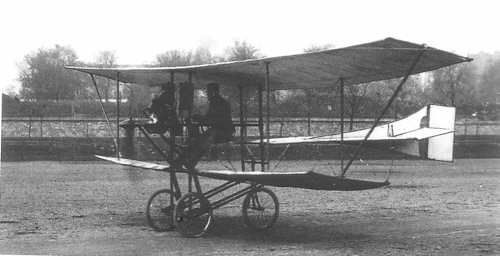
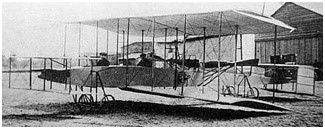
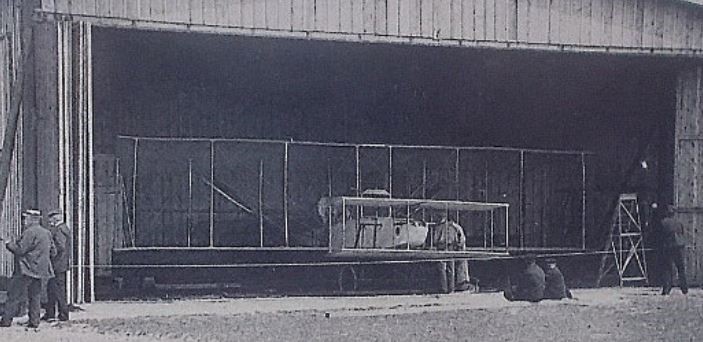
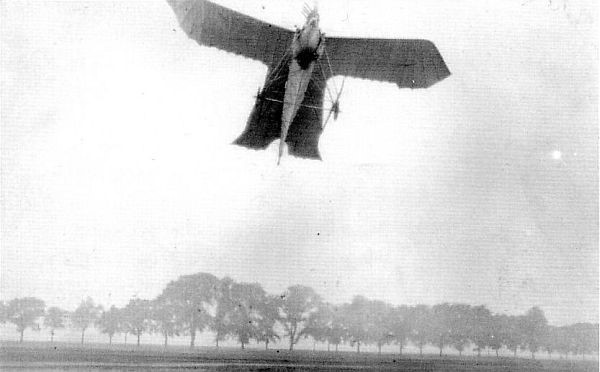
Built by L.Chauviere, the 1907 tractor biplane of Alfred de Pischoff, powered by a 25 hp Anzani 3-cylinder engine. Although tried, the machine did not fly. A French sounding name, de Pischoff was from Austria (Austro-Hungary) where he was known as Alfred Ritter von Pischoff.
By 1923 Victor Pisarenko had become one of the best Soviet flight instructors, but in the fall of that year he also made his debut as an aircraft builder and became the first Soviet amateur builder.
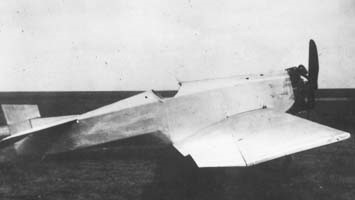
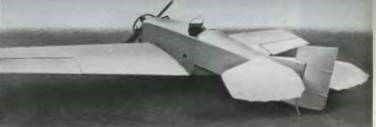
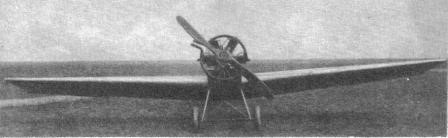
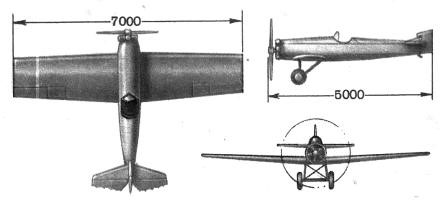
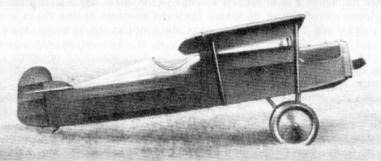
With the help of several students, Pisarenko built a single-seater light aircraft in the workshops of the Kacha Flight School, Sevastopol, which had the privilege of being the first Soviet aircraft with a low cantilever wing. This plane received the name VOP-1, an acronym for Victor Osipovich Pisarenko – 1 (Russian: Писаренко ВОП-1).
The VOP-1 was conceived as a cantilever low-wing monoplane built in wood. The one-piece wing with a trapezoidal shape on the plane used a profile selected by the author himself. With a surface area of 10 square metres, it had a double-beam structure and was completely covered by a thin layer of plywood.
The fuselage was built with a wooden structure and had a plywood covering with angular lines. In its central part, behind the engine, the open cockpit for the pilot was located.
The tail was of the monoplane type with the rudders covered in fabric.
The landing gear was conventional, fixed and had a tail skid.
A 35 hp Anzani engine obtained in the workshops themselves was used as the power plant.
The VOP-1 was built in the school’s workshops in Sevastopol and many of its parts were taken from old discontinued models. On November 27, 1923 Pisarenko flew for the first time. This flight was followed by several others.
During the test flights, carried out by Pisarenko himself, the plane was stable in flight and responded well to the controls. With its 35 hp engine, the plane reached a speed of 120 km/h.
Powerplant: One 35 hp Anzani Wingspan: 7.50 m Wing area: 10.00 m² Length: 5.00m Empty weight: 222 kg Normal takeoff weight: 322 kg Weight of fuel + lubricant: 20 kg Wing loading: 32 kg/sq.m Power load: 9.2 kg/hp Total load capacity: 100 kg Top speed: 120km/h Cruising speed: 100 km/h Practical ceiling: 1200 m Accommodation. 1
After moving to the Serpukhov Higher School of Air Combat, Shooting and Bombing (Strelbom), Pisarenko, with the help of cadets, began construction of his second aircraft. This model was called VOP-T (Víctor Osípovich Pisarenko – Trenirovochni (coach)) (Russian: Писаренко-Т or ВОП-Т).
The Pisarenko-T was conceived as a parasol-braced wing single-seat monoplane. As a distinctive feature of this model we can point out its unconventional wing profile, with flat upper and lower surfaces, a curved leading edge and a flattened tail. In general, a strange wing with a sharp leading edge was obtained.
The wing, with a double spar structure, had parallel wooden supports that fixed it to the sides of the fuselage. The covering was plywood.
The Pisarenko-T was powered by a 150-hp Hispano-Suiza engine driving a two-blade wooden propeller.
The plane was built at the Serpukhov school and was ready in 1925.
Pisarenko prepared the plane for its first flight and when it was ready, he went to the head of the school for permission. The plane had been built with hardly any calculations and its pilot was only authorized to race down the runway. Pisarenko disobeying, took the flight back and headed for Moscow, landing at the Central Aerodrome in Jodinka. Once there, before the authorities could react and ban him, he made a second flight, executing several high school piloting tricks that included inverted flight and several rolls.
Once the second flight was completed, Pisarenko never flew his plane again, nor did he request permission to do so.
The success of his model led to Pisarenko soon receiving an application to build a training aircraft with funds from the VVS leadership. He began to work in this direction, but the appearance of the excellent trainer Polikarpov U-2 soon made him leave the company.
Powerplant: One 150 hp Hispano-Suiza engine Accommodation. 1
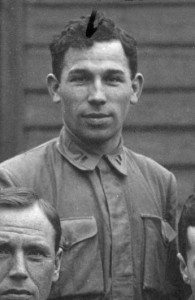
Victor Osipovich Pisarenko (Russian: Виктор Осипович Писаренко) was born in 1897 in Belarus. In 1915, during World War I, he finished technical courses and joined a telegraph battalion. After the October Revolution he voluntarily enrolled in an aviation squadron, beginning as a motorcyclist and later as a mechanic.
In 1920 he received the rank of pilot-observer (corresponding to navigator). He participated in the Civil War, fighting on different fronts. In 1921, after passing new navigator courses, he was assigned to the 13th Aviation Brigade in Kazan. In this unit and under the direction of PJ Mezheraup, he took part in combats on the Northern front against the White Finnish troops that occupied the Karelian Isthmus.
In 1922 he entered the Kacha Aviation School, finishing it a year later with excellent results, so it was decided to keep him there as a flight instructor. In he built the VOP-1 light aircraft in the school workshops, which would become the first Soviet monoplane with a low cantilever wing. On November 27, 1923, this plane rose for the first time and in the following days he would perform another set of flights. In January 1924 the VOP-1 would be transferred to Moscow, where he would end up making several hundred flights.
A short time later Pisarenko would go on to work as an instructor at the Serpujov Higher School of Air Combat, Shooting and Bombing (Strelbom), leading the flight brigade. In this center in 1925 he would build his second self-designed model known as the Pisarenko-T, which was characterized by its original wing profile. After receiving the approval only to run the plane down the runway, Pisarenko disobeyed, remounted the flight and headed for Moscow, landing at the Central Aerodrome. Once there he made a second flight, executing several high school piloting tricks. He planned to build a two-seater training version with financing from the UVVS, but the appearance of the Polikarpov U-2 put a stop to these plans.
Since 1925 by decision of the head of the VVS P.I. Baranov, Pisarenko went to work as a test pilot at the NOA (acronym for Nauchno Opytni Aerodrom or Experimental Scientific Aerodrome), predecessor of the NII VVS. In this period he would participate in tests of the I-4 (ANT-5) fighter in 1927, Heinkel HD-37 (I-7) in 1928, R-5 in 1929 and R-7 (ANT-10) in 1930.
From July 27 to August 9, 1926 with second crew member BV Stierligov, he would make a record Moscow – Kharkov – Rostov-on-Don – Sevastopol – Kiev – Moscow flight, with a total range of 3,000 km.
On July 20, 1928, during the NII VVS spin performance tests of the Heinkel HD-37 fighter, the plane went into a flat spin and Pisarenko found no way out of it. For some time he was unable to leave the aircraft and when he did he was only 300 meters from the ground. The parachute was slow to open and the pilot hit the ground hard, fracturing his leg. As it became known later, in the translated document delivered by the manufacturers, the exit methods were ignored.
On July 21, 1929 Ya. I. Alksnis and VO Pisarenko made a non-stop flight on the Moscow – Sevastopol route in an R-5, covering 1,276 km in 5 hours and 30 minutes.
From September 1930 he began working at the VVS flight inspection as a senior assistant to PJ Mezheraup.
In 1931 Yakov I. Alksnis was appointed Head of the VVS. Coming from the Alksnis ground troops, he decided that he had to learn to fly. The piloting classes were taught by Pisarenko.
He died on September 9, 1931 in a plane crash in an R-5 over the Bryansk region. He and PJ Mezheraup were carrying out an inspection flight in adverse weather conditions. With the fog, visibility decreased and they ended up hitting the tops of some trees. The remains of both crew members were found several days later. The burial took place in the building of the Zhukovski Aeronautical-Military Academy.
Charles de Piquerez was an explorer who asked de Pischoff and Koechlin in December 1908 to build him a large biplane. The design had an engine in the middle of the fuselage, driving two pusher propellers via chains. Elevator(s) were mounted in the front and the end of the fuselage. Crew one pilot and a passenger. The biplane flew in at Issy-les-Moulineaux, France, in April and May 1909 but not very successfully, so it was radically redesigned as a monoplane (also with two pusher propellers), but alas this was not a great success too.
Powerplant: 1 x 40 hp 4-cylinder Dutheil and Chalmers engine.
Presented in October 1912 at the “Süddeutschland Flug” that started in Mannheim, Germany. It was nicknamed “the flying nightdress”. Apart from the long stabilizing areas a more or less conventional Taube-design, powered by a 70 hp Argus.
The E-811 is the first electric engine certified for use in General Aviation by the European Union Aviation Safety Agency (EASA).
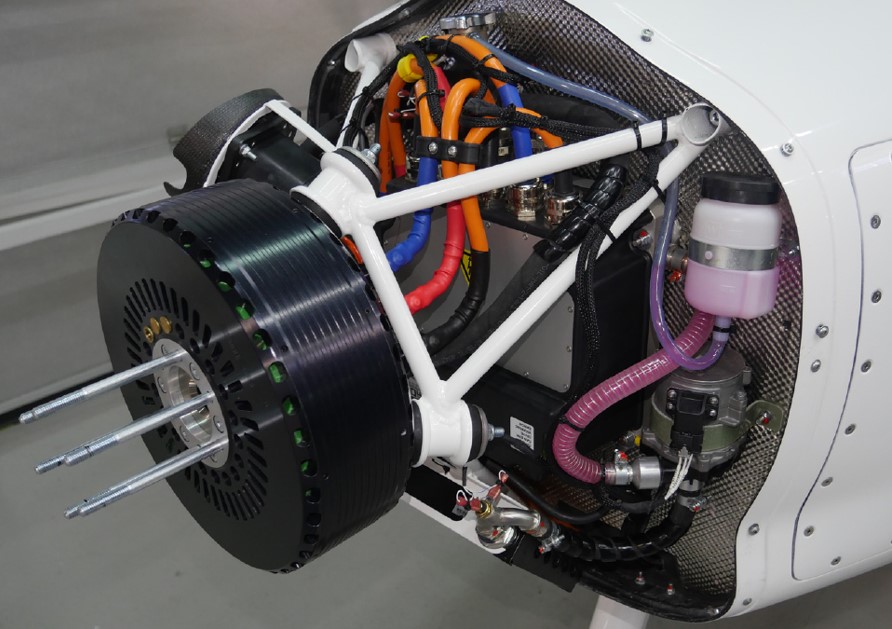
The E-811 engine combines a liquid-cooled electric motor and a liquid-cooled power controller. Offering 57.6 kW (77 hp) of peak power, and 49.2 kW (66 hp) of maximum continuous power, the E-811 is a powerplant for powered sailplanes, UL, LSA and VLA aircraft, where a Type Certified Engine is required.
The propulsion motor is an axial flux synchronous permanent magnet electric motor. Lighter and more compact, these motors are also more powerful than radial flux motors, making them ideal aviation. The propeller is mounted directly on its rotor.
The associated controller converts direct current (DC) from the batteries to alternating current (AC) for the motor. The controller receives torque command via CAN bus and adjusts the motor current input accordingly through the engine’s high voltage AC bus. The motor reacts instantaneously and without hesitation. The controller also requires a 12-volts power supply.
The motor’s rotation direction is not factory selected and can be easily adapted to any given application as part of the installation. The motor can turn clockwise or counter-clockwise as the default direction of rotation.
The E-811 supports a wide range of propellers. Fixed, ground-adjustable and electric variable-pitch propellers can be mounted on the engine, as long as they are compatible with the flange geometry and screw pattern (6xM8 on 75 mm diameter). Hydraulic governors are not supported. The propeller should have a maximum moment of inertia of 3245 kg-cm2 (7.7 lb-ft2) and weigh less than 5.5 kg. Maximum engine speed is 2500 rpm.
The engine is entirely liquid-cooled through a single cooling circuit with a mixture of 50% water and 50% glycol (automotive grade G12+). The coolant inlet is located on the power controller, it then proceeds to the motor via an intermediate coolant hose. The coolant outlet is located on the motor.
The cooling system is part of the installation and can be provided by Pipistrel. It comprises a coolant pump; a radiator; an expansion tank; an overflow bottle; inlet, outlet and intermediate hoses; and the coolant itself. The circuit shall ensure a coolant temperature at either component of less than 60°C.
In order to control the engine power output, an auxiliary control system should be provided. This can be ensured either by a power lever or a flight control computer, while cockpit indication such as an RPM indicator shall be provided as well.
The engine requires high-voltage DC power to be supplied for propulsive force. Depending on the chosen architecture, the engine will accept DC power from the energy source, which may be batteries connected via a battery management system (BMS), or a generator, or a fuel cell, or combinations thereof. A low-voltage (12 VDC) power connection is also needed.
Installation of the additional equipment depends on the aircraft configuration.
The EASA Type Certificate (No. EASA.E.234) follows the CS-22, Subpart H, Amdt. 2 standard, and the SC E-1 special condition for Electrical Engine for powered sailplanes, LSA or VLA.
Pipistrel’s Electric propulsion system is a true Plug & Play solution for electric aircraft. You receive everything you need: the motor, power controller, battery system complete with BMS and a lightweight airborne charger, complete with an advanced color display cockpit instrument, which provides you with full control. The system also supports propeller positioning and automatic retraction for self-launching glider applications.
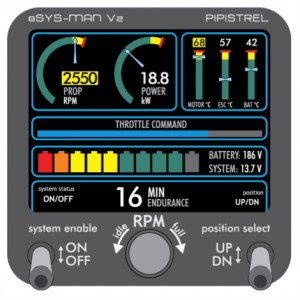
Cockpit instrument is an ESYS-MAN V2 high-resolution 3-inch sunlight readable color display and control interface. Displays all system temperatures, controls RPM/Power with automatic over-temperature protection, charge indicator, charge status overview, battery health overview, visual warnings, system enable/disable and support for propeller positioning and automatic retraction (self-launch gliders).
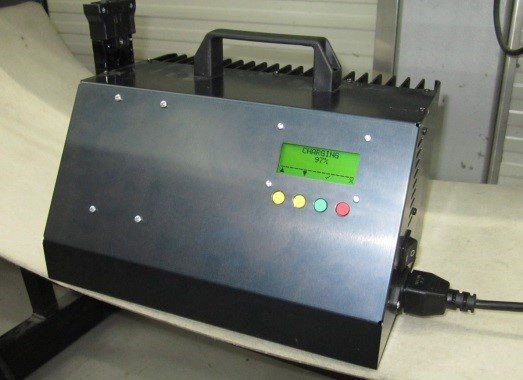
Pipistrel offers several chargers for the Taurus Electro conversion kit, a portable 2 kW world unit, supporting both 110V/60 HZ and 250 V/50 Hz networks. It has a 5 inch display and an intuitive interface, providing information about charge status, battery health overview and system configuration. It supplies 2 kW charge power in a 3 kg package.
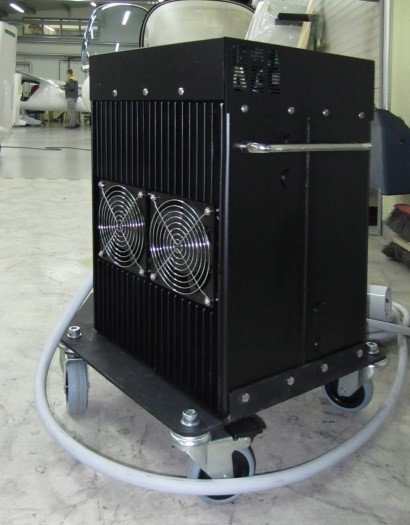
For faster charging we have an 8kW charger weighing just 25 kg.
Pipistrel 2kW Charger
Pipistrel 8kW Charger
The cockpit battery, which supports the avionics, power controller and motor extension/retraction, is charged together with the main power battery. This provides an extra layer of safety and allows gliding even with the main battery depleted. The cockpit battery is also charged in flight by the solar panels attached to the aircraft The propeller is a composite lightweight 2-blade propeller, diameter 165 cm, specially optimized specially to take advantage of the electric motor characteristics.
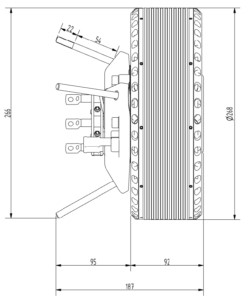
Pipistrel E-811-268MVLC Type: axial flux synchronous permanent magnet Diameter: 268 mm (10.55 in) Width: 91 mm (3.58 in) Dry weight: 22.7 kg (50 lb) Maximum take-off power (MTOP) up to 90 sec: 57.6 kW (77 hp) at 2500 rpm Maximum continuous power (MCP): 49.2 kW (66 hp) at 2350 rpm Outside air temperature range: -20°C, +40°C (-4°F, 104°F) Max motor temperature: 110°C (230°F) Speed limits: 2350 rpm (MCP), 2500 rpm (MTOP) Torque limits: 200 Nm (MCP), 220 Nm (MTOP) Coolant flow: > 5.5 l/min Coolant temperature: < 60°C (140°F) Pressure drop (over the entire system): < 1 bar
Propeller Max propeller moment of inertia: 3245 kg-cm2 (7.7 lb-ft2) Max propeller mass: 5.5 kg (12.1 lb) Max propeller speed: 2500 rpm
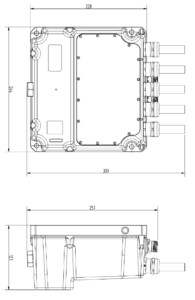
Controller – H300C Dimensions: 245 x 126 x 230 mm (9.65 x 4.96 x 9.05 in) Dry weight: 8.1 kg (17.8 lb) including cables Max controller temperature: 70°C (158°F) Input voltage range: 250 – 400 VDC Max controller current: 311 A Max continuous current: 226 A
Battery capacity 20 Ah: 4.75 kWh Battery capacity 30 Ah: 7.10 kWh Battery capacity 40 Ah: 9.7 kWh Battery Management System (BMS): Integrated, with datalogging & failure prediction. Airborne Charger: Supports 110 VAC and 240 VAC, 2 kW, typical charge time 3 h Battery voltage: 190 V -270 V Voltage per battery pack: nominal 17×3.7 V = 63 V Maximum operating temperature: 70° C – max battery temperature 60° C Minimum operating temperature: 5° C Electric motor power: High efficiency outrunner, synchronous 3-phase PEM 40 kW (1 min), 30 kW cont. Air cooled Max RPM: 2200 RPM System weights: 20 Ah unit = 59 kg 30 Ah unit = 75 kg 40 Ah unit = 91 kg
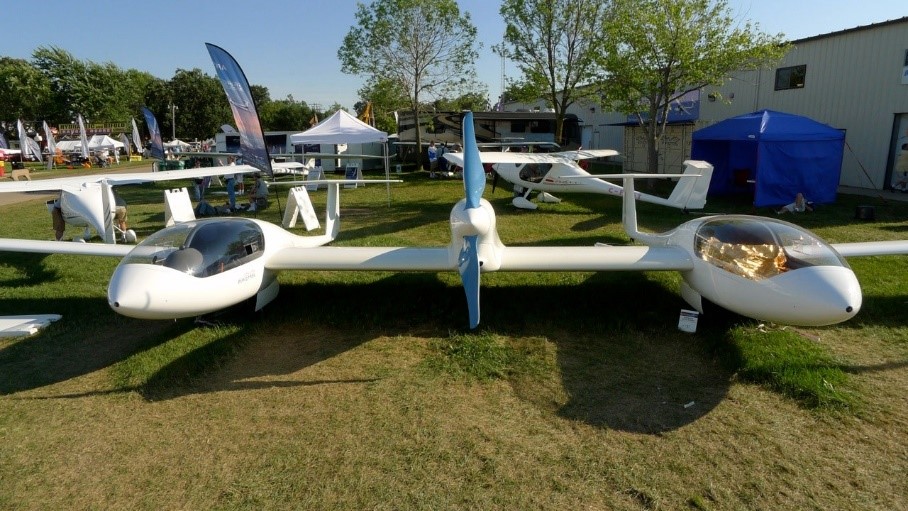
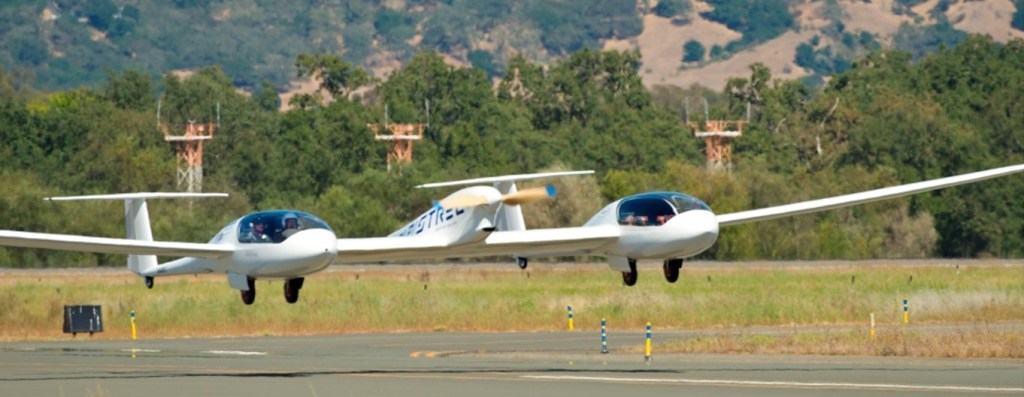
The Taurus G4 is a test bed to develop a high-power electric propulsion system. It features twin fuselages, room for four and an electric motor.
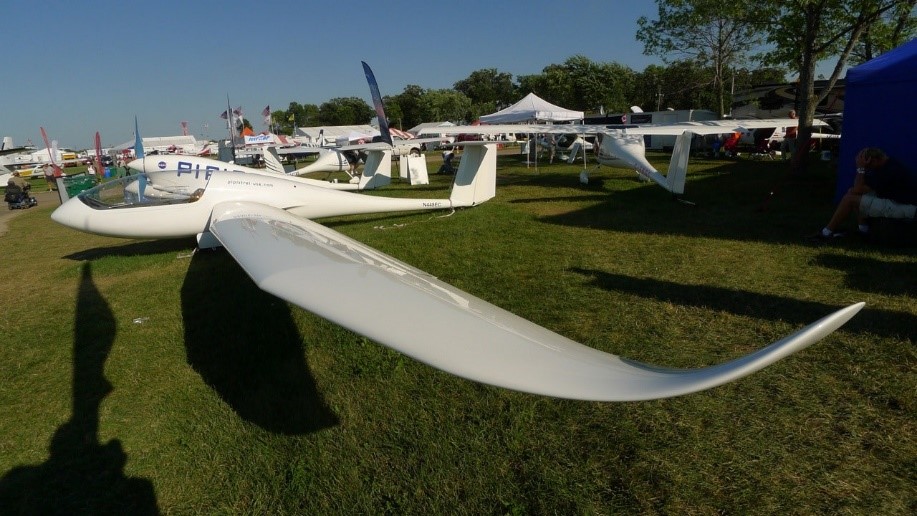
The Taurus G4 was built entirely in house, and mostly of carbon fiber with some Kevlar here and there. It is essentially a pair of Pipistrel’s Taurus self-launch glider fuselages joined by a single wing.
Mounted between the fuselages is a 150 kilowatt (200 horsepower) electric motor. It is the most powerful electric motor seen thus far in an all-electric airplane design. The Taurus G4 carries more than 1,100 pounds of lithium polymer batteries. There is more than 75 kilowatt-hours available via the company’s proprietary management system.
The airframe is very light. Although the aircraft weighs roughly 2,350 pounds empty, nearly half of that is the battery. Maximum takeoff weight is 3,300 pounds.
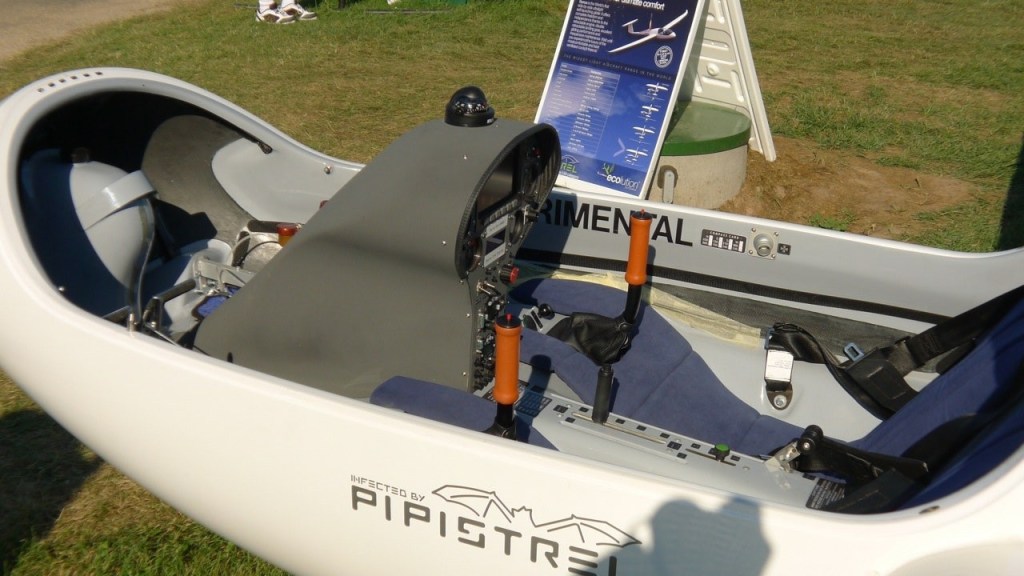
The right fuselage of the Taurus G4 contains the cockpit with dual controls.
The airplane was designed and built in the course of four months. The G4 was built specifically for the NASA/CAFE Green Flight Challenge. Its sizing and aerodynamic features, as well as the power train and battery capacity were matched to the requirements. The competition is aimed at developing highly fuel-efficient, yet practical, aircraft. Competitors must fly at least 200 miles in less than two hours while averaging at least 200 seat miles per gallon. With its four seats, the Taurus G4 has a distinct advantage if Pipistrel can meet the performance requirements.
The airplane is purely a demonstrator, with no plans for production. Pipistrel is using the G4 to develop the motor, battery and power management system for a more traditional design.
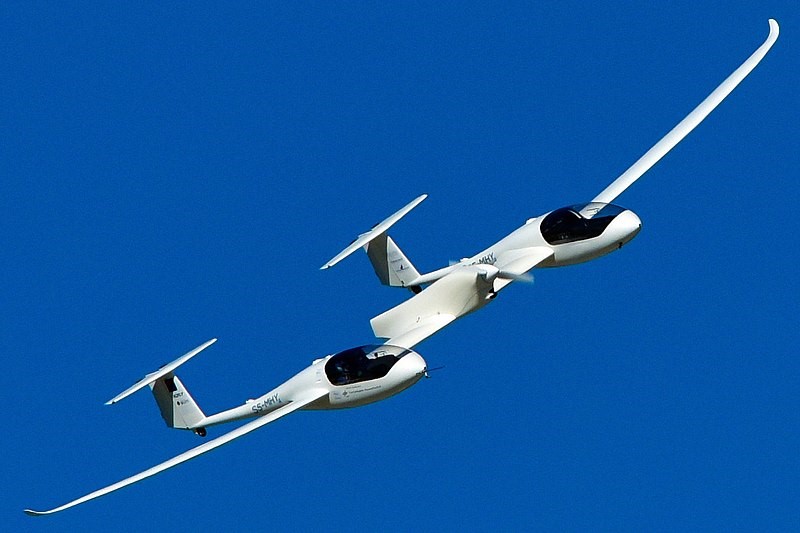
It was designed by DLR Institute of Engineering Thermodynamics of the German Aerospace Center, based on the Pipistrel Taurus G4, the German Aerospace Center / DLR HY-4 is a four-seat hydrogen fuel cell powered aircraft. It made its maiden flight on 29 September 2016 from Stuttgart Airport.
DLR HY4
In late September 2011, Google sponsored the CAFE Green Flight Challenge at the Sonoma County Airport in Santa Rosa, California. Three aircraft competed and two met the challenge requirements to fly 200 miles in less than 2 hr and use less than the energy equivalent of one gallon of fuel per passenger. The first place prize of $1.35 M was won by the Pipistrel-USA.com team led by Jack Langelaan of State College, Pennsylvania. Pipistrel’s new, twin-fuselage plane was created by combining two Taurus G2 fuselages, connected by a 5-m-long spar. A 145-kW brushless electric motor, developed for Pipistrel’s new 4-seat Panthera aircraft, is mounted between the passenger pods and drives a 2-m-diameter, two-bladed propeller in a tractor configuration. The Taurus G4’s full wingspan is about 21.36 m (75 feet) and it flew 200 miles nonstop while achieving 403.5 passenger mpg.
Pipistrel Taurus G4 at the CAFE/NASA green flight challenge, September 2011.