Porsche PFM 3200

In the 1950s, European light aircraft builders began adapting the air-cooled automobile engines from the Porsche 356 and Volkswagen Beetle into aircraft engines with a series of limited modifications. Porsche cooperated with some of these builders and produced a series of factory-built engines for about six years between 1957 and 1963, the Porsche 678 series. These relatively small engines displaced about 1.6 litres (97 cubic inches) and produced between 55 and 70 horsepower, depending on the version.

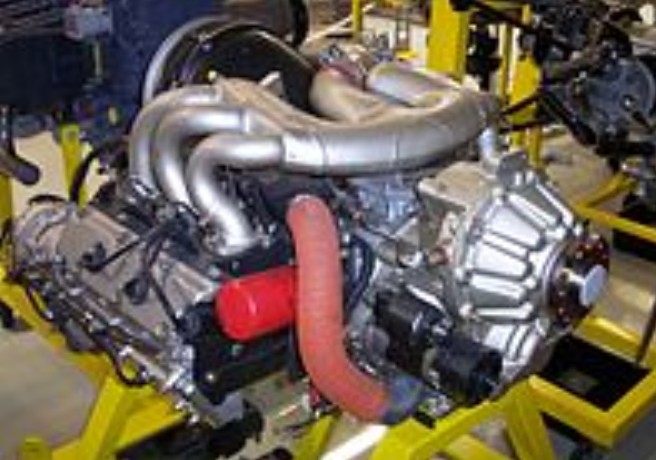
First run circa 1981, Porsche’s PFM 3200 was a six-cylinder horizontally opposed air-cooled aircraft engine developed from their air-cooled line of automobile engines from the Porsche 911 sports car. The PFM designation was derived from the name of the division that designed the engines, Porsche-Flugmotoren (~ Porsche Flight Engines).

Porsche decided to re-enter the aviation market with much larger engines derived from the Porsche 911, starting development in 1981. As the engines ran at higher speed than most aircraft engine designs, the propeller drive used a 0.442:1 reduction gearing so it could drive common propellers. The high operating speed meant the engine ran more smoothly than older designs, and the use of a muffler meant it was quieter as well. With about 3.2 litres (195 cubic inches) displacement, the normally aspirated N-series models produced about 210 hp, while the turbocharged T-series produced about 240 hp. This was roughly twice the horsepower of a conventional lower-rpm design of the same size. With single-lever operation, fully aerobatic fuel and oil supplies, direct fuel injection with automatic altitude compensation and optional turbocharging, the PFM 3200 series were some of the most advanced engines on the market.

After being introduced in late 1985 and starting to generate increasing interest in the general aviation (GA) market, Porsche exited the field during the massive downturn in the market in the late 1980s, closing the lines in 1991. It is suggested that the program cost them US$75 million to develop and produce the small number of engines delivered (about 80). Although marketed for only a short period, the PFM was found on a variety of aircraft as the primary powerplant, or as one-off modifications. These included the Extra 330, Mooney M20L, Socata TB-16, Robin DR400, Ruschmeyer MF-85 and others. Only the M20L went into production, with 40 produced in 1988, and one more in 1989.

Porsche abandoned development of the PFM3200 in 1992.

In a letter dated September 17, 2007, Porsche informed the FAA that they were surrendering their type certificate for the PFM 3200 engine and that they would no longer support the engine. In March 2009, the FAA issued a special airworthiness information bulletin stating that type certificates for existing aircraft with the PFM 3200 engine were still valid and would remain so as long as the aircraft meet FAR part 43 maintenance requirements and FAR part 91 operation requirements. However, the bulletin also said that Porsche is not exporting new or replacement parts for the engine and there is no guidance as to how compliance would be possible once existing OEM parts are exhausted.

Versions:
N00: de-rated for automotive fuel

N01: 212 hp at 5300 rpm

N03: type-certified N01 for the Mooney M20L, 217 hp at 5300 rpm

T03: similar to the N03 but with a Garrett turbocharger, 241 hp at 5300 rpm, critical altitude 18,000 ft
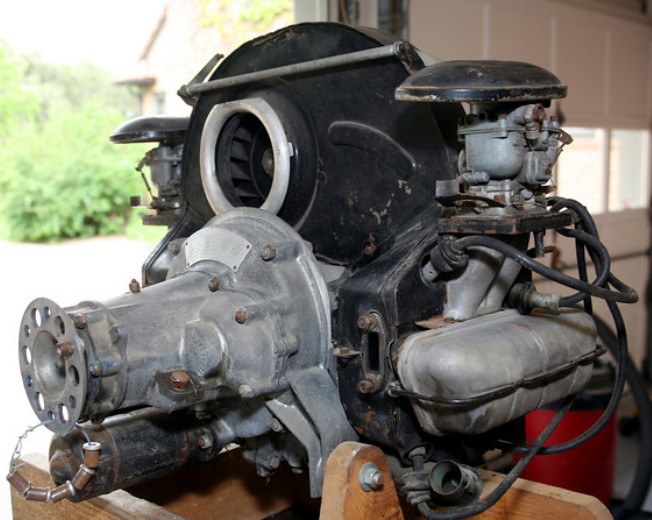
Porsche 678/4

Porsche 678

In post war Germany, General Aviation flight was not permitted until 1956. At the time of this rejuvenation, the Porsche 678 aircraft engine was being developed. This was based on the 4 cylinder Porsche 356 car engine. This air cooled engine was modified for the aviation environment.

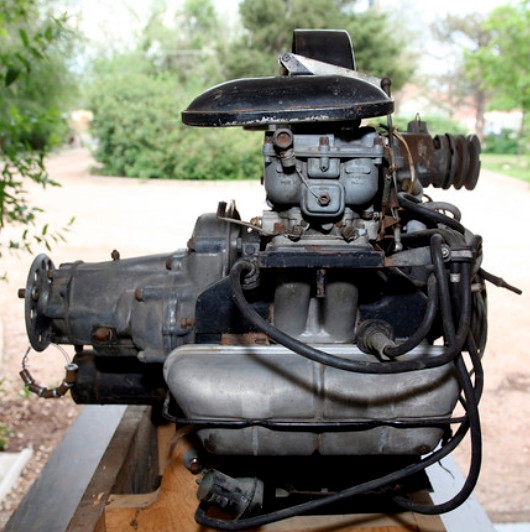
In the 1950s, European light aircraft builders began adapting the air-cooled automobile engines from the Porsche 356 and Volkswagen Beetle into aircraft engines with a series of limited modifications. Porsche cooperated with some of these builders and produced a series of factory-built engines for about six years between 1957 and 1963, the Porsche 678 series, beginning with the 1,580-cc 678/0. These relatively small engines produced between 55 and 70 horsepower, depending on the version. The 678/4, is the last and most powerful of the four-cylinder Porsche aircraft engines, all of which were based on the 356 automotive engines. These received type certificate No. 7E2 issued on November 15, 1960 as Model 678/4 Type 4H0A.

At this time Alfons Pützer was also developing the Elster A airframe, powered by the 52HP 678/3 Porsche engine. This was followed by the Elster B version powered by the 75 HP Porsche 678/4 engine and the Rolls Royce Continental C-12F and C-14F engines.

The engine differs from the car engine in many small ways, but its major departures are dry-sump lubrication, dual distributors (or magnetos, as an option) with dual spark plugs, different engine mounts, and a reduction gearbox to reduce propeller rpm to an effective range; gears could be specified as 1.46:1, 1.70:1, 1.98:1, or 2.12:1. A 12-volt electric starter and similar generator are fitted, the latter run off a dual v-belt. The external oil cooler uses a pair of 356 engine oil coolers on a special casting, and the dry-sump oil tank is connected to the pump by flexible lines. A rudimentary exhaust system piped gasses out of the fuselage.

The 678/4’s German airworthiness certificate was granted in May 1959, and FAA approval came in October 1960. Porsche’s 1959 list price for the engine (and gearbox) was $1,379. Production reportedly ended in 1962; production numbers are unknown, but it seems likely that only about 100 were made.

Earlier versions of the 678 used a low-profile cooling shroud thus could be installed in the aircraft’s nose and cooled by free air blast. The 678/4’s larger-shrouded fan air-cooling system, similar to that of the car engine, was only for enclosed rear-fuselage installation, using a pusher-type propellor, but such applications were rare.

The 678/4 was fitted to the Rhein-Flugzeugbau RW-3, a pusher-type motorized glider with retractable tricycle landing gear, seating for two, and optional wing extension. Its propellor was in the vertical tail just ahead of the rudder, with the engine set just behind the cockpit. The type was first built in 1958, and apparently only 22 aircraft were completed.

Using a Porsche engine to make an aircraft go is not a brand-new idea witness the RW3 motorglider built in Germany by Rhein-Flugzeugbau GmbH. It is powered with a Porsche 678/4 aircraft powerplant, a flat-four opposed piston engine with a reduction gearing of 1.981, a takeoff-power rating of 75 hp at 4600 rpm (propeller 2320 rpm), and max continuous power rating of 65 hp at 4500 rpm (propeller 2070 rpm). Leaned out, it delivers 55 hp at 4100 rpm (propeller 2070 rpm), with fuel consumption in economy flight mode 3.7 US gph.

Model 678/4 Type 4H0A
Displacement: 96.4 cu. in.
Bore and stroke: 3.248 x 2.913 in.
Compression ratio: 9.0:1
Reduction gearing: 1.98:1
Weight (dry): 250lb.
Max. continuous, 70hp., 4500 r.p.m. at S.L.
Takeoff (5 minute): 75 hp., 4600 r.p.m., at full throttle
Fuel (Min. grade aviation gasoline): 80
Lubricating oil : Oil Grade HD-Oil
Ambient air temperature: SAE 30:
Above 32°F: SAE 20:
32°F to 5°F: SAE 10:

Pop’s Props Zing

First flown in 1996, optional engines are the ½ VW or Rotax.

Engine: Kawasaki 340 LC, 35 hp
HP range: 28-40
Wing span: 25.5 ft / 7.77 m
Wing area: 118.8 sq.ft / 11.05 sq.m
Length: 17 ft
Height: 5.9 ft
MAUW: 500 lb / 226 kg
Empty weight: 249 lb / 112 kg
Fuel capacity: 3.5USG / 19 lt
Max speed: 70 mph / 112 kph
Cruise speed: 55 mph / 90 kph
Stall: 26 mph / 45 kph
Rate of climb: 675 fpm / 3.25 m/s
Range: 75 sm
Takeoff dist: 100 ft
Landing dist: 250 ft
Service ceiling: 6000 ft
Seats: 1
Landing gear: tailwheel
Plan price (1998): US$60

Pop’s Props Pinocchio

First flown in 1994, the prototype is powered by a twin-carburetted, two cylinder VW, with plans that will include optional motor mount illustrations for Kawasaki installation. The aircraft boasts three-axis controls and large tail surfaces. Wings carry full-span ailerons and can be detached for trailering. Its wire-bracing, spoked wheels and radial cowling gives the craft a very nostalgic look.

All wood construction. Estimated hp of the 2 cylinder VW is 40-45 hp. Construction. The fuselage is all wood incorporating 3mm plywood skin from firewall to seat back and aft of the seat on the centre section. From there, full length gussets all the way to the tail of all four corners.

Laminated bows help round out the fin and rudder and scallops accent the elevator and rudder trailing edges. The stabiliser leading edge is .8mm ply wrapped around wood formers to create a rigid D box and wire bracing tops off the lightweight but strong tail package.

The 16% Clark Y airfoil and 54” chord were chosen for the wings because of its superior stall speed characteristics and high lift capabilities. 30 dihedral was added for stability and 20 of incidence. Teleflex push-pull cables operate the full span ailerons safely and precisely. Leading edge is .8mm plywood wrapped around 3/4” foam nose ribs with 1/8” ply formers at each end and on all butt joints. Wire bracing not only makes for quick and easy wing removal but adds to the look of early aviation. Fuel is pulled from a 4.8 USG plastic tank tucked neatly above the pilot’s shins and filler is recessed into the rounded aluminium cover. Laminated foam cowl cheeks taper the round cowling into the fuselage which makes for a smooth flowing transition.

“Pinocchio’s” airframe requires no welding, no fibreglass work and the prototype was designed and constructed in approximately 500 hrs.

Speed max: 70 mph
Cruise: 60 mph
Range: 150 sm
Stall: 27 mph
ROC: 450 fpm
Take-off dist: 250 ft
Landing dist: 350 ft
Service ceiling: 2,000 ft
Engine: ½ VW, 45 hp
HP range: 35-50
Fuel cap: 4.8 USG
Weight empty: 254 lb
Gross: 500 lb
Height: 5.5 ft
Length: 16.5 ft
Wing span: 25.75 ft
Wing area: 115.8 sq.ft
Seats: 1
Landing gear: tail wheel
Tail span: 7’ without tips
Cockpit length: 46 1/2”
Cockpit width: 21 3/4”
Gear span: 46 1/2”
Payload: 230 lbs
Kit: Yes
Construction materials: Wood/fabric
Plans: Yes
Options: 2 cycle firewall forward capable.

Engine: Rotax 447, 40 hp
Wing span: 8 m
Wing area: 10.76 sq.m
MAUW: 226 kg
Empty weight: 115 kg
Fuel capacity: 19 lt
Max speed: 130 kph
Cruise speed: 100 kph
Minimum speed: 45 kph
Climb rate: 2.5 m/s
Fuel consumption: 2.5 lt/hr
Seats: 1
Plan price (1998): US$120
Kit price (1998): US$3995

Pop’s Props Cloudster

The Cloudster is a parasol winged monoplane built in wood and covered in Dacron. The pilot sits astride the fuselage.

Engine: ½ VW, 35 hp
HP range: 28-45
Wing span: 30 ft / 9.20 m
Wing area: 138 sq.ft / 12.8 sq.m
Length: 16 ft
Height: 7.6 ft
MAUW: 500 lb / 226 kg
Empty weight: 250 lb / 112 kg
Fuel capacity: 2.5 USG / 10 lt
Speed max: 96 kph / 50 mph
Cruise: 80 kph / 40 mph
Minimum speed: 38 kph
Range: 60 sm
Stall: 26 mph
Service ceiling: 2,000 ft
ROC: 3 m/s / 500 fpm
Take-off dist: 175 ft
Landing dist: 200 ft
Seats: 1
Landing gear: tail wheel
Fuel consumption: 7 lt/hr
Plan price (1998): $65
Kit price (1998): $3225

Popejoy 1980 Parasol

In 1980 Edward Popejoy built a high-wing, open cockpit monoplane registered NX2933. It was loosely based on Pietenpol, but considerably larger and faster. Specially outfitted for aerial photography with internal and external camera mounts.

Engine: 90hp Continental C-90-12
Wingspan: 27’2″
Length: 21’0″
Useful load: 688 lb
Max speed: 104 mph
Cruise: 95 mph
Stall: 48 mph
Range: 350
Ceiling: 12,500′
Seats: 2