Bert Volk started life as an engineer making cars in 1910.
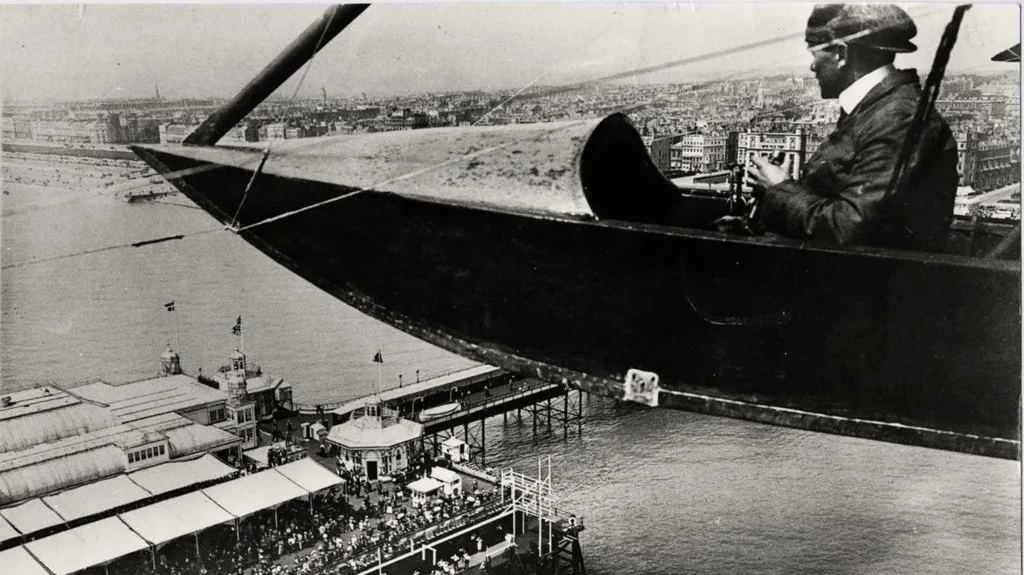
A year later the first airplane landed in Brighton on the beach, a Bleriot monoplane. Volk became fascinated with aviation and he thought he would have a go.
In 1911, he started making parts for engines, wings, floats, and fabric bodies that would be fitted into planes, and two years later pleasure flights began being launched.
Bert Volk’s elder brother, Herman, invented a collapsible, portable hanger on the edge of the water from where pleasure flights started.
They were all built in bits and taken down to the seafront next to the Banjo Groyne, put together and launched into the sea.”
There was a ramp down into the water and planes were launched into the sea.
Seaplane pleasure flights began in Brighton in 1913
A year after flights started, the outbreak of World War One meant the hanger was requisitioned by the government and the project ended. Herman Volk went off to manufacture planes for the war effort. He also contributed to the development of Shoreham Airport – one of the first aerodromes in England. After the war he took over the running of Volk’s Electric Railway on the seafront. Bert went off to South Africa where he spent most of the rest of his life.
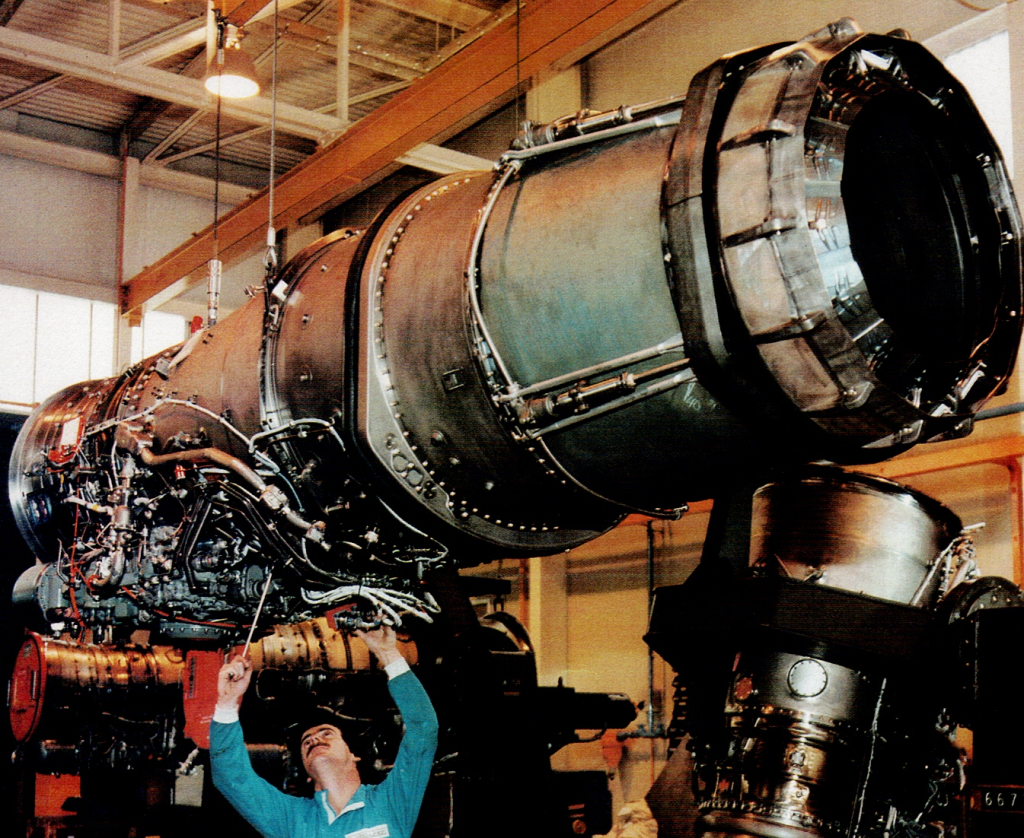
The Turbo-Union RB199 is a turbofan jet engine designed and built in the early 1970s by Turbo-Union, a joint venture between Rolls-Royce, MTU and Aeritalia.
The RB199 originated with a requirement, in 1969, to power a new European multirole combat aircraft (MRCA) called the Panavia MRCA. The engine requirements to meet the Panavia MRCA specification were significant advances over current engines in thrust-to-weight ratio, fuel consumption and size. The final selection of the engine for the MRCA was made between a new European collaboration, Turbo Union, with the RB199, and Pratt & Whitney who proposed the JTF16. The Panavia MRCA would later be called the Panavia Tornado.
Advanced engine studies at Bristol Siddeley had already been done to support the BAC/Dassault AFVG and were based on the Pegasus two-spool arrangement. At Rolls-Royce, where the three-shaft RB211 engine was in development, three shafts were considered better. Rolls-Royce took over Bristol Siddeley in 1967 so the configuration for the RB199 was decided, a three-shaft engine, but fundamentally to Bristol’s design and Bristol’s higher technology.
The overall design concept for the international collaborative program, three shafts was decided by Rolls-Royce. The bypass ratio was chosen for long-range, with low fuel consumption, particularly when throttled back. The selected BPR also gave a higher reheat boost than with smaller values used on similar engines. The design of the individual modules was shared between Rolls-Royce, MTU and Fiat according to their existing expertise. Rolls-Royce designed the fan using scaled-down Pegasus knowledge, the combustor, the high pressure (HP) turbine and the reheat. The reheat used cold air combustion techniques, described by Arthur Sotheran and which were derived from their experience with ramjets and plenum chamber burning (PCB) in Pegasus front nozzles. Fiat had built turbines for the Viper so designed the low pressure (LP) turbine as well as the final nozzle. MTU designed the intermediate pressure(IP) and high pressure (HP) compressors, the IP turbine, and the thrust reverser.
A three-spool arrangement reduces the pressure ratio on each compressor so no variable stators were needed. To meet the short afterburner requirement an arrangement known as mix-then-burn, as used in current engines, was not possible because it was too long and heavy. The RB199 used a much shorter arrangement known as mix/burn.
The RB199 first ran on 27 September 1971 at Patchway, UK. It was flight-tested using an Avro Vulcan with the engine installed in a nacelle that was representative of the Tornado aircraft. The Vulcan first flew with the RB199 in 1972.
Service flying with the Royal Air Force, German Navy and German and Italian Air Forces in the European environment showed normal failure mechanisms for turbine blades, thermal fatigue, creep and high cycle fatigue (HCF) so development started on replacing the initial production equiaxed blades with single-crystal ones which last longer at high temperatures.
Sand ingestion tests had been done and passed as part of the qualification for service introduction but operating in desert conditions with the Royal Saudi Air Force produced new problems. Frequent flying in air carrying different sizes of sand particles caused deposits on the HP turbine blades from sand passing through the combustor. In addition, sand carried with the cooling air through the blades blocked the cooling holes. Single crystal blades were being introduced to improve the life of the blades for the European operating conditions and revised cooling hole arrangements were introduced at the same time to reduce the detrimental effect of sand on blade cooling. With incorporation of these blade processing and cooling changes “Desert Storm Tornado aircraft flew some of the most arduous missions of any Allied aircraft with reliability no worse than peacetime and no engines were rejected for HP Turbine blade defects.”
RB199 Mk.104D
Looking back on the RB199 program in 2002 Chief Engineer for the RB199, Dr. Gordon Lewis, concluded “The final production standard provided satisfactory reliability and performance.
Variants and applications
RB199 Mk 101 Initial variant powered first Tornado IDS deliveries, with a 38.7kN (8700lbf) dry thrust, 66.01kN (14840lbf) with afterburner.
RB199 Mk 103 Powering Tornado IDS strike versions, with a thrust rating of 40.5 kN (dry) 71.2 kN (reheat)
RB199 Mk 104 Powering the Tornado F3 Air Defence Variant, with a thrust rating of 40.5 kN (dry) 73 kN (reheat)
RB 199 Mk104D Derivative used on the BAe EAP.
RB199 Mk 105 Powering Tornado ECR versions and applicable to IDS, with a thrust rating of 42.5 kN (dry) 74.3 kN (reheat)
RB199-122 A derivative of the Mk104 (originally designated Mk 104E[13]), powering the first two prototypes of the Eurofighter Typhoon (DA1 and DA2) until the initial versions of the Eurojet EJ200 were available.
Specifications (RB199-104) Type: Turbofan Length: 3,600 mm (142 in) Diameter: 720 mm (28.3 in) Dry weight: 976 kg (2,151 lb) Compressor: 3-stage LP, 3-stage IP, 6-stage HP Turbine: Single-crystal HP, single-crystal IP, 2-stage LP Maximum thrust: 40 kN (9,100 lbf) dry, 73 kN (16,400 lbf) wet Turbine inlet temperature: ~1,600 K Thrust-to-weight ratio: 7.6 (with reheat)
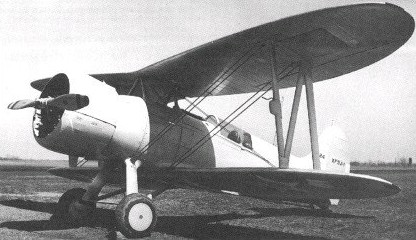
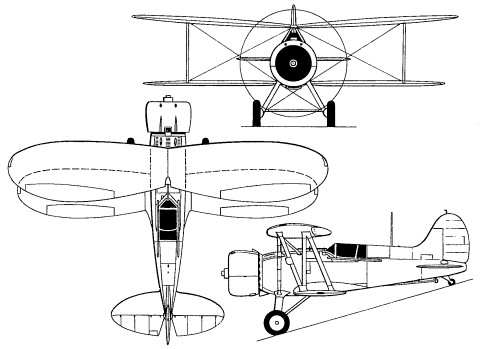
Designed by the US Navy Bureau of Aeronautics, the XF3J-1 was turned over to the Berliner-Joyce Corporation for development and construction. Ordered on 30 June 1932, this experimental single-seat shipboard fighter was completed in January 1934. Of all-metal construction with a semi-monocoque fuselage and fabric-covered wings, the XF3J-1 was powered by a 625hp Wright XR-1510-26 radial. Armament was two 7.62mm synchronised machine guns, and provision was made for two 50kg bombs beneath the wings. Although offering a good performance, the XF3J-1 was surpassed by the Grumman XF2F-1, and no further development was undertaken.
Engine: 625hp Wright XR-1510-26 radial Empty weight: 1233 kg/2718 lb Wingspan: 8.84 m/29 ft 0 in Length: 6.98 m/23 ft 11 in Height: 3.28 m/11 ft 9 in Wing area: 22.26 sq.m/239.60 sq ft Max. speed: 336 km/h/209 mph Range: 1157 km/719 miles Armament: two 7.62mm synchronised machine guns, two 50kg bombs
If the Indian armed forces assess the need for a dedicated manned counter-drone fighter capability, Hindustan Aeronautics Limited’s (HAL) HTT-40 could be cost-effectively upgraded to fulfil the role within a reasonable timeframe.
On March 7, 2023, the Indian Ministry of Defence (MoD) signed a contract with HAL to procure 70 HTT-40 basic trainer aircraft. Earlier, in July 2022, HAL had signed a $100 million contract with U.S. engine-maker Honeywell for 88 engines to power the HTT-40 fleet.
The 70 aircraft on order will be delivered over six years from the date of contract signing.
The HTT-40 is a tandem-seat turboprop trainer that is fully aerobatic and offers excellent low-speed handling characteristics. It features an air-conditioned cockpit, modern avionics, hot refueling capability, running changeover, and zero-zero ejection seats.
The HTT-40 procurement aims to address the Indian Air Force’s (IAF) shortage of basic trainer aircraft and includes associated equipment, training aids, and simulators.
HAL first pitched the HTT-40 as an indigenous trainer for the IAF at Aero India 2013, showcasing a mockup of the aircraft.
However, on May 10, 2012, the Cabinet Committee on Security (CCS) had already approved the procurement of 75 Pilatus PC-7 MkII aircraft for the IAF, Indian Navy, and Coast Guard. The Pilatus had been selected through global bidding to replace the aging HPT-32 fleet.
Ironically, in response to HAL’s display of the HTT-40 mockup at Aero India 2013, then IAF Chief of Air Staff Air Chief Marshal NAK Browne had remarked, “There is no need for [the HTT-40 trainer]. We have the Pilatus PC-7. It’s a proven aircraft. The HAL project is starting from scratch. Our indications are that the cost will be too high. There is no need for all this.”
The glider is probably pre 1914 and located in the Hawke’s Bay, New Zealand, area. The occupant appears to have a car steering wheel-type control at his disposal but no obvious foot controls. The undercarriage appears to be a basic bicycle forks and wheel construction. NZ Wings June 1982
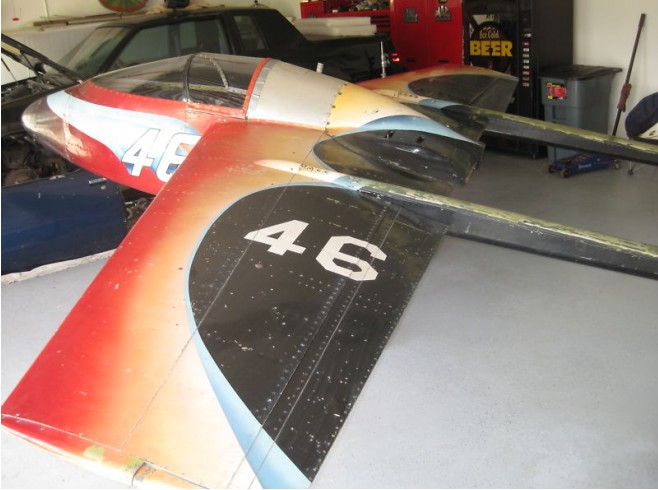
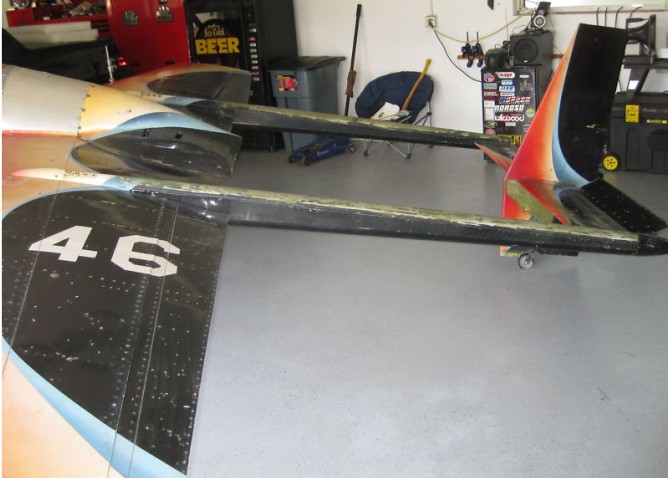
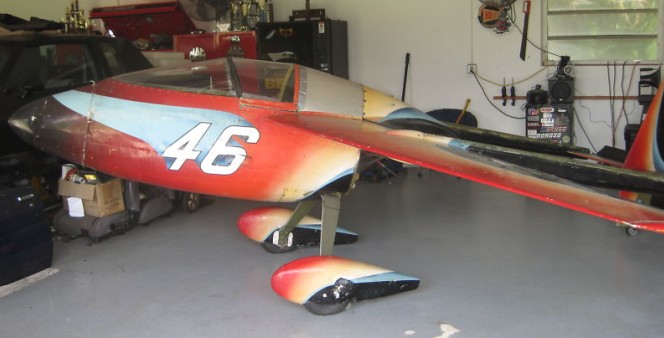
This is a 1966 formula 1 racer pusher type experimental, the aircraft is a stressed skin design with cantilever wing construction and twin booms to accomodate pusher engine and conventional landing gear. The entire airframe components, internal structure, and all skin surfaces are made from 2024-T3 alclad aluminum, wingspars are of 2024 -T3 aluminum web with extruded spar cap top to bottom.The cockpit area is formed of half hard aluminum.The canopy is formed of plexiglass, all fittings are welded chromoly, all flight controls are cable operated except ailerons these are push type controlled.Engine is a O-200 or C-85.
It was built for the Goodyear races, by three engineers who passed away together in an airline accident and the aircraft was never finished or flown.
Henry Guantt later purchased this aircraft from a Mr. Watts in 1973.
This aircraft was then aquired by a father and son team around 2006 for the purpose of fixing and flying the aircraft but that never came to be because the father passed and they never got to finish this project. Around 2012 the craft was again on the market, hoping someone could dedicate the time to it and fly it. This included all of its documentation and specs and all of the parts to complete it except the engine but including the pusher type propeller.
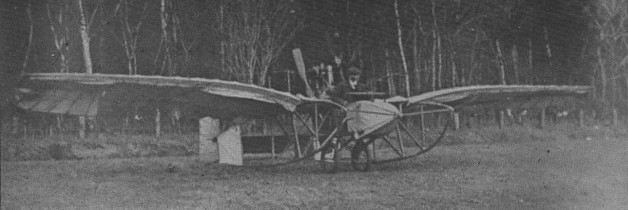
The machine is a monoplane with arched wings. Its cloth-capped pilot is seated in a faired central nacelle, immediately in front of a large vertical piston engine, possibly with four cylinders, driving a two-bladed wooden pusher propeller. The nacelle is supported on a twin-wheel undercarriage, and a few feet out on either side are open frames extending rearwards to carry the tall surfaces. The rear ends of these frames are covered in to serve as fins There appears to be a monoplane tailplane, possibly with an elevator, plus twin rudders behind the tailplane. The wings appear to be double-surfaced only along their leading edges, back to the front spar, and single surfaced aft of the front spar, and their fabric covering is clearly poorly applied, as it may be seen hanging down beneath the inboard leading edges. Inset ailerons are fitted at the wingtips. It is extremely difficult to date it any more precisely than 1909-13.






 All Aero