1995-8: 2331 Dodgeville Rd, Rome, OH 44085, USA.
UL builder
1995-8: 2331 Dodgeville Rd, Rome, OH 44085, USA.
UL builder
Argentina
RACA began assembly of Hughes 500C helicopters in 1975 under license. A minimum of 120 helicopters were to be built.
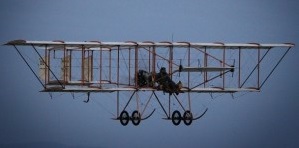
The brainchild of Group Captain (retd) Ron Gretton and Wing Commander (retd) Geoff Matthews, the Boxkite replica was built at the RAAF Museum at Point Cook, Australia, and will eventually be a showcase display for the public.
With Air Vice-Marshal (retd) Mark Skidmore at the controls, the Boxkite flew successfully on Wednesday 11 September 2013 at RAAF Base Williams. The aircraft flew about 1000 metres and reached a speed of 42 mph.
“It was an exhilarating and humbling experience, I am honoured and proud to follow those aviators who pioneered military aviation in this country,” said AVM Skidmore, a former F-111 and ARDU test pilot.
“I now also have the honour of being the only RAAF pilot who has flown both the fastest and slowest aircraft in the Air Force. The Bristol Boxkite has a rich history in the evolution of military aviation in Australia, it was the first official military aircraft built in this country and used to train our first military pilots.”
The Boxkite has a rich history in the evolution of military aviation in Australia and was the first official military aircraft built in Australia that was used to train Australia’s military aviators.
A Bristol Boxkite was flown in Australia for the first time on 1 March 1914, when Lieutenant Eric Harrison took one into the air at Point Cook. The airfield was then the home of the Australian Flying Corps (AFC).
Harrison’s flight is recognised as the starting point of military flying in Australia. In recognition of this historical significance, RAAF Base Point Cook will play host to the Centenary of Military Aviation in Australia event on 1 to 2 March 2014 with the Bristol Boxkite replica as a major draw card.
Two other aircraft were developed at Randwick to the prototype stage: Warrigal I (a trainer) and Warrigal II a single seat fighter.
Two other aircraft were developed at Randwick to the prototype stage: Warrigal I (a trainer) and Warrigal II a single seat fighter.
The first design was the Widgeon 1, a flying boat, followed by a much larger amphibian, the Widgeon II, powered by a 440 hp A.S. Jaguar engine. In 1927, the Widgeon II undertook a 9,000 mile flight around Australia.
The first design was the Widgeon 1, a flying boat, followed by a much larger amphibian, the Widgeon II.
Lawrence J. Wackett (later Sir Lawrence) started his career in the Australian Flying Corps in the First World War and saw service in Egypt; when the R.A.A.F. was formed in 1921 Wackett decided to move into aircraft design and development and, after a short professional training period, persuaded the then Defence Minister, R. K. Bowden, to set up a R.A.A.F. Experimental Aircraft Station at Randwick, in order to develop aircraft suitable for Australian conditions.
The first design was the Widgeon 1, a flying boat, followed by a much larger amphibian, the Widgeon 11, powered by a 440 hp A.S. Jaguar engine. In 1927, the Widgeon 11 undertook a 9,000 mile flight around Australia.
Two other aircraft were developed at Randwick to the prototype stage: Warrigal I (a trainer) and Warrigal II a single seat fighter. As a result of a government-sponsored report, the Randwick Station was closed in 1931: Wackett resigned from the R.A.A.F. and transferred, with some personnel and equipment to Cockatoo Dockyard.
The Raache LR-1 or Honroth Special of 1947 was a single-place cabin, low wing monoplane, NX/N5595N, powered by a Continental engine.
In its first Goodyear competition, when rounding the first pylon, this racer twisted its frame so badly it limped in and was immediately retired from flying.
An improved Schwalbe.

