RANS S-4 Coyote

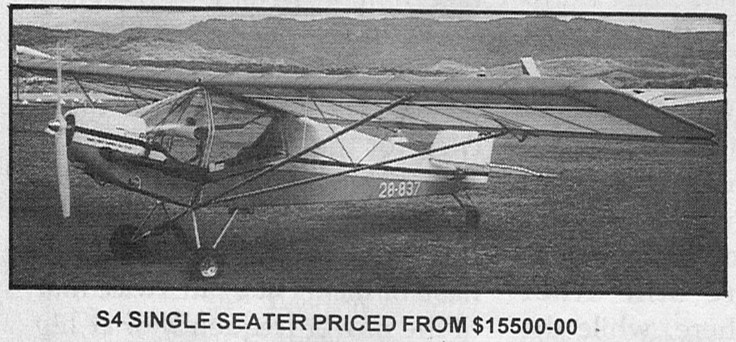
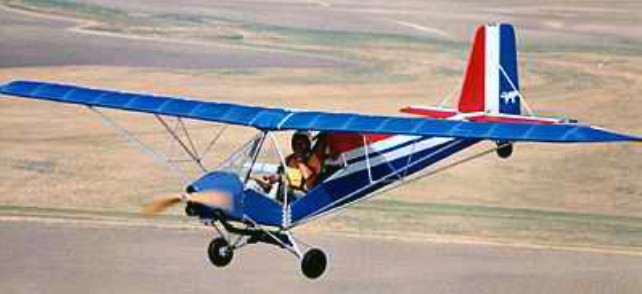
Construction began in November 1982, with the first flight being in November 1982. Single seat single engined high wing mono¬plane with conventional three axis control. Conventional tail. Control inputs through stick for pitch/roll and pedals for yaw. Wing braced from below by struts; wing profile; double surface. Undercarriage has three wheels in tail dragger formation. Push right go right tailwheel steering connected to yaw control. Aluminium tube framework, totally enclosed. Engine mounted below wing driving tractor propeller.
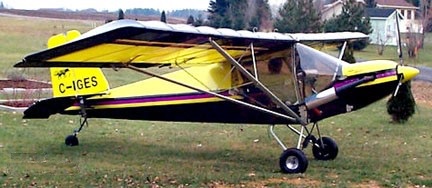
Rans S-4 Coyote C-IGES

The cockpit is fully enclosed and there is only one seat. Equipped with doors, 4 position flaps, elevator trim, bungee suspension landing gear, steerable tailwheel, brakes, radio and headset. Rotax 503 with electric start gives a 70 mph cruise.

The Coyote S 5 is a nosewheel version.
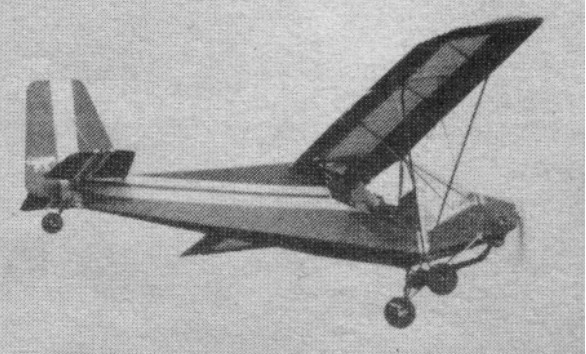
June 1997

Gallery

Engine: Rotax 277 (268 cc), 28 hp
Static thrust: 220 lbs.
Empty wt: 240 lb
Wing span: 32ft.
Wing area: 138 sq.ft
Height: 5ft 6in
Length: 17ft
Fuel cap: 5 USG.
Construction: Aluminium, Dacron
Max wt: 535 lbs.
Stall: 25 mph
Max speed: 63 mph.
Vne: 75 mph
Climb rate: 800 fpm @ 30 mph.
Design limit: +6, -3g
Glide ratio: 11-1.
Wing loading: 3.88 lbs/sq.ft
Power loading: 19.11 lbs/hp.
Seats: 1.

RANS S4 single seat
Engine: Rotax 503
Fuel burn: 12 lt/hr
Fuel capacity: 60 lt
VSO: 28mph
VSI: 31mph
VFE: 50mph
VNO: 70mph
VNE: 94mph

RANS

Randy Schlitter began building “sailtrikes” (better known to us as land yachts) in 1974 in Kansas before moving on to pushbikes and microlights. His first flying machine was the Coyote, which first flew in March of 1983 under the Aeromax name. This was soon changed to the RANS name. RANS standing for Research and Natural Systems.
1982: Aero Max Inc, 1104 E Highway 40 By Pass, Hays, Kansas 67601, USA.
1984: 1104 E. Highway 40 By-Pass, Hays, KS 67601, USA.
1997-8: 4600 Highway 183 Alternative Hays, KS 67601, USA. Ph 785/625 6346, fax 785/625 2795.

Ranger V-770

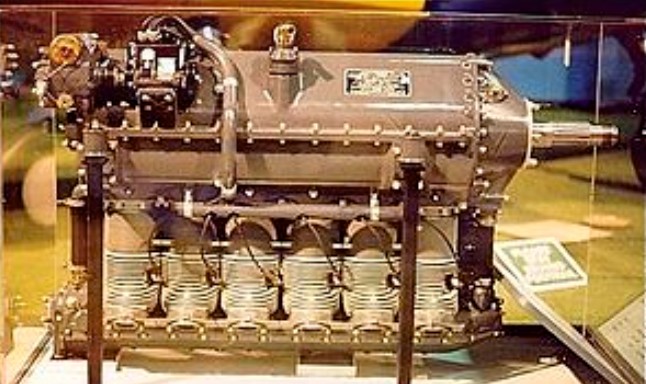
The Ranger V-770 was an American air-cooled inverted Vee aero-engine developed by the Ranger Aircraft Engine Division of the Fairchild Engine & Aircraft Corporation and first run in 1931.

In 1931, the V-770 design was put to paper, based on the Ranger 6-440 series of inline air-cooled engines, and test flown in the Vought XSO2U-1 Scout. In 1938 it was tested in the Curtiss SO3C Seamew and found to be unreliable with a tendency to overheat in low-speed flight. By 1941 a more developed V-770 was installed in the Fairchild XAT-14 Gunner prototype and found satisfactory for the production Fairchild AT-21 Gunner gunnery school aircraft.

Produced from 1941 to 1945, the V-770 featured a two-piece aluminum alloy crankcase, steel barreled cylinders with integral aluminum alloy fins and aluminum alloy heads. The V-770 was one of very few V-type, in-line, air-cooled engines to reach production. The engine was used in a relatively small number of Army Air Forces aircraft, among them the Fairchild AT-21 twin-engine trainer of which approximately 175 were built, and in the two Bell XP-77s.

By 1944, the unit cost was US$11,000

Variants:
V-770-4
Installed in the Vought XSO2U-1 Scout

V-770-6
Installed in the XAT-14 Gunner prototype, intended for the Ryan SOR-1 Scout

V-770-7
Installed in the Bell XP-77 light-weight fighter prototype

V-770-8
Installed in the Curtiss SO3C Seamew Scout.

V-770-9
Installed in the XAT-6E Texan prototype.

V-770-11
Installed in the Fairchild AT-21 Gunner.

V-770-15
Installed in the Fairchild AT-21 Gunner.

SGV-770C-1
Tested in the Curtiss XF6C-7 Hawk Fighter-Bomber at 350 hp.

SGV-770D-5
Developed for post-war commercial use, 700 hp (kW) at 3,600 RPM, weight 870 lb (395 kg), height 31.11 in (790 mm), length 74.92 in (1,900 mm), width 33.28 in (846 mm)

Applications:
Bell XP-77
Curtiss SO3C
Edo OSE
Fairchild AT-21
Fairchild BQ-3
Ikarus 214D
Vought XSO2U

Specifications:

SGV-770C-1
Type: 12-cylinder inverted Vee piston engine
Bore: 4 in (101.6 mm)
Stroke: 5 1⁄8 in (130.2 mm)
Displacement: 773 in3 (12.6 L)
Length: 62 in (1,574.8 mm)
Width: 28 in (711.2 mm)
Height: 32.2 in (817.88 mm)
Dry weight: 730 lb (331 kg)
Valvetrain: Two overhead camshafts, one per cylinder bank, gear driven
Supercharger: Single-Speed, Single-Stage, produced 45 inches of mercury (1.5 bar, 7.5 psi) at take-off
Fuel system: Holley non-icing carburetor
Fuel type: 87 octane petrol
Oil system: Full pressure type
Cooling system: Air-cooled
Power output: 520 hp at 3,150 rpm (387.7 kW)
Specific power: 0.673 hp/in3
Compression ratio: 6.5:1
Power-to-weight ratio: 0.71 hp/lb

Ranger L-440 / 6-440C

The Ranger L-440 (company designation 6-440C) are six-cylinder inline inverted air-cooled aero-engines produced by the Ranger Aircraft Engine Division of the Fairchild Engine and Airplane Corporation of Farmingdale, New York, United States. The engine was mainly produced for Fairchild’s family of training aircraft in the mid-1930s.

Variants:
6-440C-2
175hp variant with a 6:1 compression ratio.

6-440C-3
180hp variant with a 6.2:1 compression ratio.

6-440C-4
190hp variant with a 6.8:1 compression ratio.

6-440C-5
200hp variant with a 7.5:1 compression ratio.

Applications:
Fairchild PT-19/26
Falconar SAL Mustang
Grumman Widgeon
Maestranza Central de Aviación HF XX-02
St. Louis PT-LM-4

Specifications:

6-440C-2
Type: Six-cylinder inline inverted air-cooled
Bore: 4 1⁄8 in (104.8 mm)
Stroke: 5 1⁄2 in (139.7 mm)
Displacement: 441 in³ (7.2 litres)
Length: 53.156 in (1.351 m)
Width: 21.954 in (0.549 m)
Height: 33.50 in (0.854 m)
Dry weight: 376 lb (170.7 kg)
Valvetrain: Underhead camshaft
Fuel system: Upright carburetor
Fuel type: 65 octane rating gasoline
Oil system: Full pressure type
Cooling system: air-cooled (pressure type cylinder baffles)
Power output: 175 hp at 2,450 rpm
Compression ratio: 6:1

Rankin RBM-4

The Rankin RBM-4 of 1928 was a two-place low wing monoplane powered by a 60hp LeBlond 5D engine. Fist flown by Basil B Smith, they were priced at $2,500.

One appears in a 1936 register as four-place cabin with a 200hp Wright NC9622 (how the NC was acquired is unknown)] c/n 3, owned by brothers Alexander, Arch, and Charles Rankin of Wayne MI. Company promotion also told of a three-place open cockpit with 90hp LeBlond 7D also in progress, with a useful load circa 500 lb and max speed of 110mph, as well as an ambitious plan for a network of national distributors.

Engine: 60hp LeBlond 5D
Wingspan: 37’1″
Length: 25’6″
Useful load: c.350 lb
Speed: 100 mph
Seats: 2