Ravin Aircraft Ravin 500

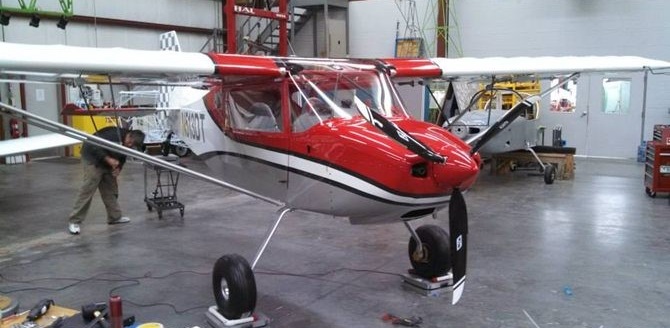
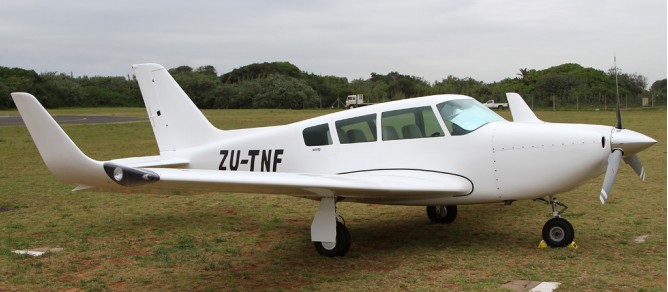
This composite aircraft, based on the concept of the Piper Comanche was designed and developed by SA Ravin in 2 years and 5 months. The Ravin 500 made it’s first flight on 15 September 2002.

An all Composite kit aircraft for amateur construction by SA Ravin Aircraft of Pretoria, South Africa.

An NACA 64-series profile (modified) was used, brought into the shape by Francois Jordaan. The standard handshake overlap main spar design is used to join the two spars in the fuselage.

A Hartzell 3 Bladed Scimitar Pulse Prop was used from the beginning. It uses a 12 liter plenim box in conjunction with the air filter.

The fuselage mold is split vertically with port and starboard halves. There are cross braces below the cockpit floor and one bulkhead visible in the rear fuselage.

Wings are also two-piece, incorporating mainspars and rear subspars. The carbon mainspars overlap and join within the fuselage. Horizontal tailplane was one-piece, glass with carbon elevator.

The fuselage, wings, tailplane and other components appear to have been molded with an inscribed grid covering the exterior surfaces as an aid to alignment and windshield, window cutouts.

Ravin 500
Type: 4-Seat cruiser, conventional
Engine: Lycoming IO540 (194kW, 260h)
Wing span: 10,40m (34ft 2 in)
Wing Area: 14,6 sq m (157 sq ft)
Empty Weight: 975 kg – 1040 kg
Max take-off Weight: 1620 kg (3564 lb)
Aircraft Length: 7,42 m (24 ft 4 ins)
Fuel Capacity: 160 US gal integral wing tanks
Max power loading: 8.35 kg/sq m (22.7 lb/hp)
Max wing loading: 111 kg/sq m (22.7 lb/sq ft)
Max level speed (sea level ISA): 210 kts (242 mph) IAS
Cruise speed (75% power): 185 kts (213 mph) IAS
Optimum cruise (75%@ 6500 ft): 196 kts (226 mph) TAS
Stall speed clean @ max weight: 64 kts IAS (75 mph) IAS
Stall speed with flaps, gear down: 56 kts IAS (64 mph) IAS
Fuel consumption @ 75% power: 14.1 US gal/hr
Range with 10% fuel reserve: 2000 naut miles (2300 stat miles)
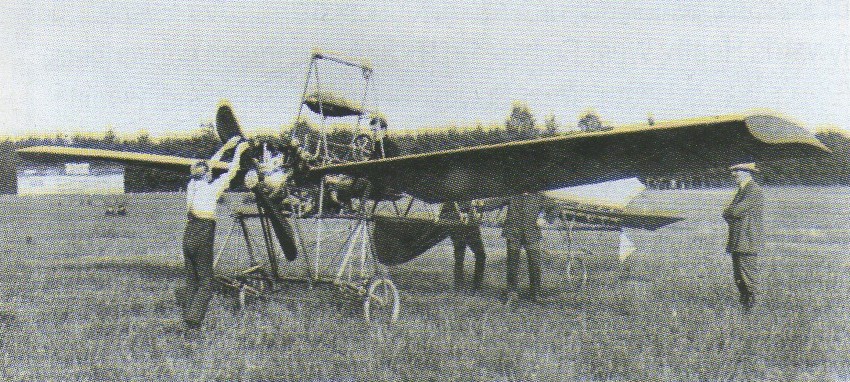
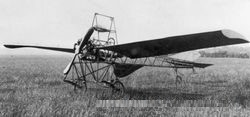
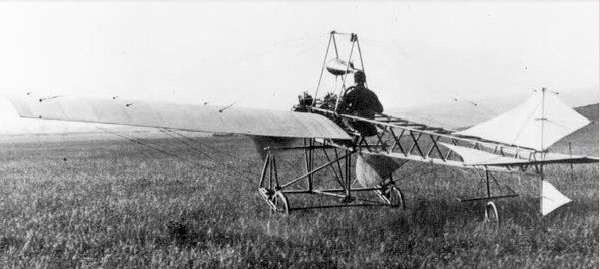
RAS Aeroplane Co Monoplane

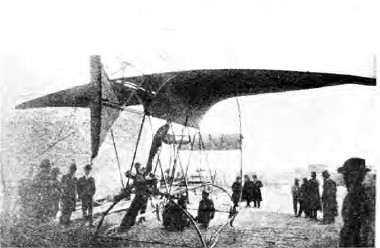
Constructed by the RAS Aeroplane Co, at Grange Airfield, Gosport, Hants, UK, around 1909/1910, the framework was of brazed cycle tubing.

The name RAS came from the initials of the three London men who were responsible for the flying machine: Mr Reader, a barman; Mr Allen, a bricklayer; and Mr Sheffield, a chauffeur. Constructed by Vic Hutfield, the aircraft made several flights with a 24 hp or 35 hp Lascelles engine.

The person in the pilot’s seat is Oswyn George William Gifford Lywood, who eventually became an Air Vice Marshal in the Royal Air Force.

For many years it hung in a workshop roof in Gosport until sold, and was last seen on a lorry heading for London.

Engine; 35 h.p. Lascelles
Propeller; 7ft.
Wing span; 32ft 4in
Length; 28ft 6in
Wing area; 210 sq.ft
Total weight; 7001b

RANS S-20 Raven

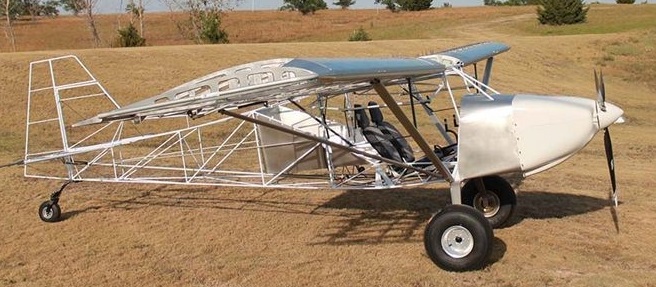
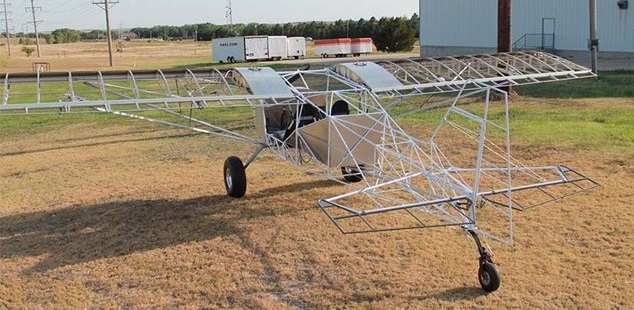
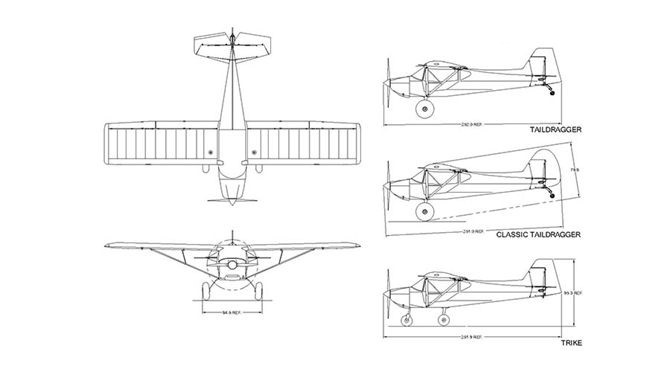
The S-20 has the wings, tail, fuel system, and aero servo ailerons from the S-7S Courier, and engine system, control sticks, flap lever, rudder pedals, seats, and instrument panel from the Coyote II S-6S. The intent was to answer the many requests for a side by side bush plane, equal to or beyond the Courier.

Construction is straight forward and classic. The wing features 3″ and 2″ custom extruded spars, airfoil struts, and stamped aluminum ribs. All welded 4130 steel fuselage and tail complete the fuselage.

Design features that will make the plane an easy project include: Welded steel fuselage and tail (all welding is completed at the factory) CNC drilled spars that eliminate almost all critical drilling and locating of holes. One-piece stamped ribs are punched with final hole sizes, and many parts are anodized eliminating the need to prime or corrosion proof. The kits are very detailed and supplied with all critical components. Builders only need to supply, engine, prop, paint, avionics, and fluids

Gallery

Engine Rotax 912ULS 100Hp

RANS S-19 Venterra

S-19LS

The S-19 is a low wing monoplane of traditional aluminum construction, featuring a constant chord wing.

The S-19 is powered by a Rotax 912 ULS engine producing 100 HP. The aircraft seats two in side by side in a 43.5” wide cockpit. Headroom is ample for even 6’4” pilots, and even larger with slight modifications.

Baggage can be carried in a 13 cubic foot compartment behind the seats with a loading capacity of 70lb. This compartment can be extended to the rear for approximate 9.5 cubic foot additional baggage space with a loading capacity of 30 lb.

The S-19 structure is of “monocoque” (stressed skin) carrying most of the strength through the aluminum skins. The skins are sufficiently supported with an internal structure of bulkheads and stringers to maintain shape.

High quality blind rivets are used throughout the construction of the airframe, with the exception of the spars, which come assembled with solid rivets. The fit and finish of the parts allowing virtually jigless assembly, and many parts to final hole size accelerate and assure a high quality structure. The S-19 may appear complicated, and high in part count, but we assure you the well machined components will assemble quickly, and with much lightness, due to the great care made in keeping things light.
The S-19 is a low wing monoplane of traditional aluminum construction, featuring a constant chord wing.

Kit Price 2010 w/o Engine: US$25,650
Plans Price: FREE ON CD; US$100 paper manual

In 2012 the previous S-LSA—the S-19LS Venterra low-wing, all-aluminum cruiser and S-6LS Coyote II (2,000 delivered) moved back to E-LSA or EAB kits-only status.

Engine: Rotax 912S, 100 hp
Propeller Diameter: 68 in
Propeller: 2 Blade ground adjustable
Gear Reduction: 1:2.43
Fuel G.P.H.: 5.0 gal @ 75%
Wing Span: 28 ft
Wing area: 126.9 sq ft
Mean Chord: 4 ft 7 in
Aspect: 6.18
Height: 95.5 in
Cockpit Width: 43.5 in
Seats: 2
Landing Gear: nose or tail
Baggage Capacity: 70 lbs
Fuel Capacity: 28 gal US
Take Off Roll: 325 ft
Rate of Climb: 900 fpm
Service Ceiling: 14,500 ft
Cruise: 128 mph
VNE: 150 mph
Stall Clean: 51 mph
Stall Flaps: 45 mph
Landing Roll: 325 ft
Cruise (@75%): 128 mph
Fuel burn(75%): 5.0 USgal/hr
Endurance (@75%): 4.55 hrs
Range (@75%): 580 miles
Cruise (@65%): 120 mph
Fuel burn(65%): 4.5 USgal/hr
Endurance (@65%): 5.10 hrs
Range (@65%): 610 miles
Gross Weight: 1320 lbs
Empty Weight: 820 lb
Useful Load: 500 lbs
Wing Loading: 10.4 psf
Power Loading: 13.2 lb/hp
Design Load: +4.4/ -2