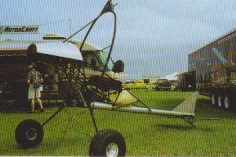
Rearwin Airplanes was founded by Raymond Andrew (“Rae”) Rearwin in 1928, at Salina, KS.
Following Charles Lindbergh’s historic transatlantic flight in 1927, the world’s fascination with aviation grew significantly. Moreover, the Air Commerce Act of 1926 established the government certification program of pilots and aircraft that gave the fledgling industry safety and legitimacy.
Rearwin produced Junior two-seat light monoplane in 1931, followed by Speedster with American Cirrus engine.
Employing his two sons, Royce and Ken, the small company designed and built over 400 airplanes, including instrument trainers and gliders, despite the effects of the Great Depression.
Taken over in 1935 by partnership called Rearwin Airplanes. In 1937 bought assets of Le Blond Aircraft Corporation renamed as Ken-Royce motors. 1939: Renamed Rearwin Aircraft & Engines Inc.
Rae Rearwin sold the company to the Empire Ordinance Company in 1942. The company built about 275 more Skyrangers under the Commonwealth name before they closed their doors in 1946.
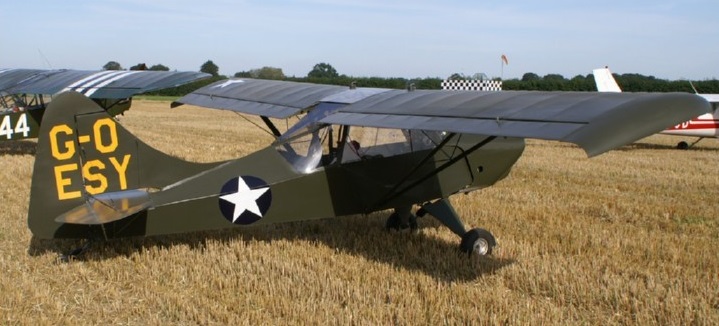
The Reality Easy Raider is a development of the Flying K (later Sky Raider LLC) Sky Raider II, incorporating over 100 modifications.
Featuring a high wing with two tubular main, and two secondary bracing struts to each wing. Tailplane braced with twin wires above and twin rods below. Large fin fillet, compared with Sky Raider, enables sideslipping with cockpit doors in place. Wings fold for storage. Quoted build time 350 hours.
Flying controls are conventional and manual. Frise ailerons, cable actuated. Flight-adjustable tab in port tailplane. Horn-balanced tail surfaces. Slotted flaps, deflections 0, 15, 30 and 40°.
Fabric-covered 4130 chromoloy steel tube fuselage with composites engine cowling. Wing built on large diameter metal tube leading-edge/spar with wooden ribs, fabric covering and composites downturned wingtips.
The landing gear is tailwheel type; fixed. Rubber-in-tension shock-absorbers. Mainwheels 8.00-6 (4 ply); Matco steerable tailwheel. Optional floats or amphibious floats.
Two fuel tanks are fitted in the wings, total capacity 37.9 litres (10.0 US gallons; 8.3 Imp gallons) standard; 72 litres (19.0 US gallons; 15.8 Imp gallons) optional.
A tandem-seat ultralight kitbuilt, the prototype G-SRII (Rotax 503 engine) flew in 2001, and conforms to BCAR Section S. Kit fabrication is by Just Aircraft of USA, with which Reality holds joint design rights.
The Easy Raider 503 initial version has one 37.0 kW (49.6 hp) Rotax 503 DCDI-2V two-stroke engine driving a Powerfin FL370T three-blade, ground-adjustable pitch, composites propeller.
The Easy Raider J2.2 has one 59.7 kW (80 hp) Jabiru 2200 engine driving a two-blade Powerfin ground-adjustable pitch or two-blade Newton wooden propeller. The prototype G-OESY (c/n 0002) was built late in 2001.
The Easy Raider R100 with a BMW R100 four-stroke motorcycle engine driving a Powerfin two-blade, ground-adjustable pitch propeller, prototype G-SLIP (c/n 0004) was under construction in 2002.
Five were flying and five more under construction by July 2003.
Kit £9,898 excluding engine; or £12,563 (Rotax), £14,500 approx (BMW) or £16,298 (Jabiru), including engine, cowlings and propeller, excluding tax (2003).
The XLR-99 powering the X-15 produced 60,000 lb of thrust and Scott Crossfield flew the new engine on contractor flights in November and December 2960, but the engine was not ready for government flights until March 1961.
The engine powering the X-15-1 was the XLR-11, built by Reaction Motors. The XLR-11 was comprised of two rocket motors, an upper and a lower. Each motor had four chambers and each chamber gave 1500 lb thrust; a total of 12,000 lb thrust.
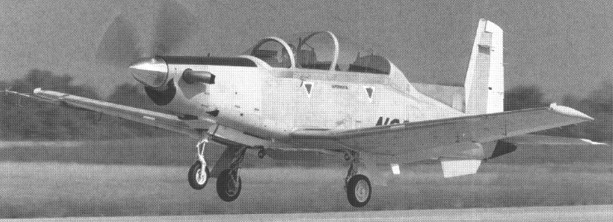
Raytheon Aircraft won a USAF and USN Joint Primary Aircraft Training System competition with the Beech Mk.II trainer, derived from the Pilatus PC-9.
Raytheon’s contract with the U.S. joint armed services to provide up to 700 T-6ATexan II JPATS trainers through the year 2014 continued to pay dividends for the Wichita based airframer. The Air Force and Navy exercised an option for 22 additional Texan IIs, an order valued at almost $65 million.
The first production T-6A Texan II flew on 15 July 1998.
Apart from the JPATS program, Raytheon has orders for 138 T 6As, including a 45 airplane deal with the Greek Air Force.
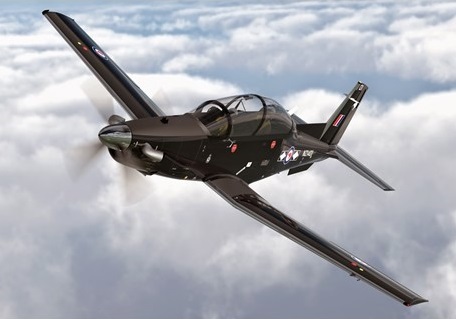
The first production Beechcraft AT-6 light attack aircraft made a ceremonial first flight on 20 August 2013 at Wichita, Kansas. The single-engined 1,600shp (1,190kW) Pratt & Whitney PT6 turboprop aeroplane took to the air at about 10:30 local time with test pilot Lionel Alford at the controls.
The aircraft was loaded with a pair of 66 gal (250 litres) drop tanks, two inert GBU-58 laser-guided bombs and two LAU-131 seven-shot rocket launchers. The AT-6 was also carrying a L-3 Wescam Mx-15Di electro-optical infrared camera. Although a production aircraft, it is a company-owned asset. Beechcraft has not secured an order for the type. When asked why the company would fly the first flight with such a heavy load, Derek Hess, the company’s senior vice-president for business development, says: “Because it’s so easy.”
The aircraft had demonstrated air-to-air gunnery with .50 caliber machine guns and the potential exists to employ Raytheon AIM-9 Sidewinders to counter certain aerial threats.
T-6C Texan II
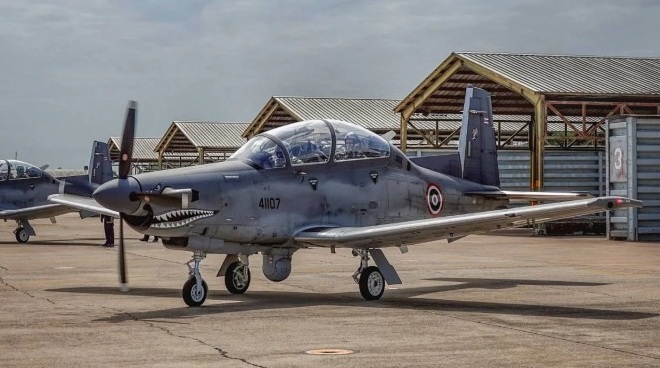
The AT-6TH Wolverine attack variant is derived from the T-6C Texan trainer and is designed to carry out close air support and surveillance missions. The AT-6 has an L3 Wescam MX-15D multi-sensor package that includes colour and IR cameras, laser designator, laser illuminator, and laser rangefinder.
Royal Thai Air Force AT-6TH Wolverine
The Royal Thai Air Force (RTAF) received eight AT-6TH Wolverine light attack aircraft in 2025 acquired from the United States as part of its ongoing fleet modernization program.
Assigned to Squadron 411, part of Wing 41 based in Chiang Mai, the AT-6TH Wolverine, manufactured by U.S. company Textron Aviation, is designed for close air support, armed surveillance, and tactical training missions.
T-6A Texan II Engine: Pratt & Whitney Canada PT6A-68, 1100 hp Length: 33.268 ft / 10.14 m Height: 10.696 ft / 3.26 m Wingspan: 33.301 ft / 10.15 m Wing area: 175.346 sq.ft / 16.29 sq.m Max take off weight: 6299.7 lb / 2857.0 kg Weight empty: 4601.8 lb / 2087.0 kg Max. speed: 310 kt / 575 km/h Cruising speed: 230 kt / 426 km/h Initial climb rate: 3996.06 ft/min / 20.30 m/s Service ceiling: 35007 ft / 10670 m Wing loading: 35.88 lb/sq.ft / 175.0 kg/sq.m Range: 850 nm / 1574 km Endurance: 3 h Crew: 2
Raytheon’s biggest Hawker design (30% larger than the 800XP) originated at roughly the same time as the initial work began on the Premier I. The Horizon would be an effort to blend high technology with earlier Hawker flight characteristics.
First flown on 11 August 2001, the Horizon retains its DH125 pedigree but is an all-new aircraft with a thinwall composite fuselage offering some 20% more cabin space for the equivalent weight of a conventional structure. The Horizon complements the upgraded 800XP and the entry-level Premier 1.
The design received FAA certification in 2004. On the flight deck is a Primus Epic flight control system and flight management system. The navigation comes from a dual VHF omni-directional radio navigation system, dual distance measuring equipment, dual inertial navigation system and a dual global positioning system. Preliminary performance specifications for the 37,500-pound-MTOW, P&WC PW308A-powered twinjet include a 470-knot high-cruise speed, 3,366 nm NBAA IFR range (two crew and six passengers), and a 5,088 ft balanced field length.
More than 320 were ordered.
Engines two 6,900-lb Pratt & Whitney PW308A turbofans Gross wt. 37,700 lb Empty wt. 21,555 lb Fuel capacity 2,134 lb Max cruise 470 kts Long range cruise 430 kt Range 2,763-3,477 nm Ceiling 45,000 ft Takeoff distance 5,088 ft Landing distance 2,907 ft Seats 8-14
In 1993 British Aerospace sold its corporate jets business (builders of the BAe 125-800 and -1000) to Raytheon.
Founded in 1994 as a division of Raytheon International Inc, bringing together the activities of the Beech Aircraft Corporation and Raytheon Corporate Jets, the latter having been British Aerospace Corporate Jets, producing Hawker bizjets, before the August 1993 acquisition.
Continued to market a range of Beech lightplanes (including Bonanza A36 and B36TC, Baron 58, King Air C90, and Super King Air B200 and 350), Beechjet 400A business aircraft and the 1900 Airliner (current 1900D Airliner version first flown March 1990)
Also continued to market the Hawker 800XP corporate jet (Hawker 1000 production ended in 1998), while its latest bizjetto fly is the Premier I (December 1998), and the Hawker Horizon will follow in 1999.
Also manufactures a variant of the Swiss Pilatus PC-9 as the Beech PC-9 Mk II, which is being produced for the USAF and U.S. Navy as the T-6A Texan II primary undergraduate flight trainer and undergraduate navigator trainer. Other activities include the production of missile targets.
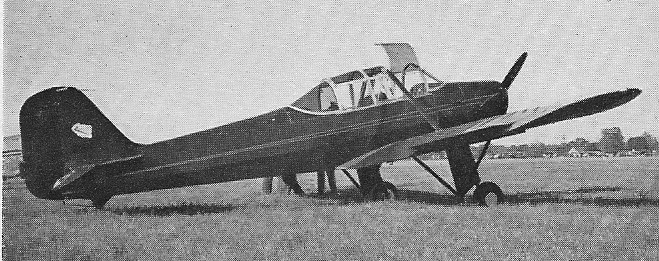
Rawdon Brothers, a flying school operator, designed and built a Lycoming engined two-seat monoplane, the T-1, first produced in 1938. At least five were produced pe-war.
The design was resurrected in 1953, powered by a 135 hp Lycoming engine.
The T-1S is an agricultural version equipped with spray tanks and spray bars.
Engine: Lycoming O-290 Max speed: 138 mph Cruise: 120 mph ROC: 900 fpm Service ceiling: 18,000 ft Range: 500 mi Empty weight: 1300 lb Loaded weight: 1900 lb Wingspan: 33 ft 4 in Length: 24 ft 2 in Height: 7 ft 3 in
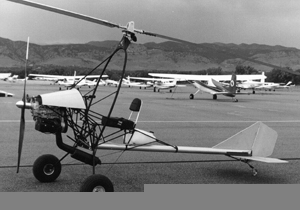
First flown in 1996, development/testing continued into 2008. With ongoing changes in the Ultralight/Light Sport arena, development of both the FAR Part 103 legal Ultralight gyro and the 2-3 seat cargo twin-engine gyro were put on hold.
Taildragger landing gear with large “tundra tires”, cable braced tempered aluminum main gear, and steerable tailwheel for superior handling off runway on rough terrain.
Conventional elevator control in the pitch axis are to minimize “porpoising” and “bunt-over”. A chrome-moly roll cage construction with pilot enclosure and lexan windshield are provided.
An optional pre-rotator assembly is available for reduced take off distance.