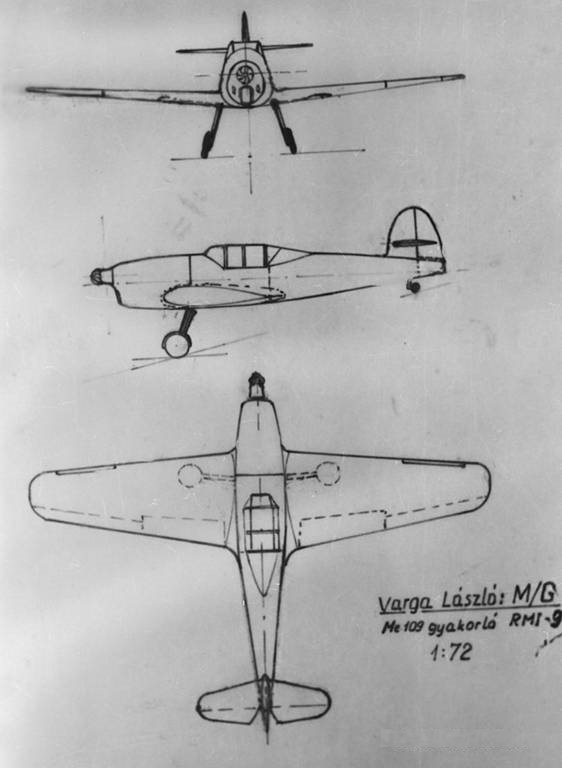
RMI RMI-9 M/G

From 1943 the Air Force was gradually getting the Bf-109 advanced jet fighters (F and G versions), but it was not easy to get used to the tight and narrow track undercarriage. The Aero Technical Institute created the RMI-9 M/G specifically for the Messerschmitt pilots in training. The machine was designed with slats, so as to better mimic the Bf-109 flight characteristics.

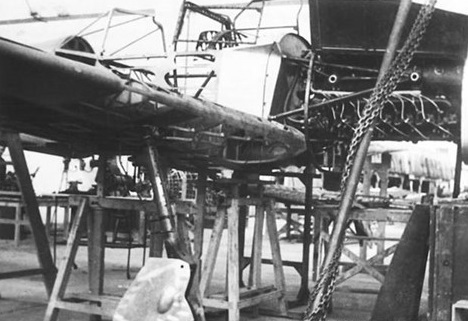
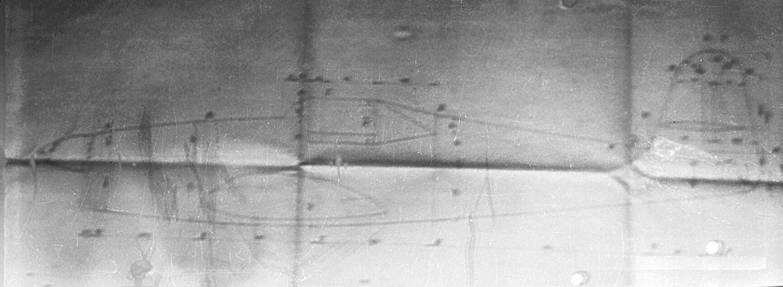
Designed by Varga László, the RMI-9 M/G [or Me/G] Bf-109 pilot trainer was built but destroyed by US bombing in 1944 in the Ferihegy experimental hangar.

Engine: Argus As-411, 480 hp
Wing span: 9.5m
Length: 7.2m
Height: 2.3m
Empty weight: 1,100 kg
T/O weight: 1,480 kg
Maximum speed: 350 km/h
Range: 700 km
Ceiling 9,200 m
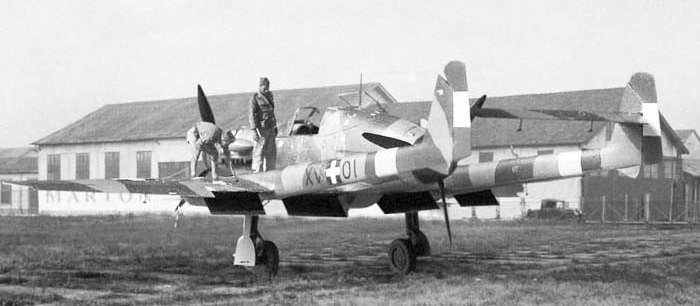
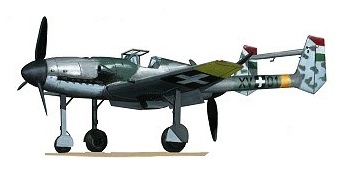
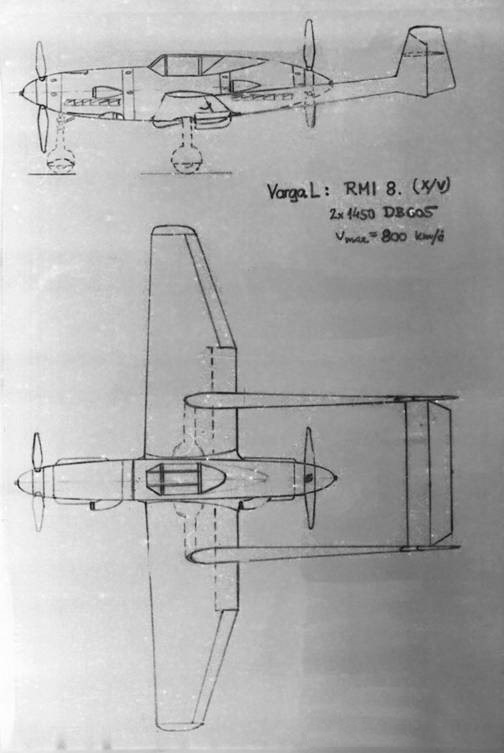
RMI RMI-8 X/V / Marton X/V

The RMI-8 X/V twin-boom, twin DB605 fighter was designed by Vilmos and Dezso Marton (assisted by László Varga), was also called the Marton X/V after the designers.

The two wings joined to the tail section, which is designed to incorporate the connection points of the high-powered MK-108 (30mm) deck gun.

The prototype (X/V-01) was said to have been destroyed by bombing while the airframe was still incomplete in April 1944.

Engines: 2 x DB-605, 1475 hp
Wing span: 11.8m
Length: 10.2m
Height: 3.5m
Empty weight: 2,850 kg
T/O weight: 3,800 kg
Maximum speed: 800 km/h
Range: 1,000 km
Ceiling: 11,500 m
Armaments: 2 x 8 mm machine guns, 2 x 30mm MK-108 machine guns.

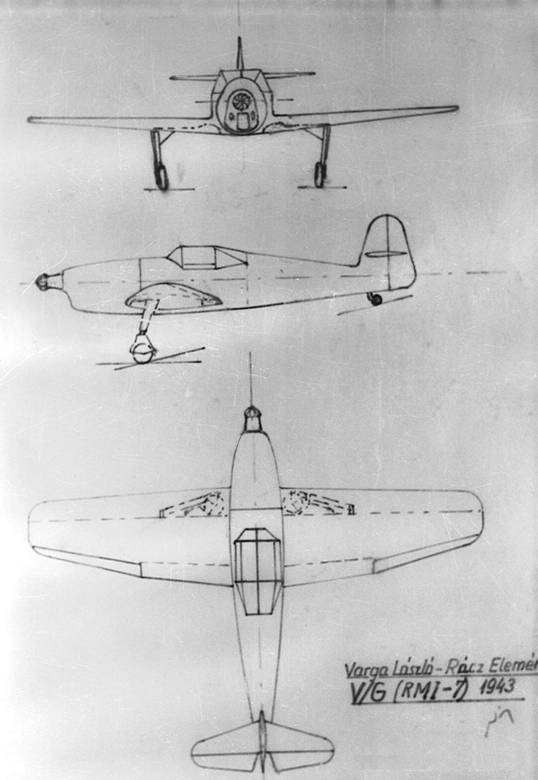
RMI RMI-7 V/G

The RMI-7 V/G was a side-by-side trainer powered by an Argus As.410, and equipped with retractable undercarriage. The mixed wood-built machine with torsion wings and hydraulic main landing gear had the same structure as the RMI Z / G.

The V / G was designed from the start serial production. Designed by Varga László and Rácz Elemér, a prototype was built in 1944. In 1944 the prototype was shipped to the Budaörs airport in order to fly but possibly never flew.

Engine: Argus As.410
Wing span: 9.54m
Length: 7.81m
Height: 2.5m
Empty weight: 1,200 kg
T/O weight: 1,680 kg
Maximum speed: 360 km/h
Range: 1,000 km
Ceiling: 8,000m

RLU RLU-1 Breezy / Breezy Aircraft RLU-1 Breezy

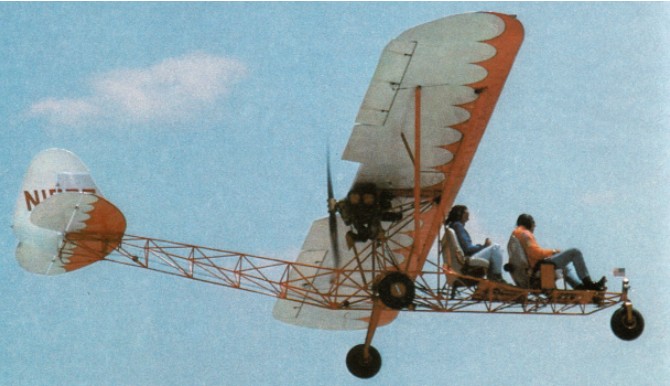
Designed and constructed by Charles Roloff, Carl Unger, and Bob Liposky, the Breezy was first introduced in 1965, and hailed as one of the most distinctive and unusual homebuilt designs to ever attend an EAA Fly-in.

RLU RLU-1 Breezy Article

The original Breezy was designed and built to accept a set of PA-12 wings. For that reason, there are no wing drawings with the plans. It is possible to substitute Champ, Taylorcraft, PA-14, PA-18, or J-3,4, or 5 wings. It’s also possible to order wing kits that replicate a J-3 wing. Breezy’s fuselage is an open framework steel tube truss. It is a three-place airplane with two seated abreast on the second seat, but it could easily be adapted as a single-seater or tandem two-seater.

Power for the prototype, which now hangs in the EAA Aviation Museum in Oshkosh, WI, is a Continental C-90. The original design utilizes a Piper Super Cruiser wing.

Plans could be purchased through:
Carl Unger, 8751 S. Kilbourn, Oak Lawn, IL 60456, USA.

Gallery

Engine 85-125hp
Span 33ft
Wing area 165 sq.ft
Length 22ft 5in
Max wt: 1200 lb
Empty wt: 700 lb
Fuel capacity 18 USG
Top speed 105 mph
Cruise 56kt
Stall 25 mph
ROC 500 fpm
Takeoff run 450 ft
Landing roll 450 ft
Range 250 mile
Seat: 2-3

Ritz Standard ‘A’

Strut-braced high wing monoplane, conventional tail, geodetic wing & tail construction. Landing gear: Tricycle. Price 1984: $2,495. Certified to PUMA standards.

Engine: 22 hp Zenoah
Wingspan 36’
Wing area 140 sq.ft
Empty weight 200 lb
Gross weight 500 lb
Cruise speed 30-50 mph
Stall speed 15mph
Vmax 65 mpg
Climb 400 fpm
Takeoff run 120 ft
Landing roll 200 ft
Setup time 15min

Ritchel Dirigicyle / Flying Car

Connecticut inventor Charles F. Ritchel made his mark in aviation history—and the cover of Harper’s Weekly magazine—by building a dirigible of his own and sponsoring the first controlled flight of a dirigible in America in Hartford in 1878.

Having been first flown outdoors less than two weeks before by Mark Quinlan in Bridgeport, Connecticut; Charles F. Ritchel began exhibiting his flying machine – also known as the Dirigicyle, or Flying Car – at Boston’s Tremont Temple on June 24, 1878. The demonstration, arranged by William McMahon, who played a major role in introducing Edison’s phonograph to the public, was a complete success. In addition to the indoor flights, Quinlan made an exciting ascension from Boston Common. Once in the air, the propeller gears jammed, allowing the balloon to rise dangerously high. Without a valve to relieve the increased pressure of the expanding lift gas, the envelope swelled, breaking several of the bands from which the frame was suspended. Quinlan could not slit his envelope, for there was no netting in which the fabric could gather to form a parachute. He had little choice but to tie one hand and ankle to the frame, then drop beneath the craft to make repairs with a jackknife as his only tool. He finally descended at Farnumsville, 44 miles from the Common, after a flight of one hour and twenty minutes.

Rithner Hirondelle / Hirondelle Electra

Hirondelle

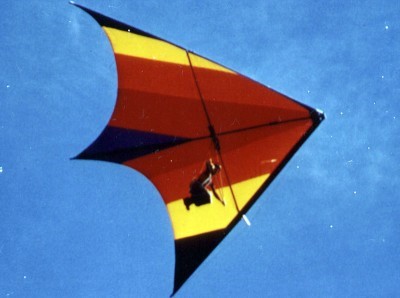
In the early 1970s, E. Rithner distributed the Bernard Danis (wing = Manta) and Electra Flyers (wing = Hirondelle) brands in Switzerland before being “inspired” to make them on his own account. Very quickly the Hirondelle Electra took over by proving to be more powerful and safer than the Manta which had the unfortunate propensity to put itself in the flag, often irreversible because the dive was stable (several accidents). Electra, which already had the “S” shaped keel (the front part was curved downwards by a cable between the upper anchorage of the trapezium and the nose, the rear part being curved upwards by the longitudinal upper cable Back), was fairly stable (slight neutral) and did not suffer from the (often fatal) phenomenon of feathering. Its fineness was of approx. 5.5, its drop rate of 2.5 – 3.0. For a weight of 18 kg.

Hirondelle Electra 1st generation

The Electra of the 1st generation had the corners of the trapezium always bent, American fashion. Undoubtedly, at this time, E. Rithner still imported a few pieces of hardware (stiffeners, screws, etc.) and US structural trapezium.