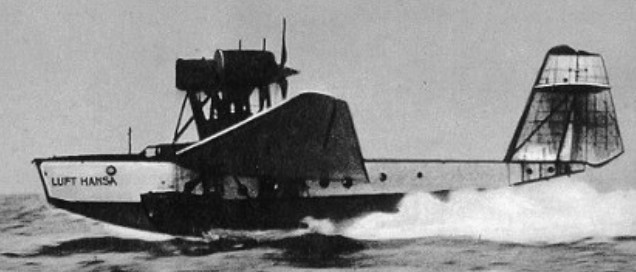
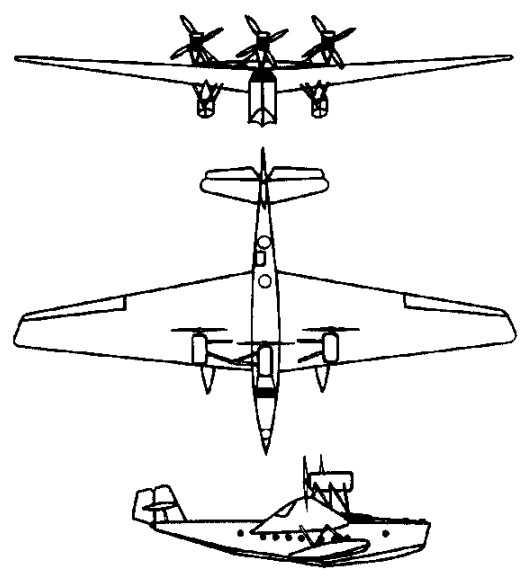
A long-range passenger flying boat, the first prototype flew on August 7, 1928.
Two models were produced. The Romar I (Werk Nrs 29,30 and 31), registrations D-1693, D-1734, and D-1747 respectively.
The single Romar II built, Werk Nr 62, went to France on the 1st April 1931 as F-AKEM.
The difference in the models was that the Romar II had BMW VIaU engines driving through a Farman gearbox. At some point the fin was changed on all models.
The three German aircraft, named “Hamburg”, “Bremen” and “Lubeck”, were all scrapped in 1933.
Ro X Romar Engines: 3 x BMW VIUZ, 485kW Wingspan: 36.9 m / 121 ft 1 in Length: 22.0 m / 72 ft 2 in Height: 8.5 m / 28 ft 11 in Max take-off weight: 19000 kg / 41888 lb Empty weight: 9900 kg / 21826 lb Max. speed: 210 km/h / 130 mph Ceiling: 2800 m / 9200 ft Range w/max.fuel: 4000 km / 2486 miles Crew: 4-5 Passengers: 12
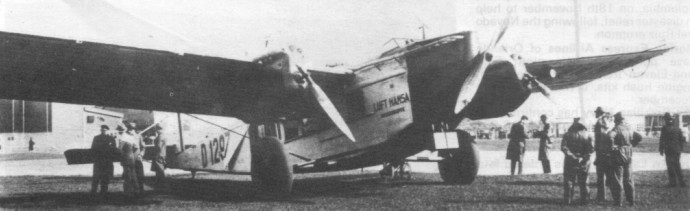
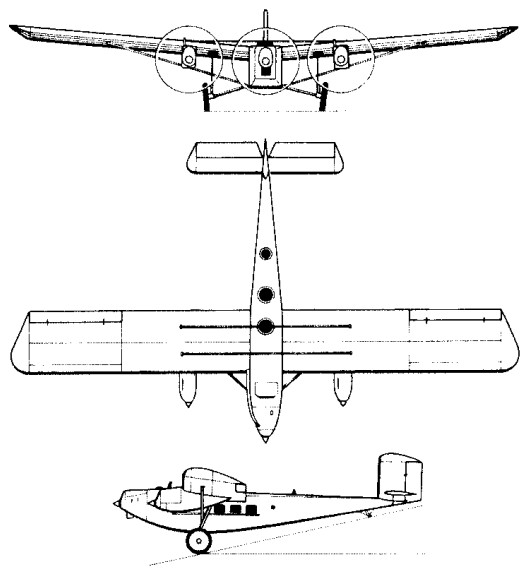
A the three engined version of the Farman Jabiru, the first flight was by D-991 (Werk Nr 18) on the 5th September 1926. It went to Iberia, as M-CAAC, later that year along with the second aircraft D-999 (Werk Nr 19) identified as M-CBBB. Both these aircraft were Mark I and were used on the Madrid – Barcelona route until August 1928 when they were returned to DHL. Six examples were operated by Deutsche Luft Hansa
There were effectively three marks: I, Ia, and II.
The Ia and II used the BMW Va engine, the Roland II of 1929 having an increased wing span of 26.3m and a maximum take off weight of 6615kg (14553lb). The maximum speed was increased to 225km/h (140 mph), the service ceiling was increased from 4,300m to 4,600m (15,100 ft). Both types were high-wing tri-motor monoplanes
A total of 18 of all models was produced with some flying well into the late 1930’s.
The last to be produced (Roland II Werk Nr50) was later registered D-ANAX. It was used by DLH until 1934 and then went to DVS.
Ro VIII Roland Engine: 3 x BMW IV, 239kW Max take-off weight: 5265 kg / 11607 lb Wingspan: 26.0 m / 85 ft 4 in Length: 16.3 m / 54 ft 6 in Height: 4.5 m / 15 ft 9 in Wing area: 88.0 sq.m / 947.22 sq ft Max. speed: 195 km/h / 121 mph Ceiling: 4600m Range w/max.payload: 925 km / 575 miles Crew: 2 Passengers: 10
Werk Nr 26 was flown by Severa GmbH for comparison flights with the Dornier Super Wal, then latter as a seaplane trainer.
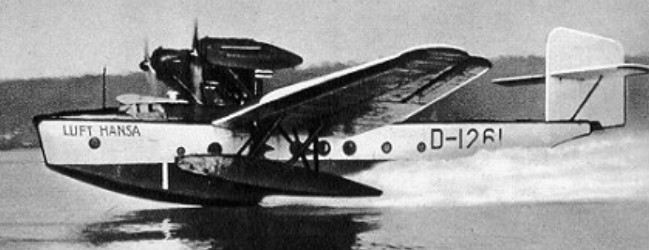
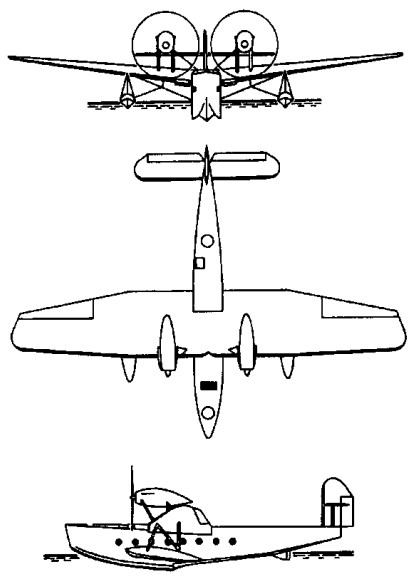
The one aircraft was built in 1927, and was used by Lufthansa between 21st May and 15th June 1928 for 47 flights between Travemunde and Oslo via Copenhagen and Gothenburg after this it was delivered to the Erpobungstelle at Travemunde.
Ro V Rocco Engines: 2 x Rolls-Royce Condor, 480kW Wingspan: 26.0 m / 85 ft 4 in Length: 19.3 m / 63 ft 4 in Height: 6.7 m / 22 ft 0 in Wing area: 94.0 sq.m / 1011.81 sq ft Max take-off weight: 9600 kg / 21164 lb Empty weight: 5990 kg / 13206 lb Max. speed: 220 km/h / 137 mph Cruise speed: 168 km/h / 104 mph Ceiling: 3150 m / 10350 ft Range w/max.fuel: 2400 km / 1491 miles Crew: 3 Passengers: 10
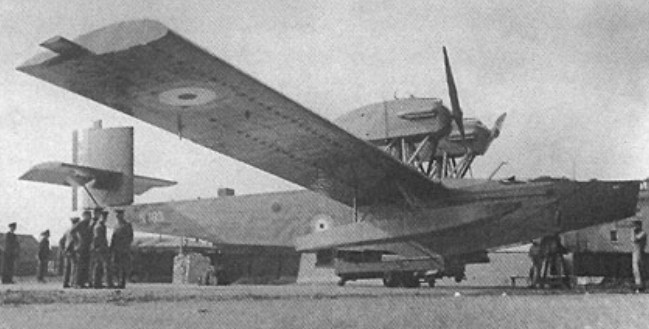
The Rohrbach RoIV was designed by Adolf Rohrbach. The first aircraft (N183) was built in the Rohrbach factory in Denmark from parts manufactured in Berlin before being sent to Beardmore. The second aircraft (N184) was built by Beardmore. Both aircraft had short lives and were scrapped in 1925.